Honey Bee Earrings: Troubleshooting Tarnish, Allergies & Breakage
Fix common issues with your honey bee earrings. Learn expert troubleshooting for tarnished wings, allergic reactions, and broken novelty clasps.

The Hidden Challenges of Apiary-Inspired Jewelry
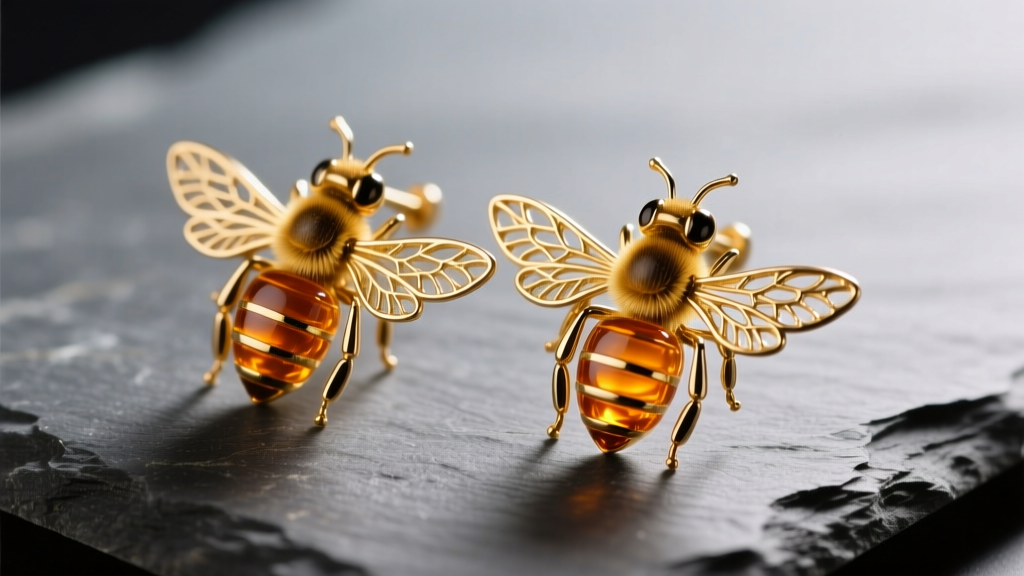
Honey bee earrings are a perennial favorite in nature-inspired jewelry, beloved for their intricate wings, detailed thoraxes, and symbolic association with community and hard work. However, from a metallurgical and structural engineering standpoint, novelty insect jewelry presents a unique set of challenges. The complex geometry of a bee—complete with protruding antennae, delicate filigree wings, and a dense, often gemstone-studded abdomen—creates inherent stress points and trapping zones for moisture and debris.
As we navigate the jewelry landscape in 2026, consumers are increasingly frustrated by the rapid degradation of mass-produced novelty pieces. Whether you are dealing with severe contact dermatitis, a snapped wing, or an earring that droops uncomfortably low on your lobe, this comprehensive troubleshooting guide will help you diagnose, repair, and maintain your honey bee earrings with professional-grade precision.
Diagnosing and Solving Contact Dermatitis
The most frequent complaint with novelty bee earrings is the sudden onset of itchy, red, or flaking earlobes. This is rarely an allergy to gold or silver itself, but rather a reaction to the base metals and plating techniques used in novelty manufacturing.
The 'Flash Plating' Failure Mode
Many affordable honey bee earrings are cast from brass (an alloy of copper and zinc) or nickel-silver, then coated with a microscopically thin layer of gold or rhodium. This 'flash plating' is typically only 0.1 to 0.5 microns thick. Because the bee's body has deep recesses (like the stripes on the abdomen), the plating bath often fails to deposit an even layer in these crevices. Within weeks, friction and skin acids wear through the plating, exposing the nickel or copper base.
According to the American Academy of Dermatology, nickel allergy is one of the most common causes of allergic contact dermatitis. Once the base metal is exposed, the copper reacts with your skin's natural salts to create copper chloride, resulting in the dreaded 'green ear' effect, while nickel triggers an immune response.
Actionable Fixes for Allergic Reactions
- Post Replacement: If the bee's body is intact but the post is causing irritation, take the earring to a local jeweler to have the base-metal post lasered off and an 18-gauge (1.0mm) ASTM F136 implant-grade titanium post soldered in its place. This is a permanent, hypoallergenic fix that usually costs between $25 and $45 per pair.
- Barrier Coatings: For a quick DIY fix on the earring post and clutch, apply a thin layer of medical-grade silicone barrier cream or a specialized jewelry coating like Jewelry Shield. Reapply every two weeks.
- Friction Back Upgrades: Discard the cheap 'butterfly' clutches that trap dead skin cells. Upgrade to 18k gold or titanium jumbo friction backs with a 6mm disc base to distribute pressure and prevent the metal from digging into the back of your lobe.
Structural Troubleshooting: The 'Heavy Bee' Droop
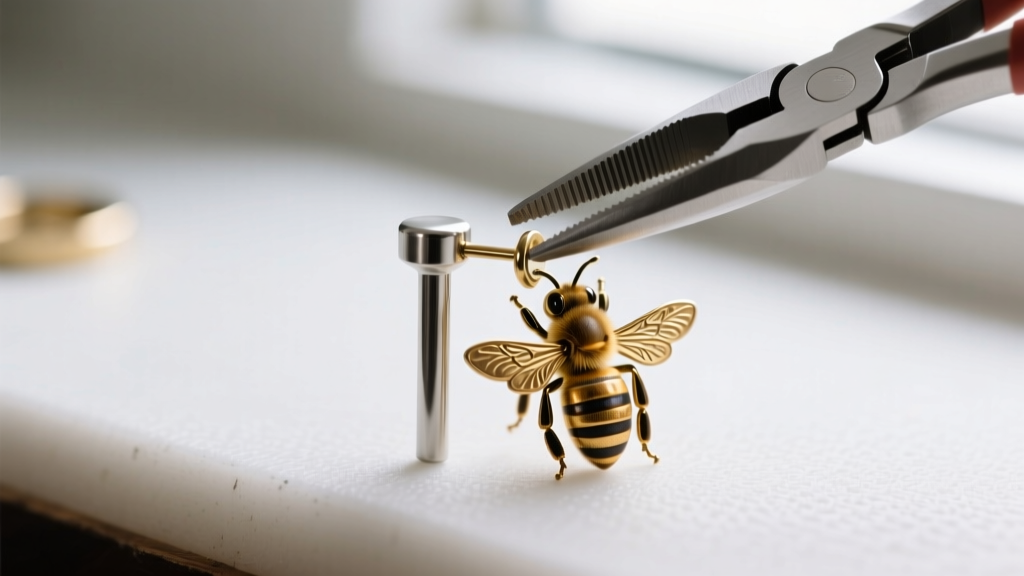
Honey bees are anatomically front-heavy. The dense abdomen—often cast in solid zinc alloy or set with cubic zirconia or amber gemstones—pulls the center of gravity away from the earlobe. This causes the earring to droop forward, stretching the piercing over time and hiding the beautiful wing details from view.
Physics-Based Solutions for Lobe Support
To counteract the forward momentum of a heavy bee earring, you must increase the surface area of support behind the lobe or alter the leverage point.
| Solution Method | Best For | Estimated Cost | Effectiveness |
|---|---|---|---|
| Silicone O-Ring Lifts (8mm-10mm) | Mild droop; standard 20G posts | $5 - $10 | High |
| Jumbo Flat Disc Clutches (12mm) | Heavy solid silver or brass bees | $15 - $25 | Very High |
| Conversion to Leverback Wires | Dangle-style bee earrings | $30 - $60 (Jeweler) | Moderate |
| Threaded Screw-Backs | High-value / fine jewelry bees | $40 - $80 | Maximum |
Pro Tip: If your bee earrings feature a standard 20-gauge (0.8mm) post, the metal itself may be bending under the weight. Ask a jeweler to drill out the solder joint and insert a thicker 18-gauge (1.0mm) or 16-gauge (1.2mm) post for rigid structural support.
Troubleshooting Enamel Chipping and Wing Breakage
The wings of a bee earring are its most vulnerable component. Depending on the manufacturing technique, the wings may be crafted from open metal filigree, cloisonné enamel, or cold epoxy resin. Each material fails differently and requires a specific repair protocol.
Material-Specific Repair Guide
1. Cold Enamel (Epoxy Resin) Yellowing and Chipping
Cold enamel is essentially tinted epoxy poured into metal recesses. Over time, exposure to UV light and cosmetics causes it to yellow or chip away from the metal casing. Fix: Carefully scrape out the remaining degraded resin using a wooden toothpick. Clean the cavity with isopropyl alcohol. Refill the wing recesses with a UV-curing jewelry resin, curing it under a 36W UV lamp in 60-second intervals to prevent heat-cracking.
2. Cloisonné Cracking
True cloisonné involves fusing glass powder to metal at high temperatures. It is highly durable but can shatter if dropped on a hard surface. Fix: Cloisonné cannot be glued seamlessly. If a wing shatters, a master jeweler must carefully heat the piece to remove the remaining glass wires and re-fire new enamel—a process that often costs more than the replacement value of fashion jewelry.
3. Filigree Metal Bending
Thin brass or sterling silver wire wings easily catch on hair and sweaters, bending out of alignment. Fix: Do not use your fingers to bend them back, as this introduces oils and uneven stress. Use nylon-jaw pliers to gently coax the wire back into the original plane, applying a tiny drop of clear, flexible jewelry adhesive (like E6000) to the solder joint where the wing meets the thorax to reinforce the connection.
'Novelty castings are inherently more porous than die-struck jewelry. The intricate textures of a bee's fuzz or the veins in its wings create microscopic pockets that trap skin oils, lotions, and sulfur. This is why your bee earrings tarnish ten times faster than a simple gold hoop.' — Master Bench Jeweler
Reversing Oxidation in Recessed Crevices
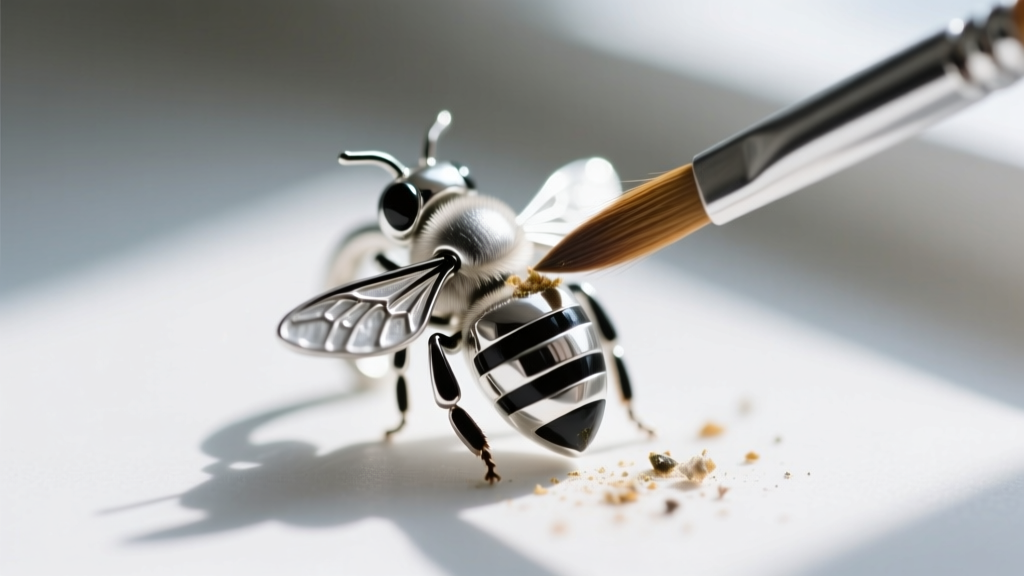
Sterling silver (925) honey bee earrings are prone to rapid oxidation. The black stripes on the bee's abdomen and the intricate antennae trap sulfur compounds from the air and your skin, turning the piece a dull, muddy gray. Standard silver dip cleaners are highly corrosive and will instantly strip the antiquing (intentional blackening) from the crevices or cloud any glued-in gemstone eyes.
The Safe, Deep-Clean Protocol
According to the Gemological Institute of America (GIA), gentle mechanical action combined with mild surfactants is the safest way to clean intricate jewelry without damaging secondary materials.
- The Soak: Mix a few drops of phosphate-free dish soap (like Dawn) into a bowl of distilled water heated to exactly 95°F (35°C). Submerge the earrings for 5 minutes to loosen sebum and cosmetic buildup.
- The Agitation: Using a baby toothbrush (which has ultra-soft bristles that won't scratch gold plating or silver), gently brush in a circular motion. Pay special attention to the underside of the wings and the joints of the legs.
- The Polish: For stubborn tarnish on the raised, polished areas of the bee (avoiding the black-striped recesses), use a treated silver polishing cloth. Fold the cloth to a fine point to reach tight corners.
- The Rinse and Dry: Rinse under lukewarm distilled water. Do not air dry, as this leaves water spots. Use a jewelry blow-dryer on a cool setting or compressed air to blast moisture out of the deep crevices.
Quick Reference: Bee Earring Repair Toolkit
To maintain a collection of intricate insect jewelry, keep the following specialized tools on hand:
- Jeweler's Loupe (10x Magnification): Essential for inspecting micro-solder joints on bee legs and antennae before they fully snap.
- UV Resin & 36W Curing Lamp: For replacing lost cold-enamel drops or securing loose cubic zirconia eyes.
- Nylon-Jaw Pliers: For bending filigree wings back into shape without marring the metal finish.
- ASTM F136 Titanium Posts & Silicone O-Rings: For immediate allergy mitigation and lobe support.
Final Thoughts on Jewelry Maintenance
Honey bee earrings are more than just a whimsical accessory; they are miniature sculptures that require an understanding of material science and structural physics to maintain. By proactively addressing the vulnerabilities of novelty castings—upgrading the metallurgy of the posts, supporting the lobe against asymmetric weight, and utilizing non-destructive cleaning methods—you can ensure your apiary-inspired pieces remain as vibrant and industrious as the insects they represent. For more insights on preserving intricate jewelry, refer to the Cleveland Clinic's guidelines on managing contact dermatitis from metal alloys.


