Troubleshooting Reactions: Best Hypoallergenic Metals for Earrings
Discover why your ears still react and learn how to choose true hypoallergenic metals for earrings, from implant-grade titanium to niobium.

The 'Hypoallergenic' Myth: Why Your Ears Are Still Reacting
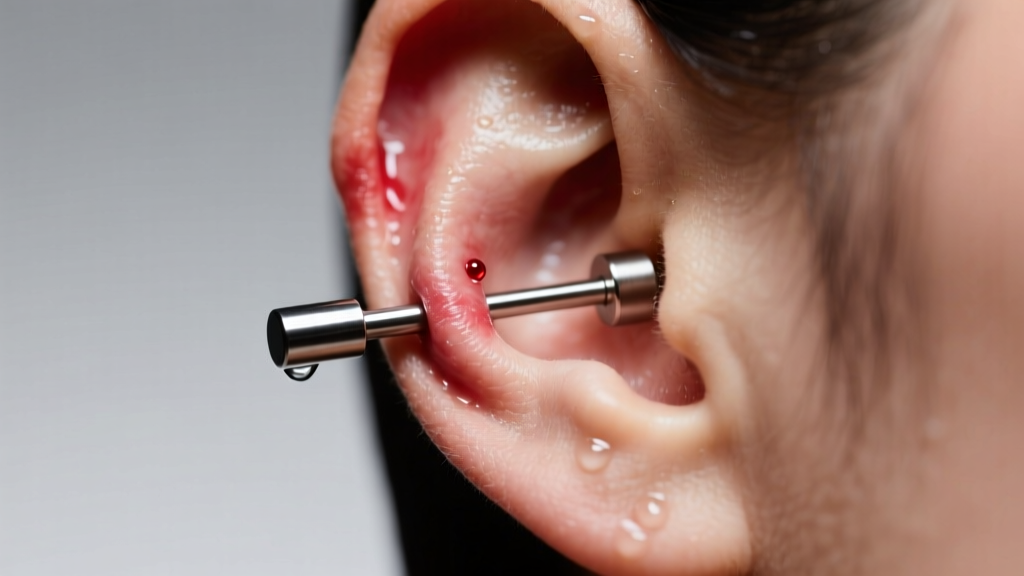
If you have ever purchased earrings explicitly labeled as 'hypoallergenic' only to experience itching, redness, or weeping fistulas hours later, you are not alone. The core issue lies in a pervasive industry loophole: the term 'hypoallergenic' is entirely unregulated by the FDA and lacks any standardized metallurgical definition. Jewelry brands frequently use it as a marketing buzzword rather than a guarantee of biocompatibility. As of 2026, contact dermatitis from nickel and heavy metal alloys remains one of the most common reasons patients visit dermatologists for ear-related complaints.
To troubleshoot your earring reactions, you must first understand the concept of the passivation layer. Many budget-friendly earrings are made from 316L surgical steel. While 316L contains chromium, which forms a microscopic oxide layer to prevent corrosion, it also contains 8% to 12% nickel. When this passivation layer is compromised by acidic sweat, chlorine from swimming pools, or mechanical friction from sleeping on your earrings, nickel ions leach directly into the epidermis, triggering an allergic cascade. True troubleshooting requires abandoning marketing terms and looking strictly at ASTM (American Society for Testing and Materials) metallurgical certifications.
Troubleshooting Your Current Earring Collection
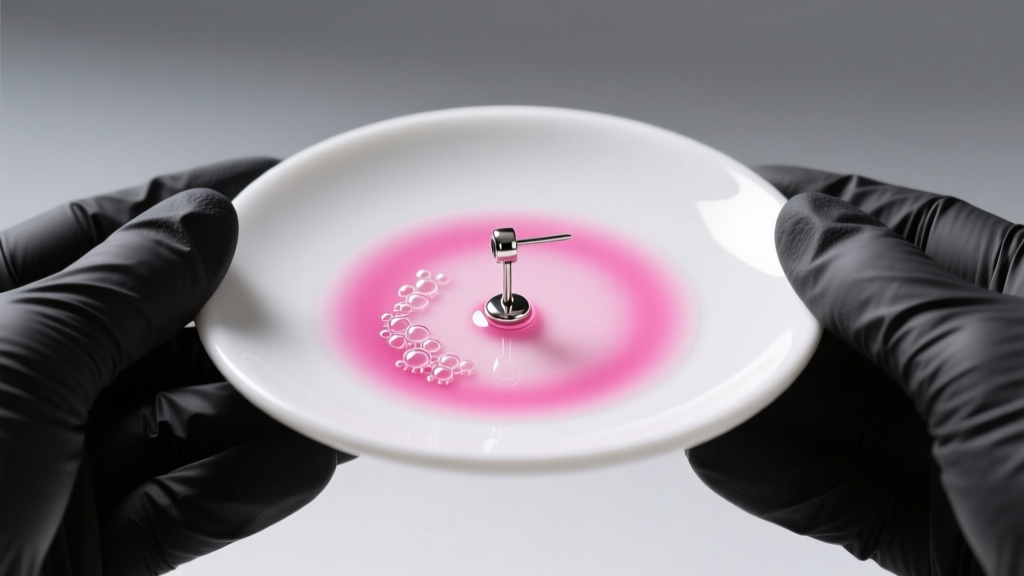
Before throwing away your entire jewelry box, you can scientifically troubleshoot your current collection using a Dimethylglyoxime (DMG) spot test. Available online for under $15, this chemical test detects free nickel release. Simply apply the solution to a cotton swab and rub it against the earring post for 30 seconds. If the swab turns pink or red, the metal is actively leaching nickel and must be retired from your rotation.
Below is a diagnostic comparison chart to help you identify the true safety profile of common earring materials:
| Metal / Alloy | ASTM Standard | Nickel Content | Allergy Risk Profile |
|---|---|---|---|
| 316L Surgical Steel | None (Commercial) | 8-12% | High (Passivation layer degrades over time) |
| Implant-Grade Titanium | ASTM F136 | 0% | Zero (Gold standard for fresh & healing piercings) |
| Commercially Pure Titanium | ASTM F67 | 0% | Very Low (Slightly softer, safe for healed lobes) |
| Niobium | Unalloyed Element | 0% | Zero (Highly malleable, excellent for hoops) |
| 14k / 18k Solid Gold | N/A (Alloy dependent) | Varies | Low to Moderate (Must be alloyed with silver/palladium, not nickel) |
| Sterling Silver (925) | N/A | Trace impurities | High (Tarnishes, releases copper/silver salts that cause argyria) |
The Ultimate Guide to True Hypoallergenic Metals for Earrings
When sourcing genuinely safe jewelry, you must look for specific material grades. According to the Association of Professional Piercers (APP), only a select few materials are approved for initial piercings and highly reactive ears.
ASTM F136 Implant-Grade Titanium
This is the undisputed champion of biocompatible jewelry. Originally engineered for surgical implants like pacemakers and joint replacements, F136 titanium contains zero nickel and boasts a mirror-polish surface finish that prevents bacterial adhesion. Expect to pay between $25 and $60 for high-quality, internally threaded titanium labret studs from reputable brands like NeoMetal or BVLA. Always ensure the packaging explicitly states 'ASTM F136'; if it just says 'titanium,' it may be a cheaper, unverified commercial grade.
Niobium
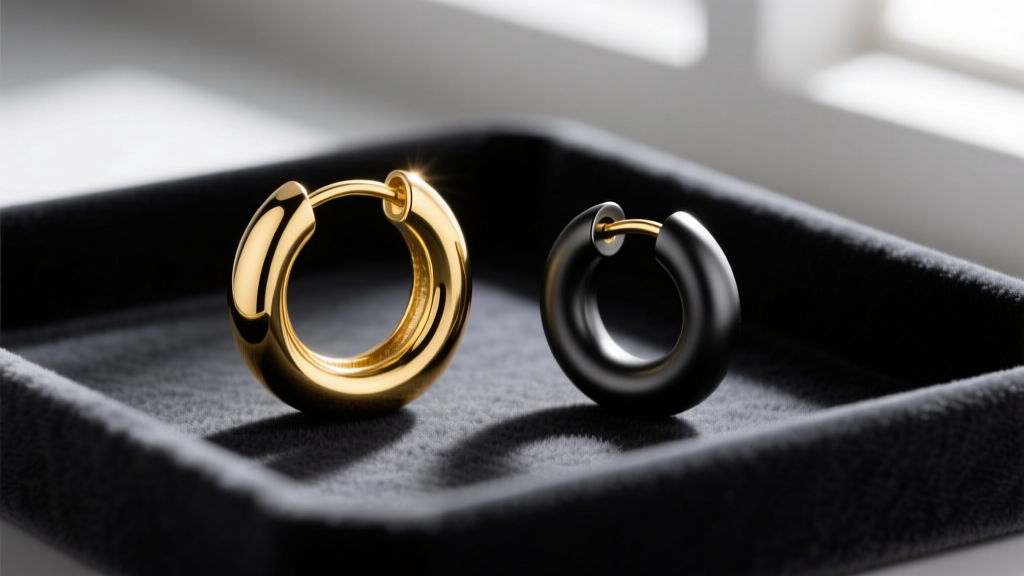
Niobium is a pure elemental metal, meaning it is not an alloy and cannot contain hidden nickel. It is slightly heavier and much softer than titanium, making it the absolute best choice for seamless hoop earrings and huggies that need to be bent to fit the ear's contour. Furthermore, niobium can be anodized using electricity to create vibrant, permanent colors without the use of toxic dyes or paints. Pricing generally ranges from $30 to $80 for custom-anodized pieces.
The 14k and 18k Gold Caveat
Gold is naturally hypoallergenic, but pure 24k gold is too soft for earring posts. It must be alloyed. The danger arises when manufacturers use nickel as a hardening agent to create white gold. To troubleshoot gold allergies, you must verify that the gold is nickel-free, typically alloyed with palladium, silver, or copper. Yellow and rose gold are generally safer than white gold, provided they are sourced from jewelers who guarantee nickel-free casting. According to the Mayo Clinic, prolonged exposure to even trace amounts of nickel in gold alloys can sensitize the immune system over time.
The Sterling Silver Trap: A Troubleshooting Case Study
Many consumers believe Sterling Silver (stamped 925) is a safe, premium alternative to surgical steel. This is a critical troubleshooting failure. Sterling silver is 92.5% silver and 7.5% copper (or sometimes zinc/nickel). When exposed to the moisture and sulfur compounds naturally present in human sebum, the copper oxidizes, creating black tarnish. This tarnish can literally stain the inside of your piercing fistula gray or black—a harmless but alarming condition known as localized argyria. Furthermore, the microscopic pitting caused by tarnishing creates a breeding ground for bacteria. Rule of thumb: Never wear sterling silver in unhealed piercings, and limit its use in healed lobes to short durations.
Cartilage vs. Lobe: Adjusting Your Metal Strategy
Troubleshooting earring reactions requires understanding ear anatomy. The earlobe is highly vascular, meaning it has robust blood flow that quickly clears away minor irritants and fights off localized infections. Cartilage (the helix, tragus, conch, and daith), however, is avascular. It receives nutrients and immune cells via slow diffusion through the perichondrium.
- The Lobe Strategy: Healed lobes can often tolerate ASTM F67 titanium, 14k gold, and high-quality platinum. Standard 20g or 18g posts are usually sufficient.
- The Cartilage Strategy: Cartilage demands ASTM F136 titanium or solid platinum. Because cartilage swells significantly during allergic reactions, wearing thin 20g wire in a cartilage piercing can cause the 'cheese-cutter effect,' where the metal slowly migrates and slices through the tissue. Always use 16g or 14g internally threaded or threadless flat-back labrets for cartilage to distribute pressure evenly.
Actionable Recovery Protocol for Flared Piercings
If you are currently experiencing an allergic flare-up, follow this clinical recovery protocol:
- Remove the Offending Metal: Do not leave the reactive earring in, even if the piercing is new. The continuous presence of nickel will perpetuate the immune response.
- Insert a Biocompatible Placeholder: Immediately insert an ASTM F136 titanium flat-back labret or a borosilicate glass plug to keep the fistula from closing while the tissue heals.
- Sterile Saline Soaks: Apply a sterile 0.9% sodium chloride wound wash twice daily. Avoid tea tree oil, alcohol, or hydrogen peroxide, as these destroy the delicate granulation tissue attempting to repair the allergy damage.
- Downsize the Post: If the piercing is less than a year old, the swelling from the allergy may require a longer post. Once the swelling subsides (usually 5-7 days), visit a professional piercer to downsize the post to prevent the jewelry from snagging and causing mechanical irritation.
'Allergic contact dermatitis to nickel is a delayed-type hypersensitivity reaction. Once the immune system is sensitized, even microscopic exposures from supposedly safe alloys can trigger severe localized eczema and piercing rejection.' — Dermatological Standards on Metal Sensitization
Frequently Asked Troubleshooting Questions
Can I wear platinum if I have a severe nickel allergy?
Yes. Platinum (specifically Pt950, which is 95% platinum and 5% ruthenium or iridium) is entirely nickel-free and highly biocompatible. It is denser and heavier than titanium, making it an excellent, albeit expensive ($300+ per stud), option for lifelong wearers with severe metal sensitivities.
Why do my ears itch only when I sleep in my earrings?
Sleeping in earrings creates a micro-climate of trapped heat, sweat, and friction. This environment accelerates the breakdown of the passivation layer on cheaper metals like surgical steel, increasing nickel leaching. Additionally, mechanical pressure from your pillow can drive the earring post into the tissue, causing micro-tears that allow allergens direct access to the bloodstream. Always remove non-implant-grade jewelry before bed.
Is 'surgical steel' the same as 'implant-grade steel'?
No. 'Surgical steel' is a broad, unregulated marketing term that usually refers to 316L stainless steel, which contains nickel. 'Implant-grade steel' (ASTM F138) is a highly controlled alloy with a much stricter limit on impurities and a superior surface polish, but it still contains trace nickel. If you have a known nickel allergy, avoid all steel variants and stick strictly to F136 titanium or niobium.


