Metals in Turkish Earrings Design: A Material Guide
Explore the metallurgy of Turkish earrings design. Compare 925 silver, 22k gold, and alloys used in Telkari filigree, plus gauge and gemstone insights.

The Metallurgical Roots of Turkish Earrings Design
When evaluating authentic Turkish earrings design, one must look past the intricate motifs and examine the foundational metallurgy. Anatolian jewelry making is a discipline forged at the crossroads of Ottoman court opulence and regional artisanal pragmatism. Historically, the imperial workshops of Istanbul favored high-karat gold and vibrant enamelwork (minakar), while provincial artisans in regions like Mardin and Cappadocia mastered silver filigree (telkari) and granulation. Today, the material choices in Turkish earrings are not merely aesthetic; they are structural necessities dictated by the extreme wire-drawing and soldering techniques required to bring these ancient geometries to life. Understanding the specific alloys, tensile strengths, and gemstone backing methods is critical for collectors, jewelers, and enthusiasts seeking authentic, durable pieces in 2026.
Core Metals: Silver, Gold, and Alloys Compared
The structural integrity of Turkish drop earrings and heavy hoops relies heavily on the chosen base metal. While tourist markets are flooded with brass and copper alloys plated in silver, genuine artisanal pieces utilize specific precious metal ratios to balance malleability with durability. Below is a technical comparison of the primary metals used in high-end Turkish earring fabrication.
| Material Grade | Composition / Purity | Vickers Hardness (HV) | Tarnish / Corrosion Risk | Primary Application in Turkish Design |
|---|---|---|---|---|
| 925 Sterling Silver | 92.5% Ag, 7.5% Cu | 60-70 HV | Moderate (requires polishing) | Standard base for Telkari and cast Ottoman motifs. |
| 950 Turkish Silver | 95.0% Ag, 5.0% Cu | 50-60 HV | Low-Moderate | Premium filigree wire; offers superior ductility for twisting. |
| 14k Gold | 58.5% Au, Ag/Cu alloys | 120-140 HV | Very Low | Modern luxury adaptations; ear wires for heavy silver drops. |
| 22k Gold | 91.6% Au, 8.4% Cu/Ag | 70-85 HV | Extremely Low | Traditional bridal sets, heavy bezels, and granulation bases. |
| Nickel Silver (Alpaca) | Cu/Ni/Zn alloy (0% Ag) | 80-100 HV | High (causes skin reactions) | Mass-market tourist reproductions; avoid for sensitive lobes. |
The Telkari (Filigree) Factor: Why Purity Matters
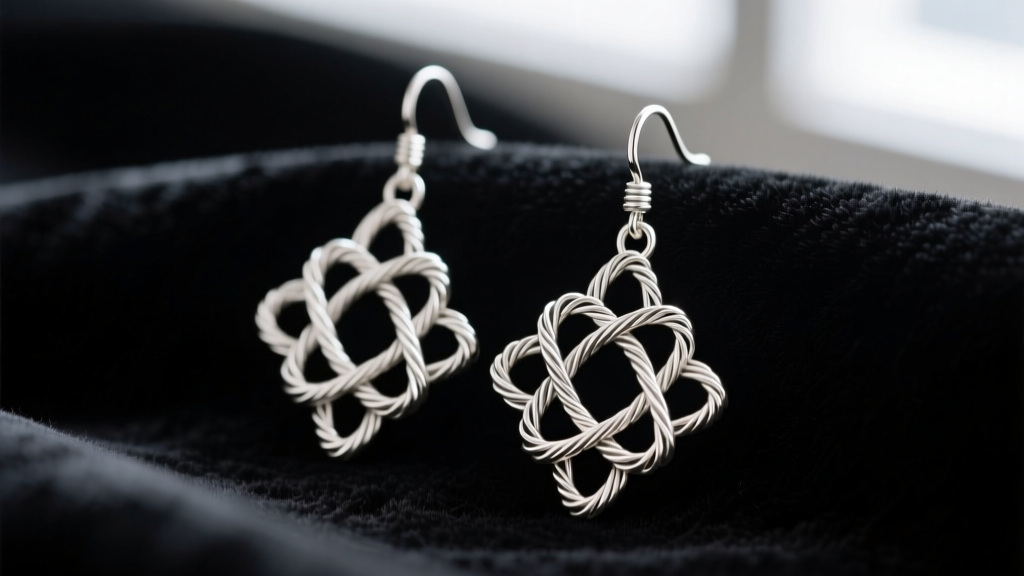
Telkari, the meticulous art of weaving metal threads, is the most iconic manifestation of Turkish earrings design. Artisans in Midyat and Mardin draw silver wires down to an astonishing 0.2mm to 0.3mm thickness. At this microscopic gauge, the metallurgical properties of the alloy dictate the success of the piece.
Silver Wire Tensile Strength
If an artisan uses standard 999 fine silver, the wire lacks the tensile strength to hold its shape once woven, resulting in warped, fragile earrings. Conversely, standard 925 sterling silver can become brittle if work-hardened too quickly during the twisting process. Master Turkish silversmiths often utilize a specialized 950 silver alloy or anneal the 925 silver repeatedly during the wire-drawing phase to maintain ductility. The individual wires are then laid over a solid silver base plate and fused using a powdered solder mixed with borax, requiring precise torch control to avoid melting the 0.2mm filigree threads.
The 22k Gold Dilemma
While Ottoman court jewelry heavily featured 22k gold, creating intricate filigree in this purity is notoriously difficult. 22k gold is exceptionally soft, meaning a complex 22k gold Telkari dangle earring weighing over 10 grams will slowly deform under its own weight when worn. To circumvent this, modern master jewelers crafting high-karat Turkish designs use a technique called granulation rather than wire weaving, fusing tiny 22k gold spheres to a solid backplate, which provides structural rigidity without sacrificing the rich, buttery color of high-purity gold.
Niello (Savat) vs. Chemical Oxidation
A defining visual characteristic of Turkish silver earrings is the stark contrast between bright silver and deep black recesses. It is vital to distinguish between authentic Savat (Niello) and modern chemical oxidation.
- Authentic Niello (Savat): This is a metallurgical inlay composed of sulfur, copper, silver, and lead. The black powder is packed into engraved grooves on the silver earring and fired in a kiln until it melts and fuses into a glassy, permanent black enamel. It is highly durable and will not rub off over time.
- Chemical Oxidation: Mass-produced Turkish-style earrings are often dipped in liver of sulfur to artificially blacken the surface. The high points are then polished. This is merely a surface patina; friction from hair, clothing, and skin will eventually wear the blackening away, leaving the earring looking flat and washed out.
Gemstone Settings and Backing Materials
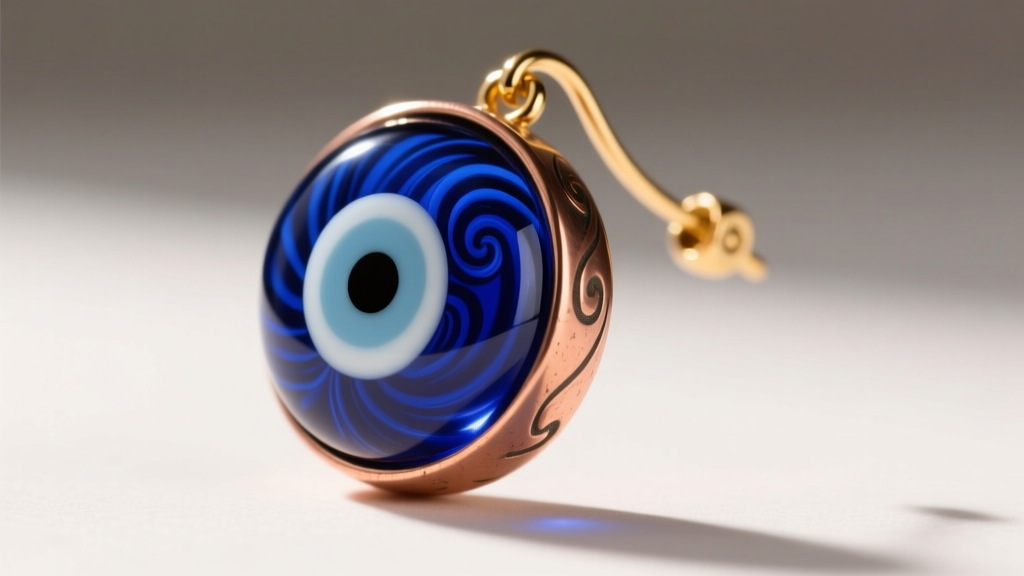
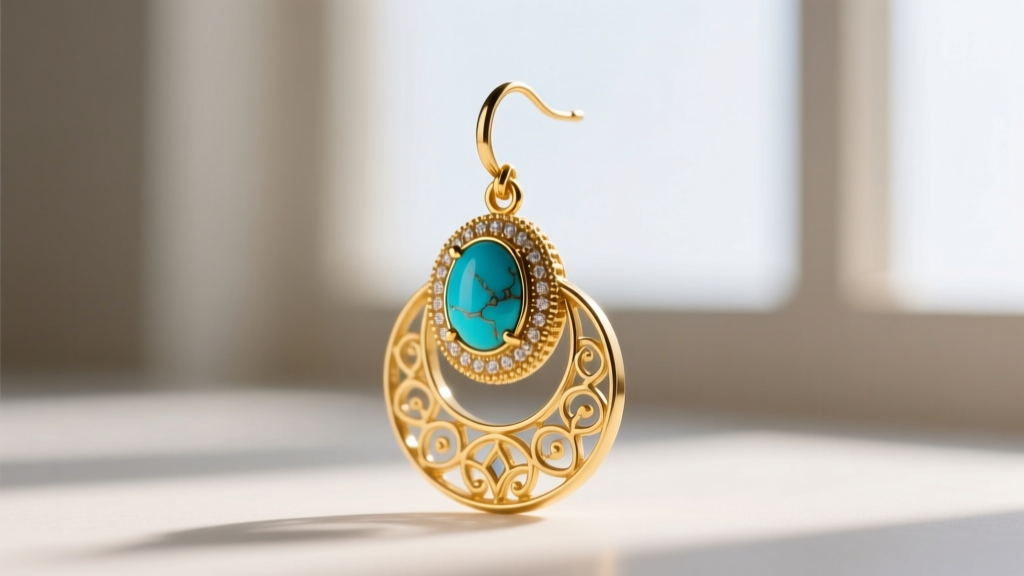
Traditional Turkish earrings design frequently incorporates regional and historically significant gemstones, most notably Turquoise, Lapis Lazuli, and Carnelian. According to the Gemological Institute of America (GIA), turquoise is a relatively soft, porous stone (Mohs 5-6), which heavily influences how Turkish artisans set and protect it.
Foil Backing and Kapama Techniques
In antique and high-end reproduction Ottoman earrings, cabochons are rarely left open-backed. Artisans use a technique called kapama, sealing the back of the bezel with a solid metal plate. Historically, this enclosed a piece of colored foil to enhance the gemstone's saturation. Today, sealed bezels are crucial for protecting porous stones like turquoise and lapis lazuli from absorbing skin oils, lotions, and sweat, which can permanently discolor the stone or degrade its matrix. When evaluating vintage or artisanal Turkish dangle earrings, inspecting the bezel for a seamless, soldered backplate is a hallmark of superior craftsmanship and long-term gemstone preservation.
Ear Wire Gauges and Structural Integrity
A frequently overlooked aspect of material properties in Turkish earrings design is the structural gauge of the ear wire. Traditional Anatolian dangle earrings, particularly those featuring heavy silver filigree or multiple stone drops, can easily weigh between 12 and 25 grams per ear.
"A standard 22-gauge (0.64mm) ear wire is entirely insufficient for heavy ethnic dangles. The sheer kinetic weight of a 15-gram Telkari earring will cause a thin wire to bend, warp, and ultimately stretch the wearer's earlobe piercing. Authentic, structurally sound Turkish drop earrings must utilize a minimum of 18-gauge (1.02mm) or heavy 20-gauge (0.81mm) ear wires, often forged with a reinforced coil at the base of the hook to distribute the tensile load."
If you are purchasing heavy Turkish hoops or chandelier earrings, always verify the ear wire thickness. Many commercial exporters solder lightweight 22g wires onto heavy 925 silver bodies to save on gold or silver costs, leading to rapid mechanical failure at the solder joint.
Care and Maintenance of Anatolian Alloys
Maintaining the material integrity of Turkish earrings requires specific protocols that differ from standard Western jewelry care. Ultrasonic cleaners, commonly used for diamond and gold jewelry, are strictly prohibited for Turkish designs featuring matrix turquoise or lapis lazuli. The high-frequency vibrations can easily fracture the internal webbing of the stones. Furthermore, as noted by historians at The Metropolitan Museum of Art, the delicate nature of historical enamel and granulation requires gentle, non-abrasive care.
For silver Telkari earrings with authentic Niello inlay, avoid harsh silver dip solutions. These acidic baths can strip the polished surface of the Niello, turning the black inlay a dull, chalky grey. Instead, use a soft-bristled toothbrush with a mild paste of baking soda and water, gently agitating the surface to remove sulfur buildup without compromising the glassy finish of the Savat inlay or the structural integrity of the microscopic filigree wires.


