How to Choose Twisted Earrings: A Complete Buying Guide
Discover what to look for when buying twisted earrings. Our expert guide covers metal grades, gauge sizes, clasp security, and pricing for 2026.

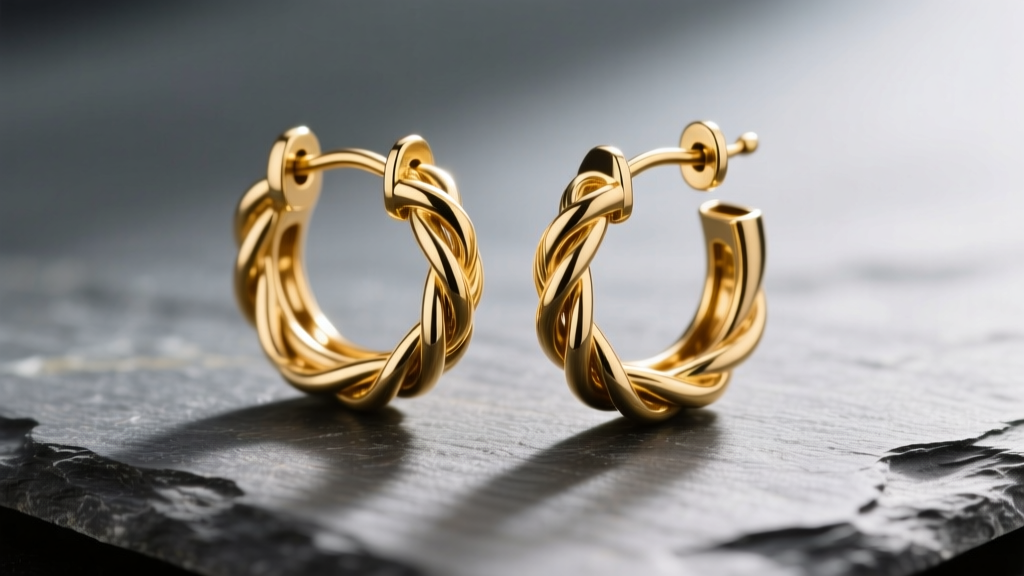
The Structural Reality of Twisted Earrings
Twisted earrings—ranging from delicate spiral studs to architectural rope hoops and cable huggies—have cemented their place in the 2026 jewelry landscape. The modern aesthetic favors 'quiet luxury' and micro-textures, making twisted wire designs more popular than ever. However, the very process that gives these earrings their signature look also introduces unique structural vulnerabilities. As a buyer, you must look beyond the surface shine and understand the metallurgy, gauge requirements, and clasp mechanics that dictate a twisted earring's lifespan. This comprehensive buying guide breaks down exactly what to look for when investing in twisted earrings, ensuring your pieces remain secure, hypoallergenic, and structurally sound.
The Metallurgy of the Twist: Work Hardening Explained
To create a twisted earring, a jeweler takes a straight wire and applies rotational torque. This physical manipulation triggers a metallurgical phenomenon known as 'work hardening.' As the metal's crystal lattice structure compresses and deforms, the wire becomes significantly harder and more rigid. While this rigidity helps the earring hold its spiral or rope shape, it also makes the metal more brittle. If a work-hardened twisted hoop is repeatedly bent open and closed at the wrong stress point, it will eventually snap. Understanding this failure mode is critical when evaluating the clasp type and metal alloy of your chosen earrings.
Material Grades: Preventing Metal Fatigue and Allergies
The deep grooves of a twisted design create friction points that accelerate wear, making your choice of metal paramount. Avoid gold-plated or vermeil twisted earrings; the plating will inevitably wear away inside the crevices, exposing base metals like brass or copper to your skin's natural acids. According to the American Academy of Dermatology, prolonged exposure to these exposed base metals is a leading cause of contact dermatitis and nickel allergies.
For the best longevity and biocompatibility, prioritize solid alloys. 14k Gold is often superior to 18k gold for twisted designs. The higher copper and silver content in 14k gold provides a harder alloy that resists unwinding and maintains the crispness of the twist over decades. Implant-Grade Titanium (ASTM F138) is the gold standard for cartilage placements and sensitive ears. The Association of Professional Piercers (APP) highly recommends ASTM F138 titanium due to its exceptional strength-to-weight ratio and complete lack of nickel. Titanium twists hold their shape brilliantly and will never tarnish in the deep grooves. Sterling Silver (925), while affordable, is a soft metal. Thin silver twists are prone to 'the unwind'—a failure mode where the spiral pitch stretches out and loses its definition under minor physical stress.
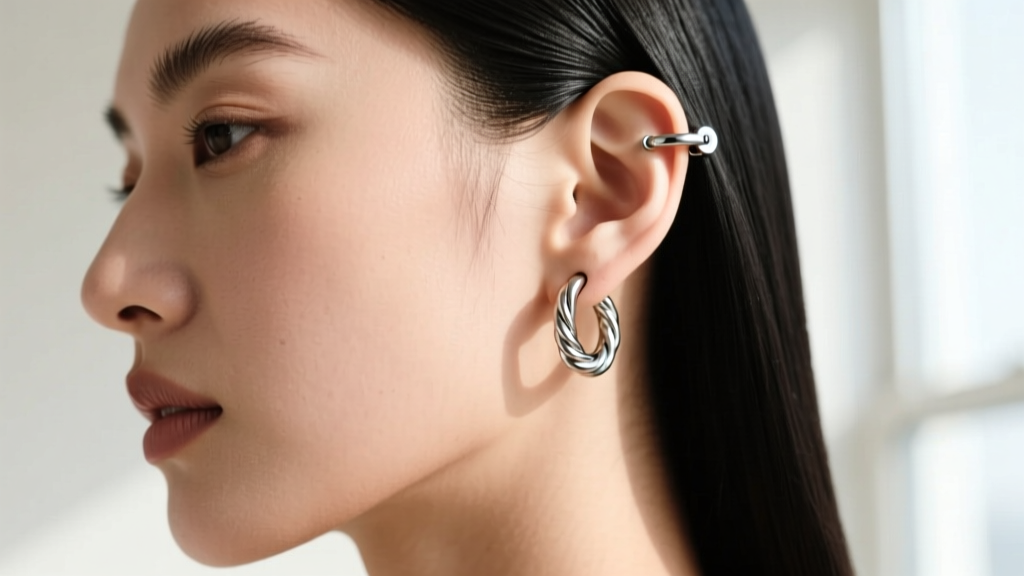
Gauge Sizing and Placement Matrix
The thickness of the wire (gauge) must be matched to both the piercing placement and the complexity of the twist. A thick, heavy rope twist requires a larger diameter to avoid looking disproportionate, while a delicate cable twist requires a finer gauge. Below is our 2026 structural matrix for matching gauge to placement:
| Piercing Placement | Recommended Gauge | Ideal Twist Style | Structural Note |
|---|---|---|---|
| Standard Lobe | 20g (0.8mm) - 18g (1.0mm) | Delicate Spiral Studs, Thin Rope Huggies | High flexibility; ensure clicker or secure friction back to prevent loss. |
| Upper Lobe / Flat | 18g (1.0mm) - 16g (1.2mm) | Micro-Twist Hoops, Cable Huggies | Requires rigid metal like 14k gold to prevent bending against the ear. |
| Helix / Cartilage | 16g (1.2mm) - 14g (1.6mm) | Architectural Twisted Clickers, Rope Hoops | Thicker gauge prevents the twist from warping when inserting through tough cartilage. |
| Daith / Rook | 16g (1.2mm) | Hinged Twisted Segment Rings | Must feature a seamless clicker hinge to navigate the curved anatomy safely. |
Clasp Mechanisms: Securing the Torque
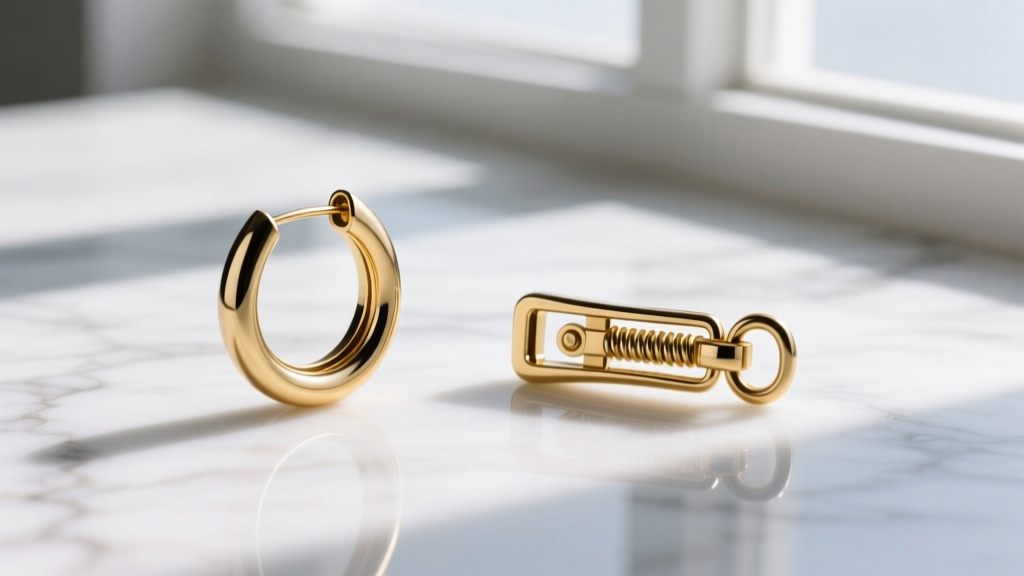
Because twisted metal is work-hardened and brittle, you must never bend the wire itself to open the earring. The clasp must do 100% of the work. Hinged Clickers are the absolute best choice for twisted hoops and huggies. The hinge absorbs the mechanical stress of opening, while the 'click' mechanism ensures a flush, secure closure that won't catch on hair or sweaters. Latchbacks are traditional but problematic for twisted designs; the lever can easily catch on clothing, pulling the earring open and potentially warping the twist. Endless (Continuous) Hoops should be entirely avoided for twisted wire. The tension required to insert the post into the tube will inevitably distort the spiral pattern near the closure point, leading to a permanent structural asymmetry.
Pricing Tiers and Market Red Flags
When shopping for twisted earrings, price is a strong indicator of manufacturing quality. Solid 14k Gold ($150 - $450+): Expect CNC-machined or precision hand-twisted solid gold. These will last a lifetime and can be polished without removing a gold layer. Implant-Grade Titanium ($40 - $120): An excellent mid-range investment. Look for brands that specify 'ASTM F138' rather than just 'surgical steel,' which is a vague and often misleading term. Gold-Filled / Heavy Plated ($30 - $80): Proceed with extreme caution. The twisting process can cause micro-fractures in the gold-filled layer, especially if the manufacturer used a thick gauge wire. Over time, these micro-fractures will peel, leaving you with a textured, discolored wire. Red Flag: If a twisted hoop feels unusually light for its size, it is likely hollow-core. Hollow-core twists dent easily and cannot be repaired by a jeweler if crushed.
Expert Maintenance: Cleaning the Grooves
The intricate valleys of a twisted earring are magnets for sebum, dead skin cells, and environmental dust. Wiping the surface with a cloth is insufficient. For routine maintenance, use a soft-bristled baby toothbrush dipped in warm water and a drop of mild, phosphate-free dish soap. Gently brush along the direction of the twist to dislodge debris from the grooves. For a deeper clean, an ultrasonic jewelry cleaner is highly effective, but only if the earrings are solid metal without glued-in gemstones. Never use harsh chemical dips or silver polishing cloths on twisted oxidized silver, as you will strip the intentional dark patina from the grooves that gives the twist its visual depth. Always store twisted hoops fastened and laid flat to prevent the wire from catching on other jewelry and unwinding.


