How to Style and Care for a Twisted Gold Earring Hoop
Learn how to choose, style, and clean your twisted gold earring hoop. Expert tips on gauge sizes, karat weights, and textured metal care.

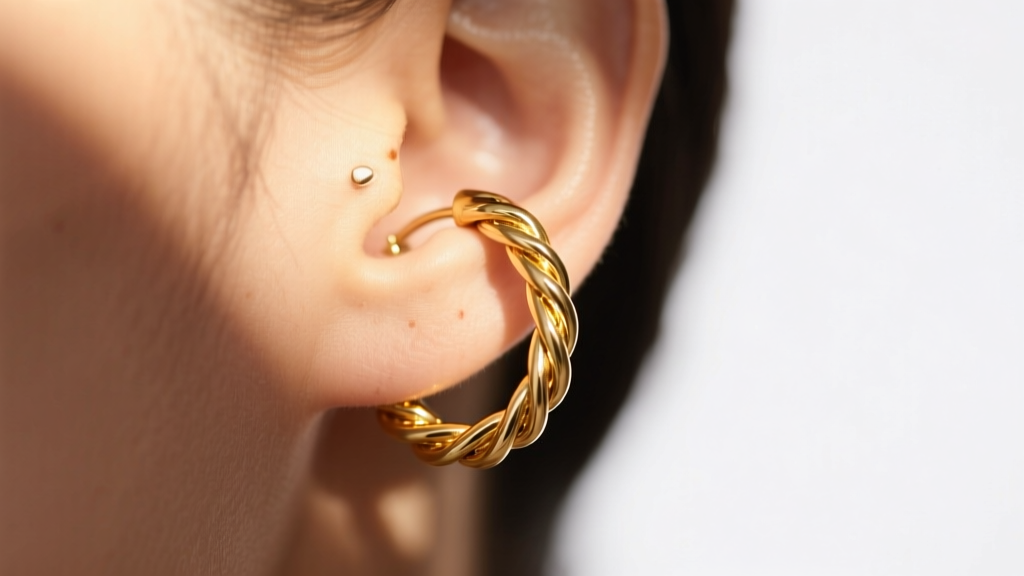
The twisted gold earring hoop is a masterclass in textured elegance. Unlike smooth, high-polish hoops that offer a simple reflection of light, twisted variants introduce depth, shadow, and a vintage-inspired architectural element to your ear curation. However, the very crevices that give these earrings their signature rope or barleycorn patterns also present unique challenges in maintenance, sizing, and daily wear.
Whether you are outfitting a freshly healed helix or curating a stacked lobe constellation, understanding the mechanics of textured jewelry is essential. This comprehensive, step-by-step guide will walk you through material selection, precise anatomical sizing, face-shape styling frameworks, and the exact cleaning protocols required to keep your textured gold gleaming.
Decoding the Twist: Anatomy and Material Grades
Before purchasing, it is critical to understand how the twist is manufactured, as this dictates the earring's longevity. The most common styles include the rope twist (multiple wires tightly wound around a core), the barleycorn twist (machine-stamped interlocking links), and the flat twist (a single ribbon-like wire torqued at regular intervals).
14k vs. 18k Solid Gold: Which is Better for Texture?
When dealing with textured surfaces, the alloy composition matters immensely. Pure 24k gold is too soft to hold a crisp twist pattern and will quickly warp or smooth out from friction. According to the Gemological Institute of America (GIA), alloying gold with metals like copper, silver, and zinc increases its tensile strength.
- 14k Solid Gold (58.5% pure): The optimal choice for twisted hoops. The higher alloy content makes the metal harder, ensuring the deep grooves of the twist resist flattening over years of wear. It is also highly resistant to scratching when pulled through hair.
- 18k Solid Gold (75% pure): Offers a richer, warmer yellow hue but is slightly softer. Best reserved for smaller huggies or low-impact lobe wear where the texture won't face heavy friction.
- Gold Vermeil: Avoid vermeil for twisted styles. The friction points of the raised ridges will cause the micron-thick gold plating to wear off rapidly, exposing the sterling silver or brass base metal beneath.
Step-by-Step Sizing for Lobe and Cartilage Piercings
A twisted gold earring hoop must be sized with mathematical precision, especially for cartilage. The added visual weight of the twist can make a hoop look bulkier than its smooth counterpart, while the physical thickness of the wire requires careful gauge matching. The Association of Professional Piercers (APP) emphasizes that improper jewelry sizing in cartilage can lead to pressure necrosis, migration, or hypertrophic scarring.
Follow this sizing matrix to ensure a flush, comfortable fit without pulling on the fistula (the piercing channel).
| Piercing Location | Recommended Gauge | Ideal Inner Diameter (ID) | Best Twist Style |
|---|---|---|---|
| Standard Lobe | 20g (0.8mm) or 18g (1.0mm) | 12mm - 15mm | Rope Twist or Barleycorn |
| Upper Lobe / Flat | 18g (1.0mm) or 16g (1.2mm) | 10mm - 12mm | Flat Twist (low profile) |
| Helix / Cartilage | 16g (1.2mm) | 8mm - 10mm | Tight Rope Twist Huggie |
| Tragus | 16g (1.2mm) | 6mm - 8mm | Micro Barleycorn |
Pro-Tip: Always measure the Inner Diameter (ID), not the outer edge. A 10mm twisted hoop with a thick 2mm wire will have an outer diameter of 14mm, which may catch on headphones or collars.
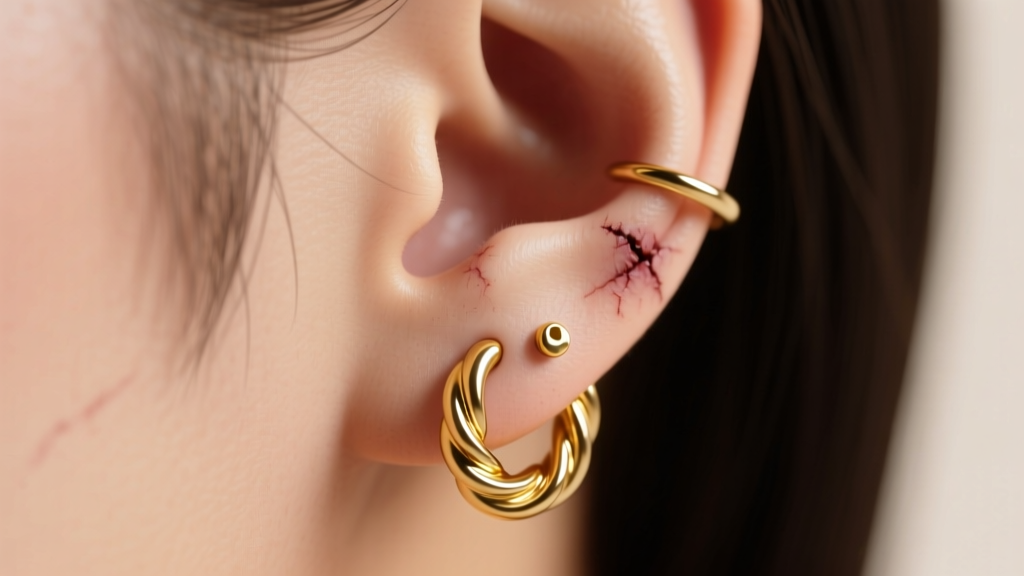
Styling Frameworks: Face Shapes and Texture
The optical illusion created by a twisted gold earring hoop is a powerful styling tool. The ridges catch ambient light from multiple angles, creating a halo effect that can subtly alter the perceived geometry of your face.
Round and Heart-Shaped Faces
To elongate the face, avoid wide, chunky twisted huggies that add horizontal volume. Instead, opt for a 15mm to 20mm elongated drop hoop with a delicate flat twist. The vertical lines of the elongated hoop, combined with the downward visual pull of the texture, will beautifully balance a wider forehead or fuller cheeks.
Square and Angular Faces
Angular jawlines benefit from the softening effect of circular geometry. A classic 12mm rope twist hoop in 14k yellow gold introduces organic, winding curves that contrast perfectly with sharp bone structure. The vintage, tactile nature of the rope twist adds a romantic softness to the overall aesthetic.
Oval Faces
Oval face shapes possess natural symmetry and can carry off virtually any proportion. Experiment with asymmetrical stacking: pair a thick 10mm barleycorn twist in the primary lobe with a minimalist 6mm smooth huggie in the upper lobe to create a curated, textural gradient.
The Ultimate Cleaning Routine for Textured Gold
The most significant drawback of a twisted gold earring hoop is its ability to trap sebum, dead skin cells, hard water minerals, and hair products within its grooves. If left uncleaned, this buildup will oxidize, dulling the gold and potentially causing contact dermatitis.
Step-by-Step Manual Cleaning Protocol
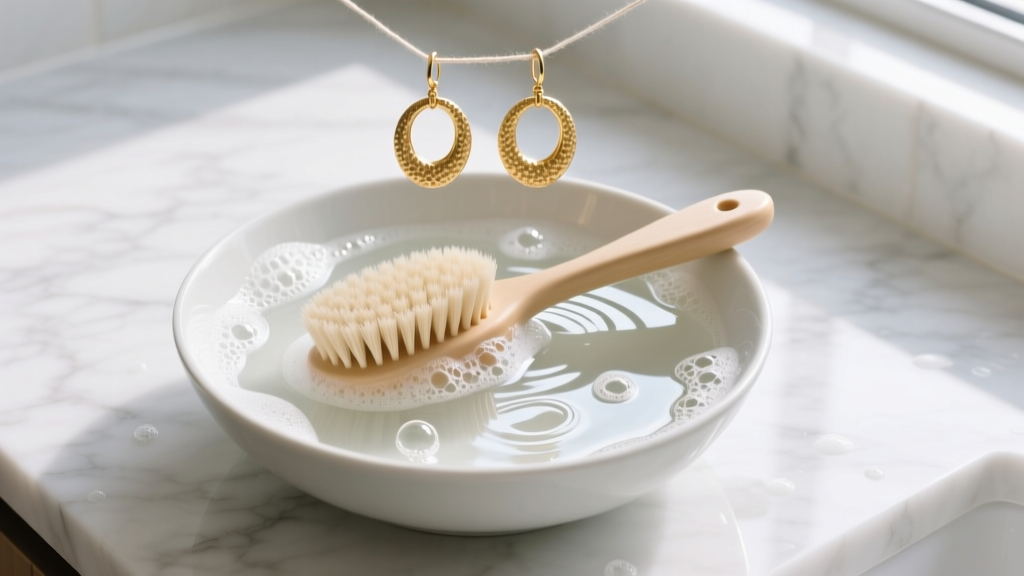
- Prepare the Solution: Fill a small ceramic bowl with warm (not hot) water and add three drops of a mild, phosphate-free dish soap (such as original Dawn). Avoid harsh chemical jewelry dips, which can strip the natural luster of the alloy metals.
- Soak: Submerge the hoops for exactly 5 to 7 minutes. This loosens the lipid bonds of trapped sebum without compromising the metal.
- Agitate the Crevices: Using a soft-bristled baby toothbrush (adult toothbrushes are too abrasive and can cause micro-scratches on 18k gold), gently brush along the direction of the twist. Do not scrub against the grain, as this can bend delicate wire wraps.
- Rinse and Dry: Rinse under lukewarm distilled water to prevent hard water spots. Pat dry with a lint-free microfiber cloth, ensuring no fibers are left snagged in the grooves.
What to Avoid
Never use ultrasonic cleaners on twisted hoops that feature tension-set gemstones or oxidized black-gold accents. The high-frequency vibrations can easily dislodge stones or strip deliberate patinas from the deep grooves of the twist.
Troubleshooting Common Twisted Hoop Issues
Even with perfect sizing and premium materials, textured hoops can present minor functional annoyances. Here is how to troubleshoot them like a professional jeweler:
- Issue: Snagging on Knits and Hair.
Solution: If your rope twist constantly catches on your hair, switch to a 'barleycorn' or 'flat twist' design. These patterns offer the visual depth of a twist but feature smoother, flush transitions that slide past hair strands without friction. - Issue: Hinge Clasp Feels Loose.
Solution: Textured hoops are heavier than smooth wire hoops, putting extra stress on the hinge pin. Never attempt to bend the wire or squeeze the clasp with pliers, as this will warp the twist pattern. Take the piece to a bench jeweler to have the internal pin gently peened and tightened. - Issue: Skin Discoloration Behind the Ear.
Solution: Green or black marks behind the earlobe are rarely an allergy to gold; they are a reaction to trapped copper alloys reacting with acidic sweat and trapped soap. Increase your cleaning frequency and ensure the back of the earlobe is thoroughly dried after showering.
Final Thoughts on Curating Texture
A twisted gold earring hoop is more than just an accessory; it is a tactile piece of wearable architecture. By prioritizing 14k solid gold for durability, matching the inner diameter precisely to your piercing anatomy, and committing to a gentle but thorough cleaning routine, you ensure that your textured hoops remain a brilliant, light-catching staple in your jewelry rotation for decades to come.


