2 Inch Diamond Hoop Earrings: Material & Weight Guide
Discover the best metals and stones for 2 inch diamond hoop earrings. Compare weight, durability, clasp types, and pricing for large statement hoops.

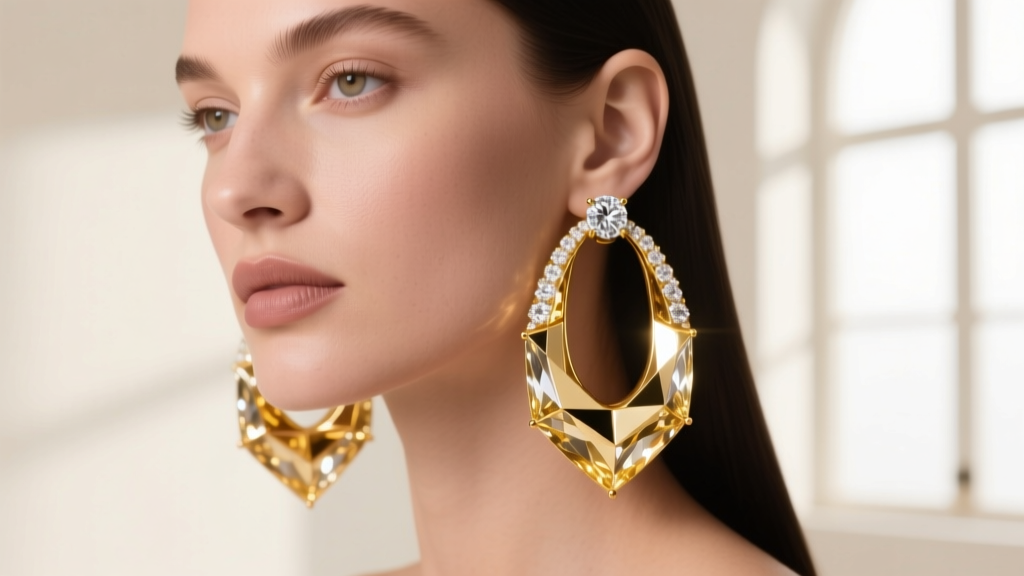
The Engineering Challenge of the 50mm Hoop
When it comes to statement jewelry, few pieces command attention quite like 2 inch diamond hoop earrings. Measuring approximately 50 millimeters in diameter, these large-format hoops offer a dramatic, face-framing silhouette that bridges the gap between everyday elegance and red-carpet glamour. However, designing and wearing a hoop of this magnitude introduces significant structural and anatomical challenges. As we evaluate the fine jewelry landscape in 2026, the focus has shifted heavily toward the intersection of metallurgy, gemology, and ergonomic design.
The primary adversary of a 2-inch hoop is physics. The 'moment arm' effect means that the further the mass of the earring sits from the piercing, the more torque is applied to the earlobe. A poorly engineered 50mm hoop will drag, stretch the piercing, and eventually cause the metal to warp or the clasp to fail. To combat this, jewelers must carefully balance material density, wire gauge thickness, and stone distribution. In this comprehensive guide, we break down the exact material properties, setting architectures, and clasp mechanisms required to make 2 inch diamond hoop earrings both beautiful and structurally sound.
Metal Alloys: Tensile Strength vs. Lobe Drag
The choice of metal dictates not only the color and prestige of the earring but also its weight and structural memory. For a 50mm hoop, the metal must possess high tensile strength to resist bending when caught on clothing, yet remain light enough to preserve the health of your earlobe.
Platinum: The Heavyweight Champion
Platinum (typically 95% pure, alloyed with ruthenium or iridium) is the most durable precious metal used in fine jewelry. It is highly resistant to tarnish and develops a desirable patina over time. However, platinum is exceptionally dense. A solid 2-inch platinum hoop can weigh upwards of 22 grams per earring, which is far too heavy for a standard lobe piercing to support long-term without stretching. If you desire platinum for its hypoallergenic properties and bright white luster, you must opt for a 'hollow-core' or tubular construction, which reduces the weight by up to 40% while maintaining the outer dimensions.
18k Gold: The Luxury Standard
Comprising 75% pure gold, 18k gold offers a rich, saturated color that is highly prized in luxury markets. However, pure gold is soft, and even when alloyed with copper, silver, or zinc, 18k gold lacks the rigid 'spring-back' memory required for large hoops. A 2-inch hoop in solid 18k gold will slowly ovalize over time if not stored properly. To mitigate this, high-end jewelers use a thicker wire gauge—typically 14-gauge (1.6mm) or 12-gauge (2.0mm)—to provide the necessary rigidity.
14k Gold: The Pragmatic Powerhouse
For 2 inch diamond hoop earrings, 14k gold (58.5% pure gold) is often the superior engineering choice. The higher proportion of alloy metals (like nickel, copper, and zinc) significantly increases the tensile strength and hardness of the metal. This allows jewelers to use a slightly thinner, lighter wire (such as 16-gauge) without sacrificing structural integrity, resulting in a hoop that is kinder to the earlobe while resisting deformation.
| Metal Type | Density (g/cm³) | Tensile Strength | Recommended Gauge for 50mm | Lobe Impact |
|---|---|---|---|---|
| 950 Platinum | 21.45 | Very High | 12G (Tubular/Hollow) | High (Heavy) |
| 18k Yellow Gold | 15.58 | Moderate | 14G (1.6mm) | Moderate |
| 14k White Gold | 13.86 | High | 16G (1.2mm) or 14G | Low to Moderate |
| Titanium (Grade 5) | 4.43 | Extreme | 16G (1.2mm) | Very Low (Featherlight) |
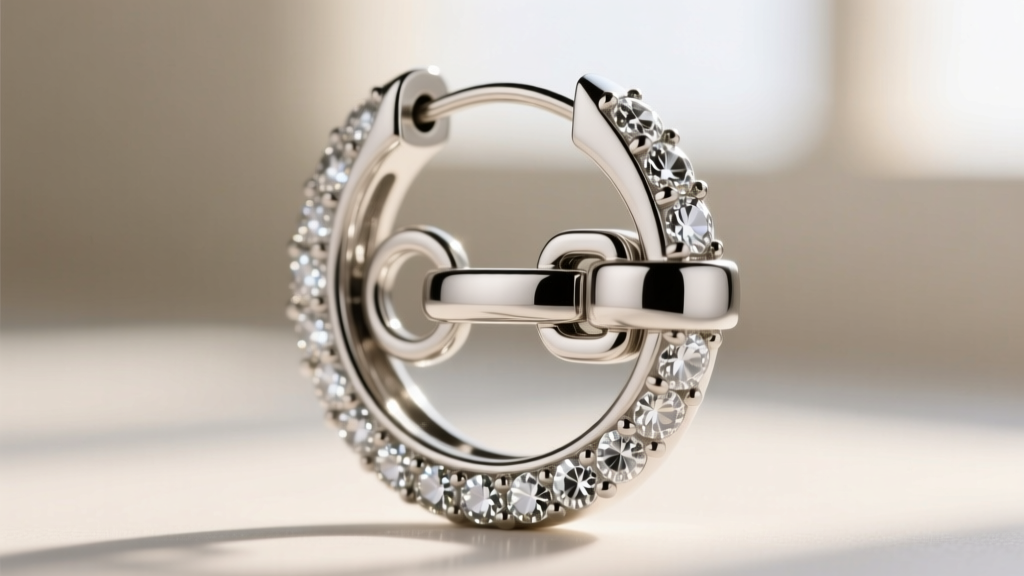
Diamond Selection and Setting Architecture
The stones themselves contribute to the overall weight and structural demands of the earring. In 2026, the market for large-format diamond hoops is heavily influenced by the stabilization of the lab-grown diamond sector, allowing consumers to achieve higher carat weights without the exponential price premiums of natural stones.
Natural vs. Lab-Grown Diamonds
According to the Gemological Institute of America (GIA), lab-grown diamonds possess the exact same chemical, physical, and optical properties as their mined counterparts. For a 2-inch hoop, which typically requires between 3.00 and 6.00 carats total weight (ctw) to achieve full coverage, choosing lab-grown diamonds can reduce the stone cost by 70% to 85%. This allows buyers to reallocate their budget toward superior metal craftsmanship and advanced clasp mechanisms. The Bain & Company Global Diamond Report notes that lab-grown diamonds have become the dominant choice for fashion-forward, high-carat statement pieces where size and sparkle are prioritized over geological rarity.
Pave vs. Channel Settings: A Structural Showdown
How the diamonds are secured to the metal is critical for a 50mm hoop. The flexing and micro-bending that occurs when putting on or taking off a large hoop can wreak havoc on delicate settings.
- Micro-Pave Settings: While pave offers maximum brilliance by exposing more of the diamond, the tiny prongs used in micro-pave are highly susceptible to catching on hair and clothing. On a 2-inch hoop, the leverage applied to the metal can cause the prongs to lift, leading to catastrophic stone loss. If you choose pave, ensure the jeweler uses a 'bright cut' or 'bead' setting with reinforced shoulders.
- Channel Settings: For large hoops, channel setting is the undisputed king of durability. The diamonds are suspended between two solid walls of metal, protecting their girdles from impact and completely eliminating the risk of prong snagging. The continuous metal walls also act as an I-beam, adding significant lateral rigidity to the hoop and preventing it from bending out of its perfect circular shape.
- Bezel Settings: Individual bezels offer excellent security and a modern, architectural look, but they require more metal, which adds weight. This is best utilized in 14k gold or titanium to offset the mass.
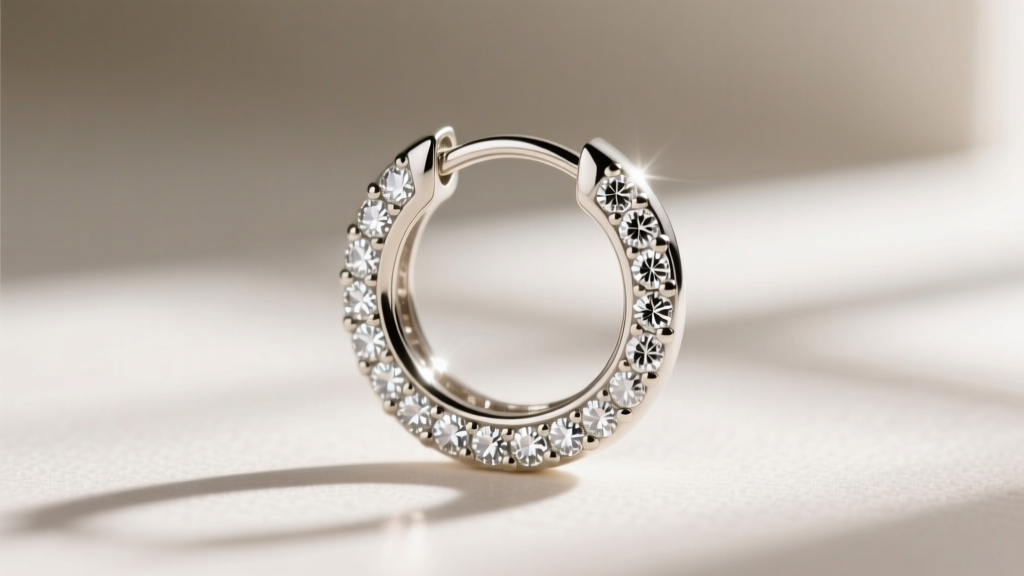
Clasp Mechanisms: Preventing the Dreaded Drop
The most common failure point on any hoop earring is the clasp. On a 2-inch hoop, the weight of the earring creates a pendulum effect that can easily shake a weak clasp open. Standard hinged snap clasps or simple friction posts are entirely inadequate for 50mm hoops.
The Saddle Clasp
The saddle clasp (often seen on high-end Cartier or Tiffany designs) features a hinged, U-shaped wire that snaps securely into a recessed groove on the opposite side of the hoop. The tension of the metal wire against the groove creates a lock that requires deliberate, two-handed pressure to open. This is the gold standard for heavy, large-diameter hoops.
The Locking Clicker
Borrowed from body jewelry, the locking clicker utilizes a internal spring-loaded mechanism that audibly 'clicks' into a machined notch. When crafted in 14k or 18k gold, a precision-milled clicker hinge offers unparalleled security. The post itself should be at least 14-gauge to prevent shearing under the dynamic load of a swinging 2-inch hoop.
Omega Backs with Hinged Hoops
Some 2-inch hoops are designed as 'inside-out' or front-facing hoops that utilize an Omega clip back for added support. While Omega backs distribute the weight across the back of the earlobe rather than just the piercing hole, they can cause discomfort if the tension is too tight, and they are generally better suited for shorter, wider earlobes.
Pricing Tiers and Value Retention in 2026
Understanding the pricing architecture of 2 inch diamond hoop earrings requires separating the intrinsic material value from the brand premium and labor costs. Large hoops require specialized mandrel casting and meticulous stone-setting hours.
- Entry-Level (Lab-Grown, 14k Gold, 2.5 ctw): $1,800 – $3,200. These typically feature commercial-grade lab diamonds in standard channel or bead settings. Excellent for everyday wear and trend-driven styling.
- Mid-Tier (Lab-Grown, 18k Gold, 4.0 ctw): $4,500 – $7,500. Expect premium VVS/VS clarity lab stones, precision channel settings, and heavy-duty saddle clasps. This is the sweet spot for luxury feel without natural diamond premiums.
- High-End (Natural, 18k/Platinum, 5.0+ ctw): $15,000 – $35,000+. Reserved for investment-grade natural diamonds with exceptional cut quality. These pieces hold intrinsic commodity value but carry a massive initial retail markup.
Final Verdict: Building Your Perfect Pair
Purchasing 2 inch diamond hoop earrings is an exercise in balancing aesthetic desires with physical limitations. If your priority is a lightweight, durable piece for daily wear, a 14k white gold hoop with a channel setting and a 14-gauge locking clicker is an unbeatable combination of engineering and style. If you prefer the prestige and warm hue of 18k yellow gold, be prepared to invest in a saddle clasp and commit to proper storage to maintain the hoop's geometry. By prioritizing structural integrity, appropriate gauge thickness, and secure setting architectures, you ensure that your statement hoops remain a secure, dazzling fixture in your wardrobe for decades to come.


