Top Types of Earrings Styles: 2026 Buyer's Guide
Discover the top types of earrings styles in our 2026 buying guide. Learn about materials, gauge sizes, and face-shape pairings for the perfect fit.

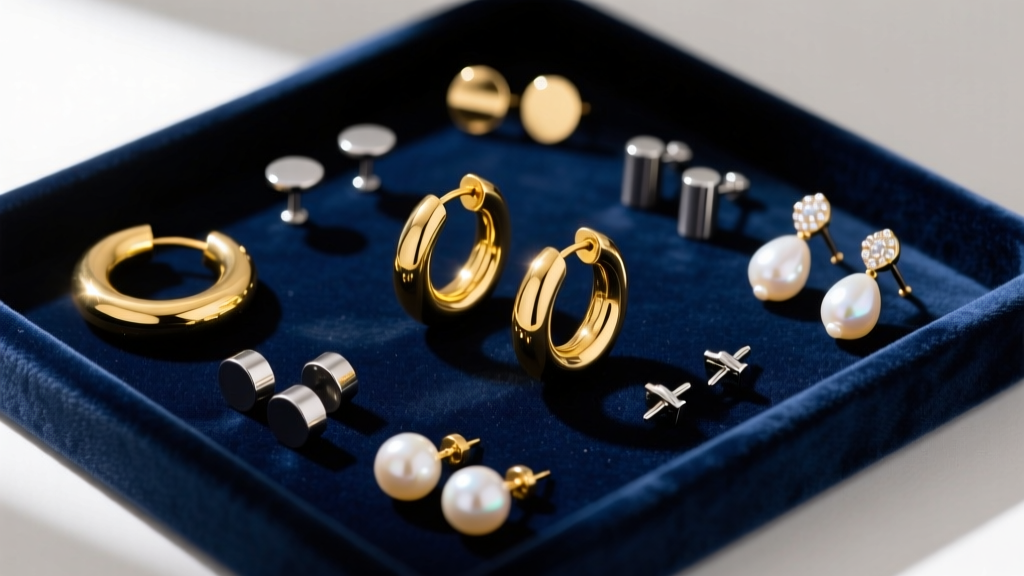
The Anatomy of Modern Earring Styles
When navigating the vast landscape of fine jewelry and body modification, understanding the specific types of earrings styles is the first step toward building a curated, comfortable, and aesthetically pleasing ear stack. In 2026, the distinction between traditional commercial jewelry and specialized anatomical body jewelry has beautifully blurred. We are seeing a massive surge in hybrid designs that prioritize both high-fashion aesthetics and long-term tissue health.
Before making a purchase, it is crucial to look beyond the surface design and examine the structural anatomy of the earring. For instance, the mechanism that holds the earring in place dictates both its security and its impact on your piercing channel. Threadless push-pin ends and internally threaded posts have largely replaced externally threaded jewelry, which is notorious for tearing the delicate fistula (the skin tube inside the piercing) during insertion.
Pro Tip: If you are buying studs for a fresh or healing piercing, always opt for flat-back labret posts over traditional butterfly backs. Butterfly backs trap moisture and bacteria, leading to irritation bumps and delayed healing.
Material Grades: The Hypoallergenic Hierarchy
The most critical factor when evaluating any of the types of earrings styles on the market is the base material. According to the Association of Professional Piercers (APP), material biocompatibility is non-negotiable for long-term wear. Here is what you need to look for in 2026:
Implant-Grade Titanium (ASTM F136)
This is the gold standard for sensitive ears and fresh piercings. Unlike commercial 'surgical steel' (which often contains up to 10% nickel), ASTM F136 titanium is entirely nickel-free and highly biocompatible. It is lightweight, reducing the gravitational pull on stretched earlobes, and can be anodized to produce vibrant colors without using toxic paints or platings.
Niobium
Often used in seamless hoops and clickers, niobium is a highly reactive metal that is naturally hypoallergenic. It is softer than titanium, making it easier for jewelers to craft seamless continuous rings that won't snag on hair or clothing.
Solid Gold (14k and 18k)
While gold is a classic choice, the alloy mixture matters immensely. The Gemological Institute of America (GIA) notes that 14k and 18k yellow and rose gold are generally safe for sensitive skin. However, buyers should be highly cautious of white gold, which is frequently alloyed with nickel to achieve its silvery color. If you prefer white metals, seek out palladium-alloyed white gold or stick to platinum.
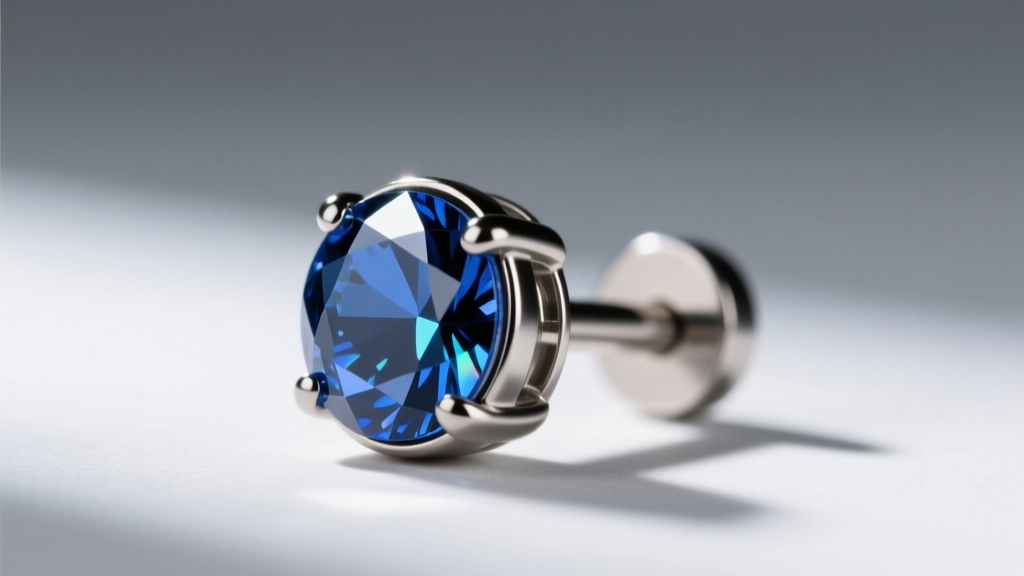
Gauge Sizes and Post Thickness: A Technical Breakdown
Wearing the incorrect gauge size can lead to the dreaded 'cheese cutter effect,' where a post that is too thin slowly migrates through the tissue, eventually slicing through the cartilage or lobe. When shopping for different types of earrings styles, match the gauge to your specific piercing placement.
| Gauge (G) | Thickness (mm) | Standard Placement | Style Recommendations |
|---|---|---|---|
| 20G | 0.81mm | Standard Commercial Lobe | Lightweight threadless studs, thin wire huggies |
| 18G | 1.00mm | Professional Lobe, Helix | Standard clicker hoops, medium drop earrings |
| 16G | 1.20mm | Cartilage, Tragus, Conch | Flat back labrets, chunky huggies, ear cuffs |
| 14G | 1.60mm | Industrial, Snug, Daith | Seamless rings, heavy statement dangles |
Matching Types of Earrings Styles to Face Shapes
Beyond anatomy and materials, the visual geometry of your earrings should complement your facial structure. Here is a practical decision framework for pairing silhouettes with face shapes:
Angular and Square Faces
If you have a strong, angular jawline, the goal is to soften those features. Avoid sharp, geometric shapes like square studs or triangular drops, which will only accentuate the harsh lines of your face. Instead, look for types of earrings styles that feature curves: medium-sized hoop earrings, rounded huggies, and teardrop-shaped dangles are your best allies.
Round and Oval Faces
Round faces benefit from elongation and structure. Rectangular drop earrings, angular geometric studs, and long, linear dangles will draw the eye downward, creating the illusion of a longer, more sculpted face. Oval faces are the most versatile and can pull off almost any style, from massive chandelier earrings to minimalist diamond studs.
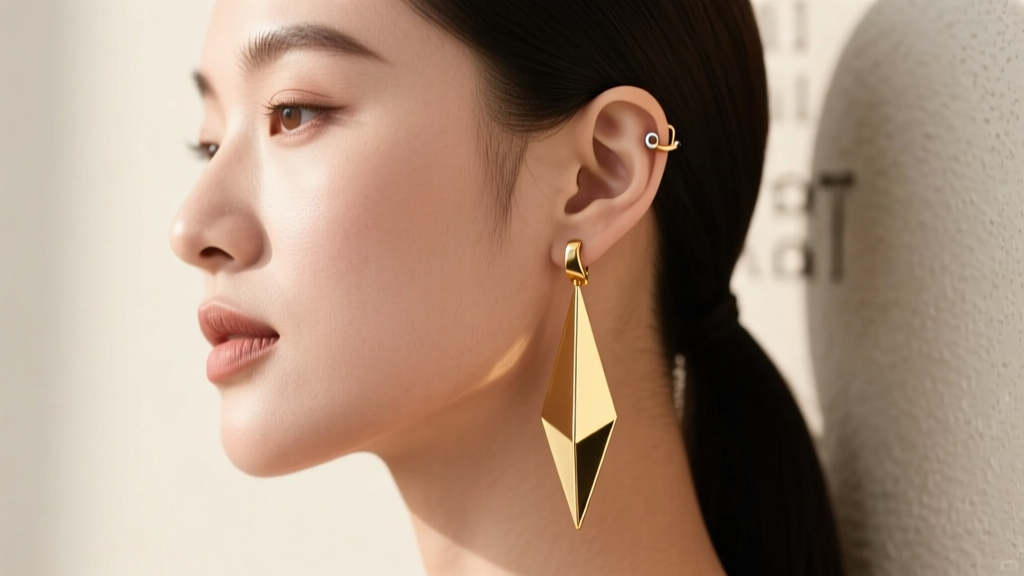
Heart-Shaped Faces
Heart-shaped faces feature a wider forehead and a narrow, pointed chin. To balance this proportion, choose earrings that add visual weight to the lower half of the face. Chandelier earrings, wide teardrops, and bottom-heavy cluster studs work exceptionally well to create visual harmony.
Cartilage vs. Lobe: Structural Considerations
The tissue composition of your ear dictates which types of earrings styles will be comfortable for all-day wear. Earlobes are composed of soft, vascular tissue that heals quickly and can support significant weight. This makes the lobe the ideal canvas for heavy drop earrings, large statement hoops, and multi-piece ear stacks.
Cartilage, on the other hand, is dense, avascular connective tissue. It takes significantly longer to heal (often 6 to 12 months) and is highly prone to irritation bumps if subjected to pressure or friction. For cartilage piercings like the helix, tragus, or conch, avoid heavy dangles or tight, rigid hoops that press against the skin. Opt instead for lightweight flat-back studs or appropriately sized clicker rings that allow for natural swelling and movement. The American Academy of Dermatology (AAD) frequently warns against sleeping on cartilage piercings with rigid jewelry, as the sustained pressure can cause permanent migration or scarring.
2026 Pricing Tiers: What to Expect
When investing in your ear stack, understanding the pricing landscape helps you avoid overpaying for plated metals or underestimating the cost of fine jewelry.
- Demi-Fine & Vermeil ($30 - $80): Gold-plated brass or sterling silver. Great for occasional wear, but the plating will eventually wear off, potentially exposing the skin to reactive base metals.
- Solid 14k Gold & Titanium ($120 - $350): The sweet spot for everyday wear. You are paying for the raw material and the precision machining of threadless or internally threaded ends.
- Fine Jewelry & High-End Custom ($500 - $2,000+): Features platinum or 18k gold set with ethically sourced, GIA-certified diamonds or precious gemstones. These are heirloom-quality pieces meant for permanent or semi-permanent wear.
Final Verdict: Building a Curated Ear Stack
Mastering the different types of earrings styles is about balancing aesthetic vision with anatomical reality. By prioritizing implant-grade materials, respecting gauge sizing, and choosing silhouettes that flatter your unique face shape, you can build an ear stack that is as healthy as it is stunning. Whether you are curating a minimalist lobe setup or a maximalist cartilage constellation, always let the quality of the craftsmanship guide your purchase.


