Vera Wang Earrings: Technical Guide to Bridal Metals & Settings
An expert technical breakdown of Vera Wang earrings, covering metal alloys, plating thickness, post gauges, and gemstone settings for bridal wear.

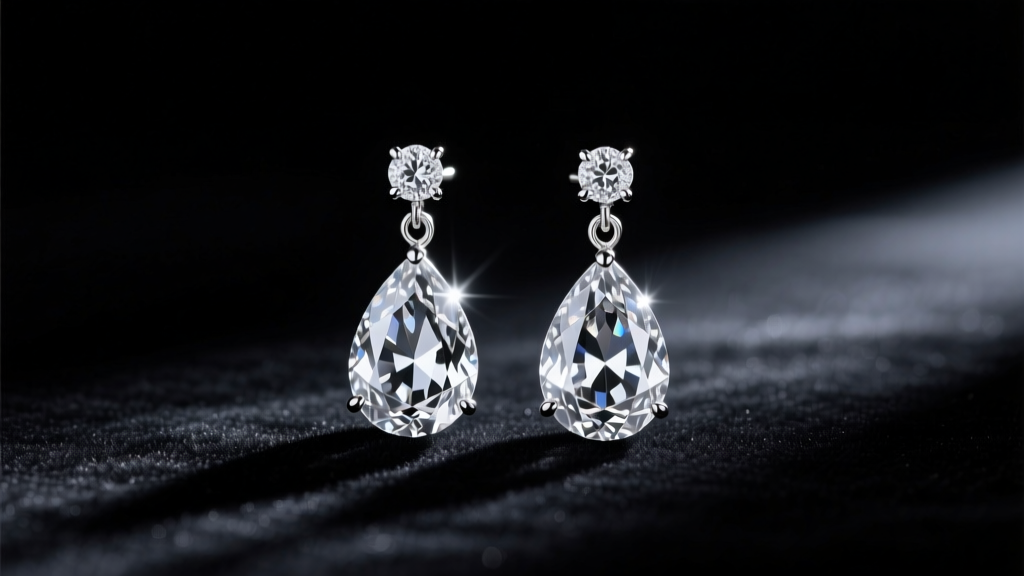
When evaluating luxury and bridal jewelry, the name Vera Wang immediately evokes images of avant-garde silhouettes and meticulous craftsmanship. However, while the textile and structural engineering of her gowns are widely documented, the metallurgical and gemological specifications of Vera Wang earrings require a much deeper technical analysis. As we navigate the 2026 bridal season, architectural hairstyles and exposed ear styling have pushed bridal earrings from subtle accents to focal points of structural importance. Understanding the precise material grades, weight distribution mechanics, and gemstone simulants used across her various collections is critical for both jewelers and brides seeking longevity, comfort, and aesthetic perfection on the wedding day.
Metallurgy and Plating Specs Across Collections
The Vera Wang brand umbrella encompasses distinct jewelry tiers, primarily divided into fine bridal collections (often retailed through major chains like Zales or Kay) and fashion/diffusion lines. The metallurgical reality of these tiers differs vastly in base alloys and surface treatments.
Fine Bridal Lines: White Gold Alloys
In her fine jewelry collections, white gold is the predominant metal. Technically, 14k white gold consists of 58.5% pure gold alloyed with metals like nickel, palladium, or silver to achieve a white hue. Because the natural color of white gold alloys often retains a faint yellowish or grayish tint, these earrings are universally plated with rhodium. A high-quality rhodium flash for bridal earrings should measure between 0.75 and 1.0 microns. Thinner plating (under 0.25 microns) will degrade rapidly when exposed to the acidic pH of human skin and the friction of bridal veils.
Fashion and Diffusion Lines: Base Metals and Vermeil
For non-fine fashion earrings, the base metals typically shift to brass (a copper-zinc alloy) or zinc alloys. The critical technical specification to look for here is the plating thickness. According to the FTC Jewelry Guides, the term "vermeil" strictly requires a sterling silver base plated with a minimum of 2.5 microns of 10k or higher gold. Many diffusion-line earrings utilize "flash plating" (often less than 0.1 microns), which provides an initial high-luster finish but is highly susceptible to micro-abrasions and rapid oxidation, leading to the dreaded "green skin" reaction caused by copper oxidation in the brass base.
Structural Engineering: Gauge, Weight, and Drop Dynamics
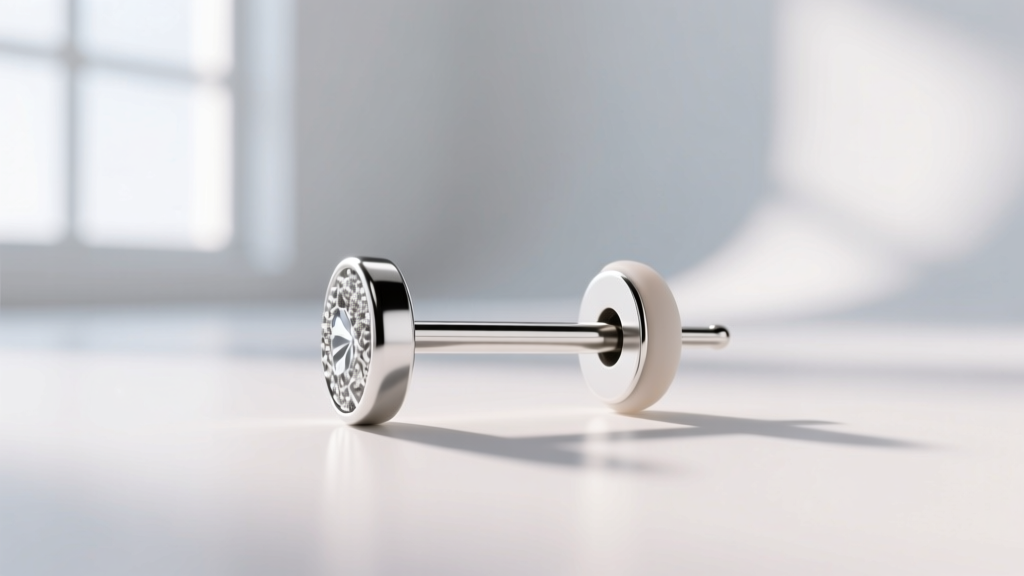
Bridal chandelier and dramatic drop earrings present a unique biomechanical challenge: the human earlobe is not structurally designed to support heavy, pendulous metallic loads over an 8-to-12-hour wear period. The standard lobe piercing is executed at 20-gauge (0.81mm) or 18-gauge (1.02mm). When a Vera Wang drop earring exceeds 12 grams, a standard 20-gauge post and a basic butterfly clutch will inevitably fail, resulting in the earring tilting forward, stretching the piercing fistula, or detaching entirely.
To counteract this, expertly engineered heavy drops utilize specific structural adaptations:
- Thicker Posts: Upgrading the post to an 18-gauge (1.02mm) or even 16-gauge (1.29mm) wire increases the sheer strength of the metal, preventing the post from bending under the pendulum effect of a dancing bride.
- Friction Surface Area: Replacing standard metal butterfly clutches with jumbo silicone friction backs or specialized omega-backs distributes the clamping pressure over a wider surface area of the earlobe, preventing localized ischemia (restricted blood flow) and drooping.
- Hollow Construction: High-end voluminous designs often employ electroforming or hollow-cast techniques to reduce the overall gram weight without sacrificing the visual footprint of the earring.
Weight-to-Gauge Recommendation Matrix
| Earring Style / Weight Class | Minimum Post Gauge | Recommended Backing Mechanism | Max Continuous Wear Time |
|---|---|---|---|
| Studs & Huggies (< 4g) | 20G (0.81mm) | Standard Metal Butterfly Clutch | Unlimited |
| Medium Drops (4g - 10g) | 20G (0.81mm) | Silicone Friction Back / La Pousette | 8-10 Hours |
| Heavy Chandeliers (10g - 18g) | 18G (1.02mm) | Jumbo Silicone Disc + Clutch | 6-8 Hours |
| Statement Ear Cuffs / Climbers | N/A (Wire wrapped) | Adjustable Tension Cuff + Post | 4-6 Hours |
Gemology: Simulants, Crystals, and Genuine Stones
The optical performance of Vera Wang earrings relies heavily on the precise selection and cutting of gemstones and simulants. Understanding the refractive index (RI) and Mohs hardness of these materials is essential for evaluating their long-term brilliance and scratch resistance.
Cubic Zirconia (CZ) vs. Precision Crystal
In the fashion and diffusion lines, the primary diamond simulants are Cubic Zirconia and precision-cut lead-free crystals (such as Preciosa). CZ possesses a Mohs hardness of 8.0 to 8.5, making it highly resistant to scratching, but it has a high specific gravity (5.6-6.0), which adds significant weight to large chandelier designs. Furthermore, CZ is oleophilic (oil-attracting); it will rapidly accumulate skin oils and cosmetics, dulling its fire. Precision-cut crystals, while lighter, typically have a lower Mohs hardness (around 6.0-7.0) and are more prone to micro-abrasions at the facet junctions if stored improperly. According to the Gemological Institute of America (GIA), the optical dispersion of CZ (0.058-0.066) actually exceeds that of a natural diamond (0.044), giving CZ its characteristic, albeit sometimes overly colorful, "fire."
Natural Diamonds in Fine Bridal Lines
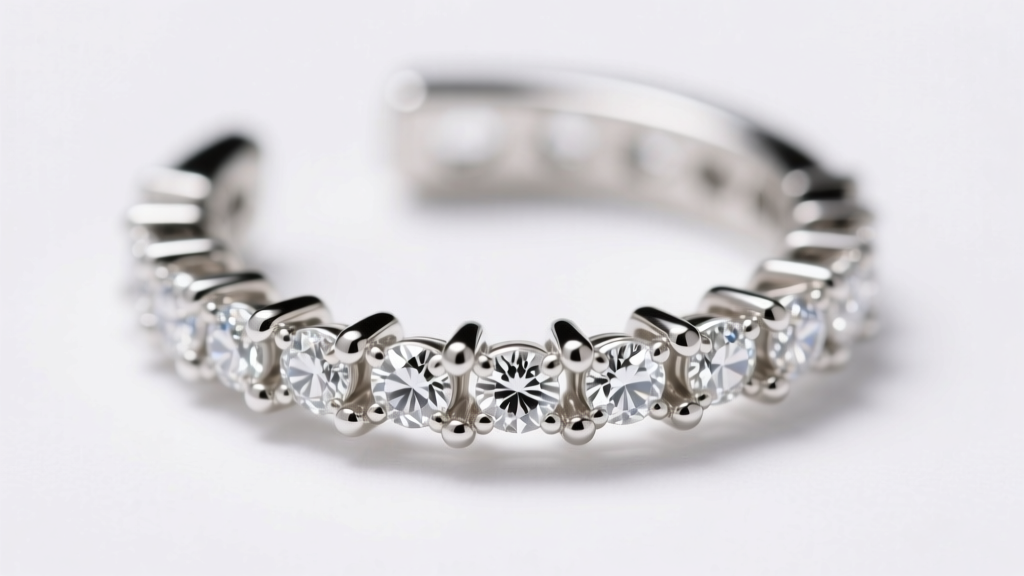
For the fine jewelry collections, natural diamonds are the standard. These are typically graded in the G-H color range with I1-I2 clarity. While I-clarity diamonds contain visible inclusions under 10x magnification, the micro-pave and cluster settings commonly used in Vera Wang's fine bridal earrings scatter light in a way that masks these imperfections to the naked eye. The critical technical concern here is the setting integrity. Micro-pave settings rely on minuscule metal beads to hold 1.0mm to 1.5mm stones; if the rhodium plating wears thin, the underlying softer gold alloy can expose these prongs to snagging on delicate bridal tulle or lace.
Maintenance, Failure Modes, and Troubleshooting
Even the most meticulously engineered earrings will suffer from environmental degradation if not properly maintained. Below is a technical troubleshooting guide for common failure modes associated with bridal and evening drop earrings.
Expert Warning: Never use ultrasonic cleaners on earrings featuring fracture-filled diamonds, glued-in simulants, or pearl accents. The high-frequency acoustic cavitation will shatter the adhesive bonds and dislodge the stones instantly.
Troubleshooting Rhodium Degradation
If your white gold or sterling silver earrings begin to show a yellowish or grayish cast at the high-friction contact points (such as the post and the back of the gallery), the rhodium plating has worn through to the base alloy. Action: Cease wearing the earrings to prevent skin irritation from nickel or copper exposure. Take them to a bench jeweler for a professional polish and a re-plate of at least 0.75 microns of rhodium.
Prong Snagging and Stone Loss
Bridal environments are hazardous for micro-pave settings due to the prevalence of fine netting, lace, and silk. If a prong is pulled upward, it will no longer exert downward pressure on the gemstone's girdle. Action: Perform a "floss test" by gently dragging a piece of un-waxed dental floss across the surface of the stones. If the floss catches, a prong is lifted. Have a jeweler re-tip or burnish the prong down before the next wear to prevent catastrophic stone loss.
Post Bending and Metal Fatigue
If an earring post bends repeatedly, it undergoes work hardening, eventually leading to metal fatigue and snapping. If you have a heavy earring with a thin 20-gauge post that frequently bends, do not simply bend it back into place. Action: Have a jeweler laser-weld a thicker 18-gauge sterling silver or white gold post to the base plate to permanently resolve the structural deficiency.
Final Considerations for the 2026 Bride
Selecting the perfect pair of Vera Wang earrings requires looking past the initial visual impact and evaluating the structural and metallurgical realities of the piece. By verifying the plating thickness, ensuring the post gauge matches the gram weight of the drop, and understanding the specific gemological properties of the stones or simulants used, you can guarantee that your bridal jewelry will perform flawlessly from the first look to the final dance. True luxury in jewelry is not just about the brand name; it is about the uncompromising engineering that supports the art.


