The Pearl Earring Johannes Vermeer Look: A Drop Buyer's Guide
Discover how to buy the perfect drop for the iconic pearl earring Johannes Vermeer look. Compare glass, freshwater, and South Sea options.

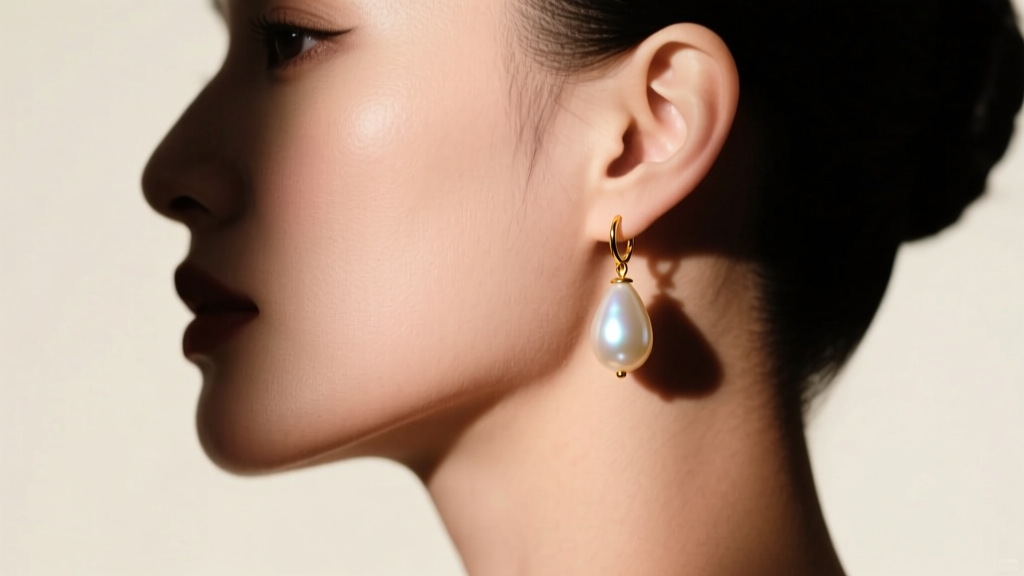
Johannes Vermeer’s 1665 masterpiece, Girl with a Pearl Earring, remains one of the most captivating portraits in art history. Often referred to as the 'Mona Lisa of the North,' the painting draws the viewer’s eye immediately to the luminous, oversized drop earring catching the light. For jewelry enthusiasts and art lovers alike, replicating this specific aesthetic is a unique challenge. The iconic pearl earring Johannes Vermeer painted is not just a piece of jewelry; it is a study in light, weight, and 17th-century fashion.
However, buying a modern equivalent requires navigating a complex market of pearl types, sizing constraints, and earlobe health considerations. This comprehensive buying guide will help you source, size, and safely wear a Vermeer-inspired drop earring in 2026, whether you are seeking historical accuracy or organic luxury.
The Mystery of the Vermeer Pearl: Glass or Nacre?
Before purchasing, it is vital to understand what you are actually trying to replicate. Art historians and gemologists have long debated the true nature of the earring in the painting. Based on the sharp, mirror-like specular highlight (the 'catchlight') Vermeer painted on the surface, experts at the Mauritshuis museum suggest the earring was likely not a natural pearl at all.
A natural or cultured pearl of that magnitude would have a softer, more diffuse luster. The sharp reflection indicates a highly polished, non-porous surface—most likely a drop-shaped glass bead, possibly backed with foil or coated in a lacquer to simulate nacre. In the 17th century, glass imitation pearls were highly prized and incredibly expensive, often worn by the wealthy when natural pearls of such extreme sizes were simply unavailable. Therefore, if you want historical accuracy, a high-quality glass or crystal pearl is actually the most authentic choice.
Sizing and Proportions: Capturing the 17th-Century Scale
The most striking aspect of the Vermeer earring is its sheer scale. By comparing the earring to the proportions of the model's head and facial features, gemologists estimate the drop to be between 20mm and 25mm in length. To put this in perspective, a standard, elegant freshwater pearl stud is usually 7mm to 8mm. A 20mm+ drop is a massive, statement-making piece of jewelry that will physically pull on the earlobe.
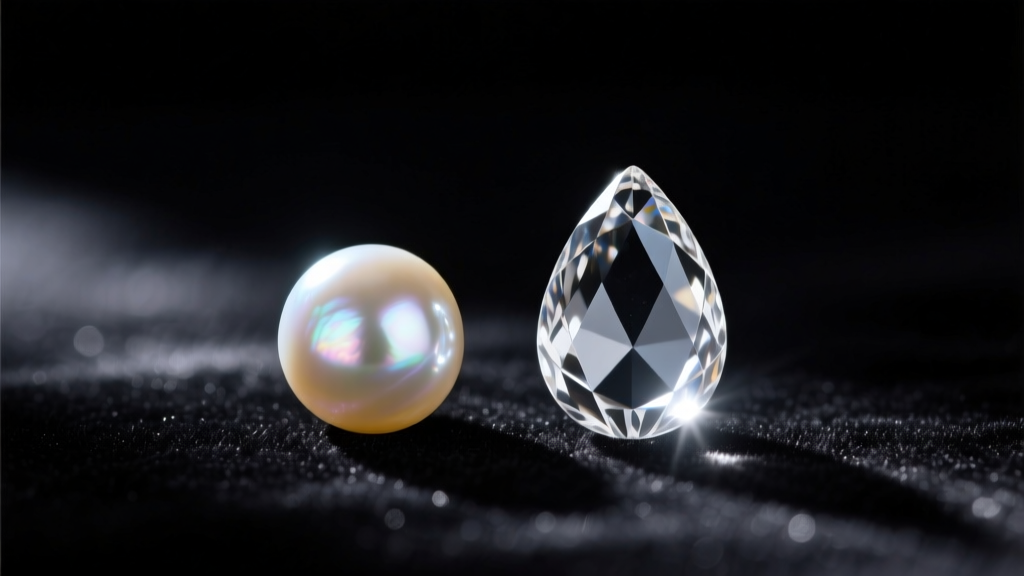
When shopping, you must decide whether you want the dramatic, exaggerated 22mm scale seen in the painting, or a more modernized, wearable 14mm to 16mm interpretation. Keep in mind that as organic pearls increase past 14mm, their price scales exponentially, whereas glass and crystal alternatives remain affordable at any size.
Material Breakdown: Choosing Your Drop
According to the Gemological Institute of America (GIA), pearls are evaluated on size, shape, color, luster, surface quality, and nacre thickness. For a teardrop or pear-shaped drop earring, the shape and luster are your primary concerns. Here is how the three main material categories stack up for this specific look.
1. Faux Glass and Crystal (The Historically Accurate Route)
To achieve the sharp, mirror-like catchlight seen in the painting, crystal pearls are your best option. Brands like Swarovski (now distributed under different luxury lines post-2020 restructuring) and Majorica offer exceptional glass-core pearls. Majorica pearls are created by coating glass beads with essence d'orient (a mixture of guanine crystals extracted from fish scales and lacquer), resulting in a heavy, highly reflective drop that mimics the Vermeer catchlight perfectly. Price Range: $60 – $250.
2. Freshwater Cultured Pearls (The Accessible Organic Option)
If you prefer a genuine organic gemstone, freshwater pearls are the most accessible. Modern nucleation techniques in China produce stunning pear-shaped freshwater pearls with excellent luster. However, finding a matched pair (if you are buying two) or a single flawless drop over 14mm is difficult. Freshwater pearls have a softer, 'satiny' luster compared to glass, which will give your earring a more romantic, diffuse glow rather than a sharp reflection. Price Range: $150 – $800 (for 12mm-15mm).
3. South Sea and Tahitian Pearls (The Luxury Investment)
White South Sea pearls naturally grow to massive sizes (14mm to 20mm+). A 20mm pear-shaped White South Sea pearl with high luster is an ultra-rare collector's item. While it will provide the size Vermeer painted, the price is astronomical, and the luster will still be organic rather than glass-like. Price Range: $3,000 – $15,000+.
| Material | Typical Size Range | Luster Type | Historical Accuracy | Est. Price (Single Drop) |
|---|---|---|---|---|
| Majorica / Glass | 18mm - 24mm | Sharp, Mirror-like | High | $80 - $150 |
| Swarovski Crystal | 14mm - 22mm | High, Reflective | Medium-High | $40 - $90 |
| Freshwater Cultured | 10mm - 15mm | Soft, Satiny | Low (Organic) | $150 - $600 |
| White South Sea | 14mm - 20mm+ | Deep, Luxurious | Low (Organic) | $2,500+ |
Hardware and Ear Health: Supporting Heavy Drops
The most overlooked aspect of buying large drop earrings is the hardware. A 22mm glass pearl can weigh between 8 and 12 grams. Standard earring wires are typically 20-gauge or 22-gauge sterling silver or gold-filled wire. A 12-gram drop on a 22-gauge wire will bend the metal, distort the earlobe, and eventually cause the earring to slip out or tear the piercing.
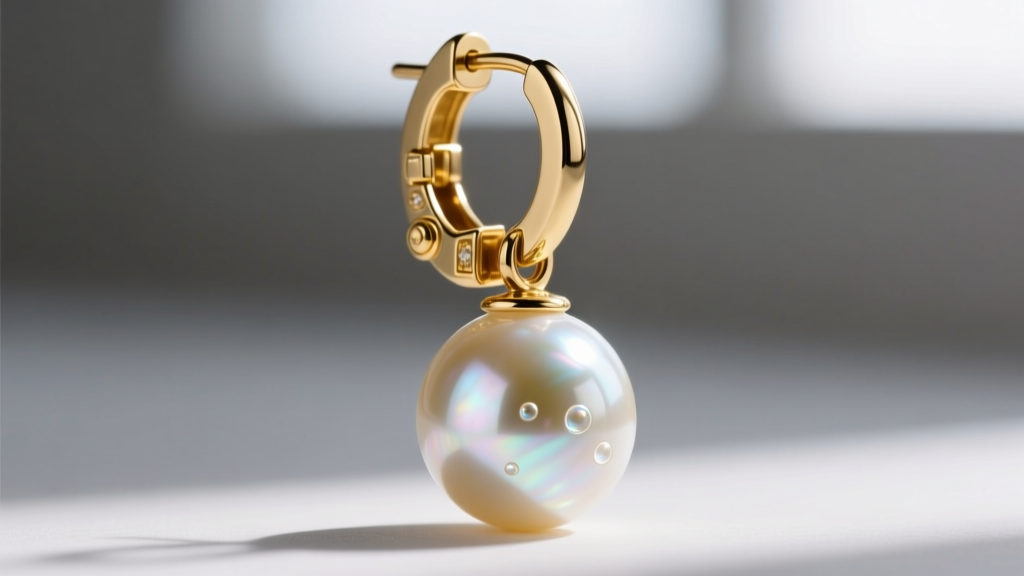
The Gauge Rule: For any Vermeer-style drop exceeding 15mm or 6 grams, you must insist on 18-gauge or 16-gauge wire for the ear hook. 14k or 18k yellow gold is preferred for the finding, as it is malleable enough for a jeweler to adjust but strong enough to hold the weight when properly tempered.
Weight Distribution: To prevent the 'drooping lobe' effect—which ruins the elegant over-the-shoulder silhouette—you should pair heavy drops with specialized earring supports. Products like Chrysmi Comfort Backs or LobeWonder patches feature a wide, flat silicone or plastic disc that sits behind the earlobe. This distributes the 10-gram point-load across a wider surface area of the ear, keeping the heavy pearl perfectly suspended and facing forward, exactly as Vermeer painted it.
Styling the Over-the-Shoulder Glance
The magic of the Vermeer earring is not just in the object itself, but in how it interacts with the wearer's movement and lighting. The painting captures a transient moment: the model turning her head, the earring swinging slightly, catching a single beam of light from an unseen window.
To recreate this in 2026, opt for a simple shepherd's hook or a minimalist leverback finding. Avoid elaborate, diamond-encrusted caps or heavy Art Deco geometric tops. The setting should be virtually invisible, allowing the illusion that the massive pearl is floating just below the earlobe. Wear your hair swept up or tucked behind the ear to ensure the drop remains the undisputed focal point of your silhouette. Whether you choose a historically accurate glass replica or a rare South Sea gem, understanding the physics, history, and proportions of the piece will ensure your investment honors the masterpiece that inspired it.


