Identifying Materials In Antique Victorian Hand Earrings
Discover the material properties of Victorian hand earrings. Compare jet, vulcanite, bog oak, and gold to identify, preserve, and wear antique motifs.

The Intersection of Sentiment and Material Science
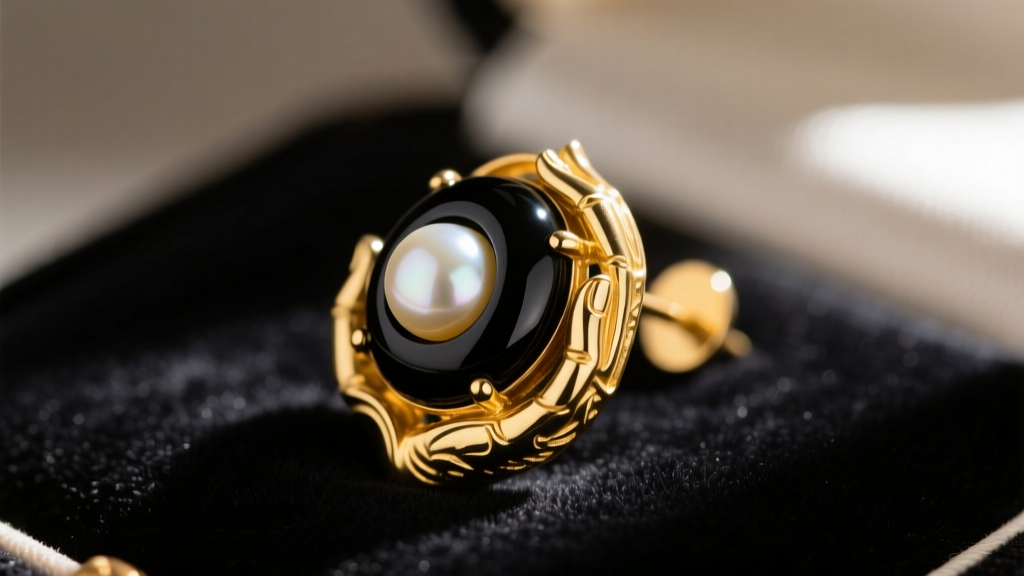
When collectors and historians discuss Victorian hand earrings, they are referring to a highly specific and deeply symbolic niche of 19th-century jewelry. The 'hand' motif was ubiquitous during the Victorian era (1837-1901), symbolizing everything from the bonds of friendship and marriage (the handshake) to romantic devotion (a hand holding a heart or forget-me-not) and protection (the Mano Figa). However, the true mastery of these pieces lies not just in their symbolism, but in the diverse, hand-carved, and hand-enameled materials used to bring them to life.
For modern collectors, wearing and preserving Victorian hand earrings requires a rigorous understanding of material properties. From the organic black materials of the mourning era to the specific gravity of British gold alloys, identifying these components is critical for authentication, valuation, and proper ear lobe care.
Organic Mourning Materials: Jet, Vulcanite, and Bog Oak
Following the death of Prince Albert in 1861, Queen Victoria mandated strict mourning protocols, sparking a massive demand for black jewelry. Artisans carved intricate hand motifs—often hands clutching weeping willow branches or urns—from three primary black materials. While they look similar to the naked eye, their chemical and physical properties are vastly different.
Whitby Jet: The Fossilized Standard
True Whitby Jet is a fossilized wood (a type of lignite coal) formed under high pressure over millions of years. It was the most prized material for high-end Victorian mourning earrings.
- Hardness: Mohs 2.5 to 4. It is relatively soft and can be scratched by a steel pin.
- Specific Gravity (SG): 1.30 to 1.40, making it incredibly lightweight and comfortable for extended lobe wear.
- Thermal Conductivity: Low. Jet feels warm to the touch almost immediately upon contact with the skin, unlike glass or onyx.
- Identification: When rubbed gently on unglazed porcelain, genuine jet leaves a distinct chocolate-brown streak. Under a 10x triplet loupe, you may see faint, flattened wood grain structures.
Vulcanite and Gutta-Percha: The Rubber Alternatives
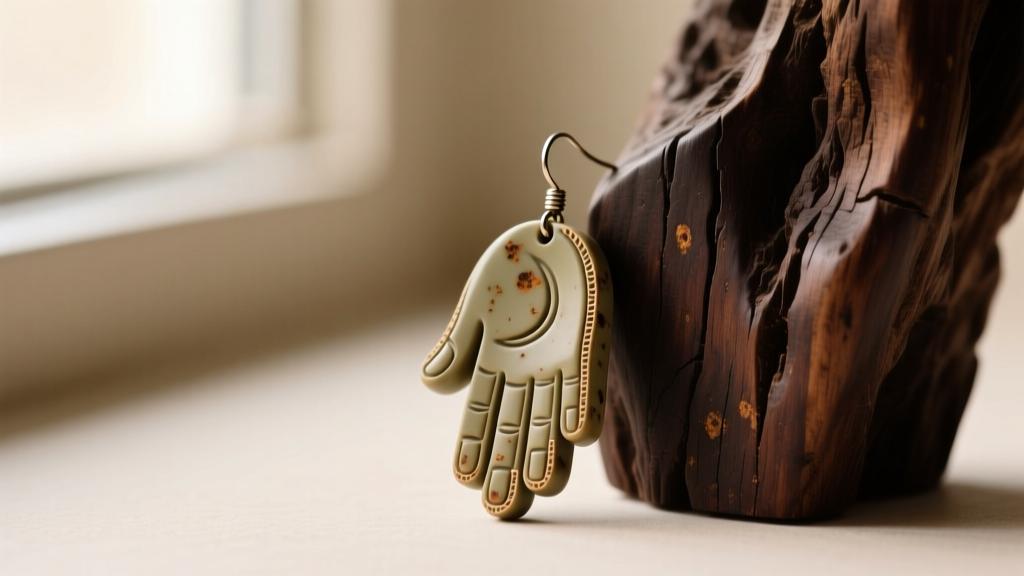
As jet became scarce and expensive, manufacturers turned to early plastics. Vulcanite (hardened India rubber mixed with sulfur, patented by Thomas Hancock) was molded rather than carved. If you examine a Vulcanite hand-motif earring, the edges will be slightly rounded, lacking the crisp, sharp undercuts of carved jet.
- Failure Mode: Vulcanite is highly susceptible to UV degradation. Over decades, exposure to sunlight causes a chemical reaction that turns the black rubber into a khaki or mustard-brown color.
- Identification: Rubbing vulcanite vigorously with your thumb generates enough friction heat to release a faint, distinct sulfur or burnt rubber odor. Never use a hot pin test, as it will permanently melt and scar the antique piece.
Bog Oak: The Irish Peat Carving
Bog oak is wood (usually oak or pine) preserved in the anaerobic, highly acidic environment of Irish peat bogs for thousands of years. The mineralization process turns it black and hardens it, making it suitable for carving detailed hand and floral motifs.
- Identification: Bog oak has an SG of roughly 1.10 (even lighter than jet). Under magnification, the xylem and phloem wood grain patterns are clearly visible, and it will leave a brown streak on porcelain, similar to jet but with a more fibrous texture.
| Material | Origin | Specific Gravity | Streak Test | Key Identifier |
|---|---|---|---|---|
| Whitby Jet | Fossilized Lignite | 1.30 - 1.40 | Chocolate Brown | Warm to touch, crisp carving marks |
| Vulcanite | Sulfur + Rubber | ~1.20 | None (Brownish) | Rubber smell when warmed, molded seams |
| Bog Oak | Mineralized Wood | ~1.10 | Light Brown | Visible wood grain under 10x loupe |
| French Jet | Black Glass | 2.40 - 2.60 | None | Cold to touch, heavy, conchoidal fracture |
Precious Metals and Enamel Work in Hand Motifs
Not all Victorian hand earrings were designed for mourning. Sentimental 'friendship' and 'betrothal' earrings frequently featured the handshake motif, crafted in gold and adorned with vibrant enameling.
The 15k Gold Standard
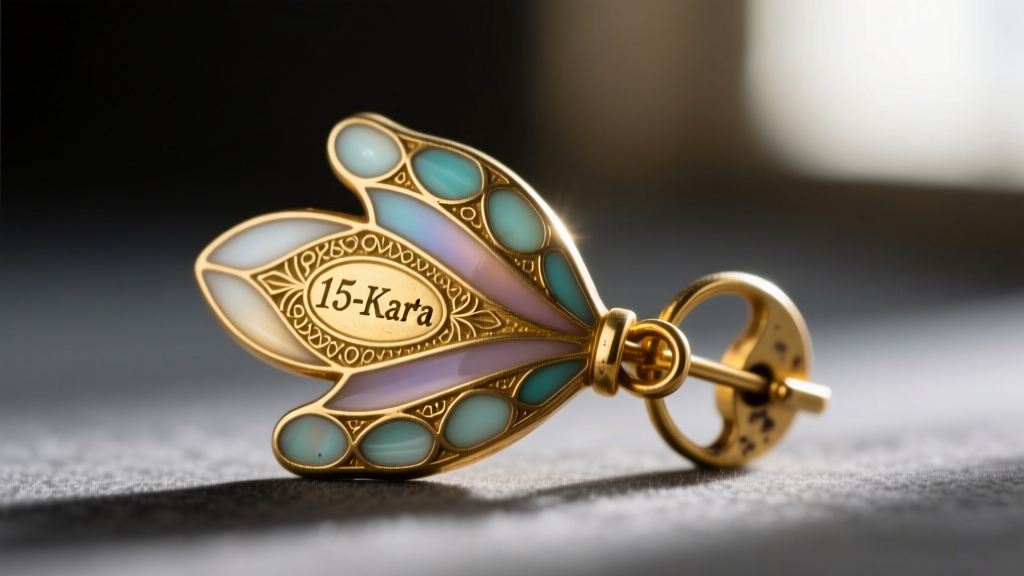
When examining the metalwork of antique British hand earrings, you will frequently encounter the 15k gold hallmark. Introduced in the UK in 1854 and abolished in 1932, 15k gold contains 62.5% pure gold. It was specifically formulated to offer the rich, warm color of higher-karat golds while providing the tensile strength needed for the delicate, articulated fingers of a handshake earring. If you find a 15k hallmark on a hand-motif earring, it is a strong indicator of mid-to-late Victorian British origin.
Guilloché and Champlevé Enameling
Victorian jewelers often incorporated enamel into the cuffs or sleeves of hand-shaped earrings. Guilloché enamel involves engine-turning a geometric pattern into the gold base, then firing translucent enamel over it, creating a shimmering, 3D effect. Champlevé involves carving troughs into the metal and filling them with opaque enamel. The primary failure mode for antique enamel is micro-crazing (tiny cracks) caused by the different expansion rates of the gold and glass enamel when exposed to temperature fluctuations over 150 years.
According to the Victoria and Albert Museum's jewelry archives, the integration of hand motifs with intricate enamel work reached its zenith during the Aesthetic Movement (1870-1890), where jewelry shifted from heavy mourning pieces to lighter, more artistic, and highly detailed sentimental designs.
Authentication and Non-Destructive Testing
When acquiring Victorian hand earrings, rely on non-destructive testing methods to preserve their historical integrity and market value. The Antique Jewelry University strongly advises against destructive testing for organic gems.
- The 365nm UV Light Test: Shine a long-wave UV light on the black materials. Genuine jet is generally inert (does not fluoresce), while some later plastic imitations or composite resins will fluoresce bright white or milky blue.
- The Mold Line Inspection: Use a 10x triplet loupe to examine the edges of the carved hand. If you spot a continuous, faint ridge running down the side of the fingers or the palm, you are looking at a molded piece (Vulcanite, Gutta-Percha, or Bakelite), not a hand-carved piece (Jet or Bog Oak).
- The Weight Test: Hold the earring in your palm. 'French Jet' (black glass) was a common, cheaper substitute for real jet. Glass has an SG of roughly 2.5, making it nearly twice as heavy as true fossilized jet.
Modern Wearability: Ear Lobe Health and Conversions
Wearing 150-year-old earrings requires modern adaptations to protect both the artifact and your ear lobes. Victorian ear wires were notoriously insecure and often structurally incompatible with modern piercing standards.
Gauge Sizes and Lobe Stretching
Original Victorian shepherd hooks and C-catch wires were frequently forged at 16-gauge or 18-gauge thicknesses. Modern standard ear piercings are typically 20-gauge. Forcing a thick 16g antique wire through a 20g lobe can cause micro-tearing, inflammation, and permanent stretching of the fistula. Furthermore, solid 15k gold and carved jet hand motifs can be surprisingly heavy, pulling on the lobe and causing 'earring droop' over time.
Safe Conversion Techniques
To safely wear Victorian hand earrings today without damaging the antique artifact, consult a professional bench jeweler who specializes in antique preservation. Avoid using harsh heat (like traditional soldering torches) near jet or enamel, as thermal shock will shatter them. Instead, request the following modernizations:
- Laser Welding: A jeweler can use a laser welder to attach a modern 14k gold leverback or French wire to the existing top loop. Laser welding concentrates heat in a microscopic area, keeping the delicate hand motif and enamel completely cool.
- Silicone Stoppers: If you wish to keep the original wire for historical purity, use high-quality silicone earring stoppers or 'O-rings' to secure the back, preventing the heavy motif from slipping out and getting lost.
- Ear Lobe Patches: For heavy, articulated hand-and-heart drop earrings, use invisible adhesive ear lobe support patches. These distribute the weight of the gold and enamel across a wider surface area of the skin, preventing the lobe from tearing.
Preserving Your Collection
Proper storage is just as critical as material identification. Store your Victorian hand earrings in a climate-controlled environment with a stable relative humidity of around 45-55%. Keep vulcanite pieces in complete darkness to halt UV-induced khaki discoloration, and store jet pieces in soft, unbleached cotton pouches to prevent the soft lignite from being scratched by harder gemstones or metal clasps. By understanding the exact material properties of these sentimental artifacts, you ensure that the craftsmanship of the Victorian era remains intact for future generations to study and admire. For further reading on organic gemstone care, the Gemological Institute of America (GIA) provides excellent guidelines on preserving fossilized organics.


