Fixing & Wearing Vintage Brass Earrings: Tarnish, Allergies & Repairs
Discover how to troubleshoot vintage brass earrings. Learn expert solutions for tarnish, green skin, nickel allergies, and broken posts.

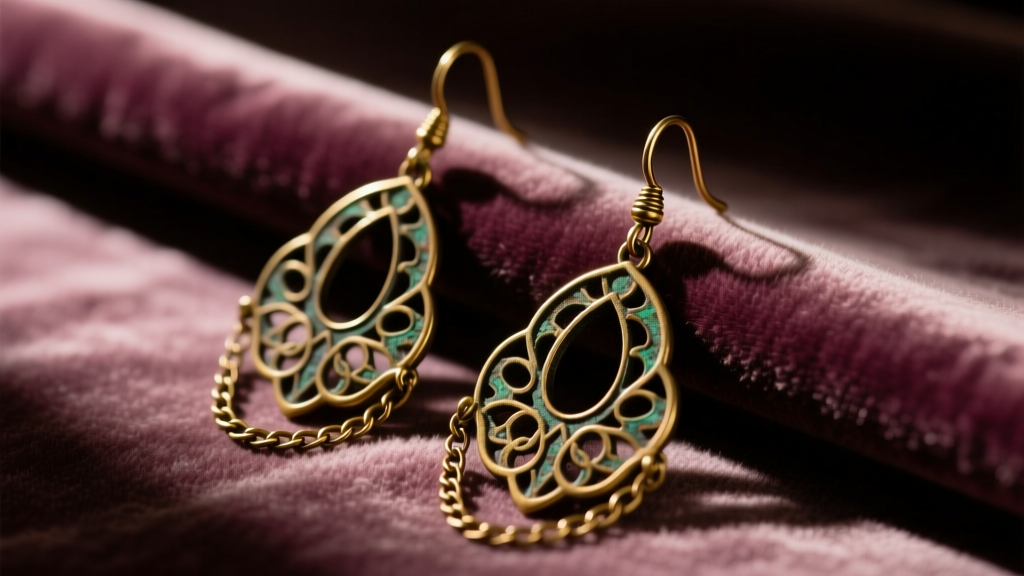
The Metallurgy and Appeal of Vintage Brass
Collecting and wearing vintage brass earrings offers a unique window into the craftsmanship of the past. From the intricate Art Deco geometric dangles of the 1920s to the bold, hammered hoops of the 1970s, brass has been a staple in jewelry making due to its gold-like luster and excellent malleability. However, wearing antique and vintage pieces today comes with a specific set of metallurgical and structural challenges. Brass is fundamentally an alloy of copper and zinc, but vintage formulations often included trace elements like lead (to improve machinability) or nickel (as a base layer for gold plating). Understanding the exact chemistry of your vintage brass earrings is the first step in troubleshooting the common issues of tarnish, skin discoloration, and contact dermatitis.
Troubleshooting Tarnish: The Dezincification Trap
The most frequent issue with vintage brass earrings is tarnish, which manifests as either a black film (copper sulfide) or a powdery green crust (copper carbonate). Many collectors make the critical mistake of using harsh, acidic commercial dips to clean their finds. According to conservation guidelines from the Victoria and Albert Museum, aggressive chemical cleaners can cause 'dezincification'.
What is Dezincification?
Dezincification occurs when acidic solutions strip the zinc from the brass alloy, leaving behind a porous, weakened, and salmon-pink copper surface. Once the zinc is leached out, the structural integrity of thin vintage stampings is compromised, and the piece will tarnish much faster in the future. Furthermore, chemical dips strip away the antique patina that gives vintage brass its depth and historical value.
- Safe Cleaning Method: Use a mild, phosphate-free dish soap and warm water with a soft-bristled baby toothbrush. This removes surface oils and dirt without attacking the alloy.
- Polishing Method: For localized black tarnish, use a jewelry polishing cloth impregnated with mild abrasives. Avoid liquid polishes near any glued-in rhinestones or enamel work, as the solvents will dissolve the vintage adhesive.
- Conservation Approach: If the piece has a stable, dark brown patina, leave it alone. This oxidation layer actually protects the underlying metal from further corrosion.
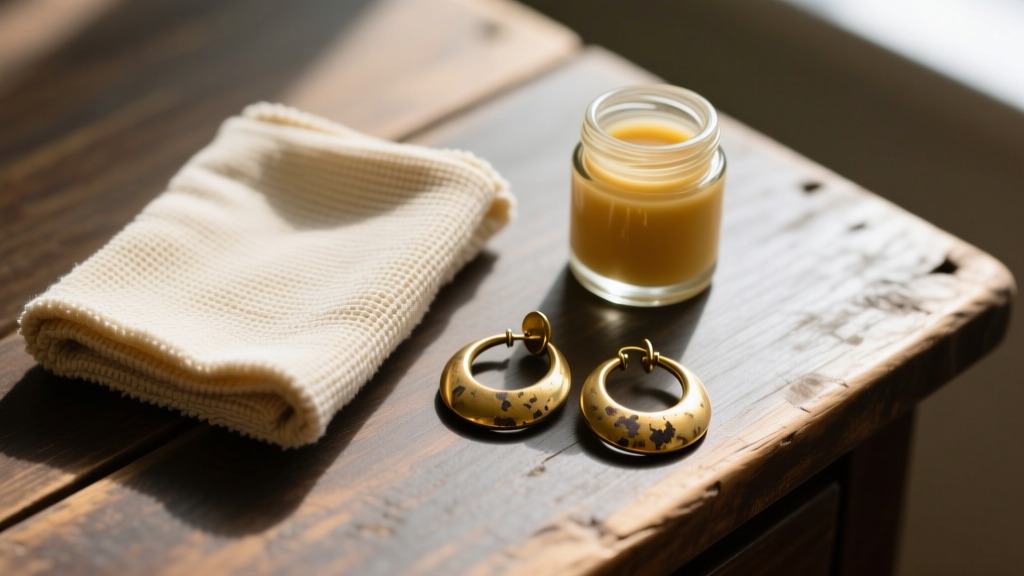
Solving the 'Green Ear' Oxidation Problem
The dreaded 'green ear' is not an infection; it is a simple chemical reaction. The copper in the brass alloy reacts with the acids, salts, and oxygen in your sweat to create copper chloride and copper carbonate, which transfer to the skin. Because vintage earrings often lack the modern rhodium or e-coating finishes, direct skin contact almost guarantees oxidation on warm days.
Sealant Comparison for Vintage Brass
To prevent this, you must create an invisible barrier between the metal and the skin. Below is a troubleshooting matrix for the most effective sealants used by jewelry conservators and vintage dealers.
| Sealant Type | Durability | Finish | Best Use Case |
|---|---|---|---|
| Microcrystalline Wax (e.g., Renaissance Wax) | Low (Reapply monthly) | Matte/Satin | Museum display, lightly worn pieces, preserving raw patina |
| Acrylic Polymer (e.g., Everbrite ProtectaClear) | High (Lasts 1-2 years) | Gloss/Invisible | Posts, ear wires, and high-friction areas on frequently worn dangles |
| Polyurethane (Clear Nail Polish) | Very Low (Peels in days) | High Gloss/Yellows | Emergency temporary fix; not recommended for valuable vintage pieces |
For wearable vintage brass earrings, applying two thin coats of an acrylic polymer sealant to the posts and the back of the earring body is the most effective long-term solution. Allow 48 hours for full curing before wearing.
Navigating Contact Dermatitis: Nickel and Lead
Beyond the nuisance of green skin, vintage brass earrings can pose genuine health risks for those with metal sensitivities. The Gemological Institute of America (GIA) notes that antique jewelry frequently contains allergenic metals that are heavily regulated in modern manufacturing.
'Vintage jewelry was crafted before modern metallurgical safety standards. Buyers must assume that pre-1980s brass alloys may contain nickel or lead, requiring rigorous testing and barrier methods before prolonged skin contact.'
Nickel Allergies
If your vintage brass earrings cause itching, redness, or flaking on your earlobes, you are likely reacting to nickel. In the mid-20th century, brass was often plated with a thin layer of nickel to create a bright, reflective base for gold or silver plating. As the thin plating wears off over decades, the nickel is exposed. The Fix: If the piece is highly valuable, have a professional jeweler strip the remaining plating and re-plate it with a hypoallergenic layer of rhodium or 24k gold. For everyday vintage finds, replacing the ear wires with modern, implant-grade titanium or niobium hooks is a cost-effective and safe alternative.
Lead Awareness
Leaded brass (containing 1% to 3% lead) was widely used to make intricate die-cast vintage earrings because lead allows the metal to be machined and stamped with sharp, crisp details. While lead in solid metal form is less dangerous than lead dust, handling heavily oxidized leaded brass and then touching your mouth or eyes is a risk. Always wash your hands after cleaning unsealed vintage brass, and avoid purchasing vintage brass teething jewelry or pieces intended for children.
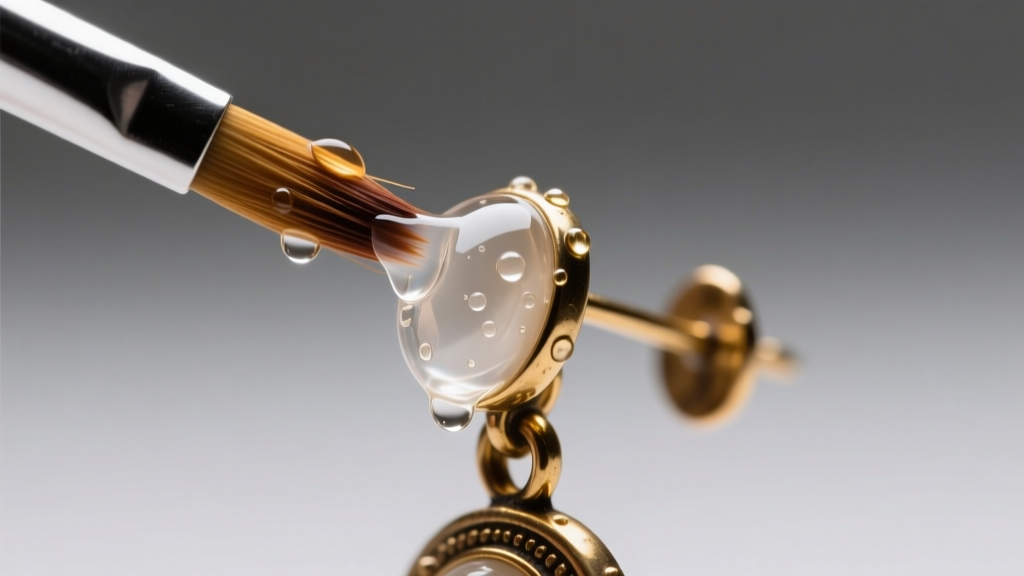
Structural Triage: Repairing Posts and Clip-Ons
The mechanical stress of decades of wear often leaves vintage brass earrings with broken solder joints, snapped posts, or weakened clip-on springs. Troubleshooting these repairs requires understanding the thermal limits of vintage materials.
Soldering vs. Cold Adhesives
Traditional silver soldering requires temperatures exceeding 1,200°F (650°C). Applying this heat to vintage brass earrings is highly risky for several reasons:
- Thermal Shock: Any glued-in glass cabochons, rhinestones, or bakelite elements will shatter or melt.
- Annealing: High heat will anneal the brass, making it dead soft. A vintage clip-on mechanism that is annealed will lose its 'spring' tension and fail to grip the earlobe.
- Plating Destruction: Heat will blister and peel any remaining gold or silver plating.
The Expert Solution: For 90% of vintage brass earring repairs, modern jeweler's epoxies are vastly superior to soldering. Use a two-part clear epoxy (like Devcon 5-Minute Epoxy) for reattaching heavy brass stampings to clip-on paddles. For reattaching a broken post to a lightweight stud, use a flexible cyanoacrylate adhesive like G-S Hypo Cement, which allows for a slight degree of mechanical flex without snapping the brittle vintage brass.
Weight Management: Preventing Lobe Stretching
Vintage brass dangle earrings, particularly those from the 1960s and 1970s, were often cast in solid brass rather than hollow-formed, making them exceptionally heavy. It is not uncommon for a pair of vintage brass chandelier earrings to weigh over 30 grams per ear. Prolonged wear of heavy earrings causes micro-tears in the earlobe piercing, eventually leading to permanent stretching and sagging.
To troubleshoot this without altering the vintage piece, utilize silicone earring support patches (such as Omeza or BlingWraps). These adhesive-backed silicone discs distribute the weight of the heavy brass across a wider surface area of the earlobe, providing structural support and preventing the earring from drooping forward. Additionally, swapping heavy vintage fish-hook wires for thicker, 18-gauge or 16-gauge leverback findings can help distribute the load more evenly across the piercing channel.
Summary Checklist for Vintage Brass Maintenance
- Inspect: Check for exposed nickel plating and test for lead if the piece is unmarked and heavily machined.
- Clean: Wash with mild soap; never use acidic chemical dips that cause dezincification.
- Seal: Apply an acrylic polymer sealant to posts and friction points to prevent copper oxidation (green skin).
- Repair: Avoid high-heat soldering; opt for two-part jeweler's epoxies to protect vintage stones and plating.
- Support: Use silicone earring patches for solid-cast dangles exceeding 15 grams per ear.


