Grandma Earrings: A Technical Guide to Vintage Mechanisms
Discover the metallurgy, mechanisms, and restoration techniques for vintage grandma earrings. Expert guide to screw-backs, clip-ons, and lobe conversions.

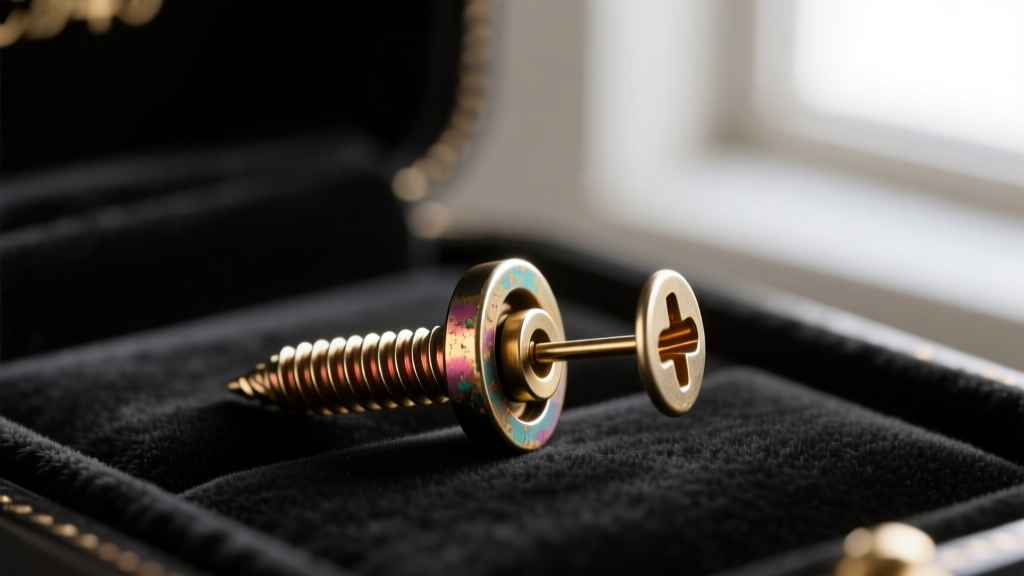
The term "grandma earrings" is often casually tossed around to describe vintage, heirloom, or mid-century button and drop styles passed down through generations. However, from a horological and metallurgical perspective, these pieces represent a fascinating era of jewelry engineering. In 2026, as the market for authenticated vintage jewelry continues to surge, understanding the technical anatomy of these heirloom pieces is critical for collectors, restorers, and everyday wearers alike. This deep dive explores the material science, mechanical failure modes, and modern conversion frameworks required to safely wear and preserve vintage grandma earrings.
The Metallurgy of Mid-Century Heirloom Earrings
Before assessing the mechanics of an earring, a jeweler must first identify the base metallurgy. Mid-century earrings (circa 1920-1970) frequently utilized specialized gold applications that differ vastly from modern electroplating. Misidentifying these materials can lead to catastrophic damage during cleaning or soldering.
- Rolled Gold Plate (RGP): Often stamped as "1/20 12K RGP", this material involves a thick sheet of karat gold mechanically bonded to a brass or copper core under extreme heat and pressure. The gold layer is substantially thicker than modern flash plating, making it highly resistant to wear but susceptible to delamination if exposed to harsh ultrasonic cleaning or excessive torch heat.
- Gold-Filled (GF): Similar to RGP but typically marked "1/20 14K GF". By US Federal Trade Commission standards, the gold alloy must constitute at least 1/20th of the total weight of the metal. Vintage GF grandma earrings often survive decades with their outer karat layer fully intact.
- Early Titanium and Surgical Steel: While less common in ornate vintage designs, late 1960s and 1970s hypoallergenic studs began experimenting with early-grade surgical steels. These require specific polishing compounds, as standard rouge can embed microscopic iron particles into the metal, causing localized rust spots over time.
For authoritative hallmark identification and metallurgical dating, experts frequently consult the Antique Jewelry University by Lang Antiques, which maintains one of the most comprehensive databases of mid-century maker marks and alloy stamps.
Anatomy of Vintage Earring Mechanisms
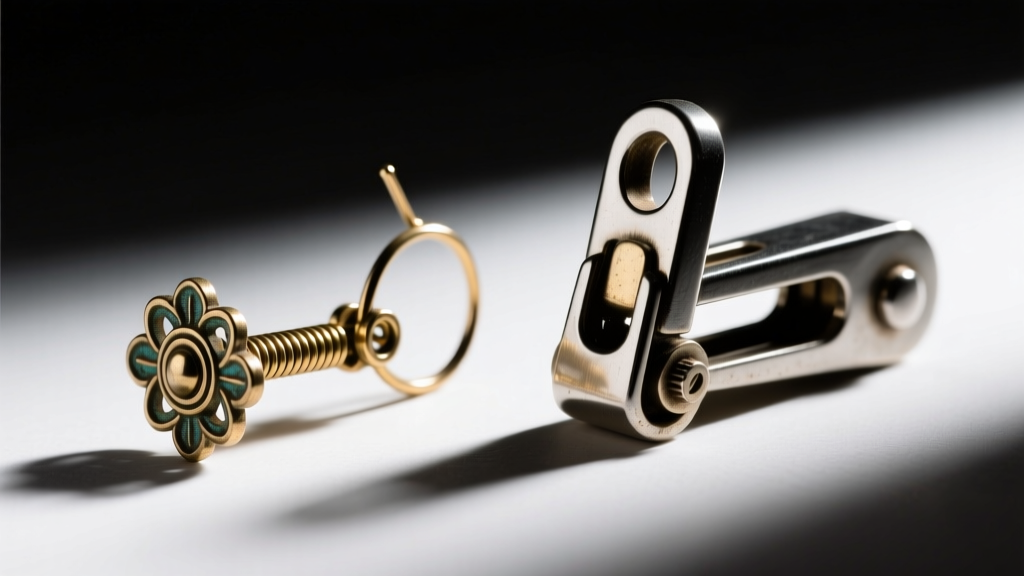
The most defining characteristic of grandma earrings is the non-pierced mechanism. Pierced ears were less prevalent among certain demographics in the early-to-mid 20th century, leading to a golden age of mechanical earring engineering. Understanding these mechanisms is vital for restoration.
The Screw-Back Mechanism (Patented 1894)
Popularized in the 1920s and dominating through the 1950s, the screw-back earring features a threaded post and a tension pad that screws down against the earlobe. The technical challenge with surviving screw-backs is thread degradation. The posts were typically cut with a very fine pitch thread (often 0.5mm to 0.8mm). Over decades of use, cross-threading and brass fatigue can strip the threads. Restoration requires a jeweler to use a specialized micro-die to re-cut the threads without reducing the post's structural diameter below the critical 0.9mm threshold, which would cause the post to bend under the weight of a vintage glass or marcasite stone.
Spring Clip-Ons and Paddle-Backs
Introduced in the 1930s, the spring clip-on relied on a tiny steel torsion spring housed within a hinged hinge. The primary failure mode here is metallurgical fatigue of the spring steel, resulting in a loss of clamping force. Later iterations in the 1950s introduced the "paddle-back" or "comfort clip," which utilized a wider, flat tension band rather than a concentrated spring point. This distributed the clamping force over a larger surface area, reducing necrotic pressure on the earlobe cartilage. When restoring these, jewelers must avoid using standard pliers to adjust tension, as this creates micro-fractures in the aged brass; instead, specialized nylon-jawed bending tools are required.
Ergonomics and Aging Earlobes: The Weight Problem
Many classic grandma earrings feature heavy ornamental fronts—think cultured mabe pearls, carved Bakelite, or clustered marcasite. When these pieces are converted from clip-ons to modern pierced posts, they present a severe ergonomic challenge for aging earlobes.
As skin loses elastin and collagen over time, the piercing fistula (the healed tunnel of skin) becomes prone to elongation and tearing. A standard modern earring post is 20-gauge (0.81mm) or 18-gauge (1.02mm). When a 12-gram vintage button earring is mounted on a 20-gauge wire, the sheer force exerted on the lower edge of the fistula accelerates tissue migration and lobe drooping.
Expert Protocol: When converting heavy vintage pieces for mature wearers, always upgrade the post to a 16-gauge (1.29mm) or 14-gauge (1.63mm) wire, and utilize a heavy-duty jumbo friction back or a specialized silicone lobe-support patch to distribute the vector forces across the posterior lobe.
Conversion Framework: Non-Pierced to Modern Pierced
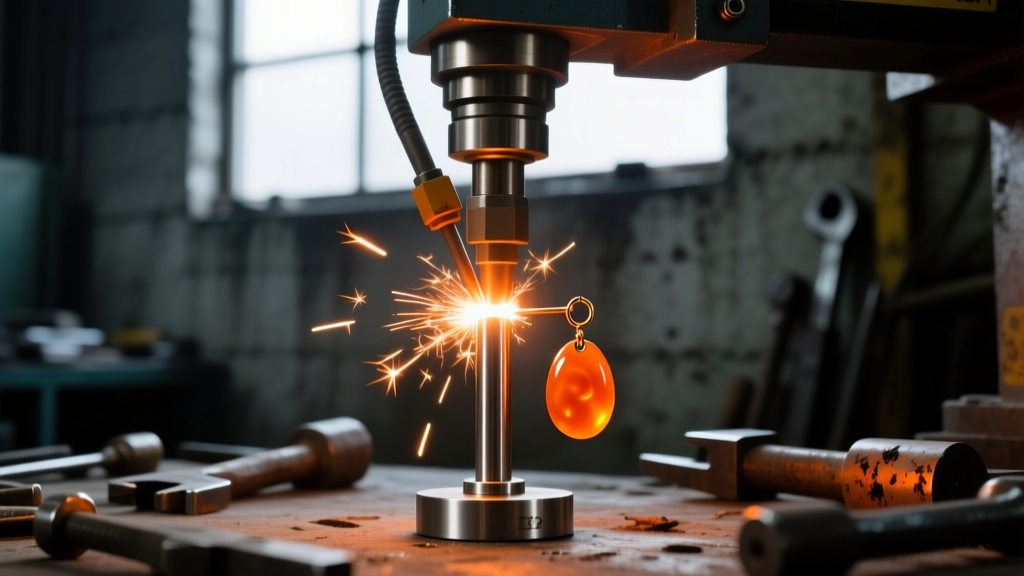
Converting non-pierced grandma earrings to modern pierced standards is one of the most common requests in heritage jewelry repair. The methodology depends entirely on the thermal tolerance of the materials involved. Traditional torch soldering operates at temperatures exceeding 700°C, which will instantly destroy heat-sensitive vintage materials.
| Material Composition | Recommended Conversion Method | Thermal Risk Profile |
|---|---|---|
| Cultured Pearls / Coral | Nd:YAG Laser Welding (Stone in-place) | Low (Localized heat under 100°C) |
| Bakelite / Lucite / Celluloid | Cold Mechanical Riveting or Epoxy Bonding | Zero (No heat applied) |
| Solid Gold / Platinum Settings | Induction Soldering or Torch with Heat Sink | Moderate (Requires thermal paste) |
| Foil-Backed Rhinestones | Laser Welding with Ceramic Heat Shield | Low to Moderate (Foil is highly sensitive) |
Modern laser welding technology has revolutionized the preservation of grandma earrings. According to research published by the Gemological Institute of America (GIA), organic gemstones like pearls and amber suffer irreversible nacre dehydration and structural cracking when exposed to traditional soldering temperatures. By utilizing a pulsed Nd:YAG laser, a jeweler can fuse a modern titanium or 14K gold post directly to the vintage base plate in milliseconds. The heat-affected zone (HAZ) is limited to less than 1 millimeter, ensuring that the original patina, adhesive, and heat-sensitive stones remain completely undisturbed.
Preserving the Patina
A critical mistake amateur restorers make is aggressively polishing converted vintage earrings. The dark oxidation found in the crevices of 1940s silver and marcasite grandma earrings is not "dirt"; it is a deliberate chemical patina (often liver of sulfur) used to create contrast and depth. Mechanical polishing strips this historical data. Proper cleaning should be limited to a mild, non-abrasive surfactant and a soft-bristled brush, avoiding the ultrasonic cavitation that can dislodge fragile foiled stones or shatter aged glass.
Final Thoughts on Heritage Preservation
Grandma earrings are far more than outdated accessories; they are masterclasses in mid-century micro-engineering and material science. Whether you are preserving a pair of 1930s screw-backs in their original state or carefully laser-welding modern posts to a pair of Art Deco clips, respecting the metallurgical and mechanical limits of the piece ensures that these heirlooms will survive to be worn by the next generation. Always prioritize structural integrity and thermal safety over rapid, high-heat repair methods.


