How to Wear the Largest Earrings in the World Safely
Learn how to safely style and support the largest earrings in the world using advanced weight distribution, ear cuffs, and helix anchors.


The Allure and Anatomy of Record-Breaking Jewelry
When avant-garde designers and high-fashion houses conceptualize the largest earrings in the world, they are rarely thinking about the delicate biology of the human earlobe. While the literal Guinness World Record holders for the heaviest earrings can weigh upwards of 5 kilograms and are strictly for static photography, the wearable art seen on 2026 runways and Met Gala red carpets frequently pushes the boundary of functional jewelry, with statement pieces often exceeding 150 grams per ear. For context, a standard, comfortable everyday hoop weighs between 4 and 8 grams.
Wearing oversized, heavyweight earrings without causing permanent fistula tearing or lobe elongation requires an understanding of physics, material science, and anatomical support systems. This step-by-step guide will teach you how to engineer support for massive statement pieces, ensuring you can wear architectural jewelry safely and comfortably.
Step 1: Assessing Earlobe Anatomy and Shear Stress
The human earlobe is composed of areolar connective tissue and fat, lacking the rigid cartilage found in the upper ear. When a heavy earring is suspended from a standard piercing (typically 20-gauge or 18-gauge), the downward force creates a fulcrum effect. The bottom edge of the fistula bears the brunt of the shear stress.
Expert Insight: Tissue elongation is not always painful. Micro-tears in the fistula can occur silently over a few hours of wearing a 50g+ earring, eventually leading to a permanent 'cheese-cutter' effect where the piercing migrates downward through the lobe.
Before attempting to wear massive earrings, evaluate your lobe thickness. Lobes under 4mm thick require aggressive external support for anything over 25 grams. According to the American Society of Plastic Surgeons, once the fistula is torn beyond the midpoint of the lobe, surgical lobuloplasty is the only permanent corrective option.
Step 2: Engineering the Support System
To wear the largest earrings in the world without surgical intervention, you must bypass the earlobe entirely and transfer the load to the rigid cartilage of the upper ear. Here are the three professional methods used by celebrity stylists.
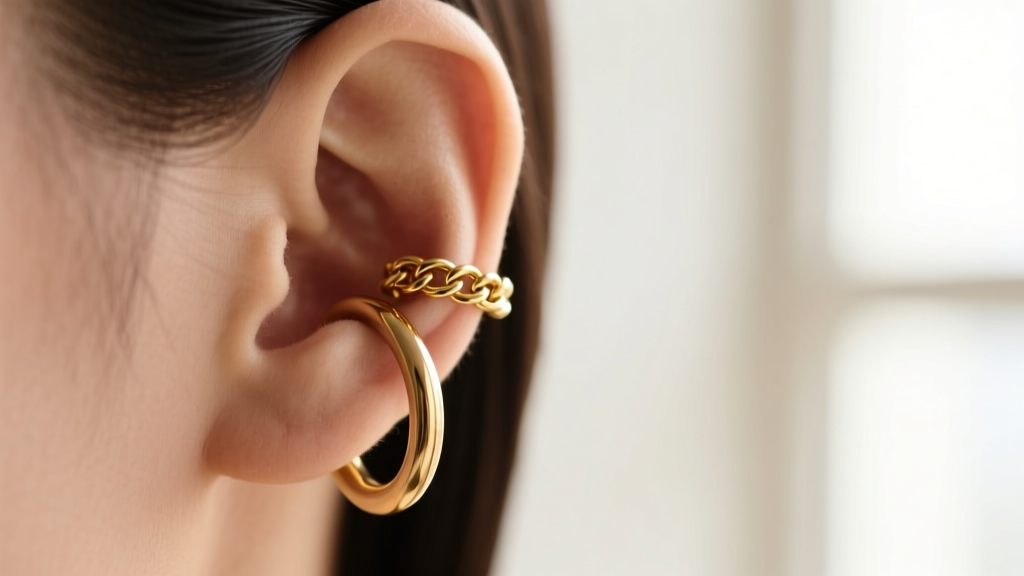
Method A: The Helix Anchor Chain
This is the most secure method for heavy metal hoops or chandeliers weighing between 60g and 120g.
- Materials needed: A tight-fitting, non-piercing 14k gold or surgical steel ear cuff (minimum 3mm width for grip), and a 24-gauge dead-soft chain.
- Execution: The chain is soldered or securely looped from the top bail of the heavy earring to the ear cuff. The cuff is clamped onto the mid-helix or upper helix cartilage. The cartilage absorbs 80% of the vertical drag, while the lobe merely acts as a stabilizing pivot point.
Method B: Polyurethane Lift Patches
For broad, heavy studs or massive cluster gems that do not have a top bail for a chain, invisible support patches are mandatory.
- Materials needed: Medical-grade, matte-finish polyurethane ear lift tapes (often sold under brands like LobeWonder).
- Execution: Apply the adhesive patch directly behind the earlobe, aligning the reinforced slit with your piercing. The patch distributes the sheer force across a 15mm surface area of the posterior lobe skin, preventing the earring post from slicing downward.
Method C: The Invisible Nylon Halo
Used for the absolute largest, most unwieldy runway pieces (150g+), this method involves wrapping 20-gauge invisible nylon thread (fishing line) around the entire ear, anchoring the earring to the auricular fold.
Step 3: Material Selection and Weight Reduction
If you are commissioning custom oversized earrings, material density is your biggest enemy. Master jewelers utilize specific fabrication techniques to create the illusion of immense mass without the corresponding gravitational drag. Data sourced from Rio Grande jewelry suppliers highlights the vast differences in metal densities.
| Material | Density (g/cm³) | Tensile Strength | Best Use Case for Oversized Earrings |
|---|---|---|---|
| Solid Sterling Silver | 10.4 | Moderate | Avoid for large volumes; too heavy and prone to bending. |
| Grade 5 Titanium (Ti-6Al-4V) | 4.43 | Extremely High | Ideal for the structural post, hook, or internal armature. |
| Electroformed Copper | 8.96 (Solid) | Low (Hollow) | Perfect for massive, paper-thin hollow sculptural hoops. |
| UV-Cured 3D Resin | 1.1 - 1.2 | Variable | The 2026 standard for bulky, avant-garde decorative bodies. |
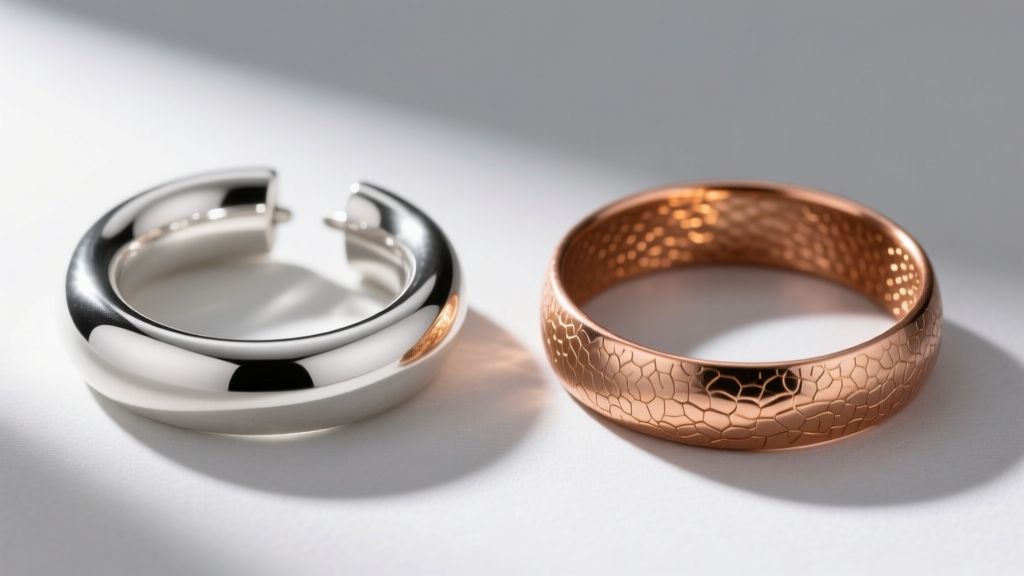
Pro-Tip: Always demand that the actual piercing wire (the part that goes through your ear) be made of 18-gauge or 16-gauge Grade 5 Titanium. Even if the decorative body is lightweight resin, a heavy swing can cause standard 20-gauge sterling silver wires to permanently warp or snap at the solder joint.
Step 4: Step-by-Step Application Guide
Putting on a 100-gram earring requires a specific physical technique to avoid immediate trauma to the fistula. Never attempt to force the post through the ear while the earring is dangling freely.
- Prep the Skin: Cleanse the earlobe and the upper helix with isopropyl alcohol to remove sebum, ensuring adhesives and cuffs grip securely.
- Apply Posterior Support: If using a polyurethane patch, apply it now and wait 60 seconds for the adhesive to reach maximum tack.
- Insert in a Supine Position: Lie flat on your back on a bed or sofa. This allows the heavy earring to rest on the mattress rather than pulling downward on your lobe while you fumble with the clasp.
- Thread the Post: Guide the titanium post through the fistula from the front. Secure the backing (preferably a wide-base silicone disc or a heavy-duty screw-back) while the earring body is supported by your hand or the bed.
- Attach the Upper Anchor: Sit up slowly, supporting the earring with one hand. Use your other hand to clamp the helix ear cuff into place and connect the 24-gauge support chain.
- Release and Adjust: Gently let go of the earring. The weight should immediately transfer to the cartilage cuff. If the lobe turns white or blanches, the chain is too loose; tighten it until the lobe rests in its natural, un-pulled position.
Step 5: Safe Removal and Tissue Recovery
Removing heavyweight earrings requires the same care as putting them on. Never unclasp the earring back while standing up, as the sudden drop can shock the fistula and cause micro-tearing.
- Removal: Lie back down, support the weight of the earring in your palm, unhook the helix chain, remove the backing, and slide the post out horizontally.
- Recovery Massage: After wearing massive earrings, the fistula will be compressed. Apply a single drop of pure, unrefined jojoba oil or vitamin E oil to the piercing and gently massage the lobe for 60 seconds to stimulate blood flow and encourage tissue rebound.
- The 48-Hour Rule: Never wear heavyweight or record-breaking statement earrings two days in a row. Give the connective tissue a minimum of 48 hours to regain its natural elasticity, wearing only lightweight 20-gauge titanium studs or sleepers in the interim.
Final Thoughts on Wearable Architecture
Pushing the boundaries of jewelry size is a thrilling form of self-expression, but it must be grounded in anatomical reality. By treating the ear not just as a canvas, but as a structural engineering challenge, you can safely wear the largest earrings in the world—or at least, the largest ones designed for human wear. Invest in high-quality support chains, prioritize titanium armatures, and always respect the physical limits of your tissue. With the right preparation, avant-garde scale becomes not just a runway fantasy, but a wearable, pain-free reality.


