Western Turquoise Earrings: A Material & Authenticity Guide
Discover the material properties of western turquoise earrings. Compare natural, stabilized, and dyed stones, plus metal pairings and care tips.

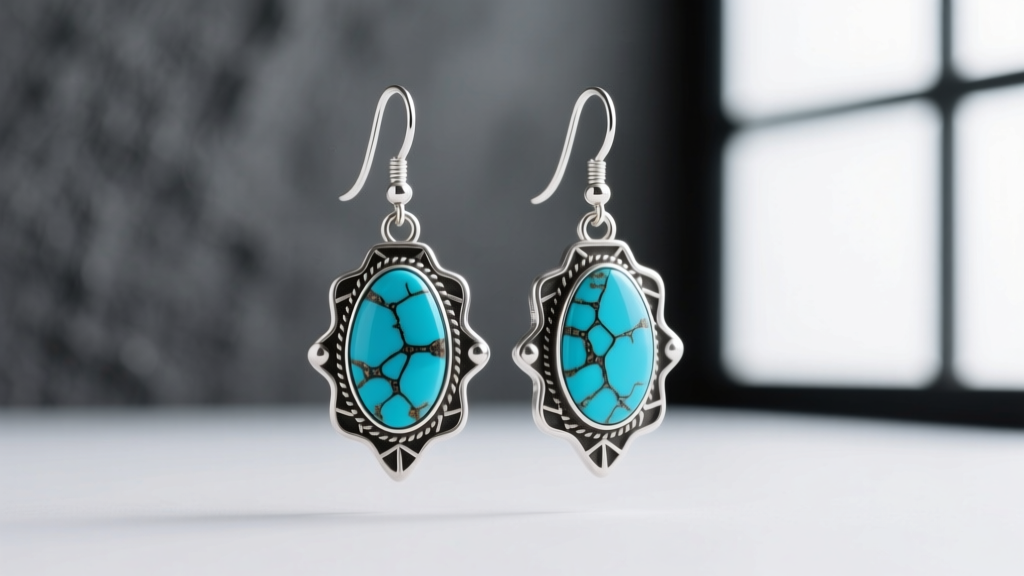
The Mineralogy and Allure of Western Turquoise Earrings
Western turquoise earrings are more than just a staple of Southwestern and Bohemian fashion; they are a masterclass in lapidary art and metallurgy. As a hydrous phosphate of copper and aluminum, turquoise possesses a unique chemical makeup that directly impacts its durability, color stability, and suitability for daily wear in jewelry. The copper content yields the highly prized sky-blue hues, while traces of iron or zinc introduce green and yellowish undertones. However, the very nature of this mineral makes it inherently porous and relatively soft, presenting specific challenges for jewelry designers and wearers alike.
When evaluating western turquoise earrings—whether they feature intricate Navajo-style silverwork, squash blossom motifs, or modern minimalist bezel settings—understanding the material properties is critical. Not all turquoise is created equal, and the treatments applied to these stones drastically alter their longevity, value, and interaction with the skin. In this comprehensive guide, we break down the exact material grades, metal pairings, and structural considerations you need to know before investing in high-quality turquoise ear wear.
Natural vs. Stabilized vs. Dyed: A Material Breakdown
The most common point of confusion for buyers is the distinction between natural, stabilized, and imitation turquoise. According to the Gemological Institute of America (GIA), over 90% of the turquoise on the market has undergone some form of treatment to enhance its durability and color. Because natural turquoise is highly porous, it can absorb oils, lotions, and sweat, which causes the stone to darken or turn green over time. To prevent this, lapidaries employ various stabilization techniques.
| Turquoise Type | Mohs Hardness | Porosity | Avg. Price (per carat) | Best Earring Application |
|---|---|---|---|---|
| Natural (Untreated) | 5.0 - 6.0 | High | $15.00 - $100.00+ | Collector studs, occasional wear |
| Stabilized (Epoxy/Resin) | 6.0 - 7.0 | None (Sealed) | $3.00 - $15.00 | Everyday hoops, dangles, inlay |
| Dyed / Reconstituted | 4.0 - 5.0 | Variable | $0.50 - $2.00 | Fashion jewelry, avoid for sensitive ears |
| Imitation (Dyed Howlite) | 3.5 - 4.5 | Moderate | $0.10 - $1.00 | Costume jewelry, not genuine turquoise |
Stabilized Turquoise: This is the industry standard for high-quality western jewelry. Stones are submerged in a clear epoxy resin or polymer under high pressure, allowing the hardening agent to penetrate the microscopic pores of the stone. This process, sometimes referred to as the Zachary process when electrochemically enhanced, locks in the vibrant blue color and raises the Mohs hardness, making it resistant to scratching and chemical absorption. Stabilized turquoise is not "fake"; it is genuine turquoise that has been engineered for survival in daily-wear earrings.
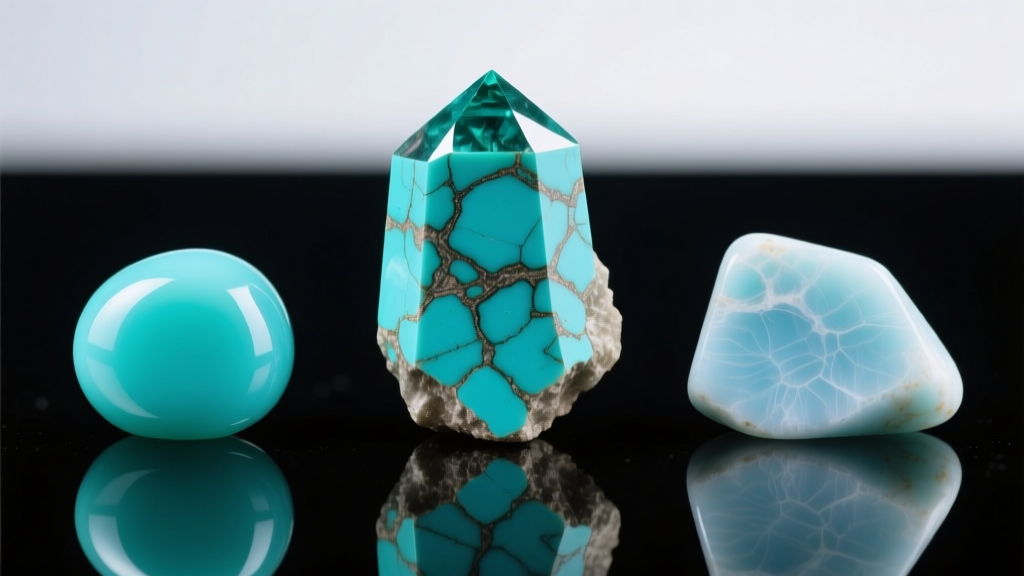
Reconstituted and Dyed Stones: Often labeled as "block turquoise," this material consists of low-grade chalk turquoise dust or entirely different minerals (like howlite or magnesite) that are dyed blue and bound together with resin. While visually similar from a distance, these stones lack the intricate matrix webbing (the brown or black host rock inclusions) that gives genuine western turquoise its character. Furthermore, the dyes used in cheap reconstituted stones can leach out when exposed to the acidic pH of human sweat, potentially causing contact dermatitis or staining the earlobe.
The Metal Matrix: Sterling Silver, Brass, and Copper
The backing metal in western turquoise earrings is just as important as the stone itself. Traditional Native American and Southwestern jewelry relies heavily on .925 Sterling Silver, but modern mass-market alternatives often use base metals. Understanding the metallurgical properties of these pairings is essential for both aesthetics and ear health.
Sterling Silver (.925) and Oxidation
Sterling silver is an alloy containing 92.5% pure silver and 7.5% copper. The copper additive provides the necessary tensile strength to hold heavy turquoise cabochons in bezel settings. However, copper is highly reactive to sulfur and moisture. In western jewelry, artisans often intentionally "oxidize" or blacken the silver using liver of sulfur to create contrast, making the intricate stamp work and the turquoise matrix pop. From a maintenance perspective, sterling silver is hypoallergenic for the vast majority of wearers, making it the safest choice for cartilage piercings and sensitive earlobes.
Brass and Copper: The Green Lobe Phenomenon
To cut costs, some manufacturers cast western-style concho and feather earrings in brass or pure copper. While these metals offer a beautiful, warm, rustic patina that complements greenish turquoise, they are notorious for causing the "green skin" effect. This is not an allergic reaction, but rather a chemical oxidation process. When the copper in the brass reacts with the salts, acids, and oils in your skin, it creates copper chloride, which transfers onto the earlobe. If you purchase brass or copper western earrings, ensure the ear wires (the part that actually passes through the piercing) are made of surgical steel or sterling silver, or coat the posts with a layer of clear jeweler's lacquer.
Structural Integrity: Gauge and Weight Considerations
Western dangle and chandelier earrings are notoriously heavy. A pair of elaborate squash blossom-style dangles or large silver concho drops can easily weigh between 15 and 30 grams per earring. This presents a significant biomechanical issue for the earlobe.
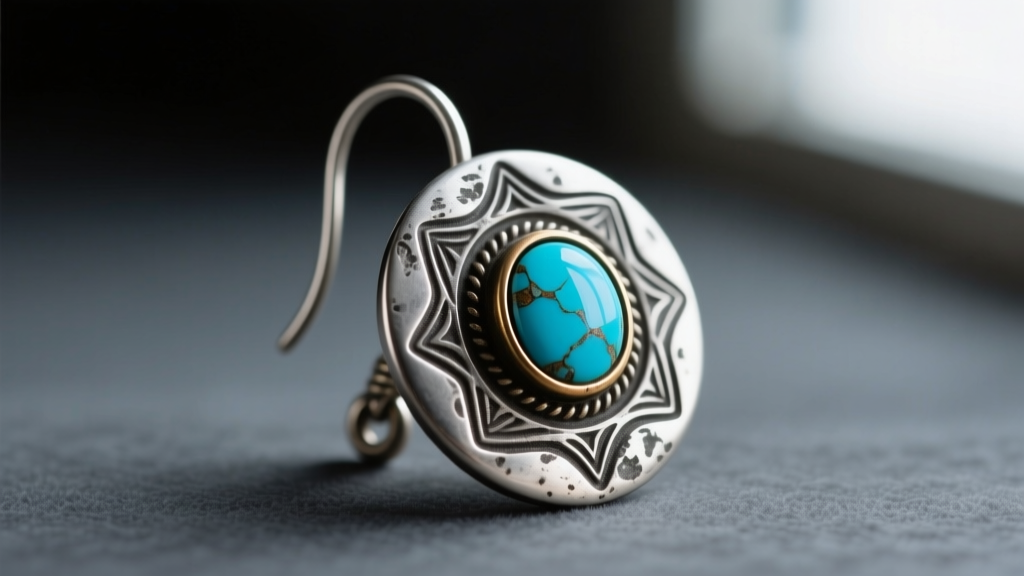
Standard fashion earrings utilize 20-gauge (0.81mm) or 18-gauge (1.02mm) ear wires. When a 25-gram earring hangs from a 20-gauge wire, the extreme pressure per square millimeter creates a "cheese-cutter" effect. Over time, this will stretch the piercing channel, cause micro-tears in the tissue, and lead to permanent earlobe sagging or splitting.
Pro-Tip for Heavy Earrings: Always inspect the gauge of the ear wire on heavy western turquoise dangles. For any earring exceeding 12 grams, insist on 16-gauge (1.2mm) or 14-gauge (1.6mm) French hooks or leverbacks. The thicker wire distributes the weight across a wider surface area of the piercing channel, preventing tissue damage and ensuring the structural integrity of the earring wire itself, which can otherwise bend and snap under the stress of heavy silver and stone.
Identifying Authenticity: Field Tests for Turquoise
Because the market is flooded with dyed howlite and magnesite masquerading as high-grade Kingman or Sleeping Beauty turquoise, knowing how to perform basic material authenticity tests is a valuable skill. According to mineralogical data from Mindat.org, genuine turquoise has a specific gravity of 2.6 to 2.9 and a distinct waxy to sub-vitreous luster. Imitations often look too glossy or plasticky due to heavy surface resin coatings.
- The Acetone Test: Dip a cotton swab in pure nail polish remover (acetone) and rub it discreetly on the back or bottom edge of the turquoise cabochon. If the cotton turns blue, the stone is dyed. Genuine natural or properly stabilized turquoise will not leach color under acetone exposure.
- The Hot Point Test: Heat the tip of a sewing needle until it is red hot, and touch it to an inconspicuous area of the stone. If the material is reconstituted turquoise dust bound with plastic resin, or dyed howlite coated in epoxy, it will melt slightly and emit a sharp, acrid chemical odor. Genuine turquoise is a heat-resistant mineral and will not melt or smell like burning plastic.
- Visual Matrix Inspection: Examine the brown or black matrix (the host rock webbing) under a jeweler's loupe. In genuine turquoise, the matrix lines are organic, jagged, and vary in depth. In dyed howlite, the "matrix" is often painted on or artificially injected, resulting in uniform, superficial lines that do not penetrate the stone's depth.
Care and Maintenance for Porous Gemstones
Even stabilized turquoise requires specific care to maintain its polish and structural integrity within its silver bezel. Turquoise is highly sensitive to sudden temperature changes and harsh chemicals. Never place western turquoise earrings in an ultrasonic jewelry cleaner; the high-frequency vibrations can fracture the stone, especially if it contains natural micro-fissures within the matrix. Similarly, steam cleaners will force moisture beneath the bezel setting, potentially degrading the adhesive used to secure the cabochon to the backing plate.
Adopt the "Last On, First Off" rule. Turquoise is easily damaged by the aerosols, alcohols, and synthetic oils found in hairsprays, perfumes, and cosmetics. Always apply your beauty products and allow them to dry completely before putting on your earrings. When removing them, wipe the stones gently with a dry, lint-free microfiber cloth to remove the day's accumulation of sebum and environmental pollutants before storing them in an anti-tarnish pouch. By respecting the unique material properties of western turquoise, you ensure that these wearable works of art remain vibrant and structurally sound for generations.


