What Are Shrimp Earrings? The 2026 Coastal Jewelry Trend Explained
Discover what shrimp earrings are, from surrealist runway origins to viral coastal trends. Explore materials, gauge sizes, and styling tips.

The Surrealist Origins and Viral Resurgence
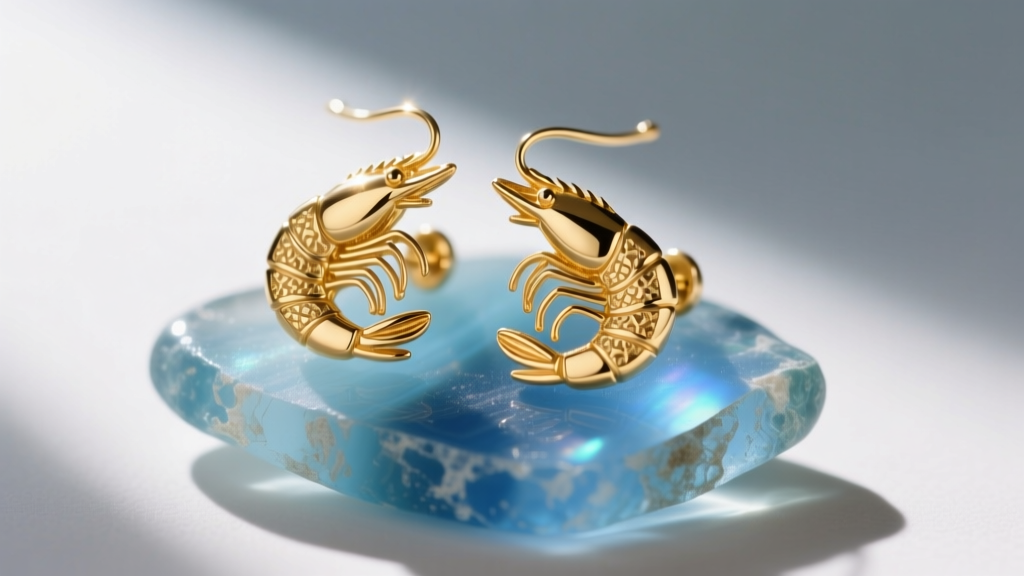
When trend forecasters and jewelry enthusiasts ask what are shrimp earrings, the answer requires looking past the initial novelty of crustacean-shaped accessories. At their core, shrimp earrings are statement or novelty ear adornments modeled after prawns, shrimp, and crawfish. While they may seem like a purely modern internet micro-trend born from the 'Seafood Core' and 'Coastal Grandmother' aesthetics on TikTok, their lineage actually traces back to 1930s high-fashion surrealism.
Designers like Elsa Schiaparelli famously collaborated with surrealist artists to incorporate unexpected biological and marine forms into wearable art. According to The Metropolitan Museum of Art, Surrealist jewelry often utilized shocking, hyper-realistic motifs to challenge traditional notions of beauty and luxury. In 2026, this surrealist ethos has been democratized. Shrimp earrings have evolved from avant-garde runway pieces into accessible, highly stylized staples for those embracing oceanic realism, mermaidcore, and elevated coastal fashion.
Material Breakdown: From Acrylic to Solid Gold
The market for crustacean jewelry is vast, and the material composition drastically dictates the price, weight, and appropriate piercing placement. Understanding these differences is crucial for both comfort and longevity.
| Material | Avg. Weight | Best Piercing | Price Range | Pros & Cons |
|---|---|---|---|---|
| Laser-Cut Acrylic | 1g - 3g | Standard Lobe, Helix | $12 - $35 | Extremely lightweight; prone to scratching and UV yellowing. |
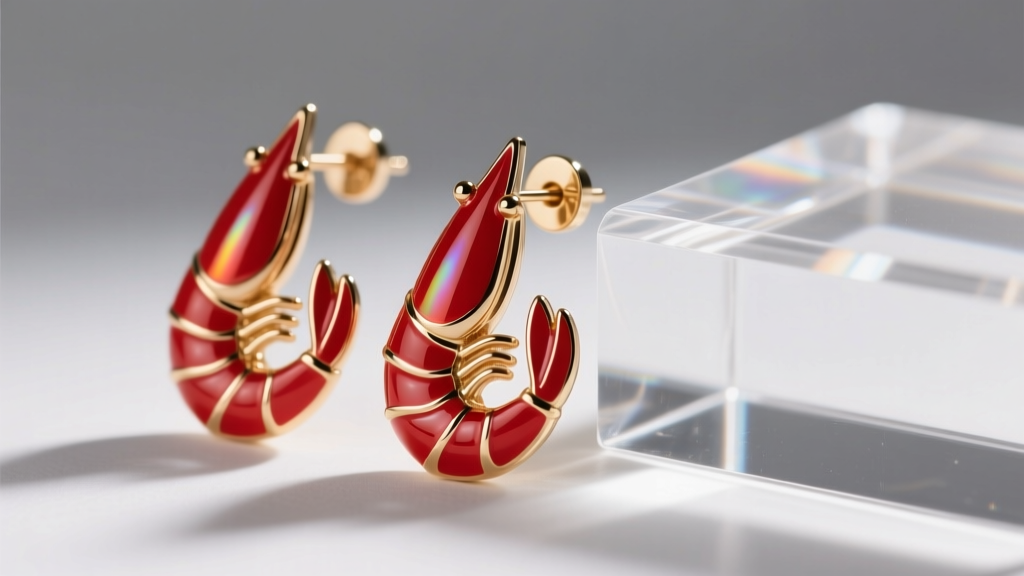
| Enameled Brass | 8g - 14g | Standard Lobe | $45 - $120 | Vibrant cloisonné colors; heavy, requires nickel-free verification. |
| Solid 14k/18k Gold | 5g - 12g | Lobe, Cartilage | $350 - $900+ | Hypoallergenic, heirloom quality; high cost, requires lost-wax casting. |
| Oxidized Sterling Silver | 6g - 10g | Lobe, Industrial | $80 - $200 | Excellent detail contrast via oxidation; tarnishes if exposed to saltwater. |
Stylist Note: If you are purchasing enameled brass shrimp earrings, always verify that the ear wire (the part that penetrates the skin) is made of surgical steel, titanium, or gold. Brass ear wires are a primary culprit for allergic reactions.
Technical Specs: Gauges, Weight, and Piercing Health
Because shrimp earrings often feature elongated, segmented bodies and intricate antennae, their weight distribution is inherently bottom-heavy. This presents unique mechanical challenges for your piercings.
Wire Thickness and Weight Distribution
Standard novelty fishhook ear wires are typically manufactured at 20-gauge (0.81mm). While this is perfectly adequate for lightweight acrylic or hollow-resin shrimp drops, it is entirely insufficient for solid metal or heavily enameled pieces. A solid brass shrimp earring can easily weigh 12 to 14 grams. When suspended on a thin 20-gauge wire, the center of gravity will cause the wire to bend, pulling the piercing channel downward and potentially causing migration or tearing.
For any shrimp earring exceeding 8 grams, you must ensure the ear wire is at least 18-gauge (1.02mm) or 16-gauge (1.29mm). Thicker wires provide the structural rigidity needed to keep the earring hanging straight while protecting the delicate fistula of your earlobe.
Avoiding Contact Dermatitis
The intricate crevices of a shrimp's segmented tail can trap moisture, sweat, and hair products. When combined with reactive base metals, this creates an ideal environment for contact dermatitis. The American Academy of Dermatology notes that nickel is the most common cause of allergic contact dermatitis, frequently found in cheap fashion jewelry alloys. If you have sensitive ears, strictly limit your choices to implant-grade titanium (ASTM F136), niobium, or solid 14k/18k gold, and avoid 'gold-plated' or 'gold-filled' options where the underlying brass can eventually bleed through the porous crevices of the casting.
Face Shape Matching for Crustacean Silhouettes
Styling shrimp earrings in 2026 requires an understanding of geometric balance. The elongated, curved silhouette of a shrimp can be used to manipulate facial proportions, much like traditional drop or dangle earrings.
- Round Faces: Opt for elongated shrimp dangles that measure 2.5 to 3.5 inches in length. The vertical drop and the natural 'C' curve of the shrimp's body will draw the eye downward, creating the illusion of a longer, more oval face shape. Avoid clustered shrimp studs, which can emphasize facial width.
- Square Faces: A strong jawline benefits from the organic, sweeping curves of a stylized shrimp hoop or a huggie earring featuring a wrapped crustacean motif. The curved segments soften angular features without adding unnecessary vertical length.
- Heart-Shaped Faces: Balance a narrower chin with bottom-heavy shrimp drops or asymmetrical designs—such as a small shrimp stud on one ear and a dramatic, dangling prawn on the other. The visual weight at the bottom of the earlobe helps widen the appearance of the lower face.
- Oval Faces: You possess the versatility to pull off almost any iteration, from hyper-realistic 14k gold crawfish studs to oversized, abstract acrylic shrimp ear cuffs.
Care and Maintenance Protocols
Maintaining the intricate details of crustacean jewelry requires specific cleaning protocols, as standard ultrasonic cleaners can destroy certain finishes.
For Enameled Brass: Never use ultrasonic cleaners or harsh chemical dips. The high-frequency vibrations can cause the glass-like enamel to micro-fracture or pop out of the brass settings. Instead, use a soft-bristled makeup brush dipped in mild, phosphate-free dish soap and warm water to gently agitate dirt out of the tail segments, then pat dry with a microfiber cloth.
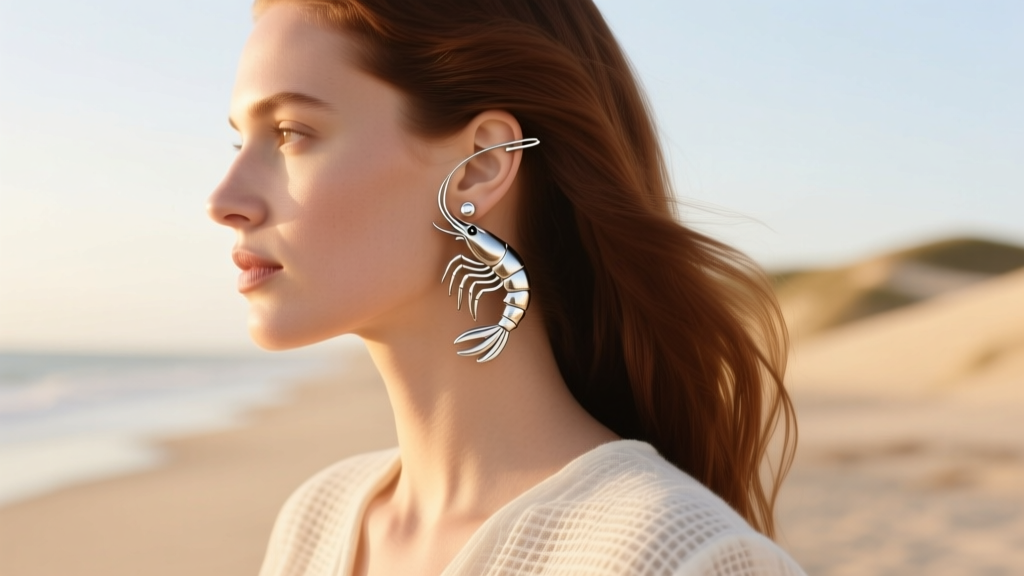
For Oxidized Sterling Silver: The darkened crevices (oxidation) are intentionally applied to highlight the shrimp's legs and antennae. Using standard silver polishing cloths will strip this oxidation, leaving the earring looking flat and one-dimensional. Clean these pieces using only a damp cloth and a soft brush, avoiding the recessed areas entirely.
For Solid Gold: Solid gold shrimp earrings can withstand ultrasonic cleaning, but if the piece features pave-set diamonds or gemstones along the shell, stick to manual cleaning with a soft baby toothbrush to prevent loosening the prongs.
Ultimately, understanding what shrimp earrings are goes beyond recognizing a viral trend. It is an appreciation of surrealist history, metallurgical craftsmanship, and the precise geometry required to turn a marine creature into an elegant, face-framing accessory.


