Which Earring Means Your Gay? The Truth About Metals & Myths
Searching which earring means your gay? Debunk the 80s myth and discover the 2026 guide to earring metals, titanium grades, and allergy-safe styles.

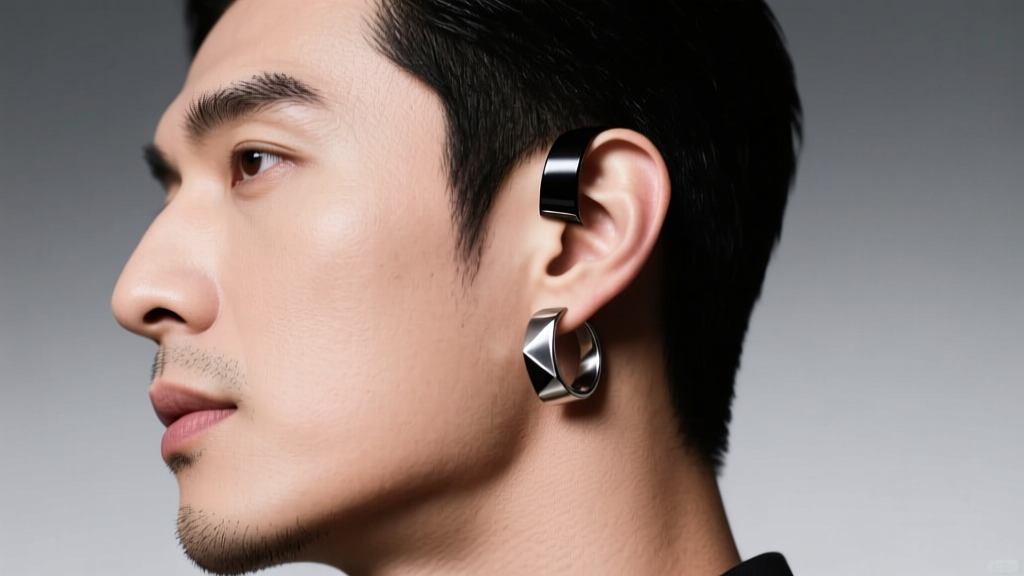
If you have ever found yourself typing which earring means your gay into a search engine, you are stumbling upon a fascinating relic of 1980s and 1990s pop culture. For decades, a pervasive urban legend dictated a strict 'hanky code' for ear piercings: the left ear signaled heterosexuality, while a pierced right ear was a covert signal of homosexuality. Both ears? Bisexual or a rebel. But as we navigate the style landscape of 2026, this outdated binary is entirely obsolete. Today, icons across the gender and sexuality spectrums curate elaborate ear constellations, wear delicate huggies, and sport heavy industrial barbells without a second thought about 'codes.'
So, what does your earring choice actually say about you today? In the modern era, the true signaling of a sophisticated jewelry wearer isn't about which ear is pierced, but rather what materials you choose to put inside your body. The real flex in 2026 is a deep understanding of metallurgy, biocompatibility, and allergy-safe curation. Let's debunk the myths and dive deep into the material properties that actually define a high-quality earring collection.
The 'Gay Earring' Myth vs. Modern Ear Curation
The 'right ear' myth originated in a time when LGBTQ+ individuals needed subtle, deniable ways to identify one another in hostile environments. However, the fashion and jewelry industries have long since moved past this. Today, ear curation is an art form focused on anatomy, face shape, and metal safety. Whether you are opting for a 16-gauge titanium labret stud in your helix or a seamless 14k gold hoop in your lobe, the focus is on tissue health and aesthetic harmony.
The modern 'code' is about self-care. Wearing implant-grade metals signals that you respect your body's immune system and understand the long-term realities of wearing foreign objects in dermal tissue. To understand this, we must look at the microscopic realities of earring materials.
Decoding Earring Metals: The 2026 Material Guide
Not all metals are created equal. The term 'hypoallergenic' is largely unregulated and often used as a marketing gimmick. Here is the unvarnished truth about the metals touching your fistulas (the healed skin tunnel of a piercing).
1. Implant-Grade Titanium (ASTM F136)
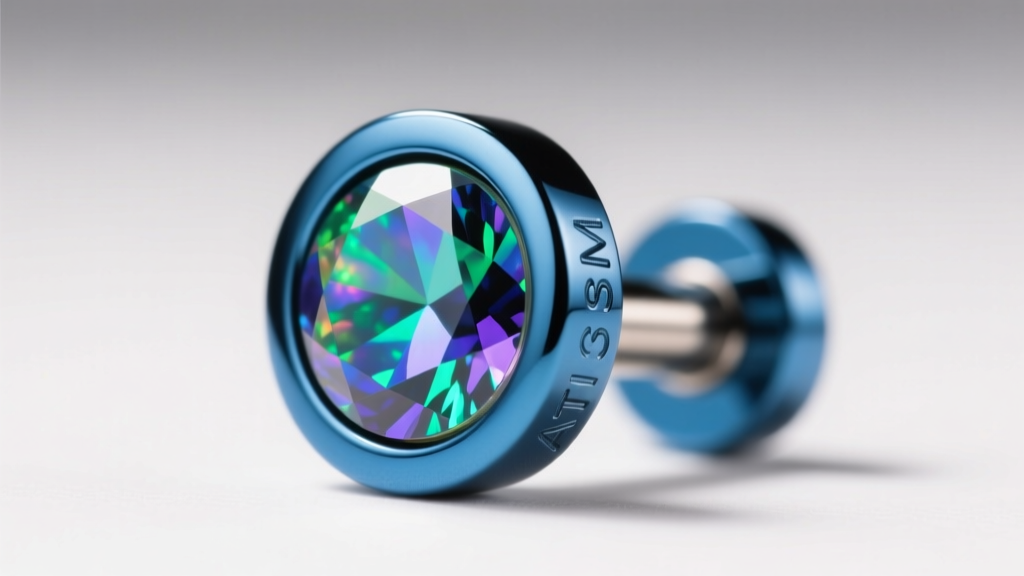
If there is a gold standard for body jewelry, it is ASTM F136 Titanium. Unlike commercial 'titanium' which may be a mixed alloy, F136 is an Extra Low Interstitial (ELI) titanium-aluminum-vanadium alloy. It contains 0% nickel, making it completely inert in the human body. It is lightweight, non-magnetic, and can be anodized using electrical currents to create vibrant, permanent colors (like deep blues, purples, and golds) without using toxic paints or plating.
- Best For: Fresh piercings, severe metal allergies, and long-term cartilage wear.
- Common Gauges: 18g (1.0mm) for lobes, 16g (1.2mm) for helix and tragus.
- Price Range: $25 - $75 per piece for high-end brands like Anatometal or Industrial Strength.
2. Niobium
Niobium is an elemental metal, meaning it is not an alloy and cannot be broken down into irritating components. Like titanium, it is highly biocompatible and nickel-free. However, niobium is significantly softer than titanium. While this makes it less ideal for the thick posts needed for structural support in an industrial piercing, it is the absolute best material for seamless rings and ear cuffs that require custom bending to fit unique ear anatomies.
- Best For: Custom-fitted seamless hoops, ear cuffs, and individuals who react even to the trace elements in gold.
- Failure Mode: Because it is soft, niobium can scratch easily if tumbled with harder metals in a jewelry cleaner.
3. The Surgical Steel Trap (316L vs. 316LVM)
Many mall kiosks and fast-fashion brands sell 'Surgical Steel' and claim it is safe for everyone. This is a dangerous half-truth. 316L and 316LVM stainless steels contain between 8% and 10.5% nickel. While the nickel is bound within the alloy, the saline environment of a healing or irritated ear can cause nickel ions to leach into the tissue, triggering contact dermatitis, itching, and the dreaded 'irritation bumps' on the cartilage.
Material Comparison Chart: Hypoallergenic Properties
Use this framework to evaluate your current jewelry box and make informed purchasing decisions.
| Material | Nickel Content | Biocompatibility | Best Use Case | Avg. Price (2026) |
|---|---|---|---|---|
| ASTM F136 Titanium | 0% | Excellent (Implant Grade) | Fresh piercings, daily wear | $30 - $80 |
| Niobium | 0% | Excellent (Elemental) | Seamless rings, custom bends | $25 - $65 |
| 14k / 18k Solid Gold | Varies (Avoid White Gold) | Good (If alloyed w/ Silver/Palladium) | Healed lobes, luxury curation | $90 - $300+ |
| 316L Surgical Steel | 8% - 10.5% | Poor for Sensitive Skin | Occasional wear, healed lobes only | $10 - $25 |
| Platinum (950) | 0% | Exceptional | Heirloom pieces, extreme sensitivity | $400 - $1000+ |
Threading and Mechanics: The Hidden Irritants
Material is only half the battle; the mechanical design of the earring dictates how your tissue heals and thrives. According to the Association of Professional Piercers (APP), the threading on your jewelry can cause micro-tears in the fistula.
Externally Threaded vs. Threadless
Externally threaded jewelry (where the screw pattern is on the post that passes through the ear) acts like a cheese grater on delicate healing tissue. It harbors bacteria in the grooves and causes friction. In 2026, high-end body jewelry relies on two superior methods:
- Internally Threaded: The screw is on the decorative end, and the post is perfectly smooth, gliding through the ear without snagging.
- Threadless (Push-Pin): A tension-based system where a slightly bent pin is inserted into a hollow post. The tension of the bent metal holds the jewelry securely in place. This is the gold standard for labret studs used in helix, tragus, and lobe piercings.

Gold Alloys and the Copper Conundrum
While solid 14k and 18k gold are luxurious choices for healed piercings, the alloy mix matters immensely. Pure 24k gold is too soft for body jewelry, so it must be mixed with other metals.
- Yellow Gold: Usually alloyed with silver and copper. Safe for most, but high copper content can cause a greenish oxidation on the skin if your body chemistry is highly acidic.
- Rose Gold: Gets its pink hue from a high copper content. If you have a copper sensitivity, rose gold will cause persistent itching and flaking.
- White Gold: Traditionally alloyed with nickel to achieve a silver color. If you are buying white gold for your ears, you must verify with the jeweler that it is alloyed with palladium instead of nickel. The American Academy of Dermatology notes that nickel allergy is the most common contact allergy worldwide, affecting up to 18% of the population.
Final Verdict: Ditch the Codes, Upgrade Your Metals
The question of which earring means your gay belongs in a museum of 20th-century subculture, not in your modern jewelry box. In 2026, true style is defined by intentionality, anatomical precision, and a commitment to biocompatible materials. Whether you are a man, woman, or non-binary individual rocking a constellation of 16-gauge threadless titanium studs or a single, perfectly fitted niobium huggie, the only thing your earrings are signaling is that you respect your body enough to wear metals that belong inside it.


