White Agate Earrings vs. Pearl & Moonstone: A Material Guide
Discover how white agate earrings compare to pearl and moonstone. Explore Mohs hardness, porosity, durability, and care tips for your jewelry.

The Rise of Opaque White Gemstones in Everyday Jewelry
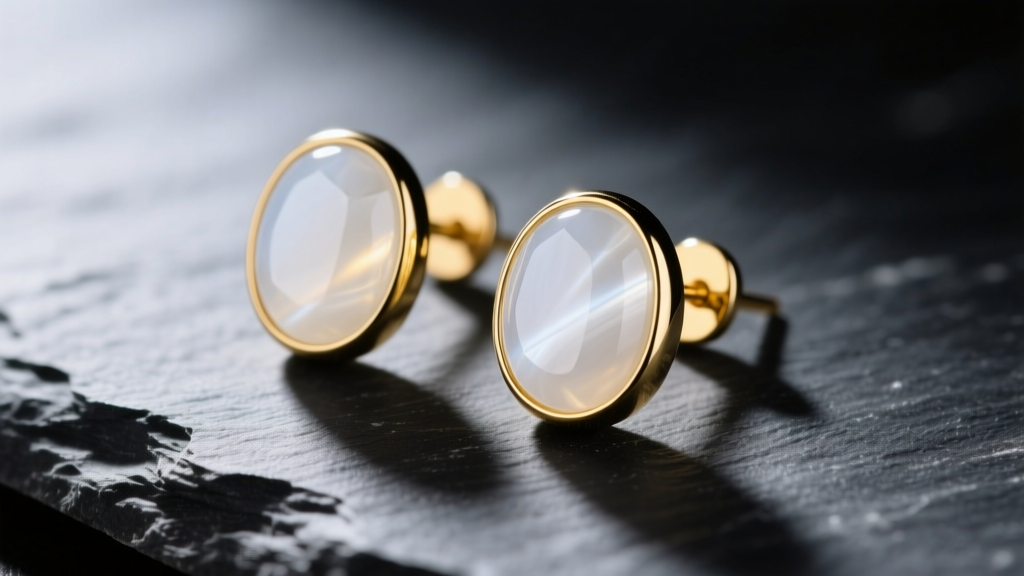
When curating a versatile, minimalist jewelry wardrobe, opaque white gemstones offer a striking alternative to traditional brilliant-cut diamonds or transparent crystals. As we navigate jewelry material trends in 2026, white agate earrings have emerged as a staple for their milky, luminous appearance and exceptional durability. However, consumers frequently confuse white agate with other popular white stones like freshwater pearls, moonstone, and howlite.
Understanding the mineralogical differences between these materials is critical for making informed purchasing decisions. A stone's hardness, porosity, and cleavage directly dictate how it should be set, worn, and cleaned. This comprehensive material comparison will break down the exact properties of white agate, contrast it with its closest visual competitors, and provide actionable guidance on jewelry fabrication and long-term care.
What is White Agate? Mineral Properties & Grading
White agate is a variety of chalcedony, which is a cryptocrystalline form of quartz. Unlike macrocrystalline quartz (like amethyst or citrine), the crystals in agate are so microscopic that they cannot be seen even under standard magnification. This dense, interlocking crystal structure gives white agate its signature waxy luster and remarkable toughness.
Mohs Hardness and Cleavage
On the Mohs scale of mineral hardness, white agate scores between 6.5 and 7. This places it in the same durability tier as standard amethyst and citrine, making it highly resistant to scratching from everyday dust and debris (which typically contains quartz particles at a hardness of 7). More importantly, agate lacks cleavage. Cleavage is the tendency of a mineral to break along flat, structural planes. Because agate exhibits a conchoidal (shell-like) fracture instead, it is far less prone to splitting or chipping from accidental impacts compared to stones with perfect cleavage.
Identifying Genuine White Agate vs. Howlite Imitations
The most common imitation sold as white agate is howlite, a porous borate mineral. Unscrupulous vendors often market howlite as 'white turquoise' or 'white agate.' According to mineralogical data from Mindat.org, howlite has a Mohs hardness of only 3.5 and is highly porous.
- The Temperature Test: Genuine white agate has a higher thermal conductivity than howlite or glass. When touched to the cheek or lips, real agate will feel noticeably cool and take longer to warm to body temperature.
- The Scratch Test: A copper coin (Mohs ~3.5) will easily scratch howlite, leaving a metallic mark. It will not scratch genuine white agate.
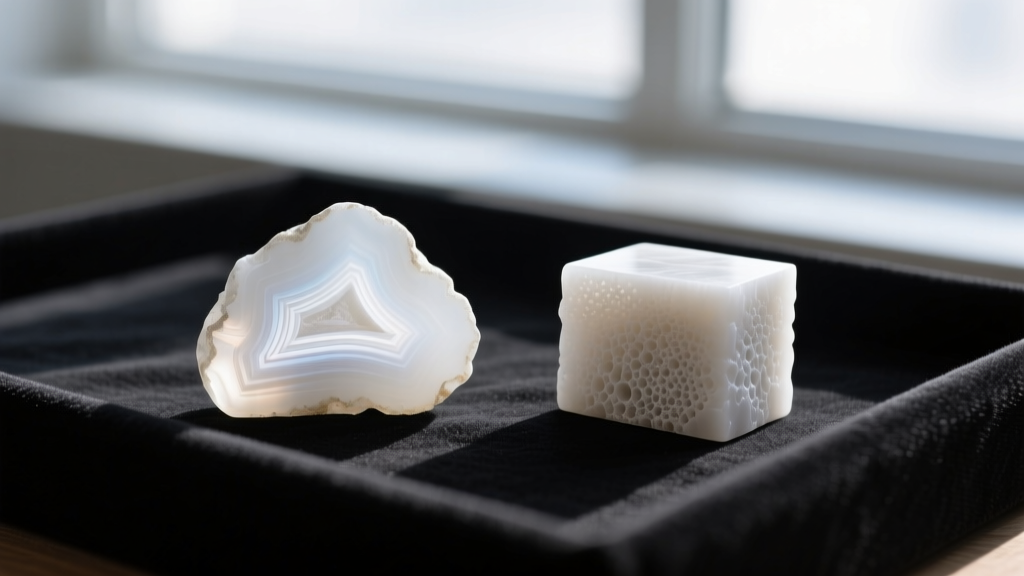
- Visual Inspection: Howlite often features distinct, web-like grey or black veining. While agate can have banding, pure white agate cabochons are typically uniform, milky, and translucent at the edges when backlit.
Material Showdown: White Agate vs. Pearl vs. Moonstone
To understand the true value of white agate earrings, we must compare them directly against the other two most popular opaque/semi-opaque white gemstones: freshwater pearls and rainbow moonstone. The Gemological Institute of America (GIA) notes that while visual similarities exist, the physical properties dictate vastly different use cases.
| Property | White Agate (Chalcedony) | Freshwater Pearl (Organic) | Rainbow Moonstone (Feldspar) |
|---|---|---|---|
| Mohs Hardness | 6.5 - 7.0 | 2.5 - 4.5 | 6.0 - 6.5 |
| Cleavage | None (Conchoidal fracture) | None | Perfect (Prone to splitting) |
| Porosity | Non-porous | Highly porous | Non-porous |
| Chemical Sensitivity | Vulnerable to hydrofluoric acid only | Dissolves in mild acids, ruined by perfume/sweat | Stable, but fractures from thermal shock |
| Avg. Cabochon Price (8mm) | $8 - $18 | $15 - $45 (High Luster) | $12 - $30 |
The Verdict on Durability: Pearls are organic and incredibly fragile. They require meticulous care and are easily etched by the lactic acid in human sweat. Moonstone, while harder than pearl, possesses perfect cleavage, meaning a single drop onto a tile floor can cause the stone to fracture internally. White agate is the undisputed winner for everyday, low-maintenance wear.
Design & Metal Pairings for White Agate Earrings
Because white agate is typically cut en cabochon (smooth and domed rather than faceted), the metal setting must be engineered to protect the stone's girdle (the outer edge) while complementing its waxy luster.
Optimal Settings and Gauge Sizes
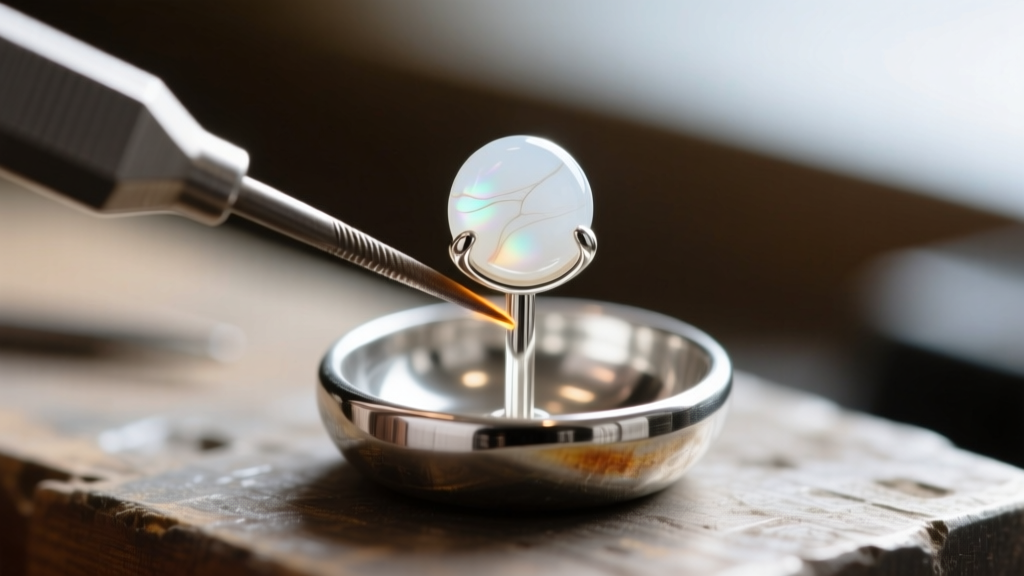
For white agate earrings, bezel settings are the industry gold standard. A full bezel wraps a thin ribbon of metal entirely around the circumference of the cabochon, securing it firmly and protecting the edges from impact. Half-bezel or prong settings leave the girdle exposed, increasing the risk of chipping if the earring is dropped.
When selecting the hardware, pay attention to the post gauge:
- 20-Gauge (0.81mm): The standard for lightweight 4mm to 8mm white agate studs. It fits comfortably through standard lobe piercings without causing stretching.
- 18-Gauge (1.02mm): Recommended for heavier 10mm+ cabochons or drop-style earrings. The thicker wire prevents the post from bending under the weight of the denser quartz material.
Metal Color Pairings
White agate's neutral, milky tone makes it a chameleon in jewelry design. 14k yellow gold provides a warm, vintage contrast that highlights the stone's creamy undertones. Conversely, rhodium-plated sterling silver or platinum creates a crisp, monochromatic, ultra-modern aesthetic. For those with nickel sensitivities, ensure the white agate earrings are set in hypoallergenic metals like surgical steel, titanium, or high-karat gold, as the stone itself is entirely hypoallergenic.
Long-Term Care: Ultrasonic Cleaners and Chemical Exposure
One of the most significant advantages of white agate earrings over pearl or moonstone is the ease of maintenance. Because agate is non-porous and lacks cleavage, it can withstand rigorous cleaning methods that would destroy other gems.
Pro Tip: You can safely clean white agate earrings in an ultrasonic jewelry cleaner using a mild, ammonia-free solution. The high-frequency vibrations will dislodge lotion and sebum from the bezel cup without risking damage to the stone. Never put pearls or fracture-filled moonstones in an ultrasonic cleaner.
However, while the stone is virtually indestructible in a jewelry context, the metal setting still requires care. Avoid exposing sterling silver settings to chlorine in swimming pools, as this will cause rapid, irreversible oxidation. For routine cleaning, a soft-bristled toothbrush with warm water and a drop of dish soap is all that is required to restore the agate's natural waxy luster.
Final Verdict: Who Should Wear White Agate?
White agate earrings are the ultimate choice for the 'wear-and-forget' consumer. If you want the elegant, opaque white aesthetic of a South Sea pearl or a high-quality moonstone, but you refuse to baby your jewelry, white agate is the superior material. Its Mohs 7 hardness ensures it will survive years of daily wear in lobe or cartilage piercings without scratching, clouding, or fracturing. By verifying the stone's authenticity and opting for a secure bezel setting on a sturdy 18-gauge or 20-gauge post, you secure a timeless, durable accessory that bridges the gap between minimalist fashion and geological resilience.


