The Modern Woman With Pearl Earrings: A Material & Metal Guide
Discover the material science behind the perfect pearl earring. Compare nacre thickness, metal settings, and hypoallergenic properties.

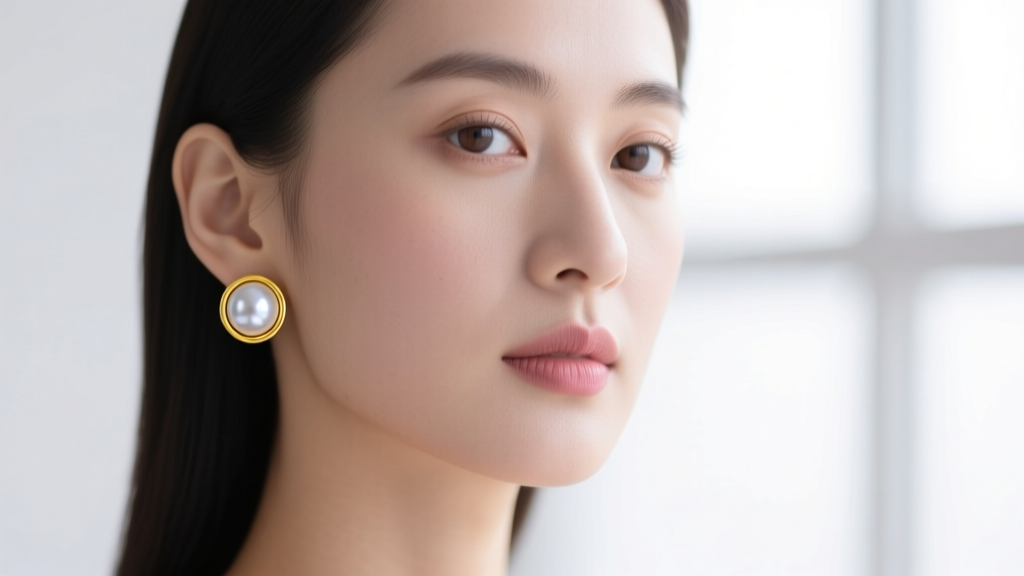
Johannes Vermeer’s 1665 masterpiece immortalized the 'woman with pearl earrings,' capturing a moment of quiet elegance that continues to define jewelry aesthetics centuries later. However, as we navigate the jewelry landscape in 2026, the modern woman with pearl earrings requires more than just an appreciation for classical art; she demands a rigorous understanding of material science, organic gemology, and metallurgical compatibility. Pearls are not inert stones. They are complex, living biominerals that interact dynamically with human skin, ambient humidity, and the metal alloys used to secure them.
This comprehensive guide deconstructs the material properties of pearl earrings, moving beyond superficial styling advice to explore nacre thickness, hypoallergenic post alloys, adhesive failure modes, and the optical physics of pearl overtones. Whether you are selecting a pair of everyday studs or evaluating heirloom drops, understanding these physical properties is essential for long-term wearability and ear health.
The Organic Architecture: Nacre Thickness and Mohs Hardness
Unlike diamonds or sapphires, pearls are organic gemstones composed primarily of calcium carbonate (aragonite) held together by an organic protein matrix called conchiolin. This structure gives pearls their signature luster but also dictates their vulnerability. On the Mohs scale of mineral hardness, pearls rank between 2.5 and 4.5, making them significantly softer than most faceted gemstones and even common household dust (which contains quartz at 7.0).
Evaluating Nacre Thickness
The durability of a pearl earring is directly tied to its nacre thickness—the layered coating of aragonite platelets secreted by the mollusk. In modern gemological assessments, X-ray microradiography is the standard for verifying these layers.
- Akoya Pearls: Typically feature a nacre thickness of 0.1mm to 0.5mm over a solid bead nucleus. While exceptionally lustrous due to the tight crystalline structure of the thin nacre, they are prone to peeling if the earring post rubs aggressively against the pearl's drill hole.
- South Sea and Tahitian Pearls: Boast a massive nacre thickness ranging from 2.0mm to 6.0mm. This makes them highly durable for heavy drop earrings and dangles, as the thick nacre resists chipping and structural degradation over decades of wear.
- Freshwater Pearls: Modern tissue-nucleated freshwater pearls are composed of solid nacre all the way through. While they lack the mirror-like luster of a bead-nucleated Akoya, their solid composition makes them virtually immune to peeling.
Metallurgy and Ear Health: Choosing the Right Post
The pearl may be the focal point, but the metal post is the material that actually interacts with your body. According to the American Academy of Dermatology, nickel allergy is the most common cause of allergic contact dermatitis, affecting up to 18% of adults. Because pearl earrings are frequently worn for extended periods, the metallurgical grade of the earring post is a critical health consideration.
| Metal Alloy | Nickel Content | Hypoallergenic Rating | Best Pearl Pairing |
|---|---|---|---|
| Platinum (Pt950) | 0% | Excellent | High-value South Sea drops |
| 18k Yellow Gold | 0% - 2% | Very Good | Akoya and Tahitian studs |
| 14k White Gold | 5% - 12% | Poor (often causes flare-ups) | Not recommended for sensitive lobes |
| ASTM F136 Titanium | 0% | Excellent (Medical Grade) | Freshwater everyday wear |
| Surgical Steel (316L) | 8% - 10.5% | Fair (Nickel is bound but can leach) | Budget fashion earrings only |
For the modern woman with pearl earrings who suffers from contact dermatitis, the optimal choice is a post machined from ASTM F136 implant-grade titanium or 18k (or higher) nickel-free yellow gold. White gold should be approached with extreme caution, as the copper, zinc, and nickel alloys used to bleach the gold yellow can trigger severe lobe inflammation, which in turn creates an acidic microenvironment that can actually degrade the pearl's drill hole over time.
Adhesive Chemistry: The Hidden Failure Points
Unlike faceted gems that are secured by metal prongs, pearl stud earrings are almost exclusively mounted using a combination of a metal cup, a pin, and an adhesive. The pearl is drilled halfway (half-drilled) or completely (fully drilled), and the metal pin is inserted into the cavity. The structural integrity of the earring relies entirely on the chemical properties of the adhesive used.
Epoxy vs. Cyanoacrylate
High-end jewelers utilize two-part jeweler's epoxy resins. These epoxies offer a high shear strength and possess a slight flexibility that absorbs the kinetic shock when the earring is bumped. However, epoxies are vulnerable to prolonged heat and specific solvents. Conversely, mass-produced pearl earrings often use cyanoacrylate (super glue) for rapid assembly. While cyanoacrylate sets instantly and bonds well to the calcium carbonate of the pearl, it becomes highly brittle upon curing. A single drop of a heavy pearl dangle can cause a cyanoacrylate bond to shatter, resulting in the loss of the gemstone.
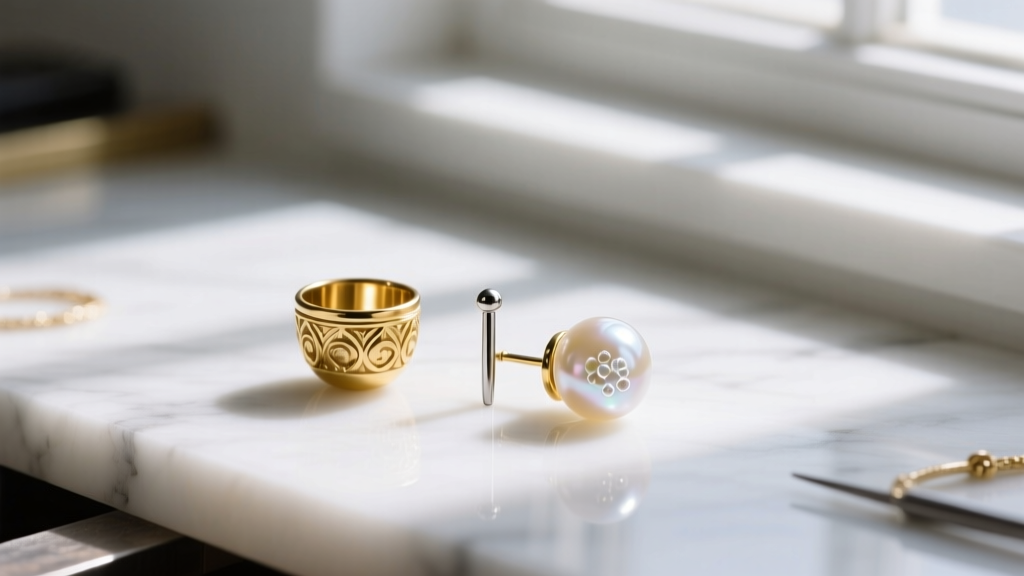
Pro-Tip for 2026: Never use ultrasonic cleaners or steamers on pearl earrings. The high-frequency vibrations will shatter brittle adhesives, and the heat will soften epoxies, causing the pearl to detach from the post. Furthermore, avoid spraying perfume or hairspray directly onto the earrings; the alcohol and aerosol propellants act as solvents that dissolve the adhesive bond over time.
Optical Physics: Overtone, Luster, and Skin Undertones
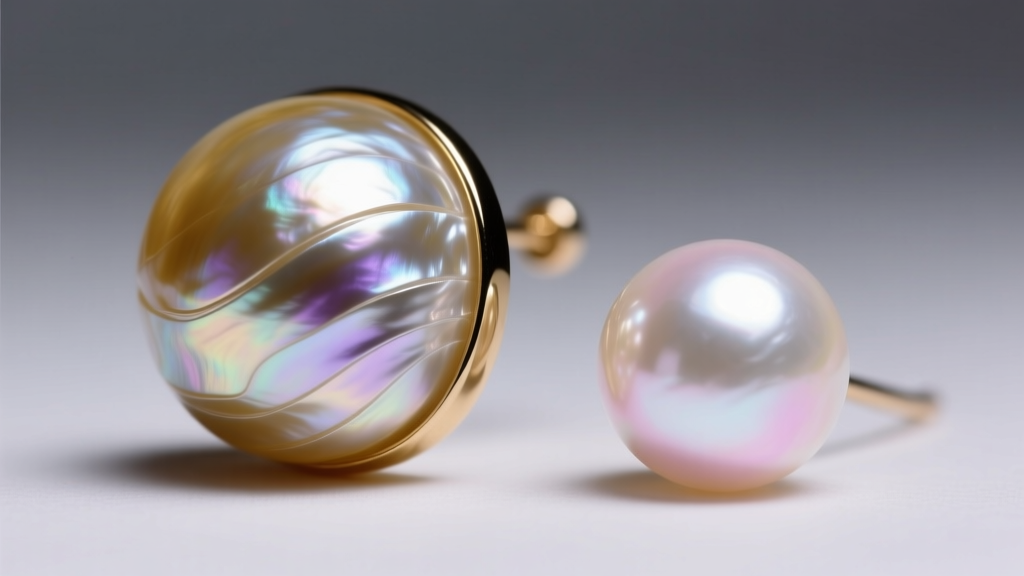
The Gemological Institute of America (GIA) defines pearl luster as the sharpness and intensity of reflections on the surface, which is dictated by the microscopic alignment of the aragonite platelets. However, the true magic of pearl material science lies in its 'overtone'—the translucent secondary color that floats over the pearl's primary body color, caused by light interference through the layers of nacre.
Selecting the right overtone is a matter of optical physics interacting with human skin melanin and hemoglobin levels:
- Rosé Overtones: The interference of light through thin, tightly packed nacre layers creates a pinkish-red secondary color. This optically complements cool skin undertones (visible blue/purple veins) by mirroring the natural flush of the skin.
- Silver Overtones: Created by slightly thicker nacre layers, silver overtones provide a stark, high-contrast reflection that brightens warm, olive, or deep skin undertones without washing them out.
- Peacock Overtones (Tahitian): A complex interference pattern of green, purple, and blue. This material property is universally flattering but creates the most striking visual depth against medium-to-deep complexions with warm undertones.
Long-Term Preservation of Organic Gemstones
Because pearls are organic, they are subject to biological and chemical degradation that inorganic stones do not face. The calcium carbonate structure is highly reactive to acids. Human sweat has a pH ranging from 4.5 to 7.0. Over years of daily wear, the mild acidity of perspiration can literally dissolve the outer layers of nacre, resulting in a permanent loss of luster and a chalky surface texture.
Storage and Hydration
Pearls require a specific humidity level to maintain their structural integrity. The conchiolin protein matrix contains water; if the pearl is stored in an overly dry environment (such as a safety deposit box or a cotton-lined jewelry box in a climate-controlled room), the protein dries out, leading to microscopic cracking and eventual delamination of the nacre layers.
The Golden Rule of Pearl Storage: Never store pearl earrings in airtight plastic bags or sealed vaults for extended periods. Keep them in a soft, non-abrasive silk pouch in a room with ambient humidity (around 40-50%), and wear them frequently. The natural oils from your skin, when wiped clean of acidic sweat afterward, actually help maintain the conchiolin's hydration and preserve the pearl's structural integrity.
Ultimately, being the modern woman with pearl earrings means embracing the beautiful fragility of organic materials. By understanding the metallurgical compatibility of your earring posts, the chemical vulnerabilities of the adhesives, and the optical physics of nacre, you can curate a collection that remains as captivating in 2026 as Vermeer's subject was in the 17th century.


