Troubleshooting Yin Yang Stud Earrings: Fixes & Care
Struggling with spinning, sagging, or chipping yin yang stud earrings? Discover expert troubleshooting tips, material fixes, and styling hacks.

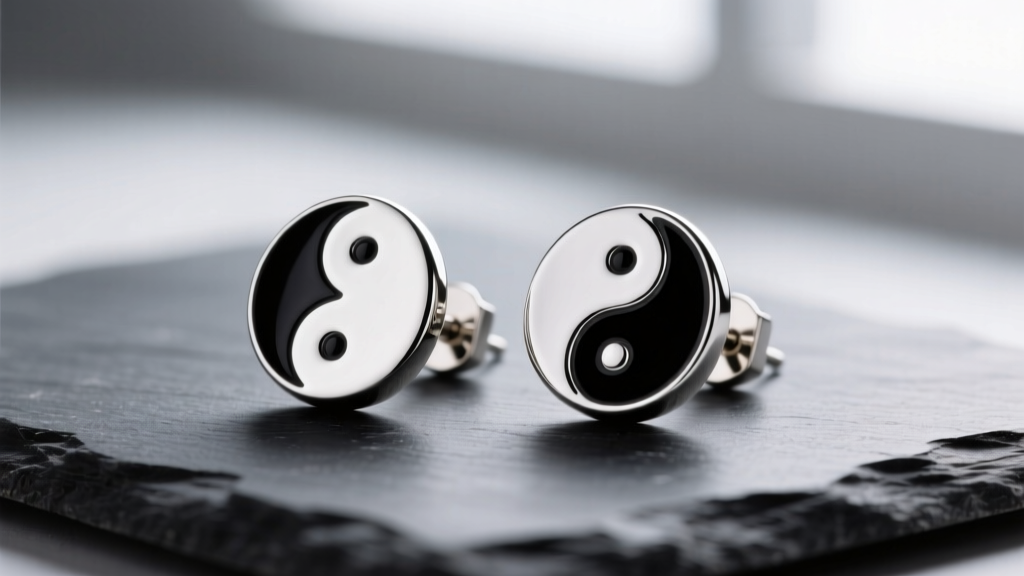
Yin yang stud earrings are a timeless symbol of balance, harmony, and duality. However, from a structural and metallurgical perspective, they are often a nightmare of asymmetrical weight distribution, mixed-material vulnerabilities, and high-friction failure points. Whether you are dealing with a stud that refuses to stay upright, black enamel that chips within weeks, or unexpected skin irritation, the root cause almost always traces back to poor hardware engineering and material mismatches.
As we navigate the 2026 jewelry market, consumers are demanding higher longevity from their everyday pieces. This comprehensive troubleshooting guide dives deep into the specific mechanical and chemical failures of yin yang stud earrings, providing actionable, expert-level solutions to restore, upgrade, and maintain your favorite pairs.
The Physics of the Spin: Why Your Studs Won't Stay Upright
The most common complaint with yin yang studs is the endless 'spinning' on the earlobe. This is not a flaw in your piercing; it is a flaw in the jewelry's center of gravity. A true yin yang design is inherently asymmetrical in density. The 'white' side is frequently crafted from dense materials like mother of pearl, cubic zirconia, or solid sterling silver. The 'black' side is often composed of lightweight cold enamel or hollowed-out base metal. This density mismatch creates a rotational torque that pulls the heavier side downward.
The Failure of Standard Butterfly Backs
Most commercial yin yang studs are manufactured with a 20-gauge (0.8mm) or 22-gauge (0.6mm) friction post paired with a standard butterfly clutch. This setup provides zero rotational resistance. The thin post acts as an axle, allowing the top-heavy design to spin freely with every movement of your jaw or hair.
The Flat-Back Labret Solution
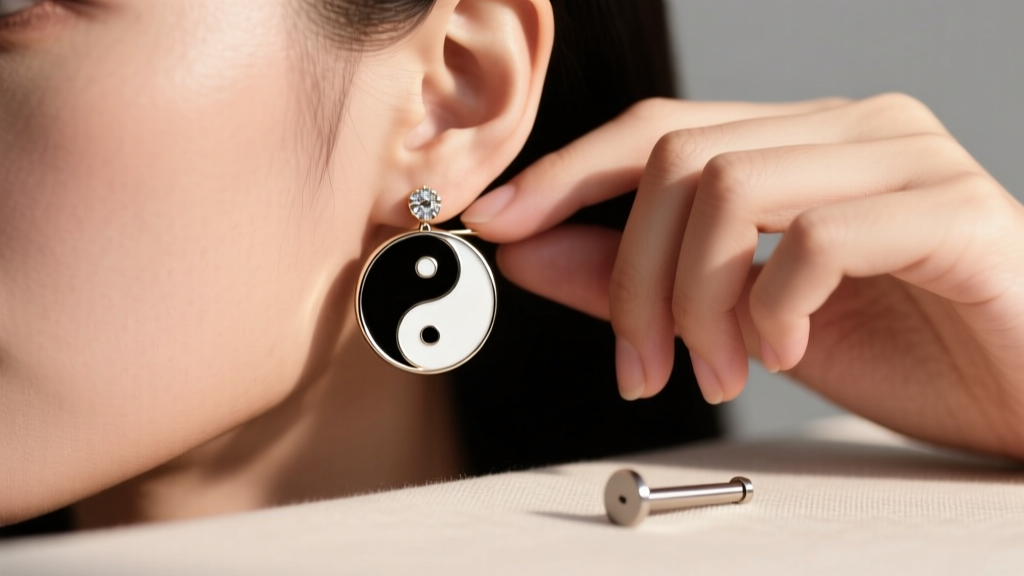
To solve the spinning issue, you must increase the surface area of the backing and the thickness of the post. According to the Association of Professional Piercers, upgrading to a flat-back labret post creates a friction lock against the rear of the earlobe.
- Post Upgrade: Swap the 20G post for an 18-gauge (1.0mm) or 16-gauge (1.2mm) post, provided your piercing fistula allows it. The thicker gauge reduces the 'axle' effect.
- Backing Upgrade: Use a flat-back titanium disc (typically 4mm to 5mm in diameter). The flat disc rests flush against the skin, distributing pressure and physically preventing the earring from rotating.
- Threadless Ends: Consider purchasing a yin yang end that utilizes a push-pin (threadless) tension fit onto a flat-back post. The slight bend in the pin creates internal tension that locks the design in your preferred orientation.
Solving the Enamel Chipping and Inlay Popping Crisis
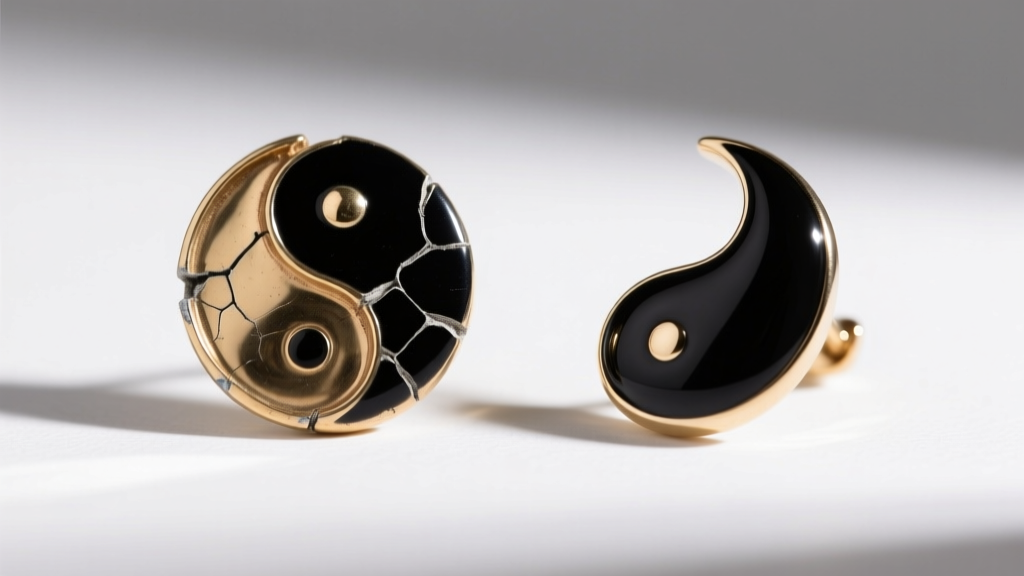
The black half of the yin yang symbol is the primary structural failure point in mass-market jewelry. The method used to achieve that deep black contrast dictates the lifespan of the earring.
Cold Enamel vs. Vitreous Enamel
If your black enamel is chipping, peeling, or revealing a brassy underlayer, you are dealing with cold enamel (an epoxy-based resin). Cold enamel is cheap to apply but lacks thermal and impact resistance. It will inevitably chip when dropped on a tile floor or exposed to hot water in the shower. Vitreous enamel, on the other hand, is glass powder kiln-fired onto metal at high temperatures. While vastly more durable and resistant to yellowing, vitreous enamel can shatter under blunt force impact.
The Bezel-Set Stone Alternative
For maximum longevity, avoid enamel entirely and seek out yin yang studs that utilize black onyx or black spinel inlay. However, pay close attention to the setting. Prong-set stones will catch on sweaters and hair, eventually pulling the stone loose. Always opt for a bezel setting, where a continuous rim of metal is burnished over the edge of the stone, locking it permanently in place.
Pro-Tip for Chipped Resin: If your favorite cold-enamel yin yang studs have micro-chips, do not discard them. Clean the area with isopropyl alcohol, apply a micro-drop of UV-curing jewelry resin, and cure it under a UV lamp for 60 seconds. This creates a hardened, glass-like seal over the damaged epoxy.
Galvanic Corrosion and Skin Irritation
Experiencing itching, redness, or a greenish tint on your earlobe? This is rarely a simple 'nickel allergy.' In bi-metal or multi-finish designs like the yin yang, galvanic corrosion is often the culprit.
When two dissimilar metals (or a base metal and a plating) are in contact in the presence of an electrolyte (your sweat), a microscopic electrochemical battery is formed. The more reactive metal corrodes, releasing copper or nickel salts onto your skin. Many budget yin yang studs are cast from brass and plated with silver on one side and black rhodium on the other. As the plating wears thin at the microscopic seam where the black and white meet, the underlying brass reacts with your skin's pH.
The 2026 Standard: PVD Coated Titanium
To eliminate allergic reactions and galvanic corrosion, the base metal must be entirely hypoallergenic. Look for studs machined from ASTM F136 implant-grade titanium. Instead of chemical plating, the black side should be colored using PVD (Physical Vapor Deposition). PVD bonds titanium nitride at a molecular level, creating a black finish that will never flake, tarnish, or cause contact dermatitis.
Troubleshooting Matrix: Quick Fixes for Common Issues
Use this diagnostic table to identify your specific earring failure and apply the correct metallurgical or mechanical solution.
| Problem Symptom | Root Cause | Expert Solution |
|---|---|---|
| Earring spins upside down | Asymmetrical weight; thin 20G post | Upgrade to 18G flat-back labret post |
| Black side chipping/flaking | Cold epoxy enamel degradation | Seal with UV resin; replace with onyx |
| Earlobe stretching/sagging | Heavy solid metal design (>4g) | Use silicone support patches behind lobe |
| Green skin / itching | Galvanic corrosion of brass base | Switch to ASTM F136 Titanium with PVD |
| White side turning yellow | Sterling silver sulfide tarnish | Store with anti-tarnish strips; polish |
Lobe Sagging and the 'Droop' Effect
While studs are generally considered lightweight, a solid 10mm or 12mm yin yang stud cast in brass or steel can weigh between 3 to 5 grams per earring. While this sounds negligible, the continuous downward pull on a standard 1mm piercing fistula will cause the tissue to stretch over time, resulting in a 'drooping' appearance where the earring sits millimeters below the actual piercing hole.
The Fix: Distribute the weight. Utilize specialized earring support patches (such as Bling Guards or medical-grade silicone o-rings) that adhere to or rest against the back of the earlobe. These patches increase the surface area bearing the weight of the earring from a 1mm puncture hole to a 10mm radius, completely eliminating tissue stretch and keeping the yin yang perfectly centered on your lobe.
Expert Sourcing and Long-Term Care Protocols
When shopping for replacement yin yang studs, bypass fast-fashion retailers and seek out independent jewelers or specialized body jewelry brands that disclose their exact material grades. The Jewelers of America recommends always verifying the metal hallmark and asking specifically about the origin of the black contrast material.
Cleaning Warnings
Never place yin yang earrings with any type of enamel or glued stone inlay into an ultrasonic cleaner. The high-frequency vibrations will shatter vitreous enamel and dissolve the cyanoacrylate adhesives used in budget stone inlays. Instead, clean your studs using a soft-bristled baby toothbrush, warm distilled water, and a drop of pH-neutral castile soap. Dry immediately with a microfiber cloth to prevent water spots on the polished metal halves.
By understanding the mechanical physics and chemical vulnerabilities of the yin yang design, you can transition from constantly replacing cheap, broken studs to investing in precision-engineered pieces that maintain their balance, both visually and structurally, for a lifetime.


