How to Clean, Care for, and Style Kays Jewelry Opal Rings
Learn how to safely clean, maintain, and style your Kays jewelry opal rings. Expert steps for protecting delicate opals from damage and scratching.

Introduction to Kay Jewelers Opal Rings
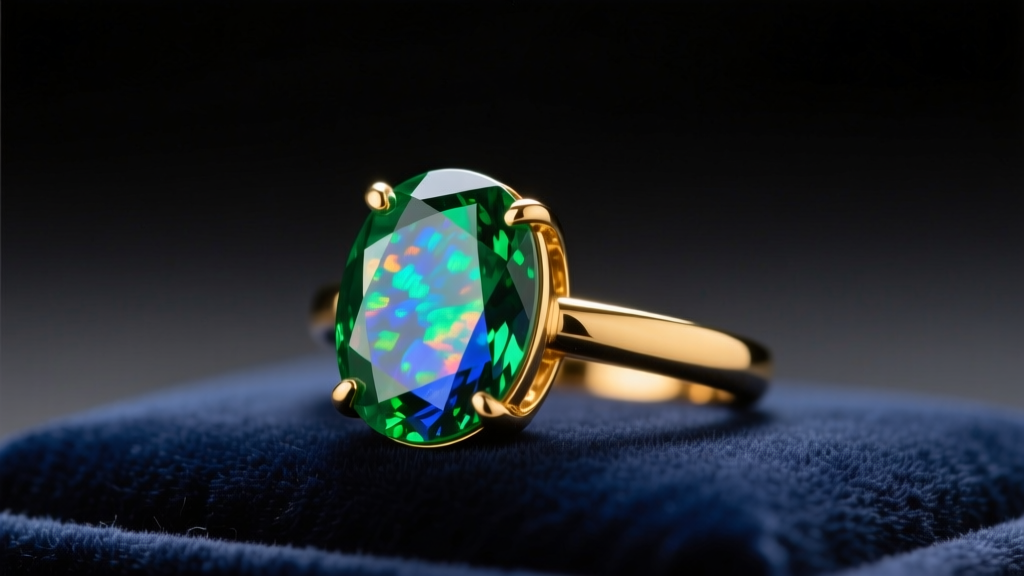
Opals are among the most mesmerizing gemstones in the world, famous for their unique play-of-color that shifts with the light. When investing in Kays jewelry opal rings, you are typically choosing between genuine Australian opals or high-quality lab-created opals, usually set in 10k or 14k gold, or sterling silver. While these rings make stunning statement pieces, opals require a highly specific care regimen. With a Mohs hardness rating of just 5.5 to 6.5, opals are significantly softer than diamonds, sapphires, and even the everyday quartz dust found in the air. In 2026, proper gemstone maintenance is about working smarter, not harder. This comprehensive guide will walk you through the exact steps to clean, style, and store your opal rings to ensure they remain vibrant and undamaged for a lifetime.
Understanding Your Opal: Solid vs. Created vs. Composite
Before applying any water or cleaning solution to your ring, you must identify the exact type of opal Kay Jewelers has set in your piece. The structural integrity of the stone dictates how it will react to moisture and pressure.
- Genuine Solid Opals: Mined primarily in Australia, these are solid pieces of natural silica. They contain up to 20% water and are prone to 'crazing' (internal cracking) if exposed to extreme heat or sudden temperature changes.
- Created (Lab-Grown) Opals: Kay Jewelers frequently utilizes created opals, which share the exact chemical composition (silica spheres) as natural opals but are grown in a controlled environment. They often feature a more uniform play-of-color and are slightly less prone to dehydration, though they share the same 5.5-6.5 Mohs hardness and scratch easily.
- Composite Opals (Doublets/Triplets):strong> These consist of a thin slice of precious opal glued to a dark backing (and sometimes capped with a clear quartz or glass dome). Prolonged water exposure will dissolve the adhesive, causing the layers to delaminate and turn cloudy.
The Opal Care Matrix: What is Safe?
| Opal Type | Mohs Hardness | Ultrasonic Safe? | Prolonged Water Safe? | Primary Risk Factor |
|---|---|---|---|---|
| Genuine Solid | 5.5 - 6.5 | NO | Yes (Briefly) | Dehydration / Crazing |
| Created / Gilson | 5.5 - 6.5 | NO | Yes | Surface Scratching |
| Triplet / Doublet | Varies (Top layer) | NO | NO | Adhesive Delamination |
For authoritative guidelines on gemstone durability, the Gemological Institute of America (GIA) strongly advises against mechanical cleaning systems for any opal variety due to the high risk of internal fracturing.
Step-by-Step Cleaning Guide for Opal Rings
Because everyday dust contains quartz (Mohs 7.0), simply wiping a dusty opal with a dry cloth will result in micro-scratches that dull the stone's fire over time. Follow this meticulous, safe cleaning process recommended by jewelry insurance experts at Jewelers Mutual.
Step 1: The Pre-Clean Inspection
Examine the prongs or bezel setting under a magnifying glass or your phone's macro camera. Opals are often cut en cabochon (a smooth, rounded dome). If the prongs are loose, dirt will get trapped underneath. If they are too tight, the pressure could crack the stone. If you notice lifted prongs, take the ring to a Kay Jewelers professional before attempting to clean it at home.
Step 2: Prepare a Gentle Solution
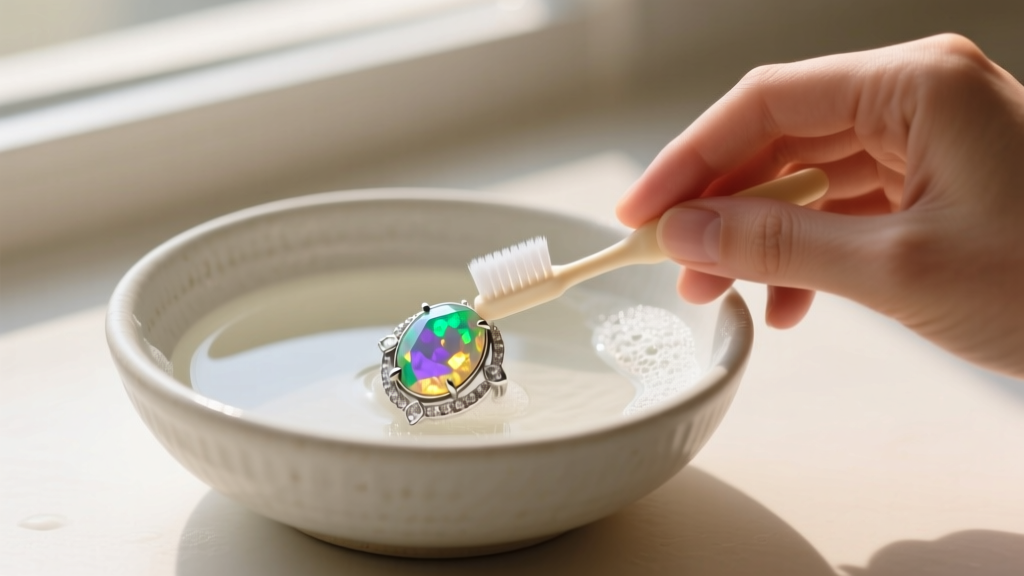
Fill a small ceramic bowl with lukewarm (never hot) distilled water. Add two drops of a mild, phosphate-free dish soap, such as original Dawn. Avoid any soaps containing moisturizers, citrus extracts, or harsh degreasers, which can leave a filmy residue on the cabochon surface.
Step 3: The Agitation Technique
Submerge the ring for no more than 60 seconds (skip submersion entirely if you suspect a triplet opal). Using an extra-soft baby toothbrush, gently flick the bristles across the surface of the opal. Do not scrub in circular motions; use light, sweeping strokes from the center of the dome outward to the edges. Pay special attention to the gallery (the underside of the setting) where skin oils accumulate.
Step 4: Rinsing and Drying
Rinse the ring under a gentle stream of lukewarm distilled water to prevent hard water spots. Immediately pat the ring dry with a lint-free microfiber cloth. Ensure no moisture is trapped between the opal and the metal setting, as this can cause sterling silver to tarnish rapidly.
The Forbidden Cleaning Methods
To protect your investment, you must absolutely avoid the following common jewelry cleaning mistakes:
- Ultrasonic Cleaners: The high-frequency vibrations will shatter solid opals and instantly separate the layers of composite opals.
- Steam Cleaners: The intense, localized heat will boil the water content inside a natural opal, leading to irreversible crazing (a network of internal cracks).
- Chemical Dips & Silver Polish: If your Kay ring is set in sterling silver, never use liquid silver dips. The harsh acids can etch the surface of the opal and strip its polish. Use a dedicated silver polishing cloth only on the metal band, avoiding the gemstone entirely.
Styling and Stacking Without Scratching
Styling Kays jewelry opal rings requires strategic placement on the hand to minimize impact damage. Because opals are soft, they should not be worn on fingers that do the heavy lifting.
Finger Placement Strategy
Reserve your opal rings for the ring finger or the pinky finger. The index and middle fingers are the most active and are highly prone to knocking against doors, desks, and keyboards. A sharp impact against a hard surface can chip the girdle (the widest edge) of the cabochon.
The Art of the Safe Stack
If you love the stacked ring trend, you must use 'guard rings' to protect the opal. Never stack an opal ring directly against a diamond, sapphire, or moissanite band. The harder stones will act like sandpaper against the opal, carving deep grooves into the dome over time.
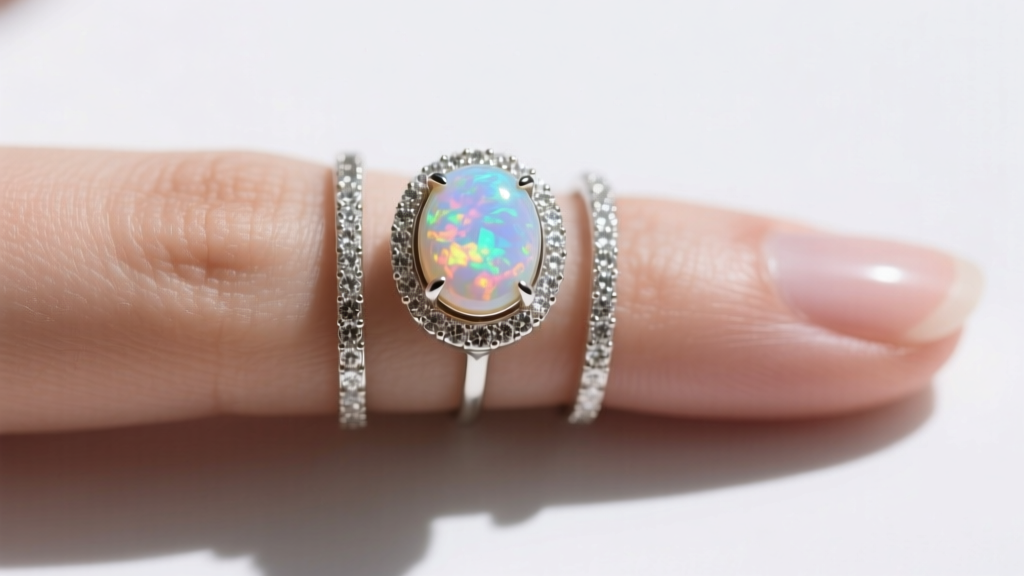
Pro Styling Tip: Flank your Kay opal ring with smooth, untextured 14k gold spacer bands. Alternatively, use a soft silicone ring guard between the opal and your harder gemstone eternity bands. This creates a shock-absorbing buffer that prevents metal-on-stone friction.
Long-Term Storage and Preventing Crazing
How you store your opal ring when it is not on your hand is just as critical as how you clean it. Natural opals require a stable humidity level to maintain their structural integrity.
Expert Storage Rule: Never store an opal ring in a hot, dry environment like a car glovebox, a sunny windowsill, or near a heating vent. Rapid dehydration causes the silica spheres to shrink and crack.
If you live in an arid climate or keep your home's humidity very low during the winter months, store your Kay opal ring in a sealed ziplock bag with a slightly damp (not wet) cotton ball. This creates a micro-climate that prevents the stone from drying out. Furthermore, always store the ring in a dedicated fabric-lined jewelry box compartment, completely isolated from harder jewelry pieces that could scratch it in the dark.
Frequently Asked Questions
Can I wear my Kay opal ring in the shower or pool?
No. While brief exposure to distilled water during cleaning is safe, showering exposes the opal to harsh shampoos, conditioners, and hard water minerals that will leave a dull, cloudy film on the stone. Chlorine in pools and hot tubs can also degrade the metal setting and damage the polish of created opals.
My opal has lost its 'fire' and looks cloudy. Is it ruined?
In most cases, the stone is not ruined. A loss of play-of-color is usually caused by a buildup of body oils, lotions, and soap scum on the surface of the cabochon, which blocks light from entering the silica spheres. Perform the gentle baby-toothbrush cleaning method outlined above, and the fire should immediately return.
Does the Kay Jewelers Extended Service Plan (ESP) cover opal replacement?
Kay's ESP typically covers routine maintenance, prong tightening, and metal refinishing. However, it is vital to read the fine print regarding gemstone replacement. Damage caused by improper cleaning methods (like using an ultrasonic machine) or accidental impacts are generally classified as 'abuse' rather than normal wear and tear, and may not be covered. Always treat the stone with extreme caution.
How often should I have the setting checked?
Because opals are sensitive to prong pressure, you should have a professional jeweler inspect the setting every six months. They can ensure the prongs are holding the cabochon securely without applying excessive torque that could lead to stress fractures.


