Fairy Ring Jewelry Buying Guide: Styles, Metals & Sizing
Discover our expert fairy ring jewelry buying guide. Learn about material grades, enamel types, shank thickness, and sizing for mycelium motifs.

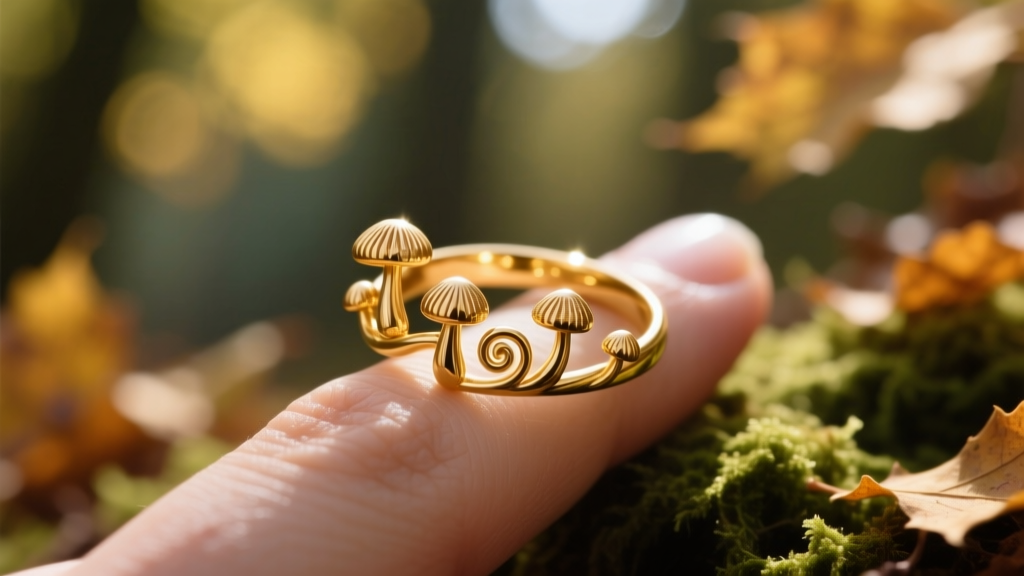
Defining the Fairy Ring Motif in Fine Jewelry
When collectors and botany enthusiasts search for fairy ring jewelry, they are rarely looking for a simple band adorned with a winged sprite. In mycology, a "fairy ring" is a naturally occurring arc or circle of mushrooms, born from an expanding underground mycelium network. In the realm of artisan and fine jewelry, this translates to intricate, nature-inspired bands that mimic the forest floor. These pieces often feature clusters of tiny, sculpted mushrooms, intertwining vines, and microscopic spore textures wrapping seamlessly around the finger.
As we move through 2026, the demand for hyper-realistic botanical jewelry has surged, pushing artisans to adopt advanced lost-wax casting and micro-pavé techniques. However, the whimsical nature of these designs introduces unique structural challenges. A beautifully sculpted mushroom cap is useless if the stem shank snaps under daily wear. This buying guide will walk you through the exact material grades, structural requirements, and sizing nuances you need to evaluate before investing in a high-quality fairy ring.
Material Selection: Metals and Enamels
The longevity of your ring depends entirely on the base metal and the coloring techniques used to bring the forest floor to life. Cheap, mass-produced rings often rely on thin plating and cold enamel, which degrades rapidly. Here is what you should look for:
Base Metals
- 925 Sterling Silver: The most common base for artisan fairy rings. It offers excellent detail retention for lost-wax casting. Ensure the piece is stamped "925" and has a rhodium flash if you want to prevent tarnish in the deep crevices of the mycelium texture.
- Solid 14k or 18k Gold: Ideal for heirloom pieces. 14k gold provides a better strength-to-weight ratio for the delicate "mushroom stems" that often act as the ring's shank, whereas 18k offers a richer, warmer tone that complements forest-green enamels.
- Gold Vermeil: If you opt for vermeil over solid gold, the Federal Trade Commission (FTC) mandates a minimum gold thickness of 2.5 microns over a sterling silver base. Anything less is considered simple gold plating and will wear off the high-friction areas of the shank within months.
Enamel Techniques
Many fairy ring designs utilize enamel to create vibrant red, brown, or green mushroom caps. According to metallurgical resources like Ganoksin, there is a massive difference between kiln-fired vitreous enamel and cold epoxy enamel.
- Vitreous Enamel: Fused to the metal at over 1400°F. It is highly scratch-resistant, UV-stable, and will never yellow. However, it is glass-like and can chip if struck against a hard surface.
- Cold Enamel (Epoxy Resin):strong> Cured at room temperature. It is more impact-resistant but prone to yellowing from UV exposure and will eventually pull away from the metal housing over time.
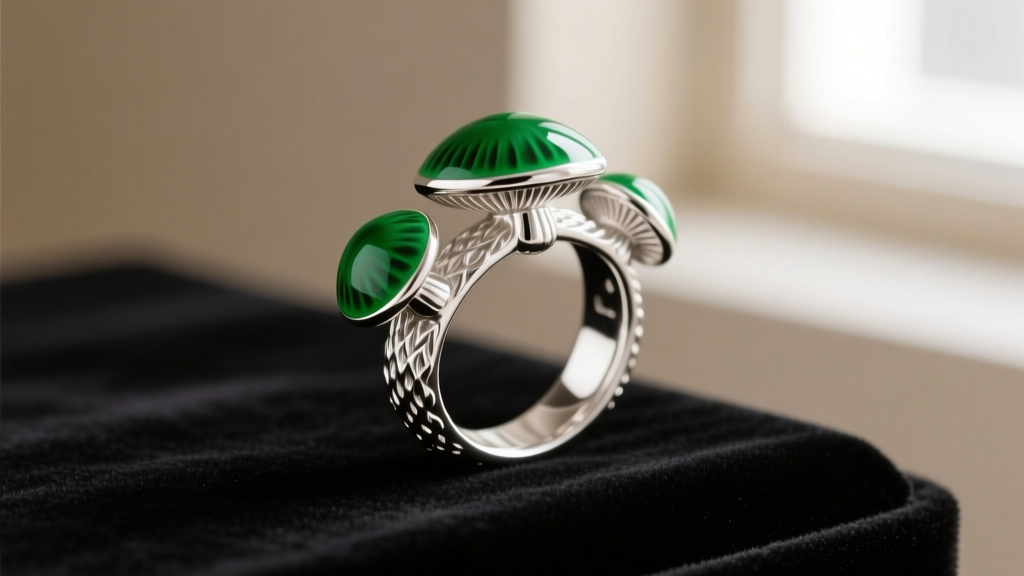
Structural Integrity and Failure Modes
Botanical rings are notorious for specific failure modes due to their uneven weight distribution and delicate motifs. When evaluating a piece, scrutinize the shank (the band that wraps around your finger) and the gallery (the underside of the design).
| Component | Ideal Specification | Common Failure Mode | Risk Level |
|---|---|---|---|
| Shank Thickness | Minimum 1.8mm width / 1.5mm depth | Snapping at the "stem" joints | High |
| Mushroom Caps | Bezel or flush setting for stones | Prong snagging and stone loss | Medium |
| Weight Distribution | Counter-balanced bottom shank | Top-heavy spinning on the finger | High |
| Mycelium Texture | Smoothed gallery (underside) | Trapping moisture and causing skin irritation | Medium |
Pro-Tip: To prevent the "spinning" issue common with top-heavy fairy rings, look for designs that feature a thicker, heavier bottom shank (often called a counterweight or European shank). This keeps the mushroom cluster centered on top of your finger.
Sizing Top-Heavy Botanical Designs
Sizing a fairy ring requires more precision than a standard flat band. Because these rings often feature a wide, sprawling motif that covers a significant portion of the finger's dorsal surface, they behave like wide-band rings.
The Half-Size Rule
If the central mushroom cluster spans more than 8mm from knuckle to knuckle, you should generally order a half-size up from your standard ring size. The rigid, wide cluster will not bend with the natural swelling of your fingers throughout the day, which can lead to circulation issues or a stuck ring if sized too tightly.
Knuckle Clearance
Ensure the artisan provides the exact millimeter width of the widest part of the ring. If your knuckles are significantly larger than your finger base, the wide fairy ring motif must pass over the knuckle comfortably. In these cases, a sizing bead or a hinged shank modification may be required to keep the ring secure once it sits at the base of the finger.
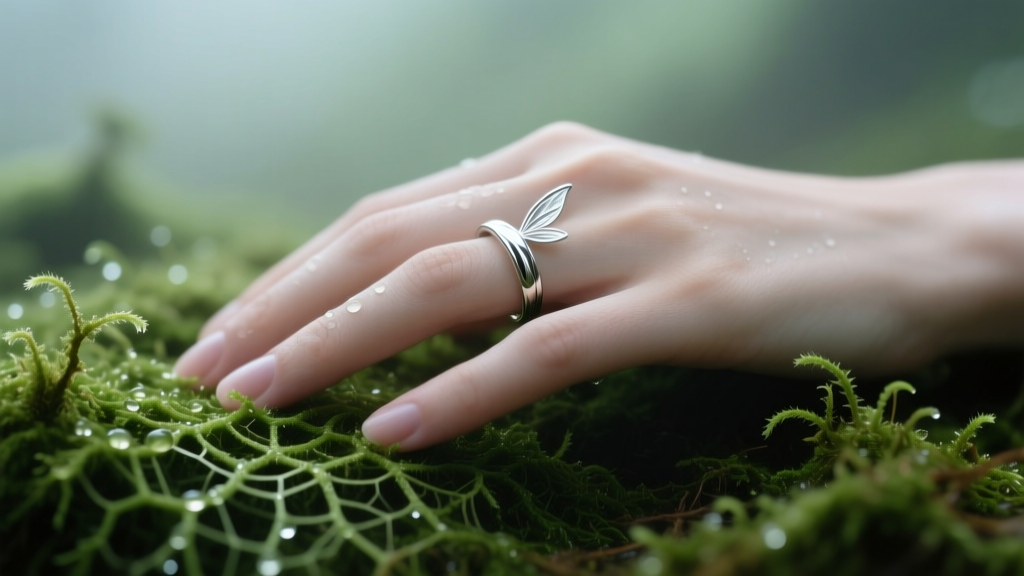
Pricing Tiers and Artisan Sourcing
Authentic, hand-finished fairy ring jewelry is rarely found in traditional mall jewelers; it is the domain of independent artisans, specialized botanical jewelers, and high-end bespoke studios. Here is what you should expect to pay in the current market:
- $60 - $150 (Entry Artisan): Typically cast in 925 sterling silver with cold enamel or oxidized detailing. The shanks may be slightly thinner (around 1.2mm), making them better suited for occasional wear rather than daily use.
- $180 - $450 (Premium Artisan): Features heavy sterling silver or 10k/14k gold vermeil (2.5+ microns). You will find kiln-fired vitreous enamel, micro-pavé diamond "spores," and structurally reinforced shanks. These are built for daily wear.
- $600 - $2,500+ (Fine Jewelry / Bespoke): Solid 14k or 18k gold, featuring natural melee diamonds, tsavorite garnets, or sapphires integrated into the mushroom caps. These pieces are hand-carved from wax, ensuring no two rings are exactly alike, and feature structural engineering designed to last generations.
"When commissioning a botanical ring, always ask the jeweler if the piece is CAD-designed or hand-carved in wax. Hand-carved fairy rings possess an organic, asymmetrical fluidity that perfectly mimics nature, whereas CAD designs can sometimes look rigid and repetitive." — Master Jeweler & Botanical Artisan
Styling and Stacking Guidelines
Because fairy ring jewelry is inherently detailed and visually loud, styling it requires a restrained approach to let the craftsmanship shine.
The Anchor and Accent Method
Treat your fairy ring as the "anchor" piece. Pair it with simple, unadorned stacking bands in a matching metal. A 1.5mm flat or half-round band placed directly below the fairy ring will frame the mycelium texture without competing for attention. Avoid pairing it with other gemstone-heavy rings or signet rings on the same hand, as the varying heights will cause the rings to grind against one another, potentially damaging the delicate mushroom stems.
Finger Placement
While the ring finger is traditional, fairy rings often look most striking on the index or middle finger. These fingers provide a broader, flatter canvas that accommodates the wide, sprawling nature of the forest floor motif, reducing the likelihood of the ring knocking against adjacent fingers during daily tasks.


