Step-by-Step Guide to Sizing and Styling Motion Ring Jewelry
Learn how to properly size, select, and maintain motion ring jewelry. Our step-by-step guide covers spinner mechanisms, metals, and daily care.

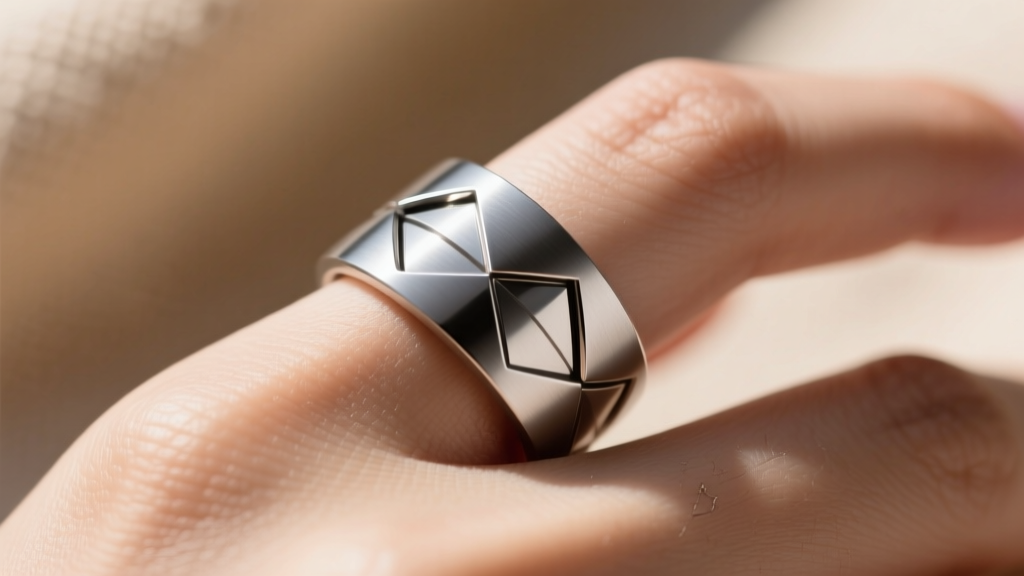
The Appeal of Kinetic and Spinner Rings
Motion ring jewelry—encompassing spinner rings, kinetic bands, and fidget rings—serves a dual purpose in modern accessorizing. Beyond their striking visual appeal, these dynamic pieces offer tactile stimulation, making them popular tools for anxiety relief and grounding. However, the inclusion of moving parts introduces unique challenges in sizing, material selection, and long-term maintenance. A poorly fitted spinner ring will either slide off during a vigorous spin or get painfully stuck on your knuckle. This comprehensive, step-by-step guide will walk you through the exact technical specifications required to choose, size, and care for your motion ring jewelry.
Step 1: Precision Sizing for Motion Ring Jewelry
Sizing a kinetic ring requires a different approach than a standard static band. You must account for the 'knuckle-to-base ratio'—the difference in circumference between your knuckle and the base of your finger. Because motion ring jewelry is typically wider and features an elevated outer track, it is more rigid and less forgiving when sliding over the joint.
Measuring for the Perfect Fit
- Use a Metal Mandrel Sizer: Avoid flimsy plastic belt sizers. The thickness of the sizer mimics the width of a spinner band, giving you a realistic feel for how the ring will pass over your knuckle.
- Account for Centrifugal Force: When you spin the outer band, a slight upward pull occurs. If the ring is a half-size too large, this kinetic energy will cause the ring to fly off. Aim for a fit that requires a firm, deliberate tug to remove.
- Consider a Euro-Shank: If your knuckle is more than 1.5 sizes larger than your finger base, request a 'euro-shank' (a squared-off bottom interior). This prevents the ring from rotating on your finger while allowing the outer band to spin freely.
- Sizing Beads: For prominent knuckles, having a jeweler solder two small metal beads on the inner bottom of the base ring will anchor the motion ring jewelry securely without requiring you to size up to an unwearably large circumference.
Step 2: Selecting the Right Bearing Mechanism
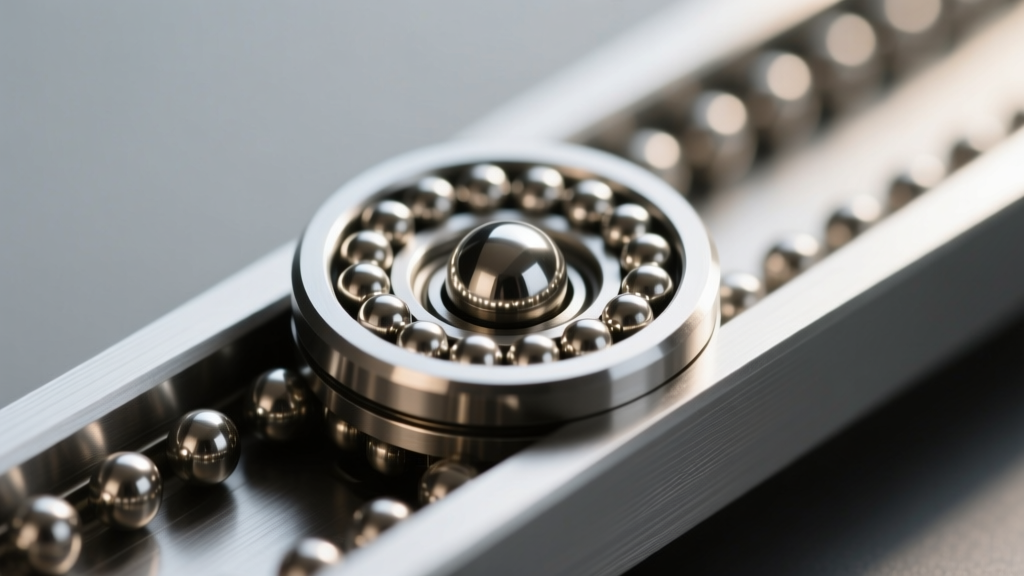
The heart of any motion ring jewelry is its bearing mechanism. This internal engineering dictates the smoothness of the spin, the acoustic profile (whether it clicks, whirs, or is silent), and the overall lifespan of the piece. Below is a technical comparison of the three primary mechanisms used in modern kinetic rings.
| Mechanism Type | Spin Duration | Acoustic Profile | Lifespan & Maintenance |
|---|---|---|---|
| Friction Fit (Metal-on-Metal) | Low (1-2 seconds) | Loud scraping or squeaking | Short; prone to galling and warping |
| Silicone O-Ring Track | Medium (3-5 seconds) | Silent, smooth dampening | Medium; O-rings degrade and need replacement every 1-2 years |
| PTFE (Teflon) Washer | High (5-8 seconds) | Near-silent, low friction | Long; highly resistant to wear and temperature changes |
| Micro-Ball Bearing | Very High (10+ seconds) | Satisfying mechanical whir | Very Long; requires occasional synthetic lubrication |
For premium motion ring jewelry, always look for PTFE washers or sealed micro-ball bearings. Silicone O-rings are common in mid-tier pieces but can snap if exposed to harsh chemicals or extreme heat.
Step 3: Choosing Hypoallergenic and Durable Metals
Because the outer band of a spinner ring is in constant motion, it creates continuous friction against the base ring. If these two components are made of dissimilar metals, you risk galvanic corrosion—a chemical reaction that causes pitting, discoloration, and structural failure. Furthermore, the constant rubbing can release nickel ions, triggering contact dermatitis.
Recommended Material Grades
- ASTM F136 Titanium: The gold standard for hypoallergenic motion ring jewelry. It is incredibly lightweight, reducing the centrifugal drag on your finger, and entirely nickel-free. According to the Gemological Institute of America (GIA), titanium is one of the safest metals for sensitive skin.
- 316L Surgical Stainless Steel: A durable, cost-effective option. However, it contains trace amounts of nickel. If you have a known nickel allergy, avoid 316L for kinetic rings, as the friction can accelerate ion release.
- 14k Solid Gold: Avoid 18k or 24k gold for the spinning outer band. High-karat gold is too soft and will quickly warp out of its circular track under the pressure of repetitive spinning. 14k gold offers the necessary tensile strength while retaining a luxurious finish.
Always verify metal purity claims. The Federal Trade Commission (FTC) Jewelry Guides strictly regulate how metals are stamped and marketed, ensuring that a '14k' stamp guarantees a minimum of 58.5% pure gold content.
Step 4: Maintenance and Troubleshooting Stuck Bands
Motion ring jewelry requires a specialized cleaning routine. The crevices between the base and the spinning band are magnets for dead skin cells, lotion residue, and environmental dust. When this debris mixes with natural skin oils, it forms an abrasive sludge that can halt the spinning mechanism entirely.
The Step-by-Step Cleaning Protocol
- Avoid Ultrasonic Cleaners: Never place a kinetic ring in an ultrasonic jewelry cleaner. The high-frequency vibrations can shatter silicone O-rings, dislodge micro-ball bearings, and force moisture deep into sealed tracks, leading to internal rust.
- The Soak and Agitate Method: Submerge the ring in a bowl of warm water mixed with a few drops of mild, phosphate-free dish soap for 10 minutes.
- Brush the Track: Use a soft-bristled baby toothbrush to gently scrub the gap between the bands. Rotate the outer band continuously while brushing to ensure all 360 degrees of the track are cleaned.
- Dry with Compressed Air: Towel drying leaves lint in the bearing track. Use a can of compressed air (held at least six inches away) to blast moisture out of the mechanism.
Expert Troubleshooting Tip: If your ball-bearing motion ring jewelry begins to squeak or feels gritty, do NOT use WD-40 or household oils. These attract dust and will eventually seize the bearing. Instead, apply a microscopic drop of synthetic watch oil (such as Moebius 9010) to the track using a fine needle. Synthetic oils maintain their viscosity and resist dust accumulation.

Step 5: Styling and Stacking Without Jamming
Stacking motion ring jewelry with static bands requires careful spatial planning. If a static ring is placed directly adjacent to a spinner ring, it will act as a physical brake, pressing against the outer band and preventing it from rotating. Furthermore, the friction between a spinning edge and a static edge will cause severe scratching on both pieces.
Rules for Kinetic Stacking
- The 2mm Gap Rule: Always leave at least a 2-millimeter gap between your motion ring and any adjacent bands. You can achieve this by wearing your spinner ring on the middle finger and your static bands on the index or ring finger.
- Use Spacer Rings: If you prefer a dense stack on a single finger, use ultra-thin (1mm) silicone or PTFE spacer rings between the kinetic piece and your metal bands. These act as shock absorbers and prevent metal-on-metal grinding.
- Contour Bands: Some jewelers offer custom contour bands designed with a recessed channel that perfectly hugs the protruding edge of a specific spinner ring, allowing them to interlock without impeding the spin.
By understanding the mechanical nuances of motion ring jewelry—from precision sizing and bearing selection to proper metallurgical pairing and maintenance—you can ensure your kinetic accessory remains a smooth, satisfying, and stylish staple in your daily rotation for years to come.


