How to Select and Style Box Ring Jewelry Flawlessly
Learn how to select, size, and clean box ring jewelry. This step-by-step guide covers box settings, geometric bands, and stacking techniques.

What Defines Box Ring Jewelry?
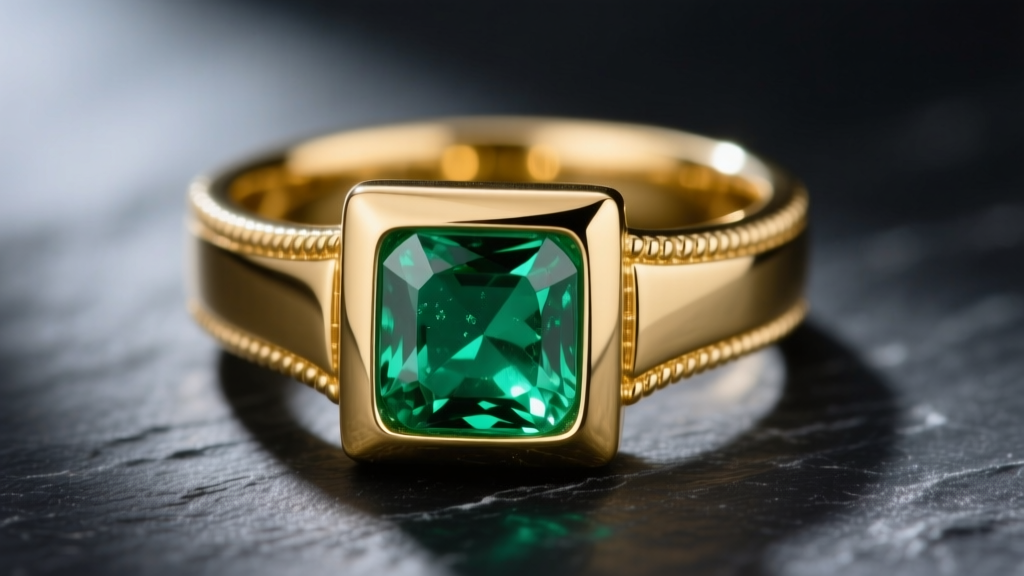
When jewelry enthusiasts and collectors refer to box ring jewelry, they are typically discussing two distinct architectural categories. The first is the box setting—a square or rectangular bezel that encases a gemstone, offering a modern, geometric alternative to the traditional round bezel or prong mount. The second category encompasses structural cube or box-shaped bands, where the shank itself features rigid, 90-degree angles and flat planes rather than a traditional circular profile.
Both styles demand a specialized approach to wear, care, and styling. Because of their sharp angles and rigid structures, box rings interact with the hand, clothing, and other jewelry differently than standard bands. This step-by-step guide will walk you through the technical nuances of selecting, sizing, stacking, and maintaining box ring jewelry to ensure longevity and optimal aesthetics.
Step 1: Selecting the Ideal Box Profile and Metallurgy
The most common point of failure in box ring jewelry is the "snag factor." A standard box setting that elevates a gemstone 5mm to 8mm above the finger will inevitably catch on silk blouses, knitwear, and even hair. To mitigate this, you must evaluate the profile and edge treatment of the ring.
The Chamfered Edge Technique
When selecting a box-set ring, look for chamfered (beveled) edges on the metal housing the stone. A harsh 90-degree outer edge on a gold or platinum box setting will wear down over time and scratch adjacent surfaces. A 45-degree chamfer reduces the surface area that contacts fabrics, allowing the ring to glide over textiles rather than catching them. For daily wear, a low-profile box setting that sits no higher than 2.5mm above the finger base is highly recommended.
Regarding metallurgy, platinum is the superior choice for box settings. According to the Gemological Institute of America (GIA), platinum's density and malleability allow jewelers to burnish the metal tightly over the girdle of a square-cut stone (like a princess or Asscher cut) without the metal springing back, which is a common issue with white gold. If you prefer gold, opt for 14k over 18k for the setting head, as the higher alloy content provides necessary rigidity for the geometric corners.
Step 2: Sizing Rigid Geometric and Box-Set Bands
Sizing a structural cube ring or a wide, flat box band requires a complete departure from standard ring sizing methods. Traditional circular bands possess a degree of flex and can bend slightly to accommodate the knuckle. Geometric box rings with flat interiors and rigid shanks have zero flex.
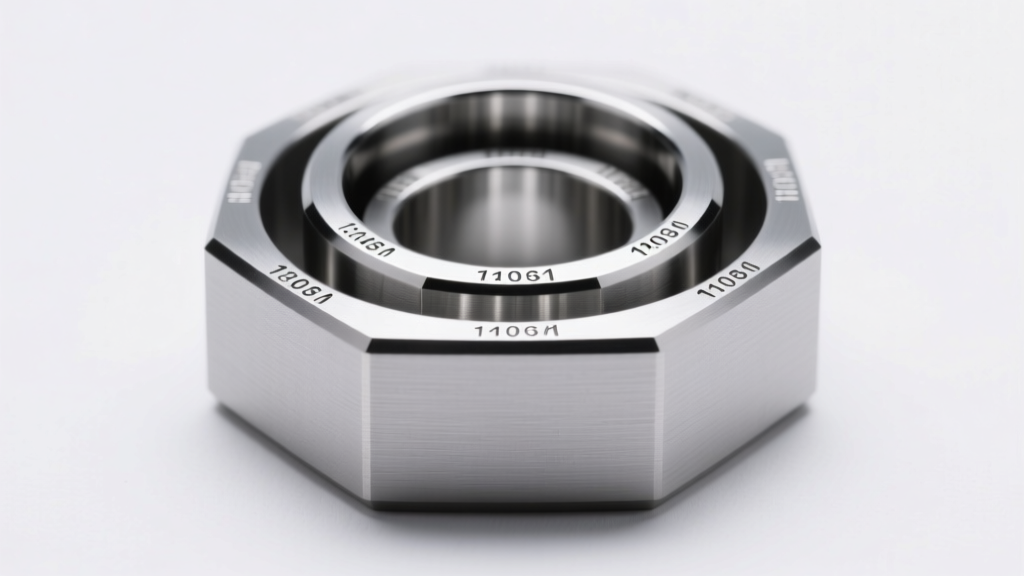
Expert Sizing Rule: If your knuckle is a size 7 and your finger base is a size 6, a standard ring is sized at 6.5. A rigid box ring must be sized to the knuckle (Size 7) to pass over the joint, requiring internal adjustments to prevent spinning at the base.
To solve the spinning issue without compromising the rigid exterior, consult a bench jeweler about installing sizing beads (also known as speed bumps) or a spring insert on the interior base of the band. Two 1.5mm platinum beads welded to the inner shank will grip the finger base securely, keeping the architectural face of the ring perfectly centered. Expect to pay between $45 and $85 for this custom interior modification.
Step 3: Strategic Stacking to Prevent Micro-Scratching
Stacking box ring jewelry requires strict material management. The sharp 90-degree corners of a box setting or a geometric band act like a micro-blade against softer, high-polish metals. If you stack a rigid titanium cube ring directly against a 24k gold band or a high-polish sterling silver ring, the harder metal will carve deep micro-scratches into the softer band within weeks.
The Spacer Protocol
- Use Silicone Spacers: For casual wear, insert a 1mm clear silicone spacer band between your box ring and softer metal bands. This absorbs the friction and protects the high-polish finishes.
- Match Mohs Hardness: If stacking metal-on-metal, ensure the adjacent bands share a similar Vickers hardness rating. For example, stack a 14k gold box ring with other 14k gold bands, or pair a platinum geometric ring with hardened cobalt chrome.
- Align the Profiles: Flat-edged box bands should only be stacked against other flat-edged bands. Stacking a flat box ring against a domed (comfort-fit) band creates a gap that collects debris and causes uneven pressure points that can warp thinner bands over time.
Step 4: The 90-Degree Deep Clean Protocol
The defining feature of a box setting—its sharp, enclosed corners—is also its greatest maintenance liability. The 90-degree interior angles of a square bezel act as traps for hand lotion, dead skin cells, and soap scum. This buildup creates a film over the pavilion (bottom) of the gemstone, drastically reducing light return and making even a flawless diamond look cloudy and gray.
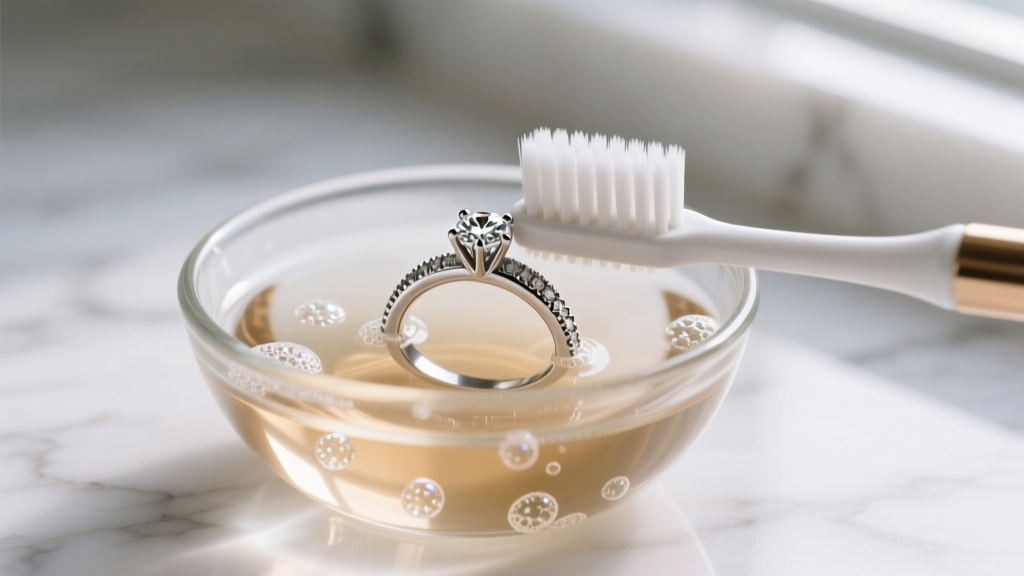
While ultrasonic cleaners are popular, they can be dangerous for box settings if the stone is held by tension rather than a fully burnished bezel. The high-frequency vibrations can shift the stone slightly within the rigid square housing, leading to chipped corners on fragile stones like emeralds or princess-cut diamonds. Instead, follow this manual deep-clean protocol recommended by Jewelers of America:
- Prepare the Solution: Mix 50% distilled water and 50% mild, ammonia-free dish soap in a small glass bowl. Avoid tap water, as hard water minerals can leave deposits in the tight corners.
- Soak: Submerge the box ring jewelry for exactly 15 minutes to soften the compacted debris in the corners.
- Targeted Agitation: Using a brand-new, extra-soft baby toothbrush, gently scrub the interior corners of the box setting. Do not scrub the top of the stone; focus entirely on the four 90-degree junctions where the metal meets the gemstone girdle.
- Rinse and Dry: Rinse under a gentle stream of lukewarm distilled water and pat dry with a lint-free microfiber cloth. Use a wooden toothpick to gently dislodge any remaining stubborn debris from the corners before the water dries.
Technical Comparison: Box Settings vs. Traditional Mounts
Understanding how box ring jewelry compares to traditional mounts helps in making informed purchasing decisions. Below is a technical breakdown of how the box setting performs against prong and standard round bezel settings.
| Feature | Box Setting (Square Bezel) | Traditional 4-Prong | Round Bezel |
|---|---|---|---|
| Security Level | Very High (protects all 4 corners) | Moderate (prongs can catch and bend) | High (continuous metal rim) |
| Light Return | Moderate (metal blocks side light) | Maximum (open sides allow full light) | Moderate to High |
| Snag Factor | Low (if chamfered and low-profile) | High (prongs easily catch fabrics) | Very Low (smooth circular edge) |
| Maintenance | High (corners trap debris) | Low (open design sheds debris) | Moderate (curved edges are easier to clean) |
| Ideal Stone Cut | Princess, Asscher, Square Emerald | Round Brilliant, Oval, Cushion | Round Brilliant, Cabochon |
Expert Verdict on Architectural Ring Care
Box ring jewelry represents the intersection of modern architectural design and fine horology-level precision. Whether you are investing in a diamond box-set signet ring or a minimalist titanium cube band, the key to longevity lies in respecting the geometry of the piece. By prioritizing chamfered edges, utilizing sizing beads for rigid shanks, employing strategic stacking spacers, and committing to the 90-degree deep clean protocol, your box rings will maintain their striking, avant-garde appeal for decades. Treat the sharp angles with the same technical respect you would afford a precision-engineered timepiece, and the jewelry will reward you with unparalleled structural elegance.


