How A Proper Jewelry Ring Box Prevents Tarnish & Damage
Discover how the right jewelry ring box prevents tarnish, scratches, and gemstone damage. Expert storage and cleaning tips for your fine ring collection.

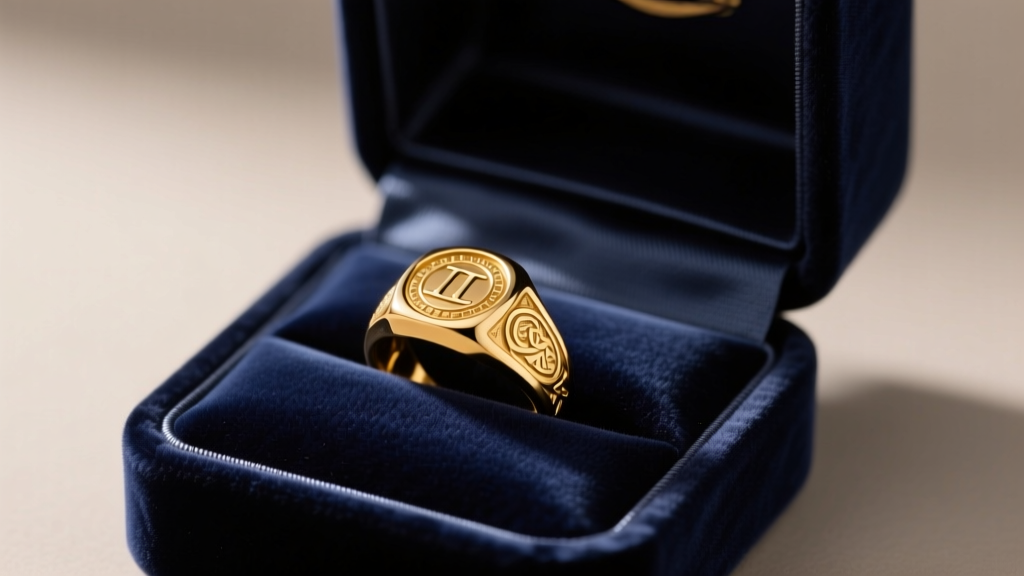
The Hidden Chemistry of Ring Storage
Most jewelry collectors dedicate hours to meticulously cleaning their rings, only to undo all that hard work the moment they place them inside a subpar jewelry ring box. The environment where your rings rest for 16 hours a day is just as critical as the maintenance routines you perform on them. Improper storage accelerates oxidation, introduces micro-scratches, and can even degrade delicate gemstone treatments.
According to the Gemological Institute of America (GIA), the primary enemies of fine jewelry are harsh chemicals, extreme temperature fluctuations, and physical abrasion. When you close the lid on a standard, mass-produced cardboard or PVC-lined box, you are often trapping your rings in a micro-environment rich in sulfur compounds and acidic off-gassing. Sterling silver (925) reacts rapidly with hydrogen sulfide in the air to form silver sulfide—the black tarnish that dulls your pieces. A high-quality jewelry ring box acts as a physical and chemical barrier against these atmospheric pollutants.
Decoding Jewelry Ring Box Linings: What Touches Your Metal?
The interior fabric of your storage solution is the first line of defense. Not all velvets and suedes are created equal, and choosing the wrong material can actively harm your collection.
Anti-Tarnish Treated Flannel and Pacific Cloth
Premium boxes utilize treated flannel or specialized woven fabrics like Pacific Silvercloth. These materials are embedded with microscopic silver particles that act as a sacrificial anode. The hydrogen sulfide in the air reacts with the silver particles in the cloth rather than your sterling silver or white gold rings, effectively neutralizing the tarnish-causing agents before they reach your jewelry.
The Danger of PVC and Acidic Cardboards
Cheap ring boxes often use polyvinyl chloride (PVC) plastics and low-grade cardboard. Over time, PVC releases plasticizers and chloride gases, which can cause irreversible pitting on silver and copper alloys. Furthermore, the adhesives used in standard cardboard manufacturing contain sulfur and acids. If your rings are stored long-term in these environments, you may notice a stubborn, dark oxidation layer that requires professional polishing to remove.
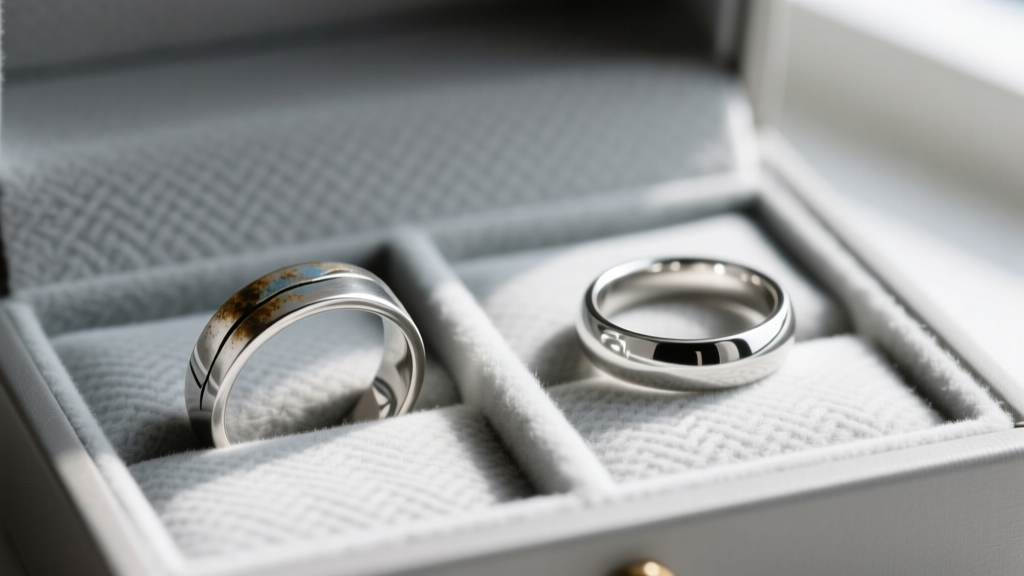
Pre-Storage Cleaning Protocols by Ring Type
Never place a dirty ring into a closed jewelry ring box. Trapping skin oils, lotions, and environmental dirt against a gemstone or metal band creates a breeding ground for bacteria and accelerates chemical degradation. However, the cleaning method must match the ring type before it is stored.
| Ring Type | Primary Material / Gem | Pre-Storage Cleaning Method | Drying Time Before Boxing |
|---|---|---|---|
| Signet Rings | 14k/18k Yellow Gold | Warm water, mild dish soap, soft baby toothbrush | 10 minutes (microfiber pat dry) |
| Cocktail Rings | Sterling Silver / Opal | Damp cloth only. Never submerge opals. | 15 minutes (air dry in shade) |
| Eternity Bands | Platinum / Diamonds | Ultrasonic cleaner (if no fracture-filled stones) | 5 minutes (compressed air for prongs) |
| Stacking Rings | Rose Gold / Morganite | Ammonia-free commercial jewelry dip | 10 minutes (lint-free cloth) |
Note: Never store a ring while it is still damp. Trapped moisture in the confined space of a jewelry ring box will cause rapid oxidation, particularly in the crevices of pavé settings and under gemstone girdles.
Micro-Climate Control: Humidity and Silica Integration
Relative humidity (RH) plays a massive, often overlooked role in jewelry preservation. The ideal RH for storing fine jewelry is between 40% and 50%. Environments exceeding 60% RH drastically accelerate the tarnishing of silver and the corrosion of copper alloys found in rose and yellow gold.
If you live in a humid climate, your jewelry ring box must incorporate desiccant technology. However, simply tossing a random silica gel packet into the box is not enough. You must use indicating silica gel (which changes color from orange to green when saturated) so you know exactly when to recharge it. Place the silica gel in a breathable mesh pouch and tuck it into a dedicated, hidden compartment at the base of the box, ensuring it does not directly touch the metal of your rings, which could cause localized scratching.

Spatial Organization and the Mohs Scale
A common mistake collectors make is overcrowding their jewelry ring box, forcing multiple rings into a single slot. This ignores the fundamental physics of the Metropolitan Museum of Art's conservation guidelines regarding the Mohs hardness scale.
- Diamond (10): Will scratch every other material on earth.
- Moissanite (9.25) & Sapphire (9): Hard enough to scratch most metals and softer gems.
- Topaz (8) & Emerald (7.5-8): Prone to chipping if knocked against harder stones.
- Gold & Silver (2.5-3): Extremely soft; easily gouged by almost all gemstones.
If you store a diamond stacking ring in the same slot as a soft 24k gold signet ring, the diamond's girdle will act like a saw blade against the gold every time the box is moved. A proper jewelry ring box must feature individual, rigidly separated slots lined with soft, non-abrasive material. For travel, consider roll-up ring inserts that isolate each piece in its own reinforced fabric cylinder.
Maintaining the Box Itself
Your storage environment requires its own maintenance schedule to continue protecting your collection. Every six months, you should perform a deep clean of your jewelry ring box.
- Vacuum the Interior: Use a soft brush attachment on a low-suction vacuum to remove dust, dead skin cells, and microscopic debris that accumulate in the fabric lining.
- Replace Anti-Tarnish Strips: If your box uses replaceable 3M anti-tarnish tabs rather than treated cloth, swap them out every 6 to 12 months, depending on your local air quality.
- Recharge Desiccants: Bake your silica gel packets in an oven at 200°F (93°C) for two hours to evaporate trapped moisture and restore their humidity-absorbing properties.
A jewelry ring box is not merely a display case; it is a controlled preservation vault. By managing the chemical, spatial, and climatic environment inside the box, you can reduce your active cleaning time by half and ensure your rings remain pristine for generations.
Investing in a high-quality, chemically inert storage solution is just as important as the rings themselves. By understanding the science of tarnish and the physics of gemstone hardness, you transform your daily storage routine from a potential hazard into an active preservation strategy.


