Wire Rings Jewelry Buying Guide: Metals, Gauges & Sizing Secrets
Discover what to look for when buying wire rings jewelry. Our expert guide covers wire gauges, metal hardness, construction quality, and sizing.

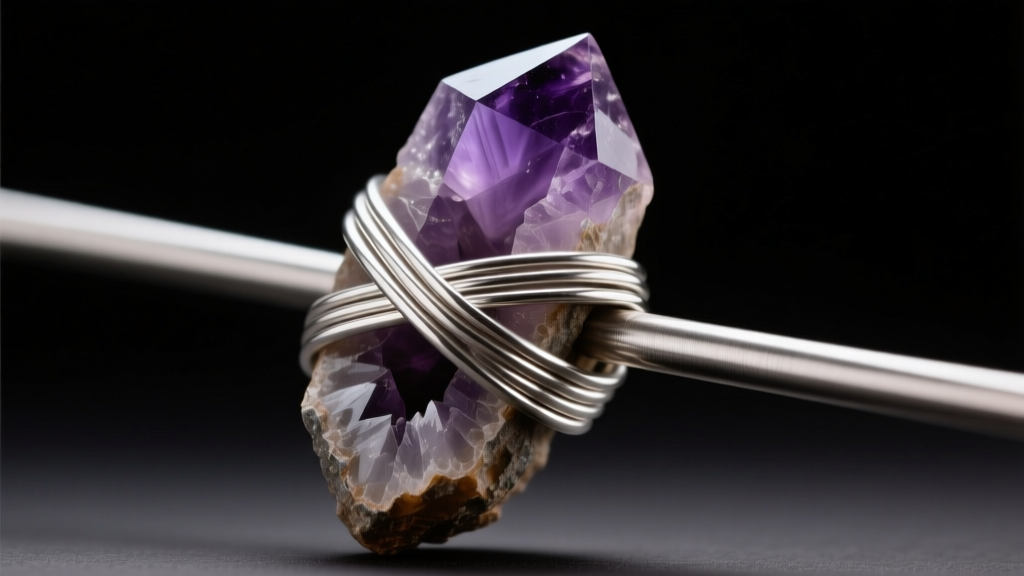
The appeal of wire rings jewelry lies in its artisanal charm, intricate weaving, and lightweight comfort. Unlike cast or stamped bands, wire-wrapped and forged wire rings are crafted by hand, meaning every piece carries the unique signature of its maker. However, this handcrafted nature also introduces significant variables in durability, structural integrity, and fit. Whether you are browsing an online artisan marketplace or commissioning a custom piece, understanding the metallurgy and mechanics of wire jewelry is essential to making a smart purchase.
This comprehensive buying guide breaks down the exact specifications you need to evaluate, from American Wire Gauge (AWG) thickness to metal temper, ensuring your next ring is both beautiful and built to last.
Understanding Wire Gauges in Ring Making
In wire jewelry, thickness is measured using the American Wire Gauge (AWG) system. Counterintuitively, the lower the gauge number, the thicker the wire. A ring made entirely of 24-gauge wire will collapse under the pressure of a handshake, while a 10-gauge wire might be too rigid to size properly. According to jewelry supply standards outlined by Rio Grande, selecting the correct gauge for the ring's shank (the band that wraps around your finger) versus its decorative elements is the primary indicator of quality.
| AWG Size | Millimeter (mm) | Best Application in Wire Rings | Durability Rating |
|---|---|---|---|
| 10 - 12 Gauge | 2.59 - 2.05 mm | Heavy, forged structural bands; single-wire shanks | Excellent (Daily Wear) |
| 14 Gauge | 1.63 mm | Standard bands, heavy prongs, structural frames | Very Good (Daily Wear) |
| 16 Gauge | 1.29 mm | Delicate bands, heavy weaving, jump rings | Moderate (Occasional Wear) |
| 18 - 20 Gauge | 1.02 - 0.81 mm | Weaving, wrapping, securing gemstones | Low (Decorative Only) |
| 24 - 28 Gauge | 0.51 - 0.32 mm | Micro-coiling, delicate accent weaving | Fragile (Avoid Friction) |
Buyer's Tip: If a listing describes a ring as "delicate" but uses 18-gauge wire for the main band, expect it to bend out of shape within weeks. For daily wear, insist on a minimum of 14-gauge wire for the foundational shank.
Metal Hardness: Dead Soft vs. Half-Hard
Gauge is only half the equation; metal temper (hardness) dictates how the ring will behave over time. Wire is sold in three primary tempers: dead soft, half-hard, and full-hard. The Gemological Institute of America (GIA) and master jewelers emphasize that temper selection directly impacts a ring's lifespan.
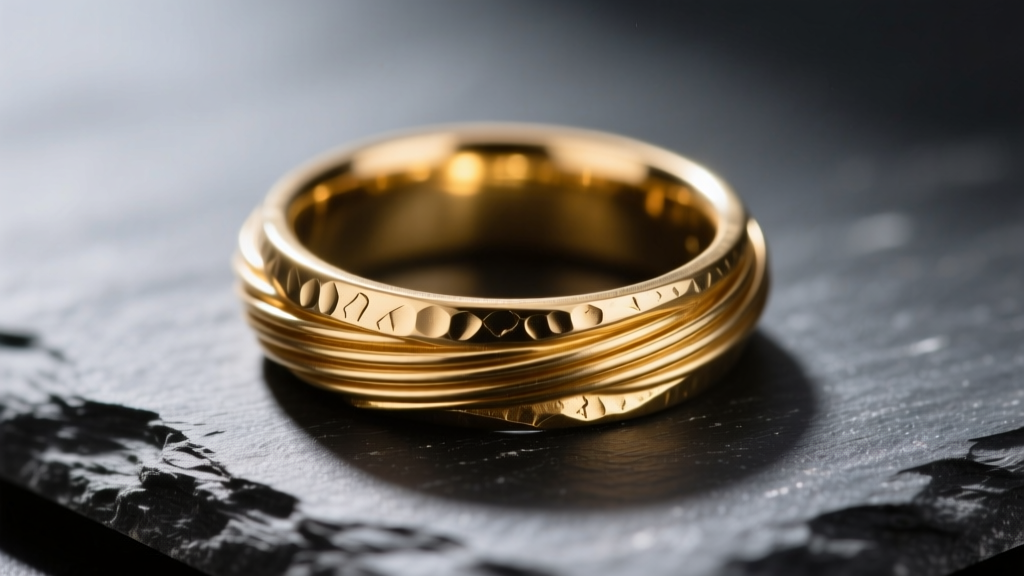
Why Hardness Matters for Daily Wear
- Dead Soft: This wire has been annealed (heated and cooled) to be as pliable as possible. It is ideal for tight weaving and wrapping around stones, but it is a terrible choice for a ring's main band. Dead soft wire will work-harden slightly as you wear it, but it will easily warp when gripping a steering wheel or carrying groceries.
- Half-Hard: This is the gold standard for wire ring shanks. It has been partially work-hardened, offering a balance between malleability (for sizing adjustments) and rigidity (to hold a round shape). Always look for artisans who specify half-hard or work-hardened wire for their bands.
- Full-Hard / Spring-Hard: Extremely rigid and brittle. It is used for clasps and ear wires but will snap if a jeweler attempts to bend it into a tight ring circle.
Failure Mode Alert: If an artisan weaves a ring entirely out of dead soft wire without a soldered backing or a thicker core wire, the ring will suffer from "shank collapse," flattening at the bottom of your finger and eventually snapping at the stress points.
Evaluating Wire Rings Jewelry Construction
Because wire rings are rarely cast in a mold, their structural integrity relies entirely on the artisan's technique. When inspecting photos or receiving a piece, look closely at the termination points and the overall finish. Poor construction leads to snagged clothing, scratched skin, and premature unraveling.
Construction Green Flags vs. Red Flags
Use this checklist when evaluating the craftsmanship of wire rings jewelry before purchasing:
- Green Flag: Tucked and Burnished Ends. All cut wire ends should be tucked tightly against the main frame and burnished (rubbed smooth) so they are completely flush. You should not be able to catch a fingernail on any wire tip.
- Red Flag: Visible Flush-Cutter Pinches. If the wire ends look sharply angled or pinched, the artisan used standard cutters without filing them down. This will scratch your adjacent fingers.
- Green Flag: Work-Hardened Finish. High-quality wire rings are often tumbled in steel shot or hammered with a rawhide mallet after weaving. This work-hardens the metal, locking the weaves in place and giving the ring a satisfying, rigid feel.
- Red Flag: Loose Weaving. Gaps between the woven wire and the core wire indicate sloppy tension control. Over time, dirt and oils will accumulate in these gaps, tarnishing the ring from the inside out.
- Green Flag: Soldered or Locked Shanks. For wrapped rings, the best artisans will either solder the back of the band for a solid feel or use a complex locking weave that prevents the wires from sliding apart.
Sizing Quirks of Wrapped Wire Bands
Sizing a wire ring is fundamentally different from sizing a traditional cast band. A solid cast ring has a fixed inner circumference. A wrapped wire ring, however, is essentially a spring. If the shank is not soldered, the ring will stretch and compress as you put it on and take it off.
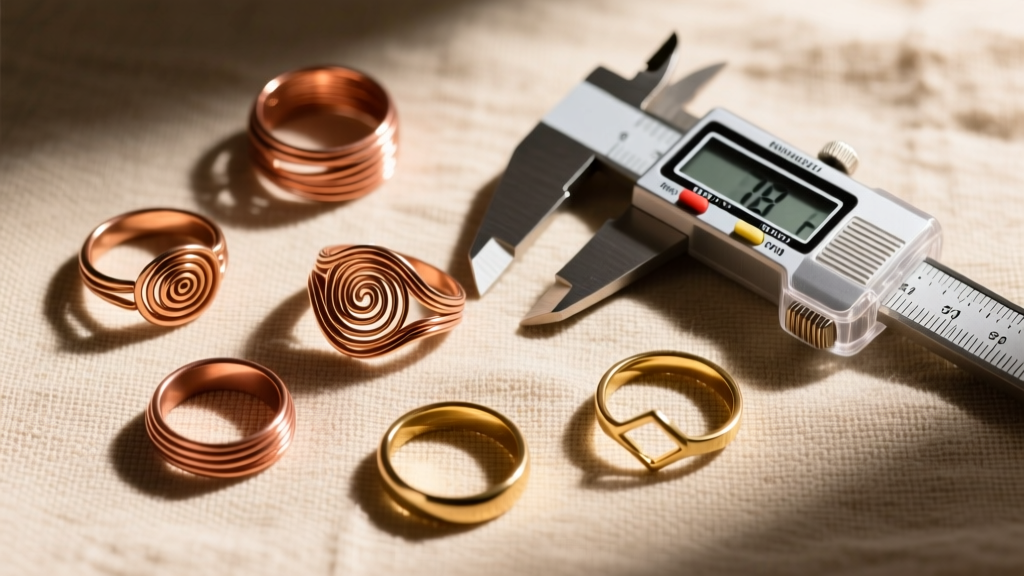
According to wrapping tutorials and sizing guides from Fire Mountain Gems, the width of the band also affects the fit. A wide, multi-wire woven band (over 8mm wide) will feel tighter than a thin 2mm band of the exact same circumference because it covers more surface area of the knuckle and finger joint.
Sizing Strategy: If you are buying an unsoldered, multi-strand woven wire ring, consider ordering a quarter to a half-size smaller than your standard ring size to account for the inevitable stretching that occurs during the first month of wear. If the ring features a solid, soldered backing plate, order your exact true size.
Metallurgy and Skin Reactions
Wire rings are frequently crafted from base metals like copper, brass, and bronze due to their affordability and beautiful patina. However, you must consider your skin's pH levels. Copper and brass react with the acids and salts in human sweat, often leaving a harmless but unsightly green or black oxidation mark on the skin.
If you have acidic skin or want a zero-maintenance piece, restrict your search to hypoallergenic and non-reactive metals:
- Sterling Silver (.925): The standard for premium wire jewelry. Tarnishes over time but easily polished.
- Gold-Filled (14/20): A thick layer of 14k gold mechanically bonded to a brass core. Far superior to gold-plated wire, as the gold layer will not flake off during the wire-wrapping process.
- Niobium: A highly reactive metal that is anodized to produce vibrant, permanent colors. Completely hypoallergenic and excellent for sensitive skin.
Price Expectations and Artisan Value
When shopping for wire rings jewelry, pricing is heavily dictated by material costs and the hours of labor required for intricate weaving. Beware of mass-produced "wire-look" rings cast from molds; they lack the structural tension of true hand-wrapped pieces.
- Copper / Brass (Base Metals): $20 – $55. Expect highly complex weaves and raw gemstones at this price point.
- Sterling Silver: $75 – $180. Prices increase significantly if the artisan incorporates faceted gemstones or precious metal clay (PMC) accents.
- 14k Gold-Filled: $90 – $220. The material cost is higher, and gold-filled wire is slightly stiffer to work with, commanding a premium for the artisan's expertise.
- Solid 14k / 18k Gold: $450 – $1,500+. Very few artisans weave with solid gold wire due to the extreme cost of scrap waste, making these pieces rare and highly collectible.
Final Verdict: What to Look For
Buying wire rings jewelry is an investment in wearable art. To ensure your purchase stands the test of time, prioritize rings that utilize 14-gauge or 12-gauge half-hard wire for the main shank, feature flush-cut and burnished termination points, and are crafted from gold-filled or sterling silver if you intend to wear them daily. By looking past the aesthetic beauty and evaluating the structural mechanics, you will secure a handcrafted ring that remains as resilient as it is stunning.


