Styling The Jewelry Ring Holder Dish: 2026 Trends
Discover 2026 trends for the jewelry ring holder dish. Learn to pair travertine, brass, and bio-resin trays with your signet, stacking, and cocktail rings.

The Shift: From Functional Catch-All to Curated Centerpiece
In the evolving landscape of vanity organization, the jewelry ring holder dish has transcended its origins as a mere utilitarian catch-all. As we navigate the design ethos of 2026, the 'quiet luxury' movement has firmly taken root in personal spaces, demanding that even the most functional accessories serve as deliberate aesthetic anchors. For serious ring collectors—those curating everything from heavy 18k gold signets to delicate oxidized silver stackers—the dish is no longer an afterthought. It is the stage upon which your collection rests when it is not adorning your fingers.
This shift is driven by a broader cultural appreciation for material honesty and tactile engagement. Enthusiasts are moving away from mass-produced, high-gloss acrylics and generic velvet-lined boxes. Instead, the modern jewelry ring holder dish is selected with the same rigor as the rings themselves, considering factors like Mohs hardness, porosity, and how specific materials interact with precious metals and gemstone settings over time. Understanding these nuances is critical for preserving your collection while elevating your daily ritual of adornment.
Material Analysis: What’s Dominating the Vanity in 2026?
The contemporary market for ring dishes is defined by three dominant materials, each offering distinct visual profiles and maintenance requirements. Selecting the right one depends heavily on your specific ring rotation and environmental factors like humidity.
Honed Travertine and Natural Stone
Travertine has emerged as the undisputed heavyweight in vanity styling. Its naturally porous surface and organic pitting provide a striking, matte backdrop that makes highly polished metals pop. However, unsealed travertine is highly reactive. If you frequently wear rings that accumulate lotions, acidic skin oils, or perfume residue, these chemicals can transfer to the stone, causing etching. For collectors of vintage or antique rings, a sealed, honed travertine jewelry ring holder dish (typically priced between $85 and $140) offers the perfect balance of organic beauty and protective neutrality.
Brushed and Antiqued Brass
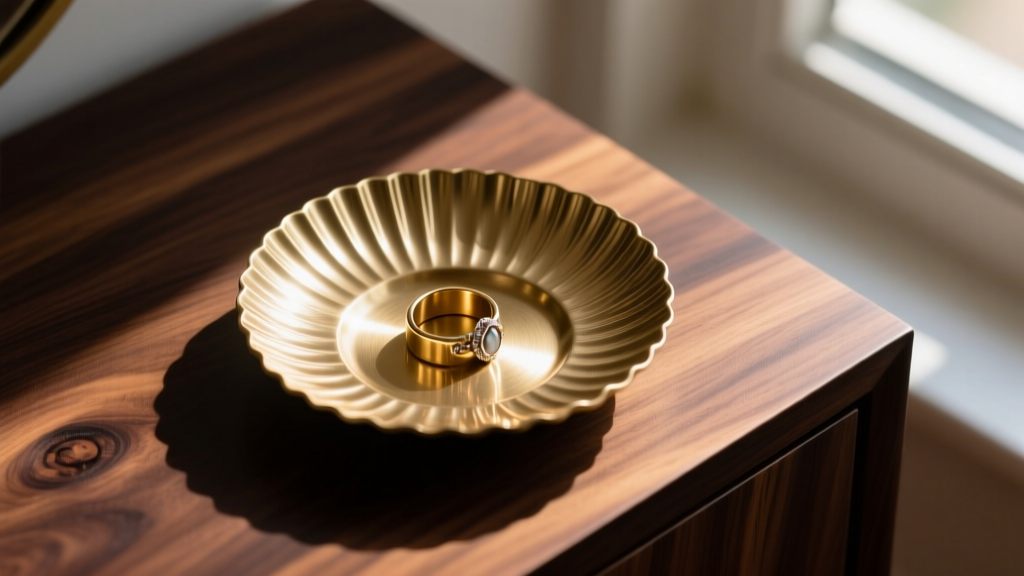
Brass offers a warm, golden undertone that beautifully complements rose gold and yellow gold rings. In 2026, the trend leans heavily toward 'living finishes'—brushed or antiqued brass that is left unsealed to develop a natural patina over time. While visually stunning, brass is softer than steel and can develop micro-scratches. It is best suited for solid gold rings rather than platinum or white gold, which can sometimes pick up a faint yellowish tint from prolonged contact with oxidizing brass. Expect to invest $45 to $90 for a solid, hand-turned brass dish.
High-Density Bio-Resin
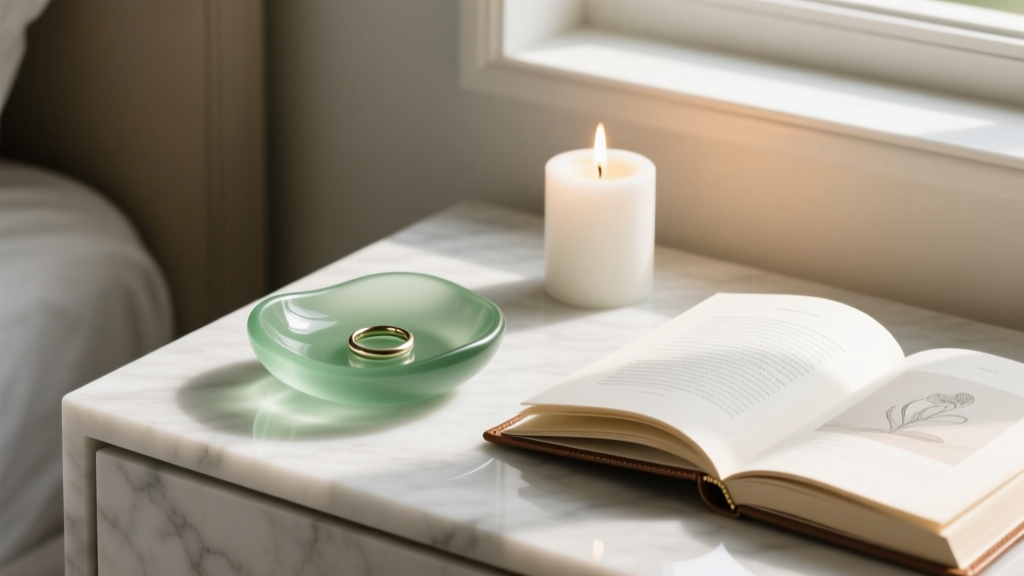
For the pragmatic collector who prioritizes durability and modern minimalism, bio-resin has replaced traditional plastics. Derived from plant-based polymers, high-density bio-resin is non-porous, shatterproof, and completely inert. It will not react with silver sulfide (the compound responsible for silver tarnish) and provides a soft, shock-absorbent landing pad for fragile gemstone settings. Translucent sage and amber tones are currently dominating the market, with premium pieces retailing between $25 and $50.
Pairing Your Ring Collection with the Right Dish
Not all rings are created equal, and neither are their storage requirements. The structural integrity of your rings—specifically their weight, profile, and gemstone fragility—should dictate the geometry and material of your jewelry ring holder dish. Below is a strategic framework for pairing your collection with the ideal vessel.
| Ring Style | Average Weight & Profile | Ideal Dish Material | Required Lip Height |
|---|---|---|---|
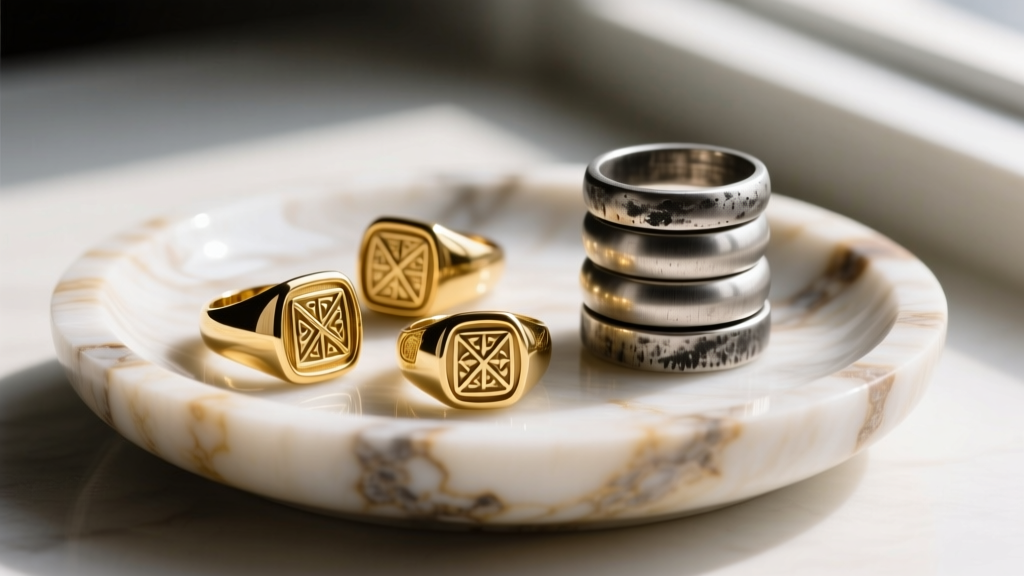
| Heavy Signet (18k Gold/Platinum) | High dome, 12-18g | Travertine or Marble | 0.25' - 0.5' (Flat lay) |
| Delicate Stackers (14k Gold/Silver) | Low profile, 2-4g each | Brushed Brass or Ceramic | 0.5' - 0.75' (Containment) |
| Cocktail (Enamel/Gemstone) | Asymmetrical, 10-15g | Bio-Resin or Velvet-lined | 1.0'+ (Protection) |
| Spinner / Mood Rings | Mechanical, bulky | Silicone or Soft Bio-Resin | 0.5' (Shock absorption) |
When dealing with cocktail rings featuring high-set center stones (such as emerald cuts or marquise diamonds), a dish with a steep lip or a soft bio-resin base is non-negotiable. Dropping a high-carat gemstone onto a hard marble surface, even from a height of two inches, can cause catastrophic girdle chipping. Conversely, heavy signet rings lay flat and benefit from wide, shallow stone dishes that allow their engraved faces to remain visible and accessible.
Spatial Styling: The Drop Zone vs. The Display Stage
How you style your jewelry ring holder dish depends entirely on its spatial function within your home. We categorize these spaces into two distinct zones: the 'Drop Zone' and the 'Display Stage'.
The Nightstand (The Drop Zone)
The nightstand dish is purely functional, utilized in low-light conditions when you are fatigued. Here, the jewelry ring holder dish must provide tactile and auditory feedback. A heavy stone or brass dish offers a satisfying 'clink' when you drop your rings, confirming they are safely contained without requiring you to turn on a lamp. High-contrast materials, like a dark walnut wood dish or black oxidized brass, help silhouettes stand out against the nightstand surface, preventing accidental knocks in the dark.
The Vanity (The Display Stage)
The vanity is where curation takes precedence. This is the space for your 'Display Stage' dish, which should be styled to interact with your ambient lighting. Fluted brass or ribbed glass dishes catch and refract morning light, creating dynamic shadows that elevate the visual weight of your collection. According to principles highlighted by the Federal Trade Commission Jewelry Guides, proper display and storage are essential for maintaining the advertised quality and finish of precious metals, meaning your vanity dish should keep rings separated to prevent metal-on-metal friction.
Maintenance, Patina, and Metal Interaction
A common oversight among collectors is assuming that a jewelry ring holder dish requires no maintenance. In reality, the dish itself can become a vector for tarnish and degradation if not properly cared for.
Silver rings are particularly susceptible to environmental sulfur. If you use a porous stone dish and live in a high-humidity environment, moisture can become trapped in the microscopic fissures of the stone, accelerating the formation of silver sulfide on your rings. To combat this, the Gemological Institute of America (GIA) recommends storing highly reactive metals in low-humidity environments and ensuring that any stone dish used for silver is periodically wiped down with a dry, lint-free microfiber cloth to remove ambient moisture and skin oils.
'The interaction between a ring's alloy and its resting surface is a micro-chemical environment. A 14k white gold ring, which contains nickel and zinc, can leave faint, dark oxidation streaks on unsealed light-colored marble over time. Always opt for inert bio-resins or sealed ceramics for white gold and silver rotations.'
For brass dishes, embrace the patina but manage it. If the brass begins to transfer a greenish hue to the underside of your rings (a harmless but annoying reaction caused by copper oxidation and skin acids), it is time to polish the dish. Use a specialized brass paste, buff it thoroughly, and apply a thin layer of microcrystalline wax to seal the surface without sacrificing the brushed texture.
Final Thoughts on the 2026 Aesthetic
The modern jewelry ring holder dish is a testament to the idea that the rituals surrounding our accessories are just as important as the accessories themselves. By moving beyond generic bowls and investing in materials that complement, protect, and elevate your specific ring collection, you transform a mundane daily habit into a moment of intentional design. Whether you opt for the organic warmth of honed travertine, the living finish of brushed brass, or the modern resilience of bio-resin, your choice of dish speaks volumes about your dedication to the craft of personal style.


