Troubleshooting Your Jewelry Box for Rings: Stop Tarnish & Scratches
Is your jewelry box for rings causing tarnish and scratches? Learn expert troubleshooting tips for ring storage, anti-tarnish materials, and slot sizing.

The Hidden Dangers of Improper Ring Storage
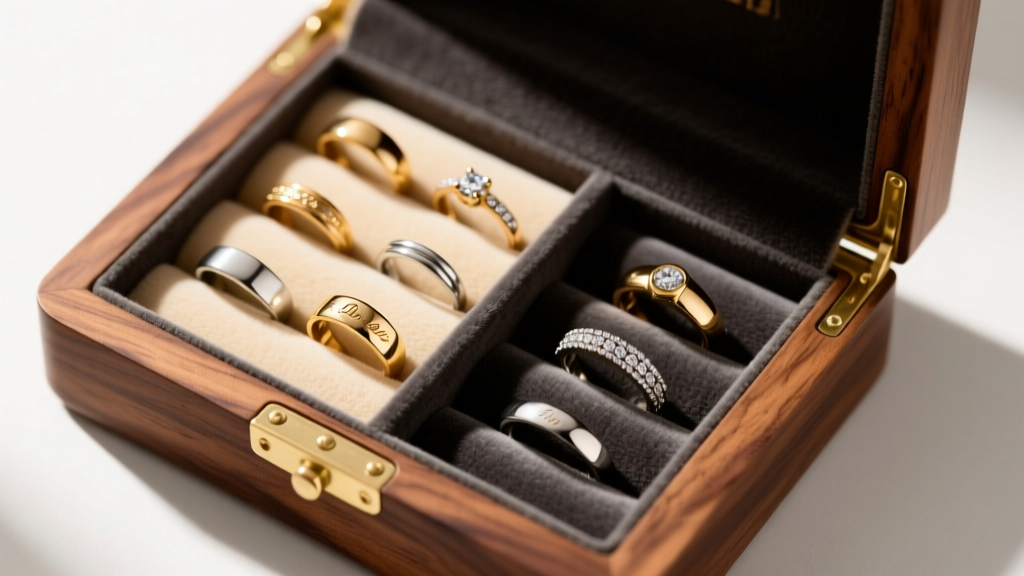
You invested in a beautiful jewelry box for rings, expecting it to protect your collection. Instead, you are opening the lid to find blackened sterling silver, micro-scratches on high-polish platinum, and dull, crazed opals. The harsh reality of ring storage is that many commercially available boxes are actually accelerating the degradation of your jewelry. As a senior style guide editor, I see countless collectors ruin thousands of dollars in precious metals and gemstones simply because they misunderstood the material science of their storage environment.
The core issue lies in the manufacturing process of mass-market jewelry boxes. To cut costs, manufacturers often use Medium-Density Fiberboard (MDF) and rubber-based contact adhesives. These materials actively off-gas sulfur compounds and formaldehyde. When trapped in an enclosed, unventilated space, these gases create a micro-climate that aggressively attacks silver alloys and degrades porous organic gems. Troubleshooting your ring storage requires moving beyond aesthetic velvet linings and examining the structural chemistry of your jewelry box for rings.
Troubleshooting Common Ring Storage Disasters
Before you throw away your current storage setup, you need to accurately diagnose the specific failure modes affecting your collection. Here is how to identify and solve the three most common ring storage disasters.
Issue 1: Sterling Silver Tarnishing in "Velvet" Boxes
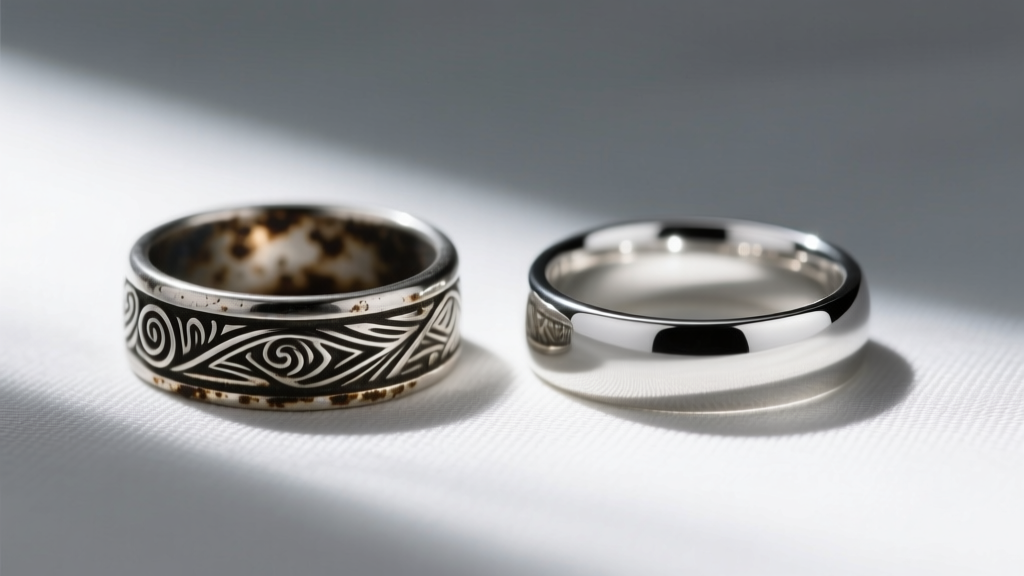
The Symptom: Your sterling silver signet rings and stacking bands develop a yellowish or black film within weeks of being placed in a closed drawer or box.
The Root Cause: Tarnish is not a natural aging of silver; it is a chemical reaction between silver and hydrogen sulfide (H2S) in the air, forming silver sulfide. While standard synthetic velvet is generally inert, the foam padding beneath it and the glues used to secure the lining are often rich in sulfur and acidic volatile organic compounds (VOCs). Furthermore, if your box is made of unsealed oak or MDF, the wood itself releases acetic acid, which catalyzes the tarnishing process.
The Fix: Line your existing ring slots with genuine anti-tarnish fabric, such as Pacific Silvercloth. This specialized cotton is embedded with microscopic silver particles that intercept and absorb H2S gases before they reach your jewelry. According to the National Park Service Museum Conservation guidelines, intercepting sulfur at the micro-climate level is vastly superior to relying on chemical polishing dips, which strip silver of its natural patina and microscopic surface layers.
Issue 2: Scratched Gemstones from Crowded Slots
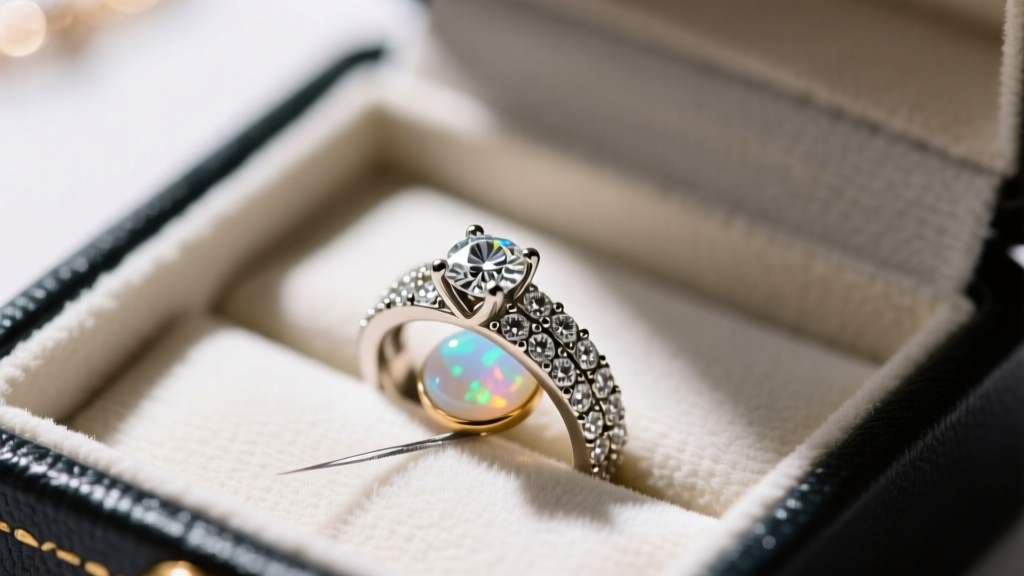
The Symptom: Your morganite, opal, or pearl cocktail rings are developing surface abrasions, even though they are sitting in individual fabric slots.
The Root Cause: The Mohs scale of mineral hardness dictates that harder materials will permanently scratch softer ones. A diamond (Mohs 10) stored in a flexible slot that shifts during drawer movement will easily scratch a nearby sapphire (Mohs 9) or devastate an opal (Mohs 5.5). Many jewelry boxes for rings feature "flexible" spring-loaded slots that push rings tightly against one another. If the velvet divider is thin, metal shanks and gemstone girdles will grind together every time the box is moved.
The Fix: Audit your slot spacing. Hardness gaps matter. Never store diamond solitaire rings in the same immediate row as softer stones like tanzanite, emerald, or pearl. If your box lacks rigid dividers, purchase individual hard-shell ring boxes or silicone ring capsules for your high-hardness stones to isolate them from the rest of the collection.
Issue 3: Moisture Trapping and Pearl Degradation
The Symptom: Your pearl and opal rings are losing their luster, developing micro-fractures (crazing), or their epoxy settings are failing.
The Root Cause: In an attempt to prevent silver tarnish, many collectors throw silica gel desiccant packets into their jewelry boxes. While dry air is great for silver, it is fatal to hygroscopic (water-absorbing) gems. The Gemological Institute of America (GIA) explicitly warns that pearls and opals require a relative humidity (RH) of 40% to 50%. Desiccants drop the RH to near zero, drawing the structural moisture out of the gems, leading to irreversible cracking and nacre peeling.
The Fix: Compartmentalize your jewelry box for rings. Dedicate a specific, sealed drawer or acrylic insert for organic gems. Use two-way humidity control packets (like Boveda 49% RH) inside this specific compartment to maintain a stable moisture level, completely isolated from your dry silver storage.
Material Breakdown: What Your Jewelry Box is Actually Made Of
Not all storage materials are created equal. When shopping for a high-quality jewelry box for rings, use this framework to evaluate the structural integrity and chemical safety of the materials.
| Material | Tarnish Risk | Moisture Control | Expert Verdict |
|---|---|---|---|
| MDF / Particleboard | High (Off-gasses VOCs & Sulfur) | Poor (Traps acidic moisture) | Avoid entirely for fine silver and heirloom pieces. |
| Kiln-Dried Solid Walnut | Low (If sealed with baked enamel) | Moderate (Breathes naturally) | Excellent for long-term storage if properly finished. |
| PU Leather over Cardboard | Moderate (Adhesives may contain sulfur) | Poor (Can trap humidity) | Acceptable for fashion jewelry; poor for fine silver. |
| Acrylic / Polycarbonate | Zero (Chemically inert) | High (Can be sealed with humidifiers) | Best for museum-grade archival storage and organic gems. |
Slot Sizing Framework: Signets vs. Stacking Rings
A major structural flaw in generic jewelry boxes is the "one-size-fits-all" ring slot. Standard ring slots are typically 20mm in diameter. While this accommodates a standard size 6 to 8 wedding band, it completely fails when applied to diverse ring styles.
- Chunky Signet Rings & Pinky Rings: A size 10 signet ring with a wide 14mm face requires a minimum slot diameter of 25mm to 30mm. Forcing a wide band into a 20mm slot bends the velvet lining, puts lateral pressure on the ring shank, and can actually warp softer alloys like high-karat 22k gold over time.
- Stacking Rings & Eternity Bands: Thin 1.5mm bands slide around in standard slots, leading to metal-on-metal friction. For stacking rings, you need micro-slots (15mm to 18mm) or a "ring roll" pillow design that secures the band tightly without putting pressure on the pavé-set diamonds.
- Cocktail Rings with High Settings: Rings featuring large, protruding center stones (like a 3-carat cushion cut morganite) cannot sit in standard recessed holes without the prongs catching on the fabric. These require open-pillow layouts or tiered, staggered drawers where the stone can hang freely over a void.
Advanced Climate Control for High-Value Collections
If your collection includes museum-quality pieces, antique mourning rings, or high-value investment gems, your jewelry box for rings must function as a micro-climate vault. According to the GIA's comprehensive jewelry care guidelines, extreme temperature fluctuations are just as damaging as chemical exposure. Storing your ring box near a radiator, in direct sunlight, or in a humid bathroom causes the metal shanks to expand and contract, which can eventually loosen gemstone prongs.
For ultimate protection, invest in a biometric or combination-lock safe that features a felt-lined, modular interior. Place a digital hygrometer inside the safe to monitor the RH. Keep the ambient room temperature between 65°F and 70°F (18°C - 21°C). By treating your ring storage as an active preservation environment rather than a passive drawer, you ensure that your signets, stacking bands, and cocktail rings remain in flawless, wearable condition for generations.
Expert Verdict: Upgrading Your Ring Storage
Troubleshooting your jewelry box for rings is an exercise in material science and spatial awareness. Stop relying on the default velvet-lined MDF boxes that come bundled with mass-market jewelry purchases. Audit your collection for Mohs hardness conflicts, isolate your organic gems with two-way humidity packets, and retrofit your silver compartments with Pacific Silvercloth. By matching the physical dimensions of your ring styles to the correct slot architecture, you eliminate friction, prevent chemical degradation, and preserve the structural integrity of your most prized possessions.