WWE Ring Jewelry Materials: Zinc, Brass, and Solid Gold
Compare materials in WWE ring jewelry, from zinc alloy replicas to solid gold customs. Learn about durability, plating grades, and skin safety.
The Spectrum of WWE Ring Jewelry Materials
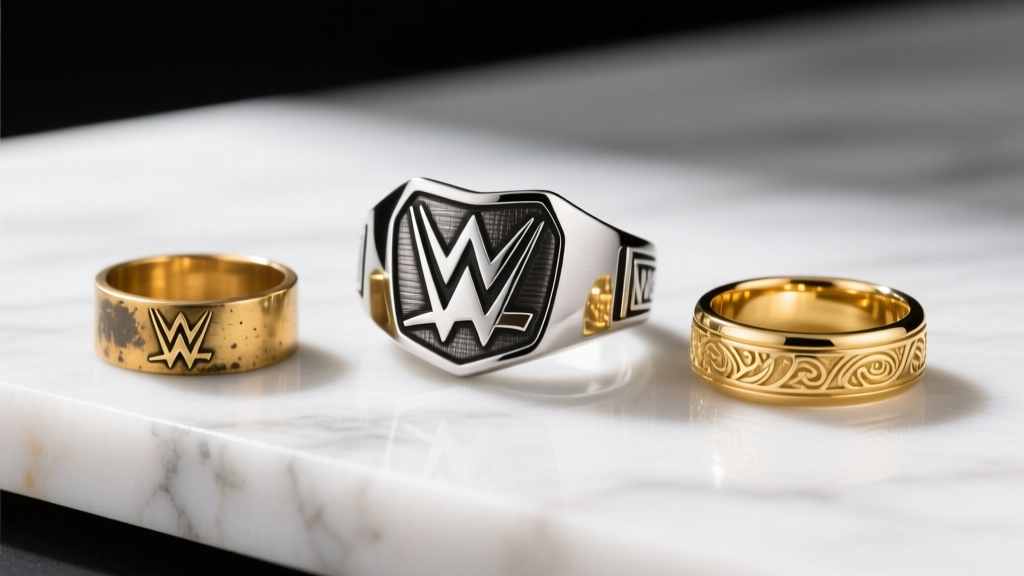
When fans and collectors search for WWE ring jewelry, they are navigating a wildly diverse market. The term encompasses everything from $30 die-cast arena merchandise to $25,000 solid gold, diamond-encrusted custom championship replicas. Understanding the metallurgical and gemological properties of these rings is critical for making an informed purchase. A ring meant for occasional display requires vastly different material specifications than one intended for daily wear. In 2026, the gap between high-end replicas and cheap base-metal knockoffs is defined by core alloys, plating micron thickness, and stone hardness. This guide breaks down the exact materials used in wrestling championship rings and fashion alternatives, providing a deep dive into their structural integrity, skin safety, and long-term value.
Tier 1: Zinc Alloy and Base Metal Replicas (The Merch Standard)
The majority of entry-level WWE ring jewelry sold at live events and through standard merchandise channels is manufactured using die-cast zinc alloys, often referred to in the industry as "pot metal." Zinc alloy is favored for its low melting point and ability to capture moderate detail in mass-production molds. However, it is inherently brittle and highly susceptible to oxidation.
To achieve the look of a championship belt, these zinc cores are typically flash-plated with a microscopic layer of gold-colored finish and sealed with a clear epoxy resin. The primary failure mode for zinc alloy rings is "sub-surface oxidation." Once the clear coat chips—a common occurrence given the heavy, clunky nature of wrestling rings—the underlying zinc reacts with moisture and skin acids, leading to a chalky white corrosion that cannot be polished away. Furthermore, base metal alloys frequently contain nickel as a hardening agent. According to the Mayo Clinic, nickel is one of the most common triggers for allergic contact dermatitis, meaning prolonged wear of unsealed zinc rings can result in severe skin irritation, redness, and blistering.
Tier 2: Brass Cores with Micron Gold Plating
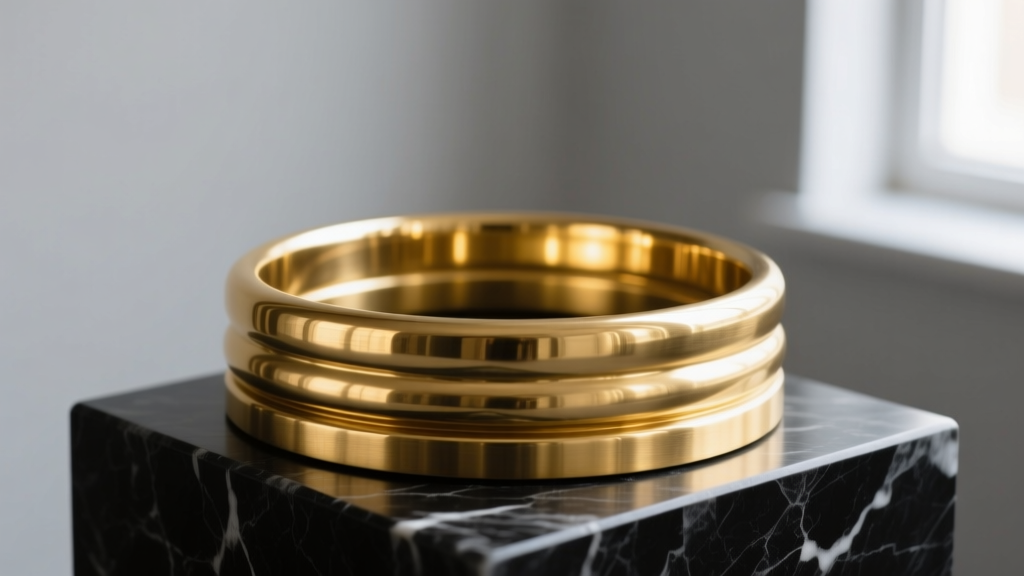
Mid-tier WWE ring jewelry, often produced by specialized replica jewelers and high-end merchandise partners, utilizes brass or bronze cores. Brass (an alloy of copper and zinc) offers superior tensile strength and captures the intricate filigree and side-plate details of championship designs far better than zinc.
Plating Thickness and Wear Rates
The value of a brass replica lies entirely in its plating. The Federal Trade Commission (FTC) strictly regulates gold plating terminology, and understanding these terms is vital for buyers:
- Gold Flashed (0.1 to 0.5 microns): Will wear through to the brass core within weeks of daily wear, exposing the copper underneath, which can turn the skin green due to copper oxidation.
- Gold Electroplated (0.5 to 1.0 microns): Offers moderate durability for occasional wear but will eventually wear thin on the high-contact points of the ring shank.
- Heavy Gold Electroplate (HGE) or Vermeil (2.5+ microns): The standard for premium replicas. When applied over a sterling silver or high-grade brass core, a 2.5-micron layer of 14k or 18k gold can withstand years of careful wear. Vermeil specifically requires a sterling silver base, which is hypoallergenic and prevents the "green finger" effect if the gold eventually wears through.
Premium replicas also upgrade the gemstones from molded glass to Cubic Zirconia (CZ). While CZ provides excellent initial brilliance, the Gemological Institute of America (GIA) notes that CZ has a Mohs hardness of 8 to 8.5. Over time, it accumulates microscopic scratches and absorbs skin oils, requiring regular ultrasonic cleaning to maintain its diamond-like fire.
Tier 3: Solid Gold and Moissanite Custom Commissions
At the apex of WWE ring jewelry are the actual championship rings presented to wrestlers, as well as bespoke 1:1 replicas commissioned by serious collectors. These are cast in solid gold and set with genuine diamonds or, increasingly in 2026, high-grade moissanite.
Wrestlers often prefer 10k or 14k solid gold over 18k or 24k for their championship rings. Pure gold is exceptionally soft. By alloying gold with copper, silver, and zinc, jewelers increase the Vickers hardness of the metal. A 10k gold ring (41.7% pure gold) is significantly more resistant to dents, scratches, and deformation than an 18k ring. Given that wrestlers frequently travel, knock their hands against equipment, and wear these rings in rugged environments, the structural durability of 10k and 14k alloys is a practical necessity, not just a cost-saving measure.
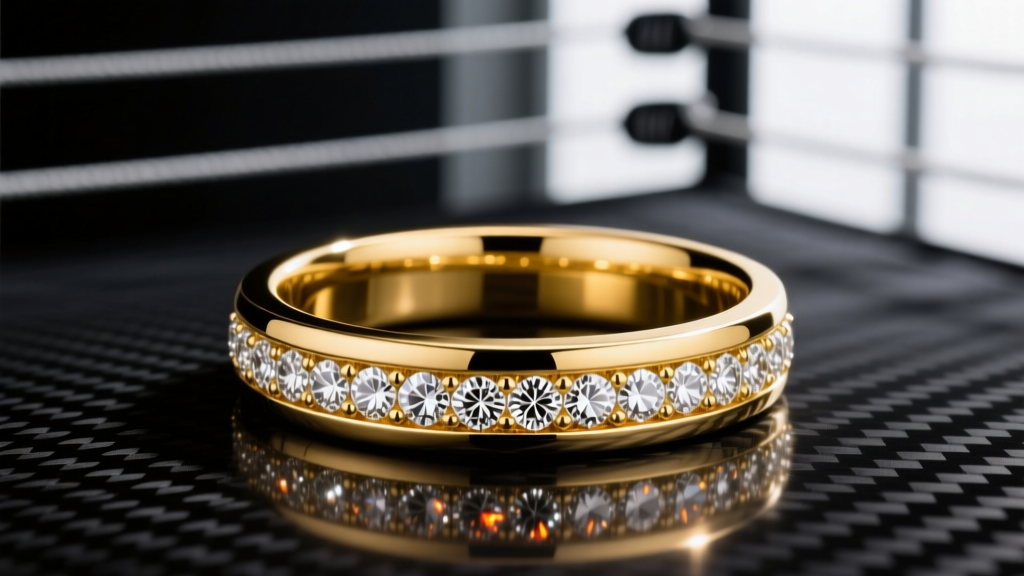
For the stones, custom jewelers are pivoting toward moissanite for massive championship centerpieces. Moissanite (Mohs hardness 9.25) outperforms CZ in both scratch resistance and refractive index. Because championship rings feature massive, emerald-cut or cushion-cut center stones, moissanite provides the necessary durability to prevent the "clouding" effect that plagues large CZ stones over time, while costing a fraction of the price of equivalent carat-weight diamonds.
Material Comparison Chart: WWE Ring Jewelry
| Material / Core | Mohs / Vickers Hardness | Estimated Price Range | Skin Safety (Hypoallergenic) | Best Use Case |
|---|---|---|---|---|
| Zinc Alloy (Pot Metal) | Very Low (Brittle) | $25 - $80 | Poor (High Nickel Risk) | Display, Cosplay, Occasional Wear |
| Brass with Flash Plating | Moderate (Malleable) | $90 - $250 | Moderate (Risk of Copper Reaction) | Collector Display, Light Wear |
| Sterling Silver Vermeil | Moderate (Durable) | $300 - $800 | Excellent (Hypoallergenic Core) | Regular Wear, Premium Replicas |
| Solid 10k Yellow Gold | High (Very Durable) | $1,500 - $4,000 | Excellent | Daily Wear, Rugged Environments |
| Solid 14k Yellow Gold | High (Balanced) | $4,500 - $15,000+ | Excellent | Heirloom Quality, Authentic Wrestler Specs |
| Tungsten Carbide (Fashion) | 9 (Extremely Hard) | $40 - $150 | Excellent (Cobalt-free grades) | Everyday Fan Wear, Minimalist Designs |
Everyday Wear: Tungsten and Stainless Steel Wrestling Rings
For fans who want the aesthetic of wrestling jewelry without the massive, heavy profile of a championship replica, tungsten carbide and surgical stainless steel offer compelling alternatives. Tungsten carbide is virtually scratch-proof, maintaining its polished finish indefinitely. Many modern fashion brands license wrestling logos and engrave them onto black or silver tungsten bands. However, buyers must ensure the tungsten is cobalt-free. Cheaper tungsten rings use cobalt as a binder, which can react with skin oils and cause irritation or dark staining; high-quality rings use nickel or ceramic binders that are entirely inert.
Sizing and Weight Considerations for Championship Replicas
One of the most overlooked aspects of buying WWE ring jewelry is the ergonomics of wide-shank rings. A standard wedding band is typically 2mm to 4mm wide. A championship replica ring, however, often features a shank width of 12mm to 18mm to support the massive side-plate detailing.
The Wide-Shank Sizing Rule: When a ring covers a large surface area of the finger, it traps heat and moisture, causing the finger to swell. Furthermore, a wide metal band cannot compress the soft tissue of the finger the way a thin band does. Always size up by at least 0.5 to a full 1.0 size from your standard ring measurement when purchasing a championship replica.
Weight is another factor. A solid brass replica can easily weigh between 40 and 70 grams. While this provides a satisfying, premium "heft" that collectors desire, wearing a 70-gram ring on the pinky or index finger for extended periods can cause joint fatigue. For daily wear, hollowed-out casting techniques or opting for 10k gold (which allows for slightly thinner, lighter castings without sacrificing structural integrity) is highly recommended.
Final Verdict: Choosing Your WWE Ring Jewelry
The right material depends entirely on your intent. If you are buying a ring for a display case or a weekend cosplay event, a zinc or brass replica is perfectly adequate, provided you are mindful of potential nickel allergies. If you intend to wear your wrestling jewelry regularly as a statement piece, investing in a sterling silver vermeil piece or a solid 10k/14k gold commission is non-negotiable. By understanding the micron thickness of plating, the alloy composition of gold, and the ergonomic realities of wide-shank sizing, you can secure a piece of sports entertainment history that will last a lifetime without turning your finger green.


