How to Choose and Size Christina Piercing Jewelry Safely
Learn how to choose, size, and safely change your christina piercing jewelry. Expert tips on titanium surface barbells, gauges, and rejection prevention.

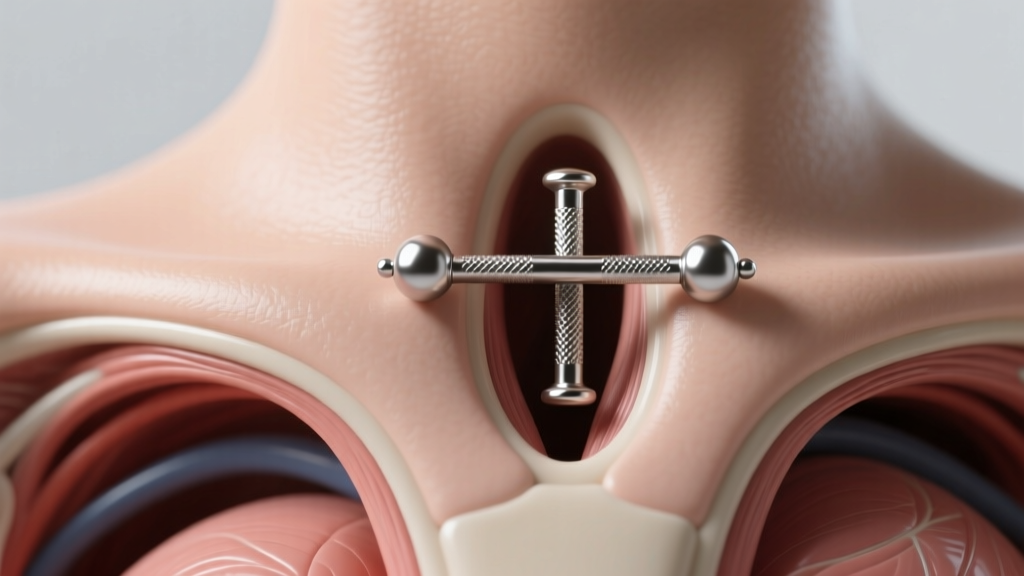
Understanding the Christina Piercing Anatomy
The Christina piercing is a highly specialized surface piercing located at the uppermost point of the vulva cleft, where the outer labia meet just below the pubic mound. Unlike standard mucosal piercings, the Christina does not pass through a distinct flap of tissue; instead, it relies on a shallow layer of subcutaneous tissue to hold the jewelry in place. Because of this unique anatomical requirement, selecting the correct christina piercing jewelry is not merely a matter of aesthetics—it is the single most critical factor in preventing rejection and migration.
According to the Association of Professional Piercers (APP), surface piercings carry an inherently higher risk of rejection than standard piercings. The body naturally recognizes the jewelry as a foreign object and attempts to push it out. To counteract this biomechanical reality, your jewelry must be perfectly sized, impeccably finished, and made from biocompatible materials.
Step 1: Selecting the Right Material and Gauge
When shopping for christina piercing jewelry, you must completely eliminate surgical steel, silver, and gold-plated options from your consideration. The damp, high-friction environment of the pubic region demands absolute biocompatibility.
Why Implant-Grade Titanium is Non-Negotiable
The only acceptable material for a healing or long-term Christina piercing is ASTM F136 implant-grade titanium. This specific alloy contains zero nickel, eliminating the risk of contact dermatitis and allergic reactions that can trigger the body's immune response to reject the piercing. Brands like NeoMetal, BVLA, and Industrial Strength machine their jewelry to mirror-finish standards, meaning the surface is polished to a glass-like smoothness that prevents tissue from snagging on microscopic scratches.
The Danger of the "Cheese-Cutter" Effect
Gauge selection is paramount. The standard gauge for a Christina is 14g (1.6mm), though some piercers may opt for 12g (2.0mm) for clients with thicker tissue folds. You must never use 16g (1.2mm) or thinner jewelry. A thinner bar increases the pressure per square millimeter on the tissue, creating a "cheese-cutter" effect where the jewelry slowly slices through the skin over time, guaranteeing rejection.
Step 2: Measuring for the Perfect Fit
A surface barbell consists of three dimensions: the gauge (thickness), the width (the horizontal bar that sits under the skin), and the rise (the vertical posts that protrude through the entry and exit holes). Getting the rise and width wrong will cause immediate complications.
| Dimension | Standard Sizing | Too Small Risks | Too Large Risks |
|---|---|---|---|
| Width | 12mm - 18mm | Tissue compression, embedding, necrosis | Excessive movement, snagging, migration |
| Rise | 3mm - 5mm | Jewelry embeds into swelling tissue | Snags on clothing, constant irritation |
| Gauge | 14g (1.6mm) | Cheese-cutter effect, rapid rejection | Unnecessary tissue trauma during insertion |
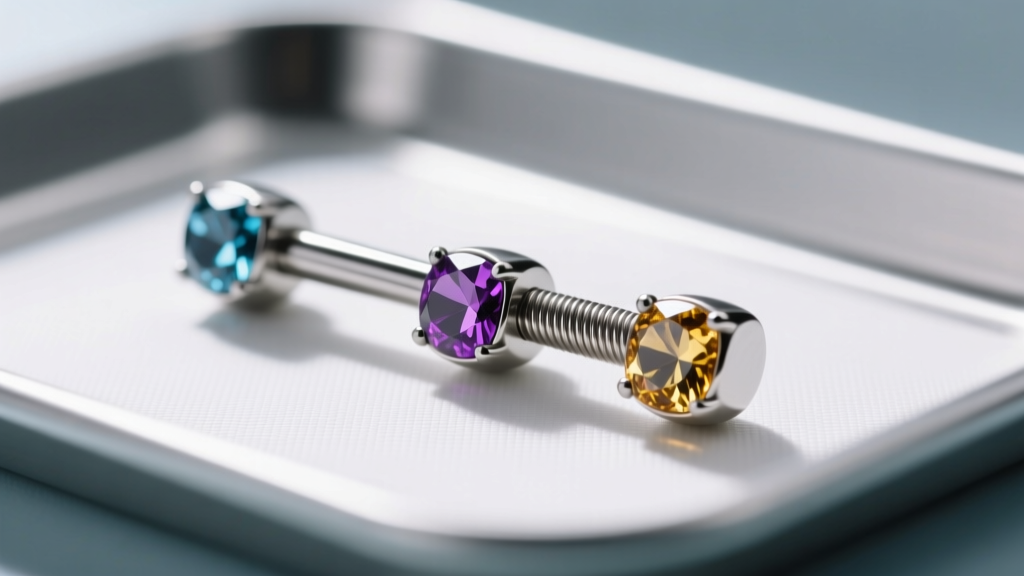
Step 3: Surface Barbells vs. Curved Barbells
A common misconception among piercing enthusiasts is that a curved barbell (banana barbell) is suitable for a Christina piercing. While some older piercing studios might still use curved barbells, modern biomechanical understanding heavily favors the staple-shaped surface barbell.
A curved barbell exerts constant outward rotational pressure on the entry and exit holes. Every time you move, sit, or wear tight clothing, the curve of the bar acts as a lever, torquing the fistula (the piercing channel). This torque signals the body to break down the tissue and reject the jewelry. Conversely, a properly fitted surface barbell sits flat and parallel to the body's contours. The 90-degree angles of the rise posts allow the tissue to heal tightly around the exits without rotational stress. For a comprehensive breakdown on surface piercing mechanics, Healthline's guide to surface piercings notes that staple-shaped bars significantly reduce the migration rate compared to curved alternatives.
Step 4: A Step-by-Step Guide to Changing Your Jewelry
Once your Christina piercing is fully healed (which can take anywhere from 9 to 18 months), you may want to swap the ends for decorative gems. Most high-end surface barbells use either internally threaded or threadless (push-pin) mechanisms. Never attempt to change a surface barbell using your bare fingers, as the pubic region is difficult to maneuver, and dropping a component can lead to lost jewelry or hygiene issues.
Changing Threadless (Push-Pin) Ends
- Prep your workspace: Wash your hands thoroughly and lay down a clean paper towel. Put on a pair of nitrile gloves to ensure a firm grip.
- Remove the old end: Grip the flat back of the surface bar post with one hand (using a hemostat or rubber-tipped pliers if needed) and firmly pull the decorative end straight out. Do not twist.
- Prep the new pin: Insert the pin of the new NeoMetal or BVLA end into the post about halfway, then bend it slightly (about a 5 to 10-degree angle). This bend creates the internal tension required to lock the end in place.
- Insert and lock: Push the bent pin fully into the post until the gem sits flush against the tissue. The tension will hold it securely.
Changing Internally Threaded Ends
- Secure the base: Use a specialized piercing hemostat to gently clamp the base of the surface bar post to prevent it from rotating under the skin.
- Unscrew counter-clockwise: Grip the gemstone end and turn left to unscrew. If it is stuck, use a second pair of hemostats with rubber tubing on the jaws to grip the gem for extra leverage.
- Thread the new end: Align the new internally threaded end. Turn it counter-clockwise until you feel a subtle "click" or drop—this means the threads are perfectly aligned.
- Tighten clockwise: Once aligned, turn clockwise to tighten. Do not overtighten, as this can strip the micro-threads or cause the gemstone to crack.

When to Seek Professional Help
If you feel resistance, notice swelling, or cannot get a firm grip on the jewelry due to the anatomical location of the Christina, stop immediately. Forcing a jewelry change in a high-tension surface piercing can cause micro-tears in the fistula, inviting infection and triggering the rejection process. Visit an APP-certified piercer who has the proper tools, such as tapered insertion pins and specialized clamps, to perform the swap safely.
Troubleshooting: Signs of Rejection and Migration
Even with perfect jewelry and meticulous aftercare, the Christina piercing has a notoriously high rejection rate due to its location. You must monitor the piercing weekly for the following warning signs:
- Visibility of the Bar: If you can see the horizontal bar of the surface barbell through the skin, or if the skin between the two holes is thinning and turning translucent, rejection has begun.
- Enlarged Holes: The entry and exit holes will appear larger, slitted, or elongated rather than tight and circular.
- Flaking and Redness: Persistent dry, flaky skin directly over the jewelry channel, accompanied by a shiny, red appearance, indicates the body is breaking down the tissue matrix.
- Migration: The jewelry physically moves closer to the edge of the pubic cleft over time.
Expert Note: Never attempt to treat a rejecting surface piercing with tea tree oil, aspirin pastes, or heavy ointments. These will only accelerate tissue breakdown and trap bacteria in the migrating fistula.
If you observe any of these symptoms, do not attempt to "save" the piercing by upsizing or changing the jewelry. The only safe course of action is to visit your piercer to have the jewelry removed immediately. Leaving a rejecting surface barbell in place will result in severe scarring, which can permanently prevent you from ever being re-pierced in that area. Once removed, keep the area clean with sterile 0.9% sodium chloride saline spray and allow the tissue to heal completely before considering a re-piercing attempt.


