Troubleshooting Nipple Jewelry Sizes: Fixing Fit & Migration Issues
Learn how to troubleshoot nipple jewelry sizes. Fix common fit issues, prevent migration, and find the perfect barbell length and gauge for your anatomy.

The "Goldilocks" Problem of Nipple Piercings
When it comes to intimate modifications, finding the correct nipple jewelry sizes is rarely a one-and-done process. Unlike earlobes, which remain relatively static, nipple tissue is highly dynamic. It reacts to temperature, arousal, hormonal fluctuations, and even the weight of the jewelry itself. Consequently, a barbell that fits perfectly on day one might cause embedding or migration by month three. Troubleshooting these fit issues requires a deep understanding of anatomy, material science, and precise measurement. In this guide, we will diagnose the most common sizing failures and provide actionable frameworks to achieve a comfortable, stable, and aesthetically pleasing fit.
The Anatomy of a Bad Fit: Diagnosing Your Symptoms
Before you can fix a sizing issue, you must accurately diagnose the failure mode. Most problems stem from a mismatch between the jewelry's dimensions and the tissue's current state. Look for these specific clinical signs:
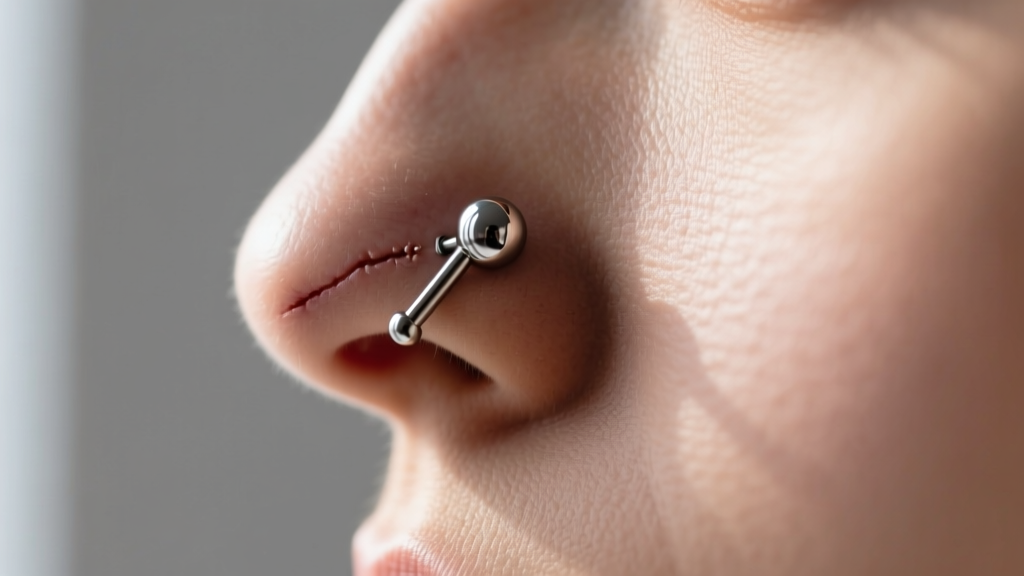
- Embedding (The Dimple Effect): If the tissue is swelling over the beads or the ends of the barbell are sinking into the areola, your barbell is too short. This is a medical urgency that can lead to necrosis or infection if not addressed within 24 hours.
- The Cheese-Cutter Effect (Migration): If the jewelry appears to be slowly moving toward the surface of the skin, leaving a thin layer of tissue behind it, the gauge is likely too thin, or the jewelry is too heavy for the gauge.
- Excessive Snagging & Spin: If the barbell spins freely like a propeller or constantly catches on clothing, the post length is too long for your healed anatomy. This continuous micro-trauma prevents the fistula from maturing and can cause hypertrophic scarring.
- Asymmetrical Tension: If one side feels tight while the other feels loose, you are dealing with natural anatomical asymmetry, requiring two entirely different barbell lengths rather than a matched set.
Decoding Nipple Jewelry Sizes: Gauge vs. Length
Understanding the distinction between gauge (thickness) and length (the wearable post area) is critical. While length accommodates swelling and tissue depth, gauge provides the structural integrity needed to prevent migration. Below is a breakdown of standard nipple piercing gauges and their specific troubleshooting applications.
| Gauge Size | Metric (mm) | Best Use Case | Risk if Misused |
|---|---|---|---|
| 16G | 1.2mm | Delicate anatomy, secondary decorative rings | High risk of cheese-cutter migration if used for heavy shields |
| 14G | 1.6mm | The industry standard for initial and healed piercings | May still migrate in highly active individuals or with heavy jewelry |
| 12G | 2.0mm | Healed piercings prone to migration; heavy shield anchors | Requires professional tapering to insert; too thick for fresh piercings |
| 10G | 2.5mm | Large-scale custom shields, heavy ornamental pieces | Excessive tissue displacement; not suitable for standard barbells |
If you are experiencing the cheese-cutter effect with a 14G barbell, upsizing to a 12G post is often the most effective troubleshooting step. The increased surface area distributes the weight of the jewelry more evenly across the fistula, halting migration.
Troubleshooting Barbell Length: The Swelling & Shrinking Cycle
The most frequent mistake consumers make is assuming their initial piercing jewelry will serve as their permanent jewelry. The healing process dictates a mandatory transition in nipple jewelry sizes.
The Initial Healing Phase
Fresh nipple piercings require longer barbells to accommodate the inevitable inflammatory response. Piercers typically use 5/8-inch (16mm) or 3/4-inch (19mm) posts. This extra length prevents the beads from embedding as the tissue expands. During this phase, a snug fit is actually dangerous.
The Downsizing Imperative
Once the primary swelling subsides (usually between 4 to 8 weeks), the long barbell becomes a liability. The excess post length allows the jewelry to flip, twist, and snag. You must return to your piercer for a "downsize." For most healed anatomies, the ideal final length falls between 3/8-inch (10mm) and 1/2-inch (12mm). The goal is a barbell that rests flush against the base of the nipple without compressing the tissue when it is in a relaxed, non-stimulated state.
When Standard Nipple Jewelry Sizes Fail: Custom Solutions
Off-the-rack jewelry is manufactured based on statistical averages, but human anatomy rarely conforms to averages. If you have inverted nipples, highly prominent nipples, or significant asymmetry, standard 3/8-inch and 1/2-inch barbells may never fit correctly.
"Custom jewelry is often a necessity, not a luxury, for intimate piercings. Tissue depth can vary by several millimeters even between the left and right sides of the same individual, necessitating bespoke post lengths to ensure proper healing and long-term stability." — The Association of Professional Piercers (APP)
If you find yourself caught between sizes (e.g., a 1/2-inch is too tight, but a 5/8-inch is too loose), seek out a piercer who works with custom jewelry manufacturers. Brands like Industrial Strength and NeoMetal offer threaded posts in 1mm increments, allowing for a truly dialed-in fit.
Step-by-Step Guide to Measuring for Your Perfect Fit
If you are ordering replacement jewelry and need to determine your exact required length, you must measure the wearable post length, not the entire barbell. Follow this precise methodology:
- Remove the Jewelry: Carefully unscrew one bead and slide the barbell out of the fistula. Ensure your hands and the jewelry are clean.
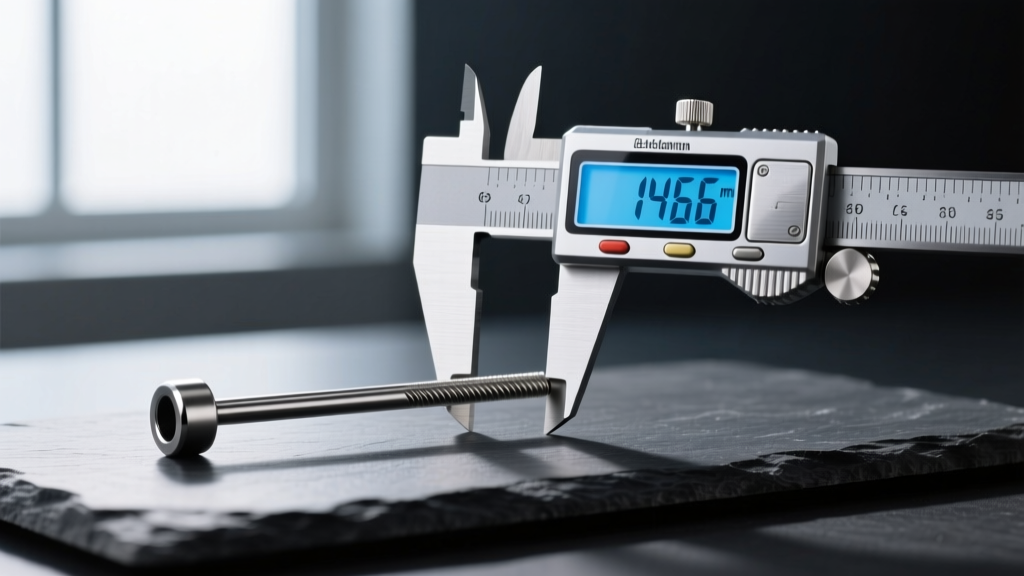
- Use Digital Calipers: Do not use a flexible sewing tape measure or a standard ruler. You need digital calipers for millimeter accuracy.
- Measure the Post Only: Place the calipers on the straight post, excluding the threaded pins and the beads. If your current 1/2-inch barbell feels slightly tight, you now know you need to order a 9/16-inch (14mm) custom post.
- Account for Threading: Remember that internally threaded or threadless jewelry hides a small portion of the post inside the bead. Always order based on the manufacturer's stated "wearable length."
Material Matters: How Titanium Grades Affect Sizing Tolerances
Sizing does not exist in a vacuum; it is deeply intertwined with the material you wear. If you are wearing low-grade surgical steel or mystery metals, your body may be experiencing a low-level allergic contact dermatitis (often due to nickel content). This chronic, microscopic swelling can make a perfectly sized 1/2-inch barbell suddenly feel too short, leading you to mistakenly believe you need a longer post.
By upgrading to ASTM F136 implant-grade titanium, you eliminate the allergic response. According to the APP guidelines on jewelry materials, implant-grade titanium is highly biocompatible and reduces tissue reactivity. Once the chronic swelling subsides, you may find that your original, smaller nipple jewelry sizes suddenly fit perfectly again. Always troubleshoot the material before you troubleshoot the dimensions.
Final Thoughts on Achieving the Ideal Fit
Troubleshooting nipple jewelry sizes is an exercise in patience and precision. By paying close attention to the physical symptoms of a bad fit, understanding the mechanical advantages of thicker gauges, and committing to the downsizing process, you can transform a problematic piercing into a comfortable, lifelong modification. When in doubt, always consult an APP-certified professional who can assess your unique anatomy with the proper diagnostic tools.


