Metallurgy & Design: Choosing Your 11 11 Necklace Gold
Discover the metallurgy, casting techniques, and chain mechanics behind a high-quality 11 11 necklace gold pendant. Expert buying guide inside.

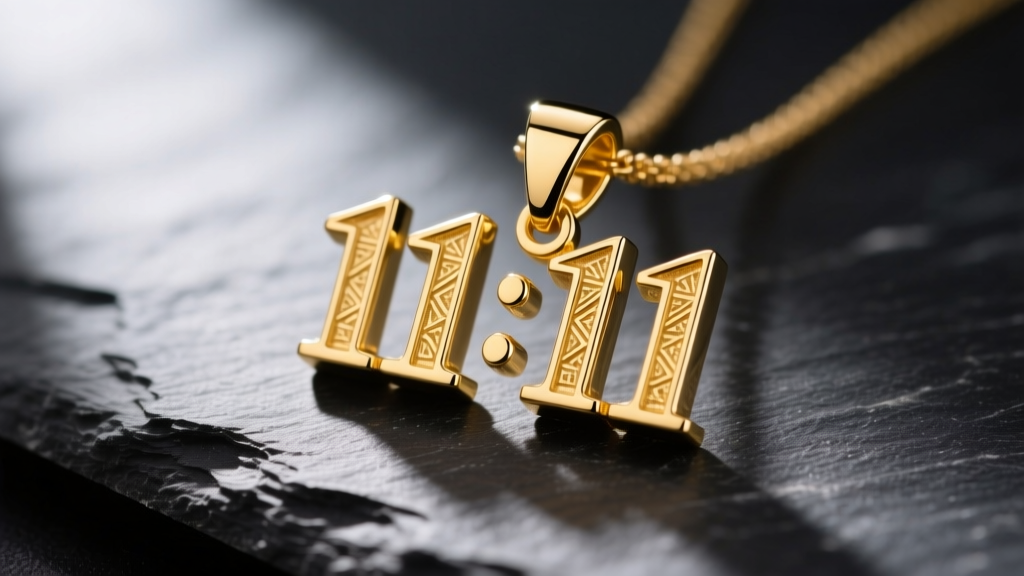
The cultural fascination with angel numbers has transformed the 11:11 motif from a fleeting digital clock anomaly into a permanent fixture in fine jewelry. However, when consumers search for an 11 11 necklace gold piece, they are often met with a sea of mass-produced, hollow-backed trinkets that lack structural integrity. As a domain expert in jewelry engineering and metallurgy, I approach numerical pendants not just as spiritual talismans, but as complex metallurgical projects. The sharp geometric angles, uniform stroke widths, and precise symmetry required for an '11 11' design demand advanced casting techniques and specific gold alloy compositions to ensure longevity.
This comprehensive technical guide deconstructs the material science, manufacturing processes, and mechanical pairings necessary to evaluate, select, and maintain a high-caliber 11 11 gold necklace. We will bypass superficial style advice and focus entirely on the actionable data points that separate heirloom-quality craftsmanship from disposable fast fashion.
The Metallurgy of Gold Numerical Pendants
The structural success of any numerical pendant relies heavily on the gold alloy's hardness and flow characteristics during the casting process. Pure 24k gold is far too malleable (measuring roughly 25 on the Vickers hardness scale) to hold the crisp, 90-degree internal corners required for the number '1'. Therefore, alloying metals are introduced to increase tensile strength and durability.
Alloy Compositions and Edge Definition
When evaluating an 11 11 necklace gold design, you will typically encounter three purity standards. Each interacts differently with the intricate geometry of the pendant:
- 10k Gold (41.7% Gold): Highly durable with a Vickers hardness of up to 130. However, the high copper and zinc content makes the alloy viscous when molten, which can lead to rounded, less defined inner corners in complex numerical castings. It is also prone to oxidation and tarnishing over time.
- 14k Gold (58.3% Gold): The optimal metallurgical compromise. With a Vickers hardness of approximately 100-120 (depending on the silver-to-copper ratio), 14k gold flows beautifully into the microscopic crevices of a numerical silicone mold, yielding razor-sharp edges while providing excellent resistance to daily deformation.
- 18k Gold (75.0% Gold): Prized for its rich, warm color and hypoallergenic properties, 18k gold is softer (Vickers hardness around 80). While it casts with exceptional detail, the slender vertical strokes of an '11' pendant in 18k gold are susceptible to bending if subjected to high tensile stress from a heavy chain.
According to the Gemological Institute of America (GIA), the specific ratio of silver to copper in 14k gold not only dictates the color (yellow, rose, or white) but also significantly alters the alloy's grain structure, which directly impacts the final polish and light reflection of the pendant's flat surfaces.
Casting Techniques and Sprue Engineering
The vast majority of gold pendants are created using lost-wax investment casting. A 3D-printed or hand-carved wax model of the 11:11 design is encased in a plaster-like investment material, burned out in a kiln, and replaced with molten gold. The true mark of an expert jeweler lies in the sprue placement—the channel through which the molten gold enters the mold.
The Problem with Visible Solder Marks
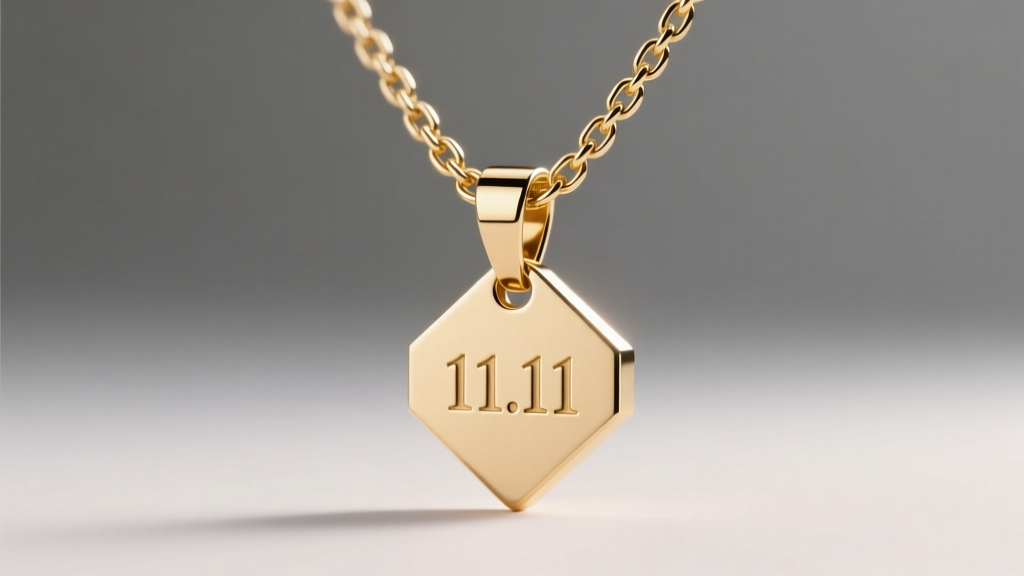
In mass-produced 11 11 necklace gold items, manufacturers often place the sprue at the top center of the pendant for easy removal. Once the sprue is cut off, the remaining nub is filed down and soldered. On a highly polished, symmetrical numerical piece, this leaves a visible discoloration or slight depression on the top edge, disrupting the visual geometry. Expert bench jewelers strategically place the sprue on the back-bottom corner of the right-most '1'. After casting, the sprue is removed using a laser welder rather than traditional torch soldering. Laser welding introduces minimal heat, preventing the surrounding gold from warping and leaving a virtually invisible seam that requires only microscopic polishing.
Chain Pairings: Gauge, Weave, and Tensile Strength
A pendant is only as secure as the chain that holds it. The uniform, rectangular shape of an 11:11 pendant creates a specific center of gravity. If the chain is too flimsy, the pendant will constantly flip backward. If the chain is too heavy, it will overpower the delicate numerical strokes. Below is a technical framework for pairing chains with numerical pendants based on pendant weight and geometry.
| Chain Type | Recommended Gauge | Tensile Strength | Best Application |
|---|---|---|---|
| Box Chain | 1.0mm - 1.5mm | High (up to 15 lbs) | Solid-cast 14k pendants weighing 3g to 6g. The square links mirror the geometric angles of the '11 11' design. |
| Cable Chain | 0.9mm - 1.2mm | Medium (up to 8 lbs) | Lightweight, hollow-back, or die-struck pendants under 3g. Offers a classic, unobtrusive look. |
| Rope Chain | 1.5mm - 2.0mm | Very High (up to 25 lbs) | Oversized, statement 11:11 pendants (8g+). The twisted links provide maximum structural support. |
| Wheat Chain | 1.2mm - 1.8mm | High (up to 18 lbs) | Mid-weight pendants. The woven, directional links prevent the pendant from sliding side-to-side. |
When selecting a chain, always verify that the links are soldered. Unsoldered cable or box chains will easily pull apart when the flat surface of an 11:11 pendant catches on clothing.
Bail Engineering and Clasp Mechanics
The bail—the loop that connects the pendant to the chain—is a critical point of mechanical failure. For a symmetrical design like 11 11, the bail must be perfectly centered to maintain visual equilibrium.
Integrated vs. Soldered Bails
Cheap pendants often feature a simple jump ring soldered to the top back edge. This causes the pendant to hang at an awkward angle, exposing the back to the viewer. High-end 11 11 necklace gold pieces utilize an 'integrated hidden bail' or a 'tube bail'. In an integrated design, the top horizontal stroke of the first '11' is hollowed out or shaped into a seamless tube during the initial 3D CAD modeling phase. This allows the chain to pass directly through the pendant's geometry, ensuring it lays perfectly flat against the sternum and maintains the unbroken visual line of the numbers.
Clasp Specifications
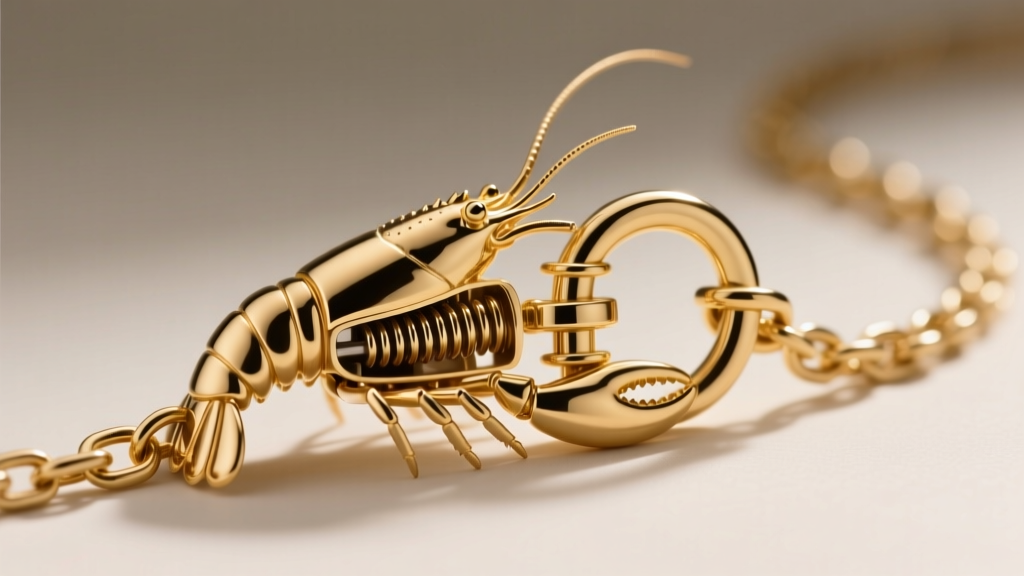
For chains in the 1.0mm to 1.5mm range, a standard spring-ring clasp is mechanically insufficient; the internal spring degrades quickly, and the small latch is difficult to manipulate. A forged lobster clasp, stamped with the corresponding gold purity hallmark (e.g., '14K' or '585'), is mandatory. Ensure the jump ring connecting the lobster clasp to the chain is fully soldered shut. An unsoldered jump ring will inevitably spread open under the pendulum-like kinetic energy generated by a swinging numerical pendant.
Pricing Frameworks and Authenticity Verification
The pricing of fine jewelry is frequently misunderstood. To determine if you are paying a fair premium for an 11 11 necklace gold piece, you must separate the intrinsic melt value from the craftsmanship multiplier.
Expert Pricing Formula: To calculate the baseline melt value, weigh the pendant and chain in grams. Multiply this weight by the gold purity percentage (0.583 for 14k), and then multiply by the current daily spot price of pure gold per gram. A fair retail price for a specialized numerical casting will typically range from 2.5x to 4.0x this baseline melt value, accounting for CAD design, casting, laser welding, and hand-polishing.
According to the World Gold Council, legitimate gold jewelry must bear a quality mark indicating its purity. On a slender 11:11 pendant, space is limited. Inspect the back of the bottom-right vertical stroke with a 10x jeweler's loupe. You should find a micro-stamp reading '10K', '14K', '18K', or their European equivalents ('417', '585', '750'). If the stamp is located only on a glued-on tag or is entirely absent, the piece is likely gold-plated over a base metal core, which will eventually oxidize and turn the wearer's skin green due to the copper content reacting with sweat.
Long-Term Maintenance of Geometric Pendants
The flat, polished surfaces of an 11 11 pendant act as mirrors, making scratches and oil buildup highly visible. To maintain the optical clarity of the gold, avoid ultrasonic cleaners if the pendant features any micro-pave diamond accents, as the high-frequency vibrations can loosen the prongs. Instead, use a solution of warm water and a few drops of phosphate-free dish soap, agitating gently with a soft-bristled baby toothbrush. This removes sebum and cosmetic residues from the sharp 90-degree inner corners without abrading the high-polish finish. By understanding the metallurgy, casting precision, and mechanical pairings detailed above, you can confidently invest in an 11 11 necklace gold piece that is engineered to last a lifetime, transcending temporary trends through superior material science.


