Expert Buying Guide: Choosing a 14 k Gold Necklace
Discover what to look for when buying a 14 k gold necklace. Learn about hallmarks, chain styles, clasp types, and pricing in our expert guide.

The Metallurgy of 14k Gold: Why It Reigns Supreme
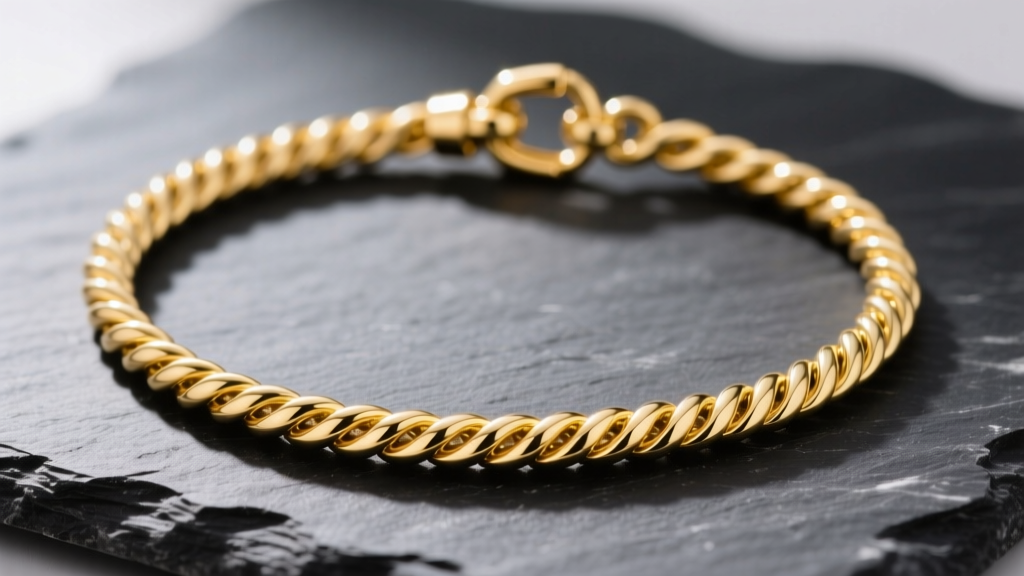
When investing in fine jewelry, understanding the metallurgy behind your pieces is non-negotiable. A 14 k gold necklace represents the ultimate sweet spot in the jewelry industry, balancing luxurious aesthetics with everyday durability. Pure 24-karat gold is inherently soft and malleable, making it entirely unsuitable for chain links that endure daily tension and friction. By alloying 58.3% pure gold with 41.7% strengthening metals—such as copper, silver, zinc, or palladium—jewelers create a material with vastly superior tensile strength.
According to the Gemological Institute of America (GIA), the specific alloy mix dictates not only the durability but also the final color of the gold. Yellow gold relies on a balanced mix of silver and copper, while rose gold increases the copper ratio for a warmer, pinkish hue. White gold utilizes palladium or nickel and is typically plated with rhodium to achieve a bright, reflective silver finish. For chains that will hold heavy pendants, the structural integrity of 14k gold ensures the links will not stretch or snap under moderate weight, a common failure mode in 18k or 22k alternatives.
Decoding Hallmarks and Authenticity Markers
Before completing any purchase, you must verify the authenticity of the metal. The Federal Trade Commission (FTC) strictly regulates jewelry hallmarking in the United States, requiring that any piece stamped with a karat mark must be within a tiny margin of error of that purity.
- 14k or 14K: The standard North American hallmark indicating 14 parts pure gold out of 24.
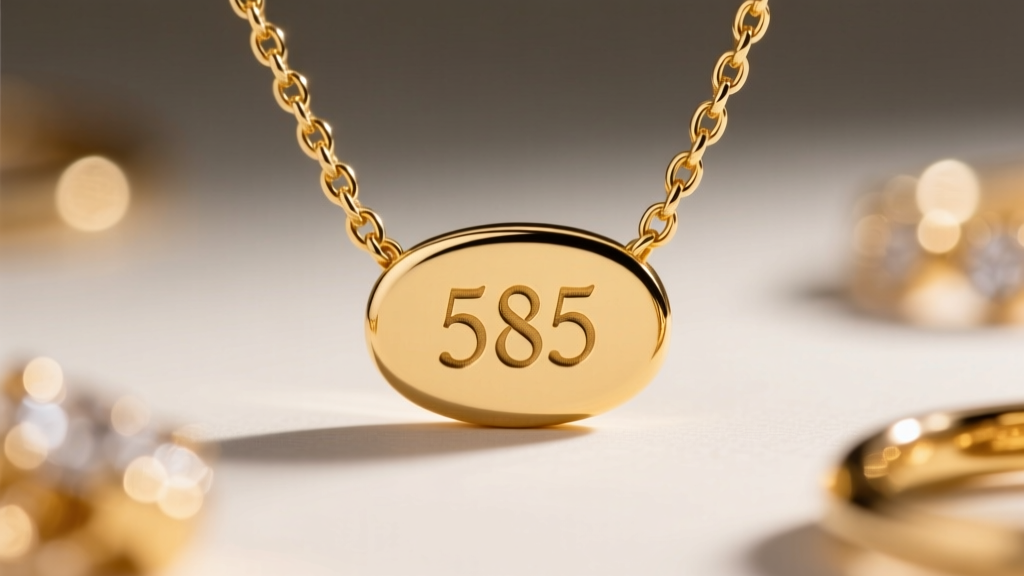
- 585: The European millesimal fineness mark, denoting 58.5% pure gold (a standard rounding up from 58.3%).
- 14KP: The "Plumb" gold mark. This is a crucial indicator of quality, guaranteeing that the piece is exactly 14k or higher, with no negative tolerance. Many vintage or high-end Italian chains carry this stamp.
Always inspect the small oval or rectangular tag located immediately adjacent to the clasp. If a chain lacks a hallmark or features a stamp like "14k HGE" (Heavy Gold Electroplate) or "14k GF" (Gold Filled), you are looking at a gold-plated base metal, not a solid 14 k gold necklace.
Chain Styles: A Durability and Use-Case Matrix
Not all chain links are engineered equally. The structural design of the links determines how well the necklace resists kinking, tangling, and snapping. Below is a comparative matrix of the most common chain styles you will encounter when shopping for a 14 k gold necklace.
| Chain Style | Tensile Strength | Kink Resistance | Best Use Case |
|---|---|---|---|
| Wheat | Very High | Excellent | Heavy pendants, everyday wear |
| Box | High | Excellent | Modern pendants, layering |
| Curb | High | Good | Standalone wear, masculine styles |
| Cable | Moderate | Moderate | Lightweight pendants, delicate layering |
| Figaro | Moderate | Moderate | Vintage aesthetics, standalone wear |
| Rope | Low-Moderate | Poor | Standalone wear (prone to hair snagging) |
| Snake | Low | Very Poor | Minimalist wear (kinks permanently if bent) |
For maximum longevity, Wheat and Box chains are the undisputed champions. Their interlocking geometric structures distribute tension evenly across multiple links, preventing the localized stress that causes Cable and Rope chains to snap over time.
Clasp Mechanics: The Hidden Weak Point
The clasp is the most frequent point of failure on any necklace. A heavy 14 k gold necklace paired with a substandard clasp is a lost necklace waiting to happen.
Lobster vs. Spring Ring vs. Box Clasps
Spring Ring Clasps: These are the small, circular clasps commonly found on mass-produced, lightweight chains. They are inexpensive but notoriously difficult to operate with one hand and feature a weak internal spring that degrades quickly. Avoid these for chains over 1.5mm in width.
Lobster Clasps: The industry standard for mid-weight chains. They feature a solid, spring-loaded lever that provides a secure closure. Ensure the lobster clasp is cast in solid 14k gold, as cheap plated clasps are sometimes soldered onto solid chains by unscrupulous vendors.
Box Clasps with Figure-8 Safety: Mandatory for heavy chains (over 15 grams). The primary box mechanism locks the tongue into place, while the secondary figure-8 wire acts as a failsafe. If the primary box mechanism fails, the safety wire catches the chain before it falls.

The 2026 Pricing Framework: Melt Value vs. Craftsmanship
Understanding how to price a 14 k gold necklace protects you from predatory retail markups. The price of any solid gold chain is derived from two components: the intrinsic melt value of the gold and the craftsmanship premium.
To calculate the baseline melt value, multiply the chain's gram weight by the current daily spot price of 14k gold. In 2026, with gold markets fluctuating around historic highs, the melt value of 14k gold hovers between $45 and $55 per gram, depending on daily market conditions.
The Craftsmanship Premium:
- Machine-Made (Standard): Expect a 15% to 30% markup over melt value. These chains are mass-produced in countries with lower labor costs and feature basic laser soldering.
- Italian Hand-Finished: Expect a 40% to 80% markup. Italian chains (often marked with a specific manufacturer's registry number alongside the 14k stamp) feature superior diamond-cutting techniques, hand-polishing, and reinforced link soldering.
- Artisan / Custom Forged: 100% to 300%+ markup. You are paying for the artist's time, unique design, and specialized metallurgical techniques.
If a vendor is selling a solid 14 k gold necklace for less than its calculated melt value, the chain is almost certainly hollow, gold-plated, or heavily alloyed with base metals that violate FTC purity guidelines.
Sizing, Gauge, and Pendant Pairing
Matching the gauge (thickness) of your chain to your pendant is critical for both aesthetics and structural safety. A general rule of thumb is the 1:5 ratio—the chain should be able to support at least five times the weight of the pendant without stretching.
- 0.8mm - 1.2mm: Best for ultra-light pendants (under 2 grams) or bare layering. Prone to snapping if snagged.
- 1.5mm - 2.5mm: The versatile everyday range. Safely supports most standard gemstone and gold pendants (2 to 8 grams).
- 3.0mm - 5.0mm: Heavy-duty statement chains. Best worn standalone or with large, heavy medallions (10+ grams).
Final Pre-Purchase Checklist
Before you finalize your investment, run through this quick verification checklist:
- Verify the "14k", "585", or "14KP" stamp on the manufacturer's tag.
- Run your fingers along the links to check for snagging, rough spots, or weak solder joints.
- Test the clasp mechanism to ensure it snaps shut cleanly and the spring tension is firm.
- Request the exact gram weight from the seller and calculate the melt value to ensure the craftsmanship premium is reasonable.
- Confirm the return policy and whether the vendor offers complimentary link repairs for the first year.
By prioritizing metallurgical integrity, robust link structures, and transparent pricing, you will secure a 14 k gold necklace that serves as a resilient, timeless staple in your jewelry collection for decades to come.


