How a 16 Inch Necklace on Neck Sits: Anatomy and Fit Guide
Discover the exact anatomy, drape physics, and fit mathematics of a 16 inch necklace on neck. Expert guide to gauges, clasps, and styling.

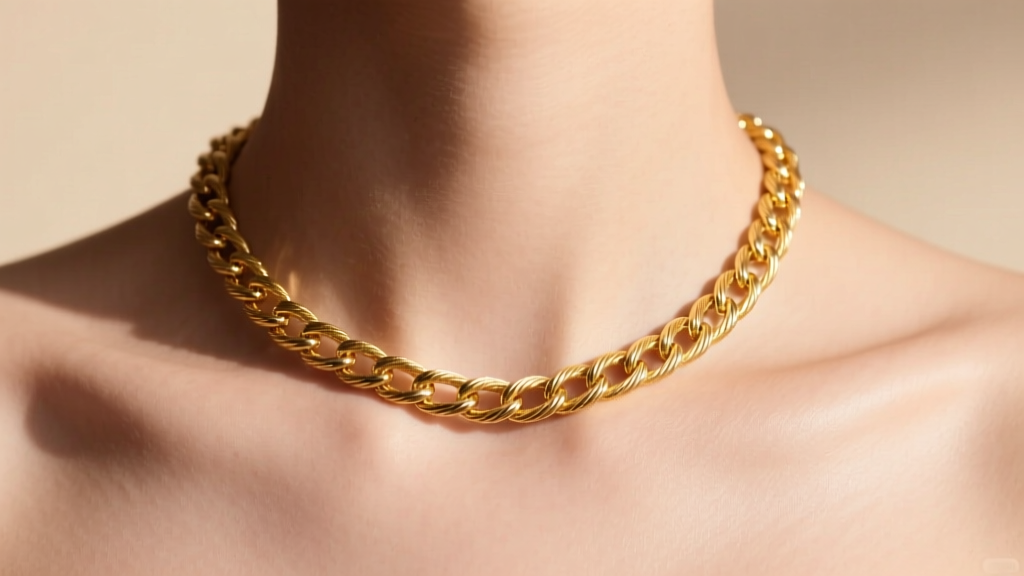
In the realm of fine jewelry, the 16-inch chain occupies a highly specific, often misunderstood anatomical zone. Frequently mislabeled as a standard choker or a traditional princess length, a 16-inch drop actually sits in the transitional 'collar' or 'high princess' boundary. Understanding exactly how a 16 inch necklace on neck sits requires moving beyond basic fashion advice and into the biomechanics of drape, metallurgical stiffness, and geometric ease. This technical deep dive explores the precise physics, material behaviors, and structural engineering required to master the 16-inch length.
The Anatomy of a 16-Inch Drop
To understand the fit, we must first map the topography of the human neck and upper thorax. The average adult female neck circumference ranges from 13 to 14 inches. A 16-inch chain (40.64 cm) provides roughly 2 to 3 inches of 'ease'—the extra material that allows the chain to drop below the cervical spine and rest on the anterior skeletal structure.
When fastened, a 16-inch chain typically bypasses the thyroid cartilage and settles directly over the clavicles (collarbones), with the lowest point of the parabolic drape resting just above the suprasternal notch (the hollow at the base of the throat). This precise placement makes it the most versatile length for framing the face without competing with high-necked garments. However, because it rests on a highly mobile joint area (the sternoclavicular joint), the chain is subject to constant kinetic friction and shifting.
Neck Circumference vs. Chain Length: The Mathematical Fit
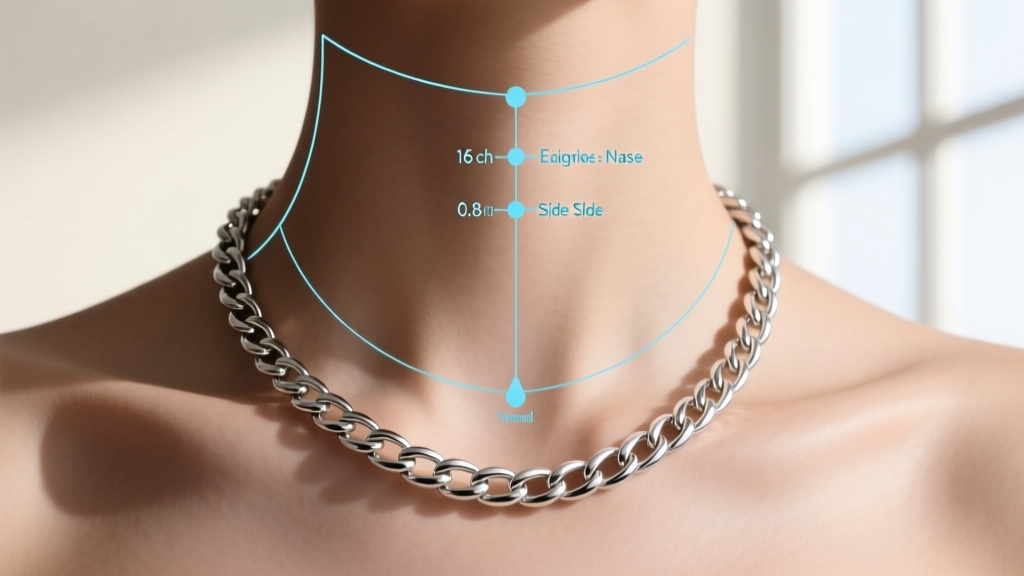
The visual behavior of a 16-inch chain is entirely dictated by the wearer's neck circumference. The 'drop depth' can be approximated using a simplified parabolic equation, but in practical jewelry fitting, we rely on ease ratios. According to sizing standards published by Jewelers of America, the relationship between neck size and chain drape fundamentally alters the necklace's classification.
| Neck Circumference | Available Ease | Drape Profile on 16" Chain | Visual Classification |
|---|---|---|---|
| 12.5 inches | 3.5 inches | Deep parabolic curve, rests mid-clavicle | High Princess |
| 13.5 inches | 2.5 inches | Shallow curve, rests on collarbone ridge | Standard Collar |
| 14.5 inches | 1.5 inches | Tight radius, hugs base of neck | Loose Choker |
| 15.5 inches | 0.5 inches | Zero drape, constrictive, sits on cervical spine | Tight Choker (Not Recommended) |
Material Drape and Gauge Physics
A common mistake consumers make is selecting a 16-inch chain based solely on the metal color, ignoring the gauge (thickness) and link architecture. The metallurgical properties and physical dimensions dictate the chain's 'bend radius'—the minimum curve the chain can form before becoming rigid.
Alloy Stiffness and Work-Hardening
Pure 24k gold is highly malleable and will drape like liquid fabric, even at thicker gauges. However, fine jewelry is rarely 24k. Standard 14k gold (58.5% gold, alloyed with copper, silver, and zinc) possesses a Vickers hardness (HV) of roughly 130-160, making it significantly stiffer. Sterling silver (92.5% silver, 7.5% copper) is prone to work-hardening; over time, the copper alloy matrix stiffens, causing a once-fluid 16-inch silver chain to develop a 'memory' and resist laying flat against the collarbone.
Chain Link Architecture and Hinge Friction
- Cable Chain (0.8mm - 1.2mm): Features simple oval links with high rotational freedom. At 16 inches, a fine cable chain will perfectly trace the suprasternal notch without bridging the gap between the collarbones.
- Curb and Cuban Links (2.0mm - 4.0mm): The flattened, interlocking links create high surface friction. A 16-inch 3mm Cuban link will not drape into a V-shape; instead, it will form a rigid, circular collar that hovers slightly above the skin, acting as a structural statement piece rather than a flowing accent.
- Box Chain (1.0mm - 1.5mm): Composed of square, hinged links. Box chains possess a high tensile strength but limited lateral flexibility. On a 16-inch drop, a box chain will create sharp, geometric angles rather than smooth curves, which can cause the links to pinch the delicate skin at the base of the neck if the fit is too tight.
Clasp Engineering for High-Tension Short Chains
The shorter the chain, the higher the parasitic tension placed on the clasp assembly. When a wearer turns their head, the cervical muscles expand, temporarily increasing the neck circumference by up to 0.5 inches. On a 16-inch chain, this kinetic expansion transfers direct sheer force to the nape of the neck.
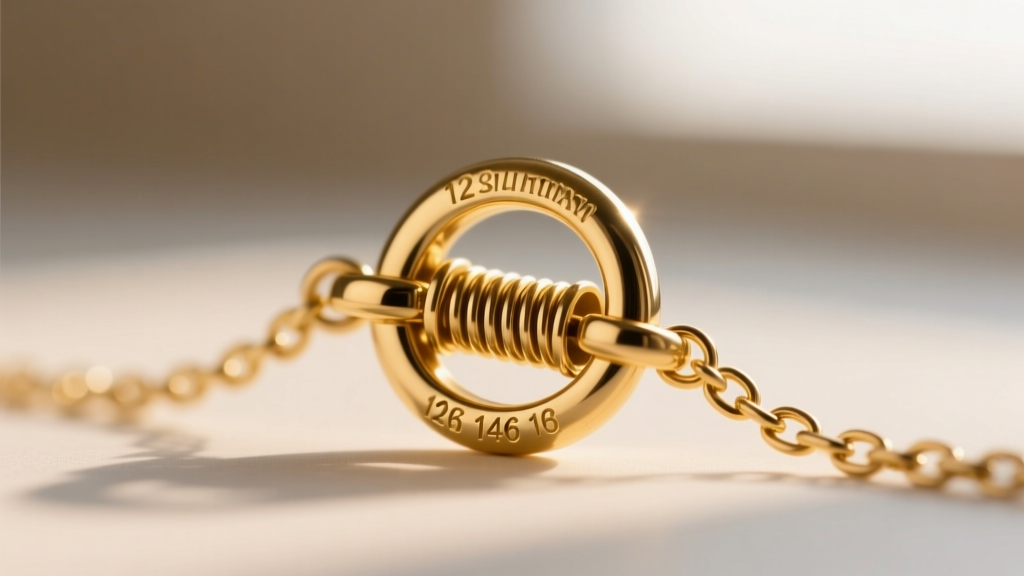
Standard 5mm spring-ring clasps are mechanically insufficient for this tension. The internal coil spring in a miniature spring ring can easily deform or slip off its track under repeated lateral stress, leading to catastrophic failure and loss of the chain. For a 16-inch length, experts recommend a 10mm to 12mm lobster trigger clasp. The lobster clasp features a solid cast body and a heavier internal spring, capable of withstanding up to 8 lbs of tensile force. Alternatively, a hidden box clasp with a figure-eight safety latch provides a seamless, zero-tension profile that eliminates the 'bump' at the nape of the neck entirely.
Neckline Pairing Framework for 16-Inch Drops
Because the 16-inch length terminates precisely at the clavicle, it interacts aggressively with garment necklines. The goal is to avoid 'visual vibration'—where the hem of the jewelry and the hem of the fabric compete for the same spatial real estate.
Expert Rule of Thumb: Maintain a minimum 1.5-inch negative space buffer between the lowest point of the necklace drape and the highest thread of the garment neckline. According to the Gemological Institute of America (GIA), proper spatial layering ensures the metal's reflectivity is not absorbed by dark or heavily textured fabrics.
- Crew Necks: High risk of friction. The 16-inch chain will rub against the ribbed collar, causing accelerated wear on the chain links and pilling on the cotton. Avoid this pairing unless the chain is a thick, rigid curb.
- Scoop Necks: Ideal. The parabolic curve of the scoop neck mirrors the drape of the 16-inch chain, creating a concentric framing effect for the face.
- V-Necks: Excellent, provided the V-drop begins below the suprasternal notch. The 16-inch chain acts as a horizontal 'stopper' that prevents the V-neck from appearing overly plunging.
- Boatnecks (Bateau): The 16-inch chain will sit entirely above the garment line, resting on bare skin. This is a highly elegant, structurally sound pairing that eliminates fabric friction.
Troubleshooting Fit and Torsion Issues
Even with precise measurements, a 16-inch chain can present mechanical annoyances. Here is how to troubleshoot the most common technical failures associated with this specific length.
- Center-of-Gravity Migration (Clasp Sliding to Front): Because the 16-inch chain sits on the sloped plane of the upper chest, the heavier clasp often slides down the side of the neck and rests on the collarbone. Solution: Attach a 1.5-gram silicone clasp counterweight or a small decorative 'counter-bead' directly opposite the clasp to balance the kinetic center of gravity.
- Chain Torsion (Twisting): Fine cable chains under 1.0mm are highly susceptible to torsion, especially if worn with a lightweight pendant that spins. Solution: Upgrade to a rolo or mariner link chain, where the alternating link orientations naturally cancel out rotational momentum.
- Hair Snagging at the Nape: The tight radius of a 16-inch chain at the cervical spine creates a trap for fine hair. Solution: Ensure the jump ring connecting the clasp is soldered closed, and opt for a sleek, bezel-set pendant rather than prong-set stones that act as micro-hooks.
Mastering the 16-inch length requires treating it not just as an accessory, but as a piece of wearable engineering. By respecting the anatomical boundaries, calculating the ease ratio, and selecting the appropriate gauge and clasp mechanics, you can ensure a flawless, comfortable, and structurally sound fit every time.


