The Anatomy of an 18 Inch Cross Necklace: A Technical Guide
Explore the metallurgy, chain gauges, and clasp mechanics of the perfect 18 inch cross necklace. Expert insights on durability and drape.

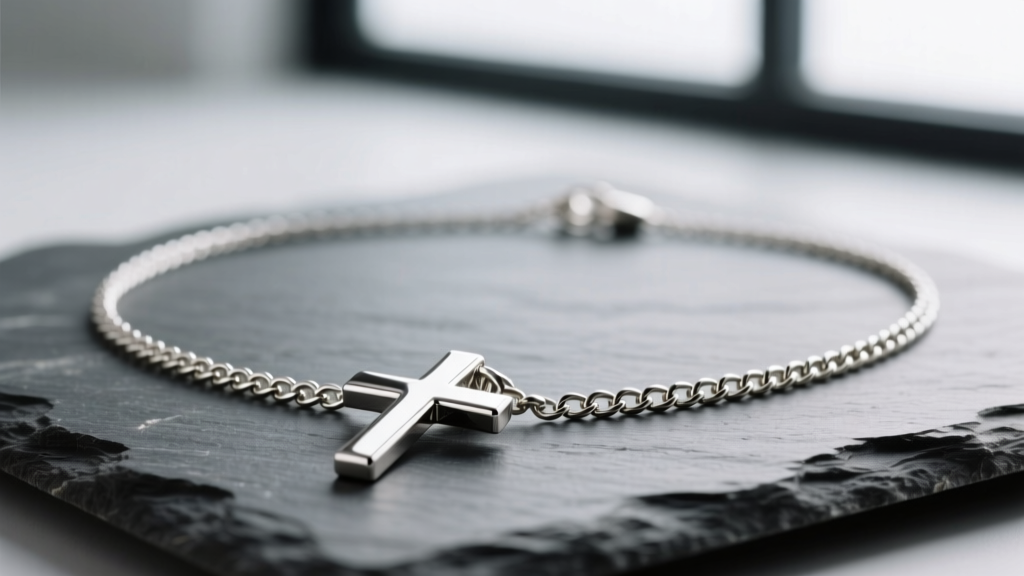
When selecting a foundational piece of daily-wear jewelry, the 18 inch cross necklace remains a ubiquitous standard. However, beneath its simple aesthetic lies a complex interplay of metallurgy, tensile engineering, and anatomical geometry. As a jewelry technician, I evaluate these pieces not just by their visual appeal, but by their structural longevity and failure thresholds. This guide deconstructs the technical specifications you must consider to ensure your necklace withstands decades of wear without catastrophic structural failure.
The Physics of the 18-Inch Drop: Anatomical Geometry
The 18-inch length is not an arbitrary industry standard; it is a calculated measurement designed to interact with the human clavicle and sternum. On an average adult frame, an 18-inch chain rests precisely at the base of the throat to the upper sternum. This specific drop zone is critical for a cross pendant because it places the focal point in the 'V' of standard crew and scoop necklines, avoiding the visual clutter of the collarbone while remaining above the bust line.

From a kinetic perspective, an 18-inch chain experiences less lateral swing than a 24-inch rope chain, reducing the centrifugal force applied to the clasp and bail during sudden movements. However, because it sits higher on the chest, it is more exposed to friction from shirt collars and seatbelts, necessitating higher surface hardness in the chosen metal alloy.
Metallurgical Breakdown: Choosing the Right Alloy
The longevity of your chain is dictated by its Vickers Hardness (HV) and tensile strength. According to the Gemological Institute of America (GIA), the alloy composition of precious metals drastically alters their work-hardening capabilities. Pure 24k gold (approx. 25 HV) is entirely unsuitable for chain manufacturing due to its malleability. Therefore, we must look at alloyed alternatives.
| Material Grade | Hardness (HV) | Tarnish Resistance | Avg. Price (1.5mm, 18") |
|---|---|---|---|
| 14k Yellow Gold (58.5% Au) | 130 - 150 HV | Moderate | $450 - $650 |
| 18k Yellow Gold (75% Au) | 125 - 135 HV | High | $800 - $1,200 |
| Platinum 950 (Pt950/Ru) | 135 - 155 HV | Exceptional | $1,800 - $2,500 |
| 316L Stainless Steel | 150 - 190 HV | Exceptional | $35 - $80 |
For maximum durability without the premium of platinum, 14k gold offers the highest hardness among precious options due to its higher copper and silver content. If you opt for 18k gold, ensure the chain links are die-struck rather than cast, as die-striking compresses the metal grain structure, artificially increasing its tensile strength.
Chain Link Architecture and Tensile Strength
The structural integrity of an 18 inch cross necklace relies heavily on the link architecture. The three most common weaves—cable, curb, and rope—react differently to mechanical stress.
- Cable Chains: Composed of uniform oval links. If unsoldered, cable chains are highly vulnerable to lateral torque. A sudden 4-pound pull can easily distort the open seams, leading to link separation.
- Curb Chains: Links are twisted and flattened so they interlock. This geometric interlocking distributes tensile stress across multiple adjacent links, making a 1.5mm soldered curb chain capable of withstanding over 15 pounds of direct vertical tension before deformation.
- Rope Chains: While visually striking and excellent at refracting light, the helical structure of rope chains traps sebum and environmental grit. Over time, this internal friction acts like sandpaper, silently thinning the interior wire gauge.
Manufacturing standards from Rio Grande jewelry supply technical guides emphasize that any chain worn daily with a heavy pendant must feature laser-soldered or torch-soldered links. Unsoldered chains should be strictly reserved for lightweight pendants under 3 grams.
The Bail and Clasp: Structural Failure Points
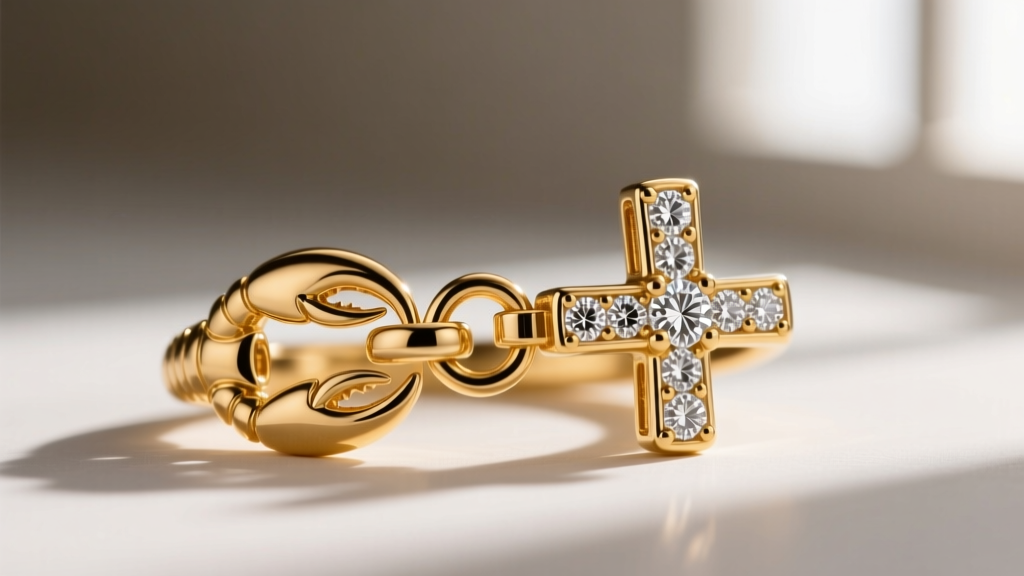
The most frequent point of catastrophic failure in any pendant necklace is the interface between the chain, the jump ring, and the pendant bail. This phenomenon, known in the trade as the 'sawing effect,' occurs when a harder metal (like a steel-reinforced chain link) continuously rubs against a softer metal (like a cast 18k gold bail) over thousands of micro-movements. Within 3 to 5 years, the jump ring can literally saw through the top of the cross pendant's bail, resulting in the loss of the piece.
To mitigate the sawing effect, always ensure the jump ring connecting your chain to the cross pendant is soldered closed, and consider upgrading the bail to platinum or hardened steel, which will outlast the chain itself.
Regarding clasps, avoid spring-ring clasps for daily wear. The internal tension spring in a spring-ring is prone to fatigue and can easily become compromised by microscopic debris. A forged (not cast) lobster clasp with a minimum internal spring tension of 2.5 Newtons is the minimum acceptable standard for securing a solid gold cross pendant.
Maintenance and Ultrasonic Cleaning Protocols
Maintaining the structural and visual integrity of your necklace requires proper cleaning protocols. The Federal Trade Commission (FTC) notes that improper chemical treatments can degrade metal alloys and damage gemstone inlays often found in cross pendants.
For plain metal chains, an ultrasonic cleaner operating at 40 kHz with a mild alkaline detergent will safely cavitate and remove trapped sebum from the inner links of curb and rope chains. However, if your cross pendant features porous gemstones like turquoise, opal, or emerald, ultrasonic cavitation will cause micro-fractures. For these pieces, manual agitation in a solution of warm distilled water and a few drops of phosphate-free dish soap, followed by a gentle brushing with a soft-bristled endodontic brush, is the only safe removal method for organic buildup.
By understanding the metallurgical properties, link mechanics, and failure points detailed above, you can select an 18 inch cross necklace that serves not just as a symbolic accessory, but as a masterclass in enduring jewelry engineering.


