Styling an 18 Necklace on Man: The Ultimate Buying Guide
Discover how an 18 necklace on man creates a bold, high-fashion silhouette. Learn about ideal widths, metal grades, and clasp hardware in our guide.


The Anatomy of the 18-Inch Drop on Men
In the realm of men's jewelry, the 20-to-24-inch chain has long been the default standard for a safe, relaxed drape. However, the high-fashion and streetwear landscapes have shifted dramatically toward closer-fitting silhouettes. When evaluating how an 18 necklace on man sits, you are looking at a piece that rests precisely on the collarbone or just above it, functioning almost like a structured choker or a tight crewneck drop. This length is not for the faint of heart; it demands proportion, precision, and an understanding of male anatomy.
The average adult male neck circumference ranges from 15 to 17 inches. An 18-inch chain on a 16-inch neck leaves exactly two inches of ease. This means the chain will sit flush against the base of the throat and the upper clavicle. If you have a thicker neck (17+ inches) or a prominent Adam's apple, an 18-inch drop can feel restrictive and visually choke the neckline. Conversely, on a leaner build with a 14.5 to 15.5-inch neck, the 18-inch length provides a tailored, sophisticated drape that frames the face perfectly without dipping into the chest hair or getting lost under a t-shirt collar.
Metal Alloys and Friction Resistance
Because an 18-inch necklace sits in the high-friction, high-heat zone of the lower neck, material selection is critical. The skin on the neck is prone to sweating, and human sweat has an acidic pH ranging from 4 to 6. This acidity accelerates oxidation in reactive metals.
316L Surgical Stainless Steel
For tight-fitting chains, 316L marine-grade stainless steel is the undisputed champion. The addition of molybdenum in the 316L alloy provides exceptional resistance to chlorides and acidic sweat. It will not tarnish, turn the skin green, or degrade with daily friction. According to metallurgical standards referenced by the Gemological Institute of America (GIA), steel alloys offer the highest durability-to-cost ratio for high-contact jewelry.
925 Sterling Silver vs. Argentium
Standard 925 sterling silver contains 7.5% copper, which reacts rapidly with sulfur and moisture, leading to heavy tarnishing when worn tightly against the neck. If you prefer the look of silver, upgrade to Argentium Silver. Argentium replaces some of the copper with germanium, creating a highly tarnish-resistant alloy that maintains its bright white luster even in the high-sweat environment of the collarbone.
14k and 18k Gold
Gold is inert and will not react with sweat. However, 18k gold (75% pure gold) is softer and more prone to micro-scratches from daily friction against the skin and shirt collars. 14k gold (58.3% pure gold) offers a better balance of rich color and structural hardness for an 18-inch daily wearer.
Chain Links and Width Proportions
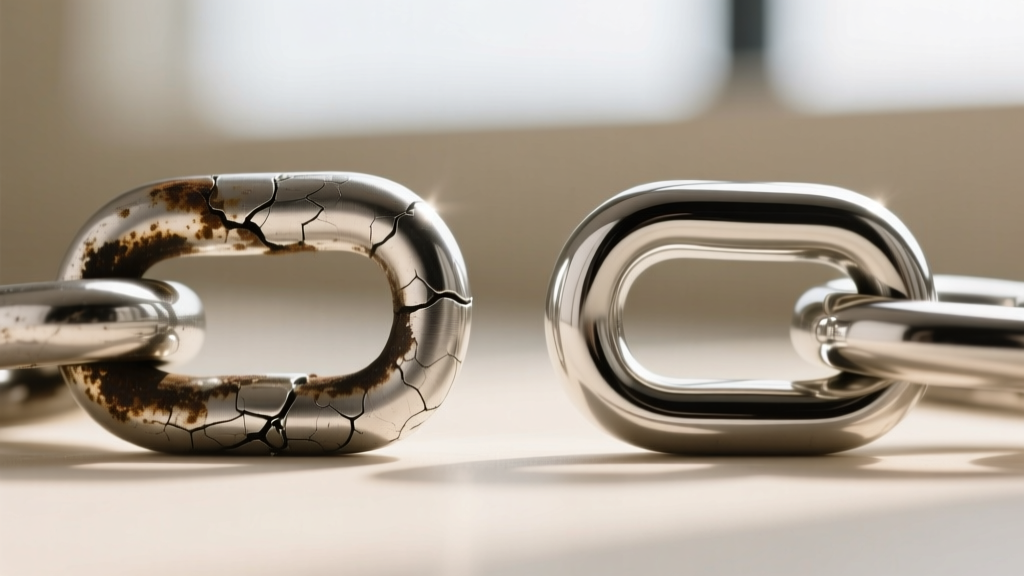
The visual weight of a chain is magnified when shortened to 18 inches. A 10mm Cuban link at 24 inches looks like a bold statement; at 18 inches, it looks like a wrestling championship belt or a dog collar. The golden rule for an 18 necklace on man is to keep the width between 2mm and 5mm. This maintains a sleek, intentional aesthetic rather than an overwhelming one.
| Chain Style | Ideal Width (18') | Visual Profile & Best Use Case | Friction Comfort |
|---|---|---|---|
| Box Chain | 2mm - 4mm | Geometric, modern, sleek. Ideal for minimalist styling or holding lightweight pendants. | High (smooth edges) |
| Rope Chain | 3mm - 5mm | Textured, high light-reflection. Adds depth without excessive visual weight. | Medium (twisted links can pull neck hair) |
| Cuban Link | 3mm - 5mm | Bold, streetwear-oriented. Must be kept under 5mm at this length to avoid looking bulky. | High (flat, interlocking links) |
| Figaro | 3mm - 4mm | Classic Italian heritage. The alternating link pattern draws the eye horizontally across the collar. | Medium-High |
Clasp Mechanics: The Hidden Failure Point
When wearing a shorter chain, the geometry of fastening it behind your neck becomes awkward. Standard lobster clasps require you to pinch a small lever while holding a tiny jump ring, a task made infinitely harder when your arms are raised and the chain is pulling taut against your throat.
As noted by hardware specialists at Rio Grande Jewelry Supply, tension and leverage on small clasps lead to premature spring failure. For an 18-inch men's chain, upgrade your hardware:
- Magnetic Neodymium Clasps: These feature a powerful rare-earth magnet encased in steel or gold. You simply bring the two ends near each other, and they snap securely into place. Ensure the magnet housing has a minimum weight rating of 15 lbs to prevent accidental drops.
- Box Clasps with Safety Latches: A folding mechanism that locks into a square housing. They sit flush against the chain, eliminating the bulky 'bump' of a lobster clasp at the nape of the neck.
Pendants and Layering Frameworks
Can you wear a pendant on an 18-inch chain? Yes, but the physics of the drape change entirely. Because the chain does not hang loosely, a heavy pendant will pull the front of the chain upward, tightening the back against your neck and causing discomfort.
The 10-Gram Rule: If you are adding a pendant to an 18-inch chain, the pendant must weigh less than 10 grams and feature a small, integrated bail. Heavy medallions or large gemstone settings will ruin the drape and cause physical irritation.
The Layering Cascade
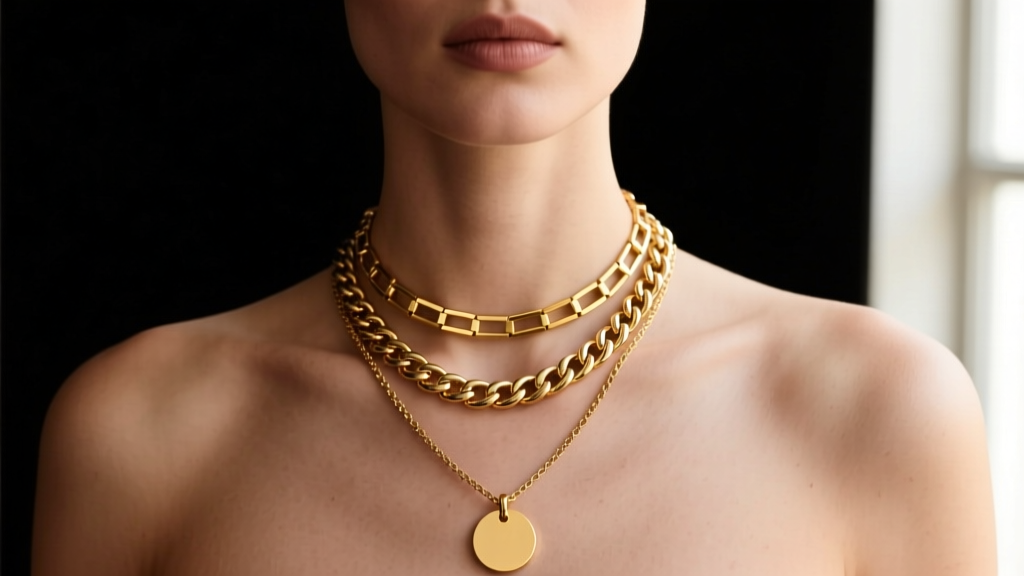
The true power of the 18-inch chain is revealed when used as the anchor in a layered setup. According to GQ's comprehensive layering guides, the most flattering cascade for men requires a minimum 4-inch gap between chains to prevent tangling and visual clutter.
- Base Layer (18 inches): 2mm-3mm Box or Rope chain. Sits on the collarbone.
- Mid Layer (22 inches): 4mm-6mm Cuban or Figaro. Rests on the upper chest.
- Statement Layer (26+ inches): Heavier chain with a substantial pendant. Falls over the sternum.
Accurate Sizing and Measurement
Never guess your chain size based on t-shirt collars. To determine if an 18 necklace on man will work for your specific anatomy, use a flexible tailor's measuring tape. Wrap it around your neck exactly where you want the chain to sit—usually just below the Adam's apple and resting on the C7 vertebrae at the back. If your measurement is 16.5 inches or less, an 18-inch chain will provide a comfortable, tailored fit. If your neck measures 17.5 inches or more, bypass the 18-inch length entirely and start your collection at 20 inches to avoid the 'choke' effect.
Maintenance for High-Contact Jewelry
Because an 18-inch chain is in constant contact with the skin, it accumulates sebum, dead skin cells, and lotion residue faster than longer chains. This buildup occurs in the crevices of the links, dulling the metal's reflectivity.
For steel and gold chains, a weekly soak in warm water with a few drops of mild dish soap, followed by a gentle scrub with a soft-bristled baby toothbrush, will remove biological buildup. Avoid ultrasonic cleaners if your chain features a magnetic clasp, as the high-frequency vibrations and heat can degrade the neodymium magnet's polarity over time. Dry the chain thoroughly with a microfiber cloth to prevent water spots, especially on polished finishes.


