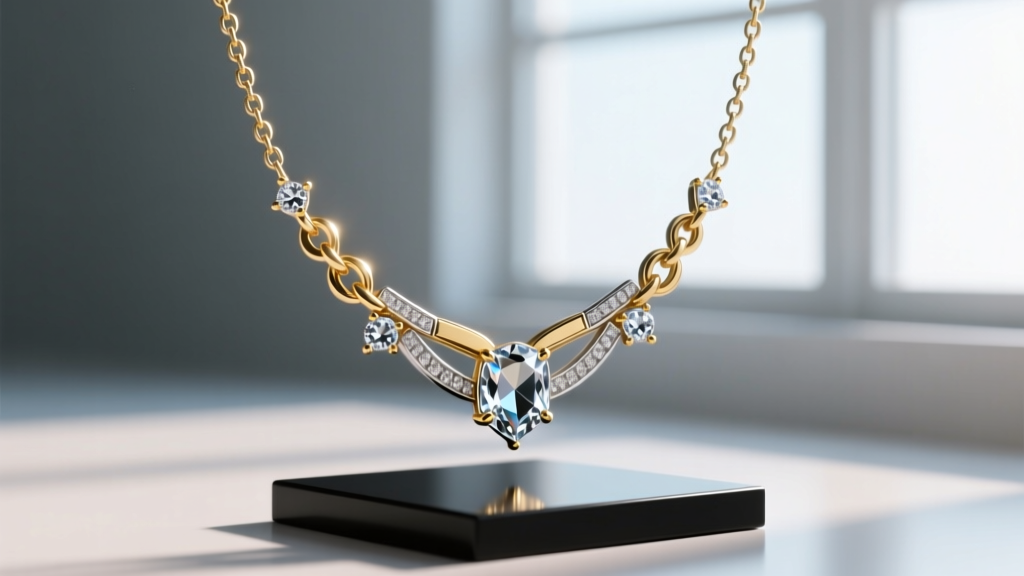
3 Tier Necklace Materials: A Metallurgy & Style Guide
Discover the best metals for a 3 tier necklace. Compare tarnish resistance, tensile strength, and weight to choose the perfect layered jewelry material.


When selecting a 3 tier necklace, most buyers focus entirely on the aesthetic arrangement of the layers—the lengths, the pendants, and the visual cascade. However, from a metallurgical and structural perspective, a multi-tier design introduces unique physical stresses that a single-strand chain simply does not face. The constant friction between layers, the uneven weight distribution, and the varying degrees of skin contact demand a highly strategic approach to material selection.
In this comprehensive guide, we break down the exact material properties you need to consider when investing in or designing a 3 tier necklace, ensuring your piece remains durable, tarnish-free, and structurally sound for years to come.
The Structural Demands of Multi-Tier Jewelry
A built-in 3 tier necklace (where all three chains connect to a single clasp via a specialized jump ring matrix) creates a localized zone of high friction. As the wearer moves, the top tier (typically 14-16 inches) rubs against the middle tier (18 inches), which in turn shifts against the bottom tier (20-24 inches).
This continuous micro-abrasion has severe implications for plated metals. Furthermore, the lowest tier rests against the sternum—a high-heat, high-perspiration zone. According to the Silver Institute, human sweat contains lactic acid and urea, which rapidly accelerate the oxidation of copper alloys found in standard sterling silver. Therefore, the material chosen for the bottom tier must possess superior corrosion resistance compared to a standard collarbone-length chain.
Material Breakdown: Solid Gold, Silver, and Steel
Sterling Silver (925) and Rhodium Flashing
Sterling silver is an alloy containing 92.5% pure silver and 7.5% copper. While beloved for its bright luster, the copper content makes it highly susceptible to tarnishing, especially on the bottom tier of a 3 tier necklace where it absorbs skin oils. If you choose silver, it is mandatory to select a piece with a heavy rhodium flash. Rhodium, a platinum-group metal, provides a hard, inert barrier against oxidation. However, because the chains in a tiered necklace rub together, this rhodium layer will eventually wear off at the friction points, requiring professional re-plating every 12 to 18 months.
Surgical Stainless Steel (316L)
For a low-maintenance, high-durability option, 316L stainless steel is unmatched. The "L" stands for low carbon, and the addition of molybdenum drastically increases its resistance to chlorides and industrial solvents. In the context of a 3 tier necklace, 316L steel will not tarnish from sweat, nor will it snap under the cumulative tensile load of three chains. The primary drawback is weight; steel is significantly denser than gold or silver, which can cause the top tier to pull uncomfortably on the nape of the neck if the chain gauge is too thick.
Solid 14k vs. 18k Gold
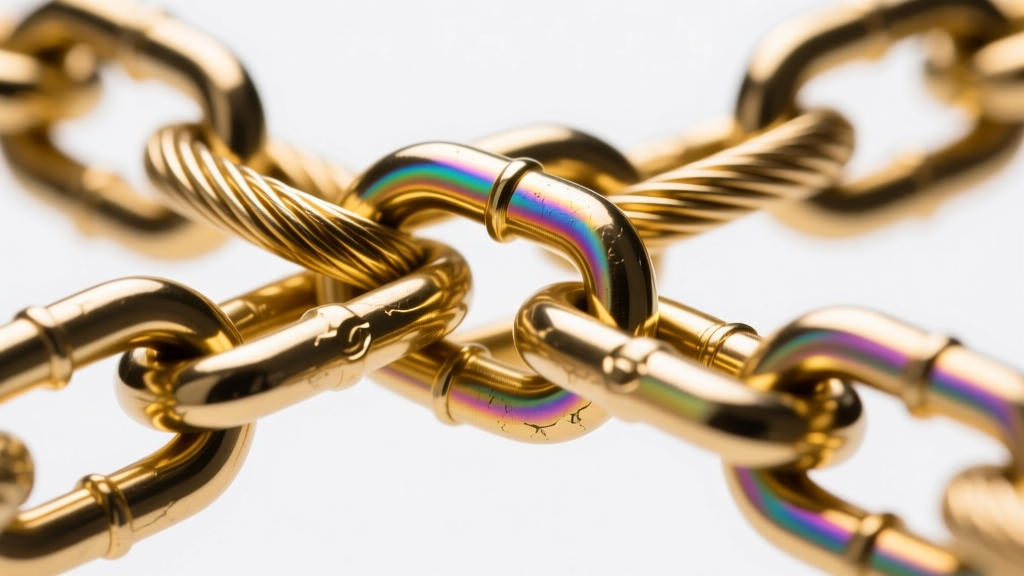
According to the Gemological Institute of America (GIA), 24k gold is too soft for jewelry, necessitating alloying. 14k gold (58.5% pure gold) offers the ideal balance of tensile strength and tarnish resistance for a multi-tier setup. The higher presence of zinc and copper in 14k gold makes the chain links more rigid, preventing the permanent stretching that can occur when a heavy pendant is attached to the bottom tier. 18k gold (75% pure gold) offers a richer color but is softer; if used in a 3 tier necklace, the links must be forged with a slightly thicker gauge to compensate for the reduced structural integrity.
The Plating Problem: Why Vermeil Fails on Tiered Chains
Gold vermeil (a thick layer of gold over sterling silver, legally required to be at least 2.5 microns) is a popular choice for affordable luxury. However, it is fundamentally unsuited for the friction points of a 3 tier necklace. The constant rubbing of the chains acts like a very fine sandpaper. Within 6 to 12 months of daily wear, the gold layer at the interlocking jump rings and the center of the links will wear through, exposing the silver core to air and sweat, leading to rapid, localized blackening.
Expert Tip: If you desire the look of gold on a budget for a layered piece, bypass electroplated vermeil entirely. Instead, opt for PVD (Physical Vapor Deposition) coated stainless steel. PVD bonding occurs in a vacuum chamber, embedding the gold color into the steel at a molecular level. It is up to 10 times more resistant to friction wear than traditional electroplating.
Comparative Data Matrix: 3 Tier Necklace Materials
| Material | Tensile Strength | Tarnish Resistance | Friction Durability | Relative Weight |
|---|---|---|---|---|
| Solid 14k Gold | High | Excellent | Excellent (Solid) | Medium |
| Solid 18k Gold | Medium | Very Good | Excellent (Solid) | Medium-Heavy |
| 925 Sterling Silver | Medium | Poor (without Rhodium) | Good (Wears to core) | Light |
| 316L Stainless Steel | Very High | Excellent | Excellent (Solid) | Heavy |
| Titanium (Grade 5) | Extreme | Excellent | Excellent (Solid) | Very Light |
Gauge Sizing and Chain Weave Selection
Material is only half the equation; the physical geometry of the chain dictates how the materials interact. In a 3 tier necklace, utilizing the exact same chain weave and gauge for all three tiers is a design flaw that guarantees severe tangling.
- Top Tier (14-16 inches): Should utilize a lightweight, smooth weave like a Cable or Snake chain in a 1.0mm to 1.2mm gauge. This reduces the weight burden on the cervical spine and allows the chain to lay flat against the collarbone.
- Middle Tier (18 inches): A Rolo or Box chain in a 1.5mm gauge provides structural mid-weight. The flat surfaces of a box chain resist catching on the links of the top tier.
- Bottom Tier (20-24 inches): Requires a heavy, robust weave like a Figaro or Curb chain in a 2.0mm to 2.5mm gauge. This anchors the visual weight of the necklace and provides the necessary tensile strength to support larger pendants without warping the links.
Clasp and Jump Ring Metallurgy
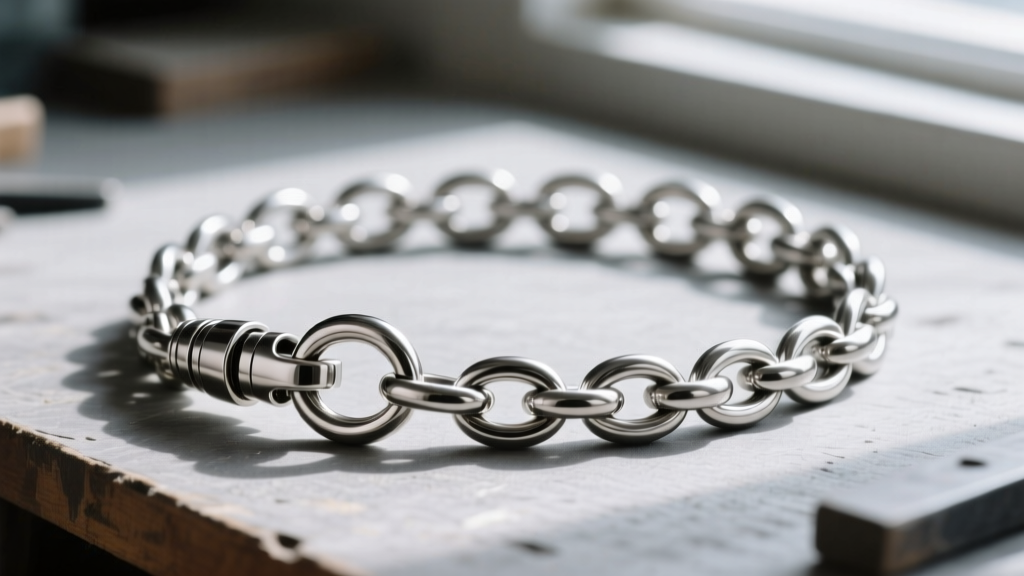
The weakest point of any 3 tier necklace is the convergence zone where all three chains meet the clasp. A standard 4mm spring ring clasp is entirely insufficient for the combined tensile load and dynamic movement of three chains.
You must look for a heavy-duty lobster clasp (minimum 10mm in length) forged from the same material as the chains to prevent galvanic corrosion—a process where two dissimilar metals in the presence of an electrolyte (sweat) cause the less noble metal to corrode rapidly. Furthermore, the jump rings connecting the chains to the clasp must be soldered closed or feature a split-ring double-loop mechanism. Open jump rings will inevitably pull apart under the multi-directional torque generated by a tiered necklace swinging during movement.
Expert Verdict: Building Your Material Matrix
Choosing the right metal for a 3 tier necklace requires balancing your budget against the physical realities of friction and perspiration. For an heirloom-quality piece that requires zero maintenance and will survive decades of inter-link friction, Solid 14k Gold remains the undisputed champion. The alloy's rigidity prevents link stretching, and its solid composition means friction will never reveal a lesser base metal underneath.
For contemporary, everyday wear—especially for active individuals where sweat exposure is high—PVD-coated 316L Stainless Steel offers the best ROI. It provides the warm aesthetic of gold with an impenetrable, sweat-proof core that will not snap or tarnish, ensuring your layered look remains flawless regardless of the environment.