The 5ct Tennis Necklace: 2026 Budget & Value Assessment
Discover the true value of a 5ct tennis necklace in 2026. Compare lab-grown vs. natural diamond prices, grading tips, and budget strategies.

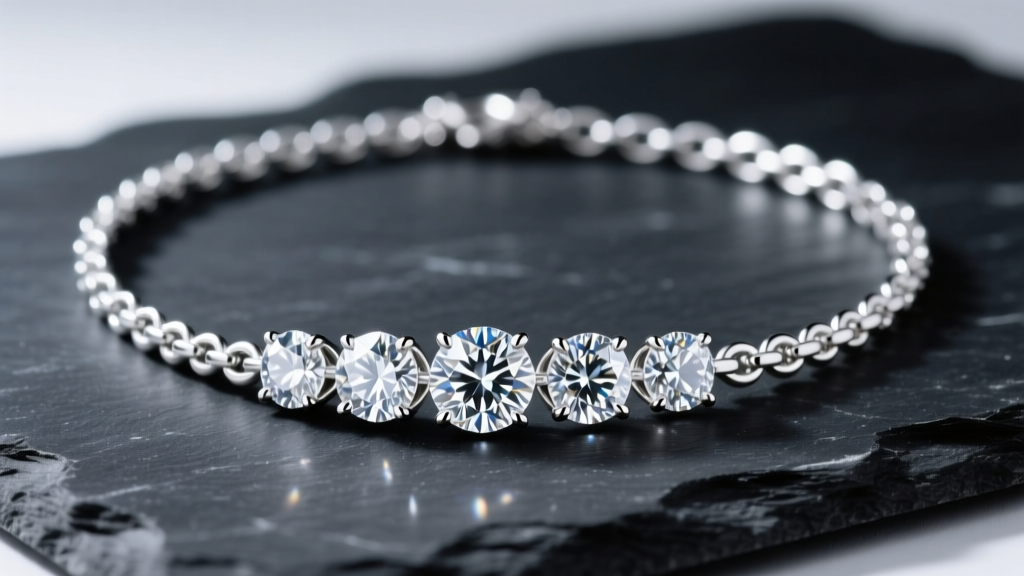
When shopping for timeless diamond jewelry, the 5ct tennis necklace remains one of the most highly sought-after pieces in 2026. However, a common point of confusion for first-time buyers is the terminology. A "5ct" tennis necklace refers to 5 Carats Total Weight (CTW) distributed across dozens of individual diamonds, not a single 5-carat stone. Typically spanning 16 to 18 inches, a 5ctw piece features approximately 45 to 60 individual diamonds, each measuring around 3.0mm to 3.5mm and weighing roughly 0.10ct to 0.12ct per stone.
Understanding this distinction is the first step in accurately assessing value. Because you are buying a high volume of smaller melee-sized diamonds rather than a single large solitaire, the pricing dynamics, grading compromises, and durability requirements shift dramatically. This guide breaks down the true cost, material choices, and hidden value traps of buying a 5ct tennis necklace in today's market.
The Real Cost of a 5ct Tennis Necklace in 2026
The market for diamond tennis necklaces has undergone a massive correction over the last three years, largely driven by the maturation and mass adoption of lab-grown diamonds. If you are budgeting for a natural diamond 5ctw tennis necklace in 14k gold, you should expect to pay between $4,800 and $8,500, depending heavily on the color and clarity grades. Luxury retail brands will push this price well past $12,000 simply for the brand name.
Conversely, the lab-grown diamond market has seen aggressive price compression. According to industry analyses tracked by the Natural Diamonds Council and broader gemological market reports, the wholesale cost of lab-grown melee diamonds has plummeted. As a result, a high-quality 5ct lab-grown tennis necklace now retails between $850 and $1,600. This represents a staggering 75% to 80% discount compared to natural equivalents, forcing buyers to carefully weigh the emotional and resale value of natural stones against the sheer budget efficiency of lab-grown alternatives.
Natural vs. Lab-Grown: The Ultimate Price Breakdown
To accurately assess value, we must look beyond the initial purchase price and consider long-term wear, maintenance, and resale reality. Below is a 2026 market comparison for a standard 16-inch, 5ctw tennis necklace set in 14k white gold.
| Feature | Natural Diamond (5ctw) | Lab-Grown Diamond (5ctw) | Moissanite (5ctw equiv.) |
|---|---|---|---|
| Average Retail Price | $5,200 - $8,500 | $950 - $1,600 | $400 - $750 |
| Resale Value (Est.) | 20% - 35% | < 5% | Negligible |
| Durability (Mohs) | 10 | 10 | 9.25 |
| Visual Differences | None to naked eye | None to naked eye | High dispersion (rainbow flash) |
The Value Verdict: If your primary goal is budget optimization and maximum sparkle for daily wear, lab-grown is the undisputed winner in 2026. If you view the necklace as a generational heirloom with some retained financial value, natural diamonds remain the only logical choice, as lab-grown stones currently hold virtually zero secondary market value.
Where to Compromise: Diamond Grading for Maximum Budget
One of the most common mistakes buyers make is overpaying for diamond grades that are physically impossible to appreciate in a tennis necklace. The GIA Diamond Clarity Scale is essential for evaluating solitaire engagement rings, but it requires a different approach for multi-stone jewelry.
Color and Clarity Sweet Spots
Because the diamonds in a 5ctw necklace are relatively small (usually 3.0mm to 3.5mm), inclusions that would be glaringly obvious in a 2-carat center stone are completely masked.
Clarity: Do not pay the premium for VVS or VS grades. An SI1 or even a well-chosen SI2 clarity grade will appear "eye-clean" once the stones are set in a 4-prong mounting. The metal prongs and the constant movement of the necklace make microscopic inclusions entirely invisible.
Color: Avoid the D-E-F (Colorless) premium. In 14k or 18k white gold, G-H (Near Colorless) diamonds will face up brilliantly white. If you are setting the necklace in 14k yellow gold, you can safely drop down to I-J color, as the yellow metal will reflect into the stones anyway, masking any faint warmth.
The Carat Illusion: 4-Prong vs. 3-Prong Settings
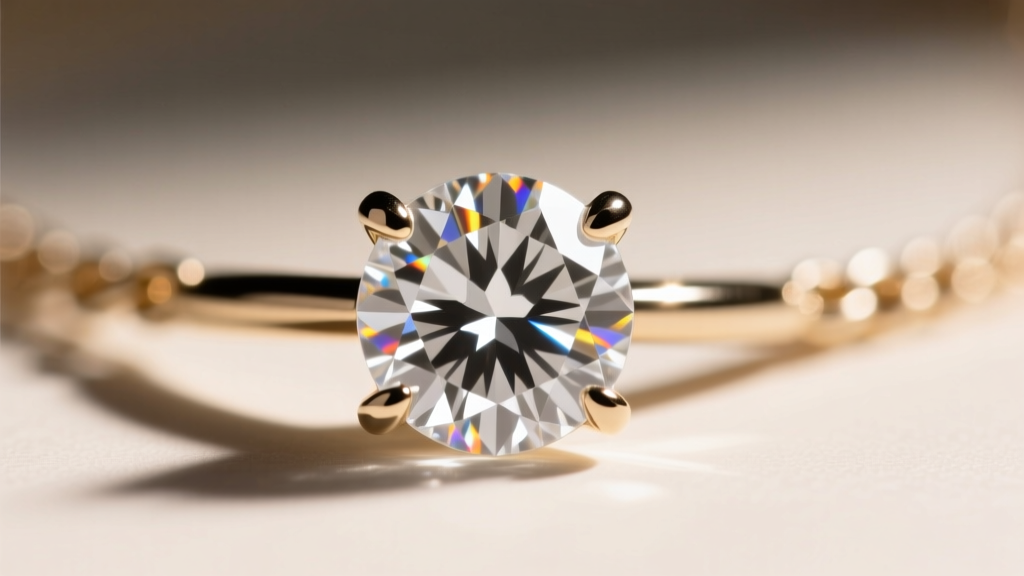
Jewelers often use setting styles to manipulate the perceived size of the diamonds. A 3-prong setting exposes more of the diamond's crown, making a 3.0mm stone look slightly larger. However, from a value and durability perspective, 4-prong settings are vastly superior.
A tennis necklace contains dozens of individual links. Statistically, the more stones you have, the higher the probability that one prong will catch on a sweater or hair. A 4-prong setting ensures that if one prong is damaged, the stone remains held by the other three. A 3-prong setting that loses one prong will result in an immediate stone loss. Always prioritize 4-prong or shared-prong settings for long-term value retention.
Metal Choices and Hidden Maintenance Costs
The metal you choose impacts both the upfront budget and the long-term maintenance costs of your 5ct tennis necklace.
- 14k White Gold: The most popular and budget-friendly choice. However, white gold requires rhodium plating every 12 to 18 months to maintain its bright white finish. Factor in $60 to $90 per year for this maintenance.
- 14k Yellow Gold: Excellent for budget buyers who want zero long-term maintenance. Yellow gold never requires plating and hides minor scratches better than white gold or platinum.
- Platinum: While highly durable and naturally white, platinum is significantly more expensive and heavier. For a 5ctw necklace, the added weight of platinum can cause the chain to stretch over time or pull uncomfortably on the neck. It is generally not recommended for budget-conscious buyers looking at smaller carat weights.
Durability: Clasps, Links, and Failure Points
A 5ct tennis necklace is an engineering marvel of tiny, interconnected joints. The weakest point of failure is rarely the diamonds; it is almost always the clasp or the soldered links.
The Clasp: Never purchase a tennis necklace with a standard lobster clasp or spring ring. The lateral stress placed on a 16-inch chain when the wearer turns their head can easily warp the delicate spring mechanism, leading to a catastrophic drop. You must insist on a Box Clasp with a Double Figure-Eight Safety Catch. The box mechanism locks the tongue firmly into place, while the figure-eight safety wires act as a secondary backup in case the primary latch is bumped open.
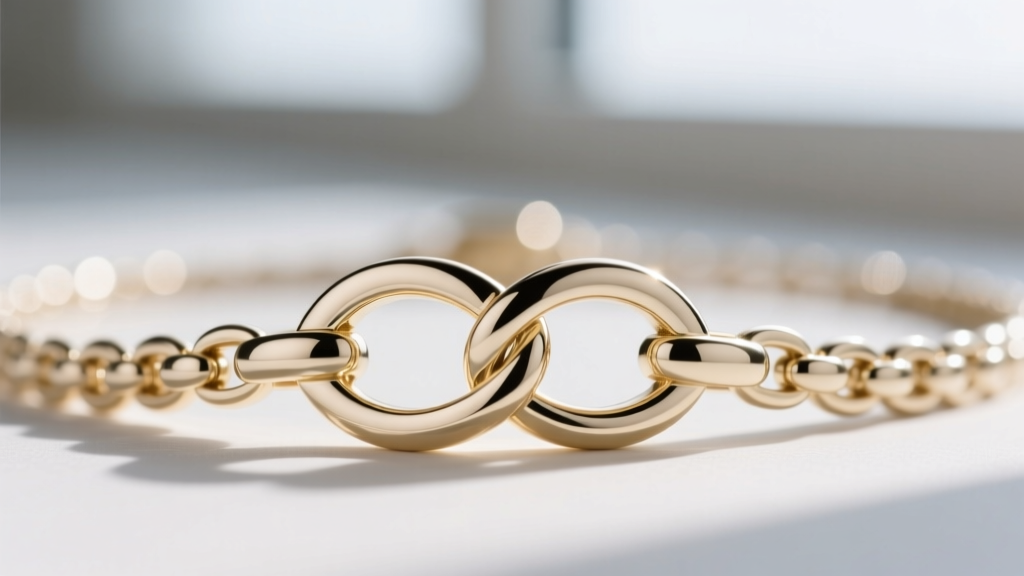
Link Flexibility and Kinking: A high-quality tennis necklace should drape like liquid silk. If the necklace feels stiff or holds a rigid "C" shape when laid flat on a table, the links have been soldered too tightly or the gold weight is too heavy for the stone size. Stiff necklaces are highly prone to permanent kinking, which can snap the internal wire or pull stones out of their settings.
Final Verdict: Is the Investment Worth It?
Evaluating the value of a 5ct tennis necklace in 2026 comes down to defining your personal metrics for "worth." If you are seeking a high-impact, luxurious accessory for daily wear and special occasions without liquidating your savings, a lab-grown 5ctw necklace in 14k white gold offers unmatched value, typically landing around the $1,200 mark. You receive identical optical and physical properties to natural diamonds at a fraction of the cost.
However, if you are purchasing this piece as a milestone gift intended to retain some intrinsic financial value or act as a liquid asset, you must opt for natural, earth-mined diamonds. By strategically compromising on clarity (SI1) and color (G-H), and ensuring the piece is fitted with a secure box clasp and 4-prong settings, you can acquire a stunning natural 5ct tennis necklace that balances enduring financial value with breathtaking, lifelong sparkle.


