Is an 80s Plastic Charm Necklace Worth It? 2026 Value Guide
Discover the true market value of an 80s plastic charm necklace in 2026. Learn pricing tiers, material grades, and how to spot vintage vs modern replicas.

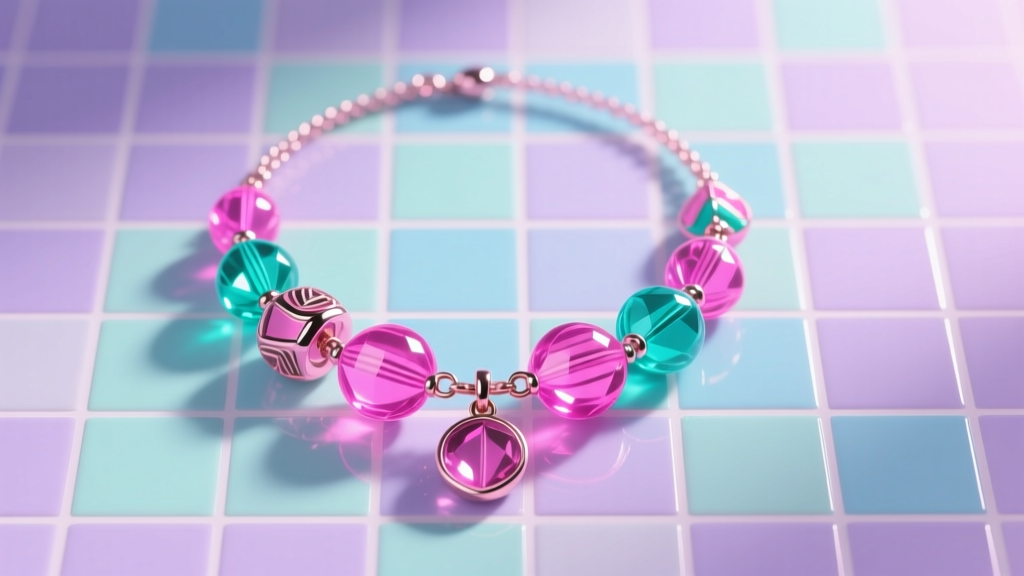
The 2026 Market Landscape for 80s Plastic Charm Necklaces
The secondary market for vintage costume jewelry has experienced a massive paradigm shift over the last five years. As we navigate 2026, the once-dismissed category of 1980s plastic and acrylic jewelry has firmly cemented itself as a highly collectible niche. Driven by Gen Z nostalgia and the archival fashion movement, an 80s plastic charm necklace is no longer just a thrift store afterthought; it is a documented piece of pop-culture history. However, this surge in demand has also flooded the market with modern fast-fashion replicas masquerading as vintage.
For collectors and budget-conscious stylists alike, understanding the true value of these pieces requires looking past the bright neon hues and chunky geometric shapes. You must evaluate the polymer grade, the hardware integrity, and the brand provenance. According to market data from Ruby Lane, authenticated 1980s designer resin and Lucite pieces have seen a 34% increase in average sale price since 2022, while unbranded, mass-produced acrylics have plateaued. This guide will break down exactly what you should pay, what to avoid, and how to assess the structural lifespan of your vintage find.
Material Breakdown: Lucite vs. Acrylic vs. Resin
Not all plastics are created equal. The term "plastic" is a catch-all that obscures the vast differences in material quality, longevity, and value. When evaluating an 80s plastic charm necklace, you are generally looking at three distinct polymers:
- Lucite (PMMA): Poly(methyl methacrylate) is the gold standard for vintage plastic jewelry. It offers glass-like optical clarity, is highly resistant to UV yellowing, and can be carved or molded with sharp, clean edges. High-end 80s designers favored Lucite for its durability and luxurious weight.
- Standard Acrylic: Cheaper and more prone to "crazing" (a network of fine surface cracks caused by stress and temperature fluctuations). Acrylic charms from the 80s often feel lighter and may exhibit a cloudy, yellowed tint if stored improperly.
- Cast Resin: Often used for opaque, heavily pigmented charms. Resin is heavier than acrylic but significantly more brittle. A dropped resin charm from 1985 is highly likely to chip or shatter, making pristine examples much rarer and more valuable.
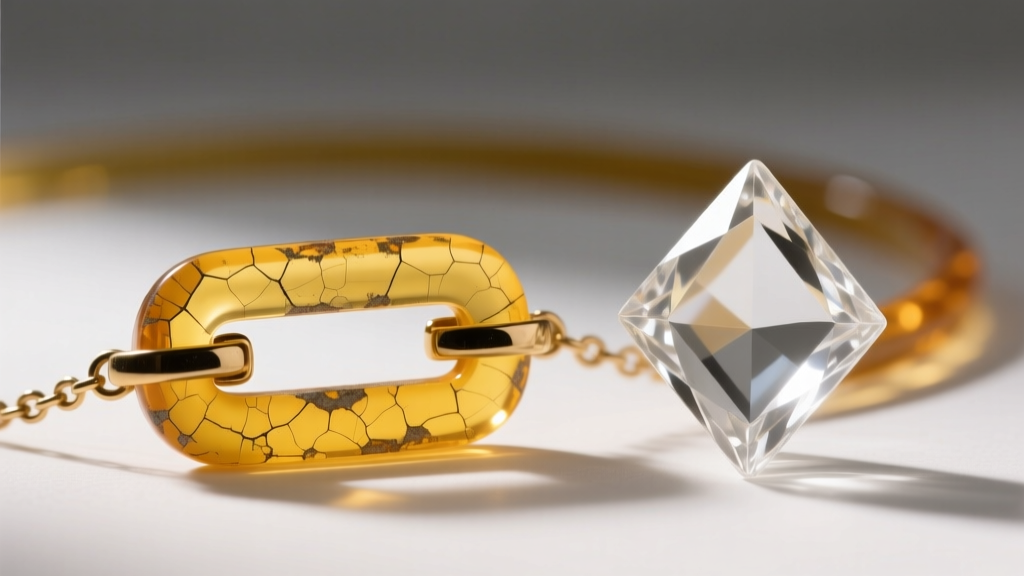
Value Assessment Matrix: Pricing Tiers in 2026
To accurately assess your budget, you must categorize the necklace into one of three market tiers. Use this matrix to ensure you are not overpaying for a basic piece or underestimating an archival treasure.
| Market Tier | Brand / Origin Examples | Material Quality | 2026 Price Range | Value Verdict |
|---|---|---|---|---|
| Bargain Bin | Unbranded, Department Store | Injection-molded ABS or cheap acrylic; base metal clasps | $12 - $28 | Buy for fun styling; zero investment value. High risk of clasp failure. |
| Mid-Tier Vintage | Monet, Trifari, Napier, Coro | High-grade Lucite or opaque resin; gold-tone brass hardware | $45 - $95 | Sweet spot for collectors. Excellent daily wear if hardware is intact. |
| Archival / Designer | Moschino, Chanel, Kenneth Jay Lane | Carved Lucite, Gripoix resin, heavy gold-plated brass | $180 - $850+ | Investment grade. Requires documentation or distinct hallmarks. |
Common Failure Modes & Hidden Restoration Costs
When budgeting for an 80s plastic charm necklace, the purchase price is only the beginning. Vintage plastics and the hardware used to string them are subject to specific, predictable failure modes. Failing to account for restoration costs is the most common mistake novice buyers make.
The Elastic and Nylon Thread Rot
Many 80s charm necklaces, particularly those featuring graduated plastic beads or floating charms, were strung on elastic cords or cheap nylon monofilament. After 40 years, these materials undergo severe dry rot. If the necklace feels stiff, or if you see white, powdery residue near the crimp beads, the cord is compromised. Restoration Cost: Professionally restringing a multi-strand or complex floating charm necklace on modern, UV-resistant Beadalon wire or high-grade elastic will cost between $35 and $60 at a bench jeweler.
Base Metal Plating Degradation
The clasps and jump rings on mid-tier 80s necklaces were typically made of pot metal or brass, plated with a microscopically thin layer of gold-tone or rhodium over a nickel barrier. When this plating wears away, the underlying metal oxidizes, leading to structural weakness and the dreaded "green skin" effect.
Pro-Tip: If the original spring-ring clasp is heavily corroded, replacing it with a modern stainless steel or sterling silver lobster claw clasp will improve security and wearability. While purists may deduct 5-10% from the "mint condition" collector value, it prevents the catastrophic loss of the necklace.
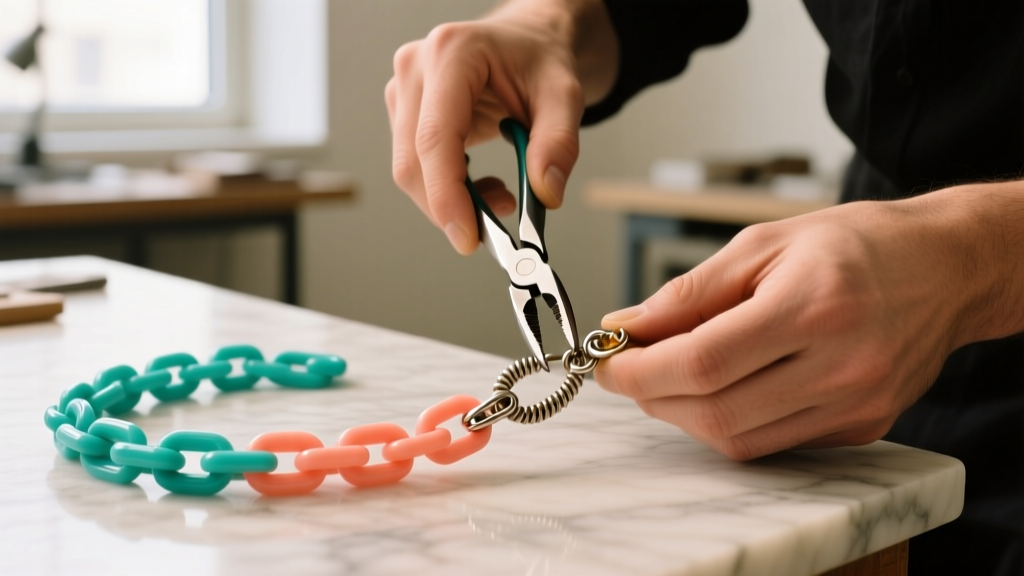
Authentication: Spotting True 80s vs. Modern Replicas
As the aesthetic of the 1980s remains highly relevant in 2026, fast-fashion retailers and dropshippers are mass-producing "vintage-style" plastic charm necklaces. Distinguishing a genuine 1985 piece from a 2024 factory replica requires a trained eye and a few simple tests. For deeper historical context on manufacturing shifts, resources like Collectors Weekly offer excellent visual archives of authentic hallmarks.
The UV Blacklight Test
One of the most reliable, non-destructive authentication methods is the ultraviolet (UV) test. Many 1980s acrylics and Lucites were manufactured with specific optical brighteners and UV stabilizers that fluoresce under a 365nm blacklight. Modern, cheap ABS plastics used in contemporary fast-fashion replicas typically do not contain these compounds and will remain dark or show a dull, flat reaction under UV light.
Mold Lines and Weight Distribution
Genuine 80s injection-molded plastic charms often feature faint, raised seam lines where the two halves of the metal mold met. While modern replicas also have mold lines, the finishing process in the 1980s for mid-to-high-tier brands involved hand-polishing these seams. Furthermore, vintage Lucite has a distinct, dense weight and a "warm" feel to the touch, whereas modern hollow-stamped plastics feel unnaturally light and temperature-neutral.
Final Verdict: Budgeting for Your Vintage Find
So, is an 80s plastic charm necklace worth the investment? The answer depends entirely on your end goal. If you are seeking a vibrant, nostalgic statement piece for seasonal styling, the $15 to $30 bargain bin tier offers incredible aesthetic value, provided you inspect the clasp and cord before purchasing. However, if you are building a curated vintage jewelry collection, bypass the unbranded acrylics. Allocate a budget of $50 to $100 to secure mid-tier, hallmarked pieces from heritage American costume houses like Napier or Monet. These pieces offer the perfect intersection of historical significance, superior PMMA/Lucite material grades, and long-term wearability. By understanding the material science and market tiers outlined above, you can confidently navigate the 2026 vintage market without overpaying for modern plastic masquerading as history.


