Decoding the 925 Italy KA 1772 Necklace Stamp: A Material Guide
Discover what the 925 Italy KA 1772 necklace stamp means. We analyze Italian sterling silver properties, hallmarks, and chain durability.

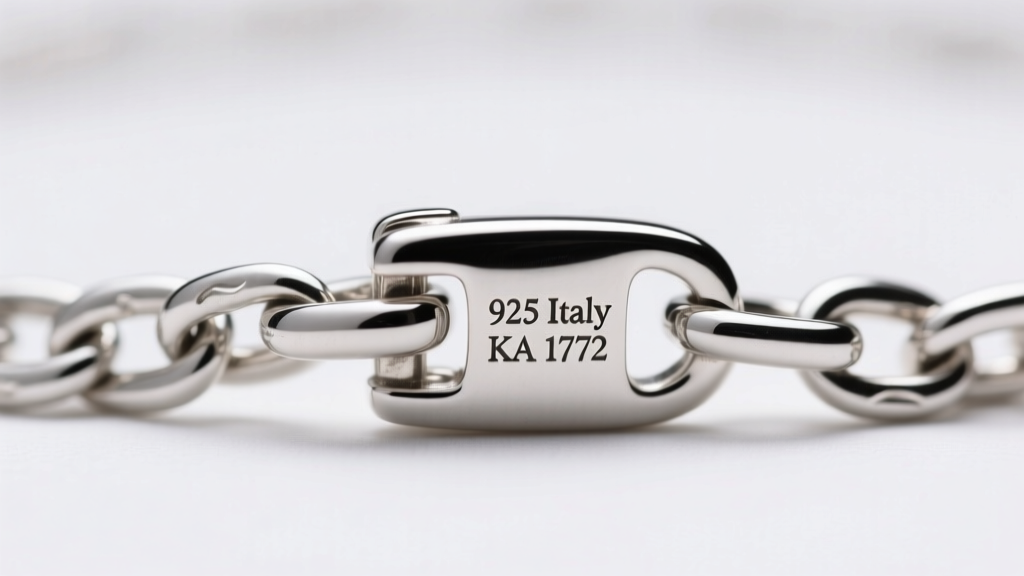
Decoding the Hallmark: What "925 Italy KA 1772" Actually Means
When examining the clasp of a vintage or high-end silver chain, you might encounter a cryptic sequence of stamps. Finding a 925 Italy KA 1772 necklace stamp is a hallmark of specific European craftsmanship, but understanding its metallurgical and legal significance requires a deep dive into Italian precious metal regulations. This sequence is not a random serial number; it is a legally mandated traceability code that guarantees both material purity and manufacturing origin.
The Millesimal Fineness: 925
The "925" stamp denotes the millesimal fineness of the alloy, meaning the piece consists of 92.5% pure silver and 7.5% secondary metals. Pure silver (999 fineness) is far too soft for functional jewelry, registering a mere 25 on the Vickers Hardness (HV) scale. By alloying it with 7.5% copper, the tensile strength and hardness increase to approximately 65-70 HV, making it durable enough to withstand the mechanical stress of being drawn into fine wire and woven into complex chain links.
The Origin: Italy
The "Italy" stamp certifies the country of manufacture. Italy remains a global powerhouse in precious metal fabrication, particularly in regions like Arezzo, Vicenza, and Torre del Greco. Italian silver is globally recognized for its superior diamond-cutting techniques, seamless link soldering, and strict adherence to European Union nickel-release directives (EN 1811:2011), ensuring the alloy is hypoallergenic.
The Maker's Mark: KA 1772
Under Italian Legislative Decree 251/1999, every precious metal manufacturer must register a unique identification mark with the local Assay Office. While modern marks typically feature a number and a provincial code (e.g., "123 AR" for Arezzo), older registrations, specific export lines, or distinct brand trademarks often utilize letter-number combinations. "KA" typically represents the manufacturer's brand prefix or an older provincial registry, while "1772" is the unique factory identification number. According to Lang Antiques, these specific maker marks are crucial for dating vintage pieces and verifying the exact factory of origin, distinguishing mass-produced imports from specialized Italian fabricators.
Metallurgical Profile: Italian 925 vs. Global Alternatives
Not all sterling silver is created equal. The specific 7.5% alloy mixture drastically alters the chain's tarnish rate, color, and malleability. Italian manufacturers traditionally use pure, oxygen-free copper for their alloy, which provides superior malleability for intricate weaves like the Foxtail or Byzantine chains. In contrast, some global manufacturers use zinc or nickel to achieve a whiter color, which increases brittleness and poses allergy risks.
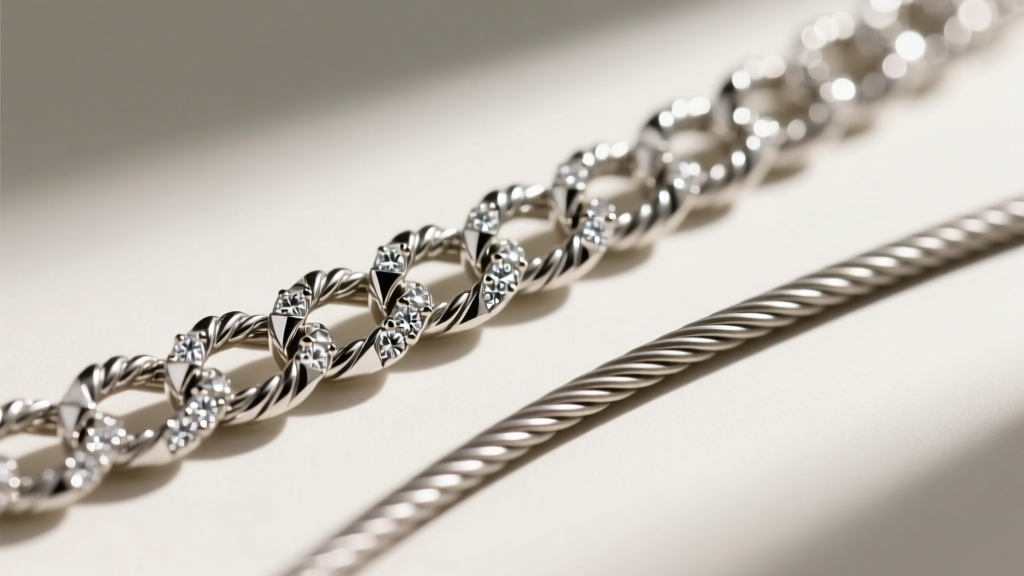
Comparative Material Properties
To understand where the traditional Italian 925 alloy stands in the modern jewelry market, we must compare it against contemporary alternatives like Argentium silver and standard brass-plated options.
| Material Type | Silver Content | Alloy Metals | Vickers Hardness (HV) | Tarnish Resistance |
|---|---|---|---|---|
| Traditional Italian 925 | 92.5% | 7.5% Copper | 65 - 70 | Moderate (Requires maintenance) |
| Argentium 935 | 93.5% | Copper, Germanium | 75 - 80 | High (Germanium oxide layer) |
| US Standard 925 | 92.5% | Copper, Zinc | 60 - 65 | Moderate to Low |
| Silver-Plated Brass | < 1% (Surface) | Zinc, Copper Core | 100+ (Core dependent) | Low (Prone to flaking) |
Expert Insight: While Argentium silver offers superior tarnish resistance due to its germanium content, traditional Italian 925 remains the gold standard for classic chain weaves. The copper alloy provides a specific "warmth" to the silver's reflectivity and allows for the aggressive diamond-cutting lathe processes that give Italian rope chains their signature sparkle without shattering the links.
Structural Integrity and Chain Weave Dynamics
The manufacturing origin directly impacts the structural integrity of the necklace. Italian factories utilize advanced laser-welding and seamless soldering techniques. When you purchase a 925 Italy KA 1772 necklace, you are often getting a chain where the individual links are soldered closed, meaning they will not pull apart under the weight of a pendant.
The Diamond-Cutting Lathe Process
One of the defining characteristics of high-end Italian silver chains is the "diamond-cut" finish. This is not a gemstone setting, but rather a precision manufacturing technique. After the chain is woven and soldered, it is passed through a computerized lathe equipped with industrial diamond-tipped blades. These blades shave a microscopic layer off the top of each link, creating flat, faceted surfaces that catch and reflect light much like a faceted gemstone. This process requires an alloy with high structural cohesion; if the silver is too brittle (due to improper zinc alloying), the links will shatter under the lathe bit. The 925 Italy KA 1772 stamp guarantees an alloy composition capable of withstanding this rigorous milling process.
Gauge Recommendations for Pendant Pairing
Understanding the tensile limits of your Italian sterling silver chain is critical for preventing catastrophic failure (snapping). Here are specific gauge recommendations based on pendant weight:
- 0.8mm - 1.2mm (Delicate): Suitable only for lightweight pendants under 4 grams. Ideal for diamond solitaires or small gemstone bezels.
- 1.5mm - 2.2mm (Standard): The most versatile range. Can support pendants weighing between 5 and 12 grams. A 2.0mm diamond-cut rope chain in this range offers excellent structural integrity.
- 2.5mm - 4.0mm (Heavy Duty): Required for heavy medallions, large crucifixes, or solid silver pendants exceeding 15 grams. At this thickness, the chain becomes a statement piece on its own.
Authentication and Wearability
Because the 925 Italy KA 1772 stamp is highly regarded, it is occasionally counterfeited by overseas mass-producers. The Gemological Institute of America (GIA) recommends several non-destructive testing methods to verify the authenticity of sterling silver.
The Magnet and Thermal Tests
Silver is diamagnetic, meaning it is slightly repelled by a magnetic field. If a strong neodymium magnet sticks firmly to your chain, the core is likely ferrous (steel or iron), and the piece is merely silver-plated. Furthermore, silver possesses the highest thermal conductivity of any common metal. If you place an ice cube on the chain, it should begin melting almost instantly, significantly faster than it would on a stainless steel or brass chain.
The Acid Test Warning
While jewelers often use nitric acid testing kits to verify silver purity, this is a destructive test that should never be performed on a finished chain. The acid will leave a permanent, cloudy burn mark on the silver. If you must use an acid test, it should only be done on an inconspicuous area, such as the inside of the clasp tongue, and immediately neutralized with a baking soda and water solution. For consumer-level authentication, the magnet and thermal tests, combined with a visual inspection of the stamp's depth and font clarity, are vastly superior and non-destructive.
Skin Chemistry and the "Green Neck" Phenomenon
Some wearers experience a green discoloration on their skin when wearing 925 silver. This is not a sign of fake silver; rather, it is a chemical reaction between the 7.5% copper alloy and the wearer's sweat. Highly acidic sweat (low pH) accelerates the oxidation of copper, creating copper chloride or copper sulfate, which transfers to the skin. To mitigate this, you can have the chain professionally rhodium-plated, or simply remove the necklace during heavy exercise or swimming in chlorinated pools.
Long-Term Care and Patina Management
Tarnish on a 925 Italy KA 1772 necklace is primarily silver sulfide, which forms when the silver reacts with sulfur compounds in the air, cosmetics, or household cleaners. Proper maintenance requires a balance between chemical cleaning and mechanical polishing.
What to Avoid
Never use liquid "silver dip" chemical cleaners on diamond-cut or oxidized Italian chains. The harsh thiourea-based chemicals in these dips will strip away the intentional oxidation (patina) that provides contrast in the chain's crevices, leaving the piece looking flat and unnaturally white. Over time, repeated chemical dipping can also micro-pit the surface of the silver, dulling the diamond-cut facets.
The Correct Polishing Protocol
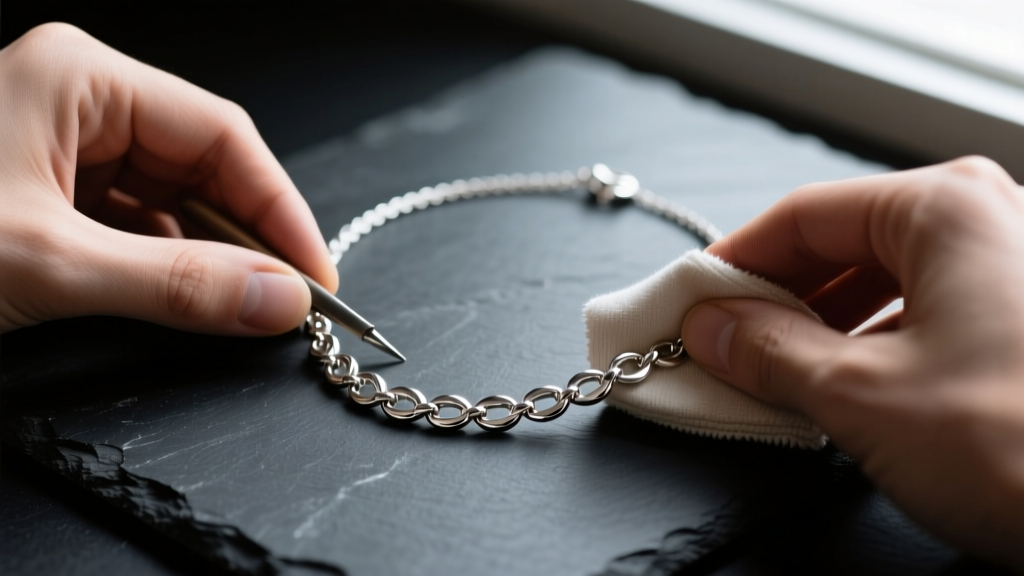
For routine maintenance, use a high-quality microfiber cloth or a jeweler's rouge-impregnated polishing cloth (such as a Sunshine cloth). Gently rub the chain in a linear motion rather than pulling it through a pinched cloth, which can stretch the links. For long-term storage, keep the necklace in an airtight polyethylene bag with a 3M anti-tarnish strip and a small silica gel desiccant packet to control ambient humidity and neutralize airborne sulfur.
Conclusion
The 925 Italy KA 1772 necklace stamp is far more than a random assortment of numbers and letters; it is a passport of metallurgical quality and artisanal heritage. By understanding the specific copper-alloy composition, the structural advantages of Italian chain weaving, and the proper protocols for authentication and care, you can ensure that your sterling silver jewelry remains a durable, brilliant staple in your collection for decades to come.


