Decoding the 925 SK9 Necklace: Hallmarks, Silver Grades & Value
Discover the technical details behind the 925 SK9 necklace. Learn about silver metallurgy, hallmark authentication, and chain gauge specs.

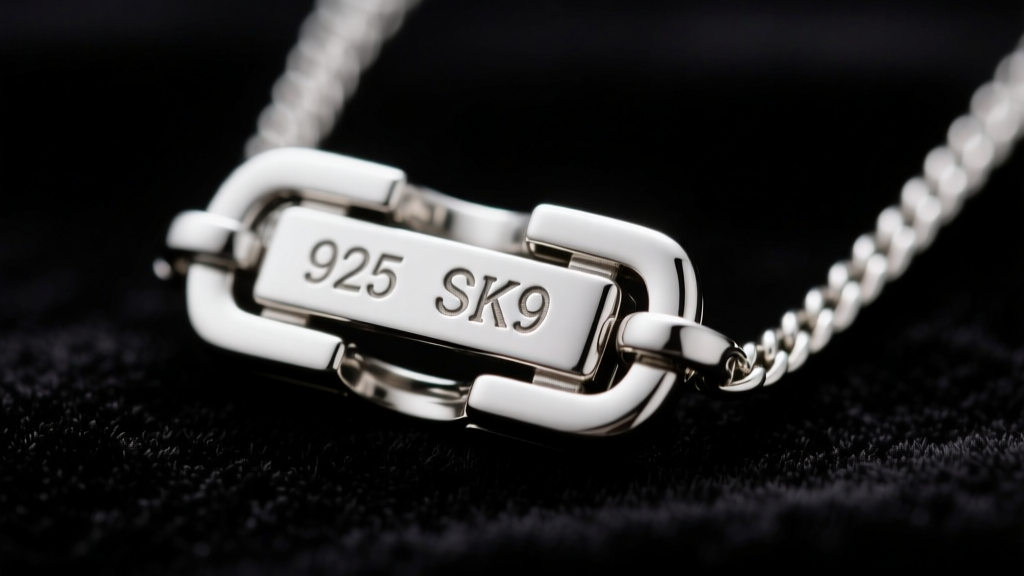
When evaluating estate jewelry or contemporary artisan pieces, few stamps generate as much curiosity as the combination found on a 925 SK9 necklace. To the untrained eye, these alphanumeric stamps are mere scratches on a clasp or end-tab. To a metallurgist or seasoned gemologist, they represent a precise intersection of material science, regional assay laws, and artisan identity. This technical deep dive deconstructs the exact alloy composition, hallmark origins, structural integrity, and valuation frameworks of SK9-stamped sterling silver chains.
The Metallurgy of 925 Sterling Silver
To understand the foundation of any 925 SK9 necklace, we must first examine the metallurgical reality of the "925" stamp. Pure silver (999 fine) possesses a Mohs hardness of roughly 2.5, making it far too malleable for functional chain links or secure clasp mechanisms. Under tensile stress, pure silver will stretch, warp, and eventually snap at the solder points.
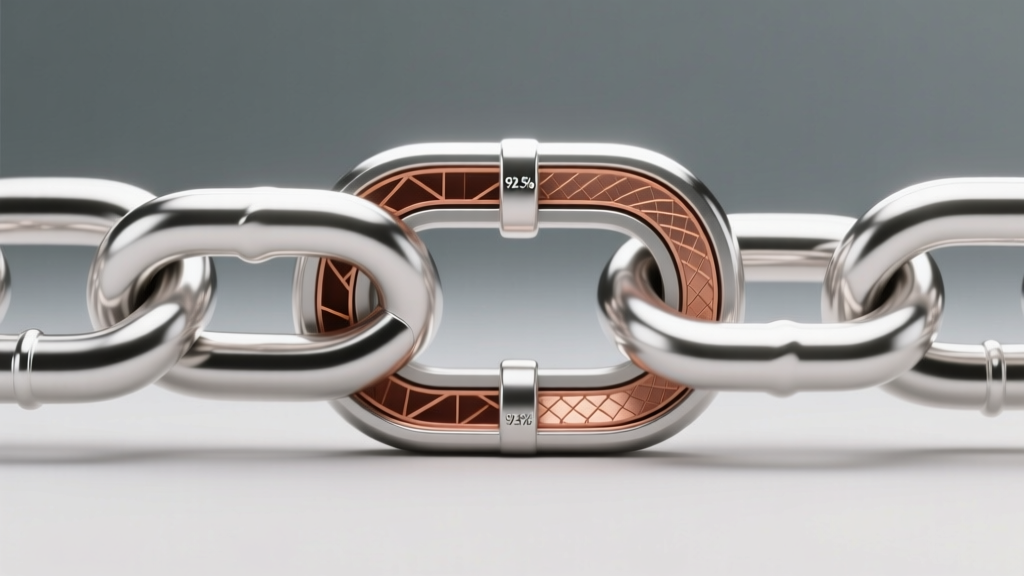
The 925 designation indicates that the alloy consists of 92.5% pure silver and 7.5% secondary metals—almost universally copper. This specific ratio is not arbitrary; it represents the optimal eutectic balance. The copper addition increases the Brinell hardness to approximately 65-70 and raises the Mohs hardness to 3.0, providing the necessary tensile strength for chain drawing and link soldering while retaining the optical reflectivity (roughly 95% of visible light) characteristic of precious silver. However, this copper inclusion is also the primary catalyst for tarnish, a factor we will address in the chemical care section.
Decoding the SK9 Maker's Mark
While "925" is a globally recognized purity mark, the "SK9" stamp serves as a maker's mark, factory identifier, or artisan signature. According to the British Assay Office and international hallmarking standards, a maker's mark is registered to a specific silversmith, manufacturing syndicate, or design house.
The "SK" prefix is historically associated with several prominent jewelry entities, most notably the luxury brand Scott Kay, as well as various mid-century European and Southeast Asian silversmithing guilds. The addition of the number "9" typically denotes one of three things:
- Factory Line or Division: A specific manufacturing branch or quality tier within a larger silversmithing conglomerate.
- Date Letter Equivalent: In some regional assay systems, a number combined with letters indicates the exact year of hallmarking or the specific assay master who verified the silver content.
- Artisan Identifier: A specific bench jeweler working under a master guild mark, allowing for traceability in the event of structural failure or quality disputes.
When authenticating a 925 SK9 necklace, examine the stamp's typography. Genuine artisan marks are typically struck with a single, high-impact die press, resulting in uniform depth and sharp, clean edges. Counterfeit stamps often show "soft" edges or double-striking shadows caused by cheap laser engraving or low-pressure casting molds.
Chain Construction and Gauge Specifications
The structural integrity of a 925 SK9 necklace relies heavily on its gauge (thickness) and link geometry. Sterling silver chains are manufactured through wire drawing, where the 925 alloy is pulled through progressively smaller tungsten carbide dies. Below is a technical breakdown of standard gauges used in SK9-marked chains and their respective tensile limits.
| Gauge (AWG) | Thickness (mm) | Approx. Tensile Strength | Recommended Use Case |
|---|---|---|---|
| 18 Gauge | 1.02 mm | ~12 lbs (5.4 kg) | Lightweight pendants, layering |
| 16 Gauge | 1.29 mm | ~20 lbs (9.0 kg) | Standard everyday wear, medium pendants |
| 14 Gauge | 1.63 mm | ~35 lbs (15.8 kg) | Heavy pendants, statement lockets |
| 12 Gauge | 2.05 mm | ~55 lbs (24.9 kg) | Standalone statement chains, no pendants |
For a 925 SK9 necklace intended to hold a heavy gemstone pendant (e.g., a 20-carat quartz or silver locket), a minimum of 14-gauge wire in a soldered curb or rolo link pattern is required. Unsoldered links in gauges thinner than 1.2mm are highly susceptible to lateral deformation and will pull apart under dynamic load.
Advanced Authentication Protocols
Verifying the authenticity of a 925 SK9 necklace requires moving beyond the outdated and unreliable "magnet test" (which only detects ferrous metals, not copper or lead-filled silver). The Gemological Institute of America (GIA) recommends a multi-tiered testing approach for precise elemental verification.
1. Specific Gravity (Archimedes) Test
The theoretical density of pure silver is 10.49 g/cm³, while copper is 8.96 g/cm³. A perfectly mixed 92.5/7.5 alloy yields a specific gravity of approximately 10.36 g/cm³. By weighing the necklace in air and then suspended in distilled water, you can calculate its exact density. A reading between 10.30 and 10.40 strongly confirms genuine 925 sterling, whereas a reading below 10.0 indicates base metal plating or excessive porosity from poor casting.
2. X-Ray Fluorescence (XRF) Spectrometry
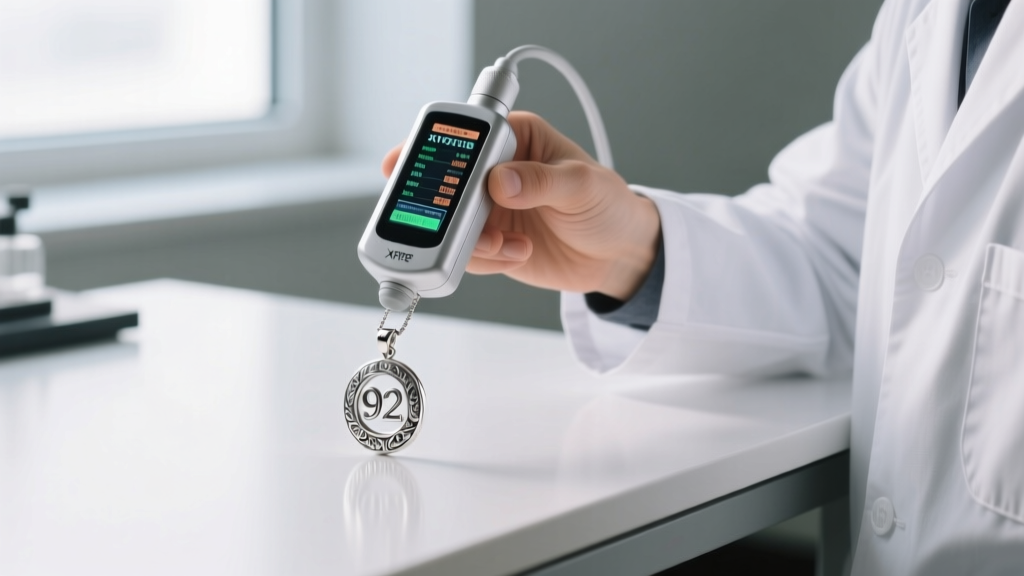
For non-destructive, laboratory-grade authentication, XRF testing is the gold standard. An XRF gun bombards the clasp and chain links with X-rays, measuring the fluorescent emission to determine the exact elemental breakdown. This will instantly reveal if the "SK9" piece is solid 925 silver, silver-plated brass, or contains hazardous elements like nickel or lead, which are sometimes illegally used in cheap counterfeit alloys.
Tarnish Mitigation and Chemical Care
The 7.5% copper in a 925 SK9 necklace creates a galvanic vulnerability. Silver tarnish is not a rust; it is a chemical reaction where silver reacts with hydrogen sulfide (H2S) in the atmosphere to form silver sulfide (Ag2S), a blackish-purple layer on the surface. The presence of copper accelerates this when exposed to chlorides, sweat, and high humidity.
To mitigate this at a molecular level, avoid chemical dips containing thiourea, which strip the silver sulfide but also microscopically etch the copper alloy, leaving the surface porous and more susceptible to rapid re-tarnishing. Instead, utilize an electrolytic reduction bath: submerge the necklace in a solution of hot water, baking soda (sodium bicarbonate), and a piece of sacrificial aluminum foil. This reverses the electrochemical reaction, converting the silver sulfide back into elemental silver without removing any of the base metal.
Valuation Framework for SK9 Silver
Appraising a 925 SK9 necklace requires separating the intrinsic melt value from the numismatic or artisan premium. The baseline melt value is calculated by multiplying the item's troy ounce weight by 0.925, and then by the current spot price of silver.
"Never melt down a hallmarked piece without first researching the maker's mark. The 'SK' designation, particularly when tied to recognized designers or specific vintage eras, can command a secondary market premium of 300% to 800% over the raw silver melt value."
If the SK9 mark is verified as a mid-century modernist artisan or a high-end brand like Scott Kay, the valuation shifts from a commodity metric to an art-market metric, factoring in provenance, link complexity (e.g., hand-woven Byzantine vs. machine-made cable), and the condition of the original patina. Always preserve the hallmark area from heavy polishing, as a worn or obliterated maker's mark instantly reduces the piece to its base melt value in the eyes of serious collectors.
Final Verdict
A 925 SK9 necklace represents a fascinating intersection of standardized metallurgy and specific artisan traceability. By understanding the copper-silver alloy dynamics, respecting the tensile limits of specific chain gauges, and employing rigorous specific gravity or XRF authentication, collectors and wearers can confidently evaluate, maintain, and value these unique pieces of wearable metallurgy.


