The Diamond Necklace Guy de Maupassant Summary & Value Assessment
Read the diamond necklace guy de maupassant summary and discover 2026 budget and value assessment strategies for buying real vs. simulant jewelry.

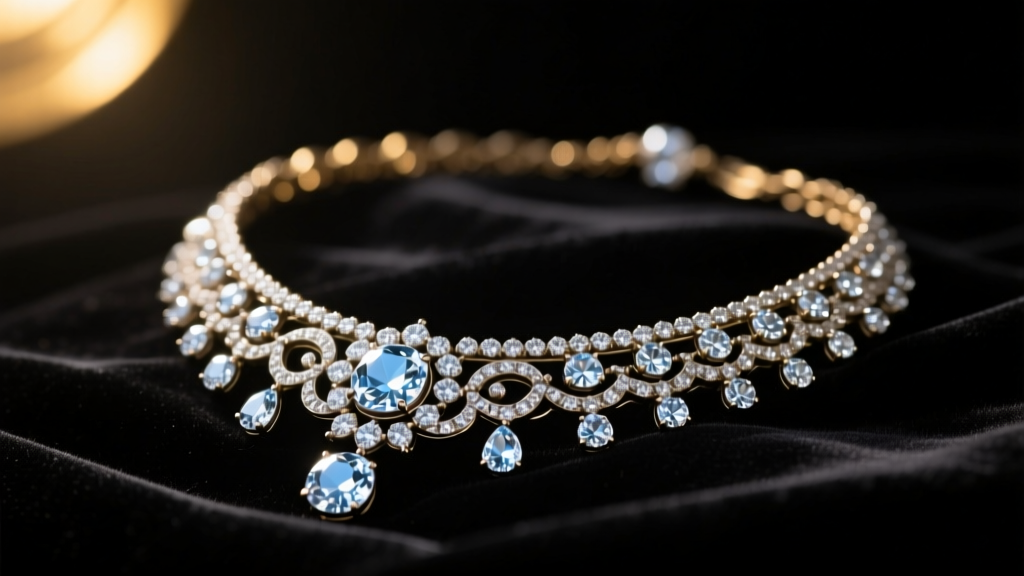
When evaluating fine jewelry, the line between astronomical value and clever imitation has been a source of both fascination and financial ruin for centuries. For modern buyers navigating the 2026 jewelry market, understanding how to assess a necklace's true worth is paramount. Interestingly, one of the most profound lessons in jewelry valuation doesn't come from a modern gemological textbook, but from a classic piece of French literature. By examining the historical context of simulated gems alongside modern pricing frameworks, we can avoid the catastrophic financial mistakes made by the characters in one of history's most famous short stories.
The Diamond Necklace Guy de Maupassant Summary: A Tale of Perceived Value
To understand the mechanics of jewelry deception, we must first look at the narrative that defined it. For those seeking the diamond necklace guy de maupassant summary, the 1884 story follows Mathilde Loisel, a woman born into a modest family who yearns for high-society luxury. When invited to a prestigious ball, Mathilde borrows what she believes to be a stunning, authentic diamond necklace from her wealthy friend, Jeanne Forestier.
Tragedy strikes when Mathilde loses the necklace on the way home. Too proud and terrified to confess the loss to Jeanne, Mathilde and her husband secretly purchase a replacement necklace from a jeweler at the Palais-Royal for 36,000 francs—using her husband's entire 18,000-franc inheritance and taking on crippling, high-interest debt for the remainder. The couple spends the next ten years living in grueling poverty, working multiple menial jobs to pay off the loans. Finally, a hardened and aged Mathilde encounters Jeanne and confesses the truth. Jeanne, shocked, grabs Mathilde's hands and delivers the story's devastating twist: the original necklace was made of paste (costume jewelry), worth at most 500 francs.
"Oh, my poor Mathilde! But mine was paste. It was worth at most five hundred francs!" — Jeanne Forestier, as documented in the original text available via Project Gutenberg.
The Fatal Flaw: Paste vs. Natural Diamonds in the 19th Century
Mathilde’s inability to distinguish between natural diamonds and "paste" was not a sign of personal stupidity, but a reflection of 19th-century jewelry trends. During this era, high-quality paste jewelry—specifically strass, a type of leaded glass invented by Georges Frédéric Strass—was incredibly popular even among the aristocracy. Leaded glass has a high refractive index (RI), allowing it to mimic the brilliance of a diamond to the untrained eye in dim, candlelit ballrooms.
How 1880s "Paste" Compares to 2026 Simulants
Today, leaded glass has been entirely replaced by advanced simulants and lab-grown alternatives. If Mathilde were attending a gala in 2026, she might encounter Cubic Zirconia (CZ), Moissanite, or Lab-Grown Diamonds. Understanding the optical and physical differences between these materials is the foundation of modern budget and value assessment.
- Lead Glass (Paste): RI of ~1.7. Soft (Mohs 5-6), easily scratched, lacks the "fire" of modern gems.
- Cubic Zirconia (CZ): RI of 2.15. Harder (Mohs 8-8.5) but prone to clouding over time due to oil and dirt accumulation in its facets.
- Moissanite: RI of 2.65. Exceptionally brilliant and doubly refractive (showing facet doubling under a loupe). Mohs 9.25.
- Lab-Grown Diamond: RI of 2.42. Chemically, physically, and optically identical to mined diamonds. Mohs 10.
Modern Value Assessment: How to Avoid the Loisel Trap
Mathilde's ultimate failure was not just her inability to identify paste; it was her failure to seek a professional appraisal or simply ask her friend about the necklace's origins and value before making a 36,000-franc purchasing decision. In 2026, the Federal Trade Commission (FTC) mandates strict disclosure regarding lab-grown diamonds and simulants, yet the secondary market and private sales remain fraught with misrepresentation.
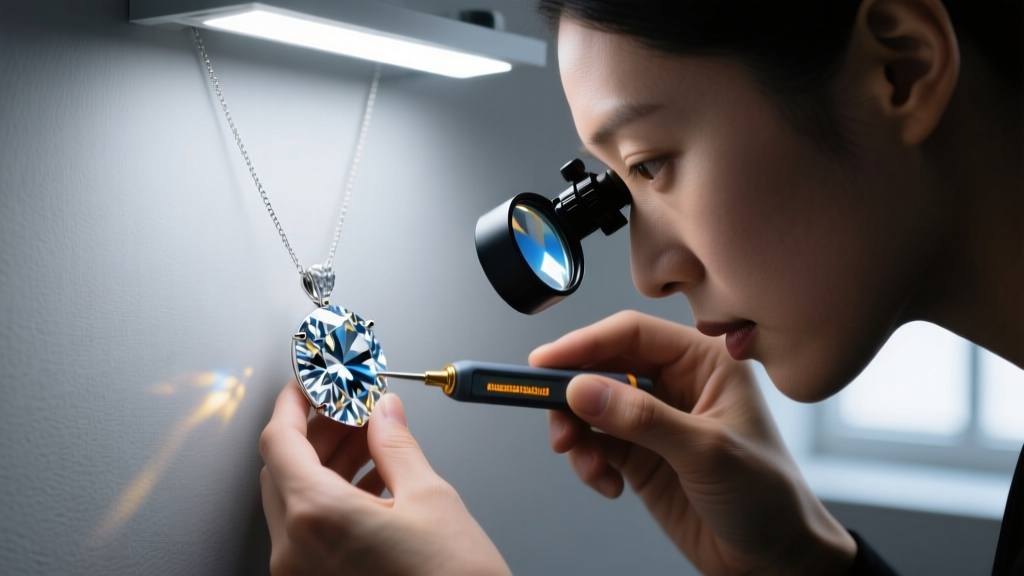
To accurately assess the value of a diamond pendant or necklace today, you must rely on gemological testing rather than visual inspection alone. Modern jewelers use advanced dual-testing mechanisms that measure both thermal and electrical conductivity. For instance, a Presidium DuoTester will easily separate a diamond (high thermal, low electrical conductivity) from moissanite (high thermal, high electrical conductivity) and CZ (low thermal, low electrical conductivity).
2026 Market Pricing: Budgeting for a Diamond Pendant
The landscape of diamond pricing has shifted dramatically. According to the Gemological Institute of America (GIA), lab-grown diamonds have become a dominant force in the market, offering identical physical properties at a fraction of the cost. This creates distinct budget tiers for buyers looking at solitaire pendants and tennis necklaces.
| Material (1.00 Carat Round, VS1, F Color) | Approx. 2026 Price Per Carat | Value Retention | Best Use Case |
|---|---|---|---|
| Natural Mined Diamond | $4,200 - $5,500 | Moderate (Slow depreciation) | Heirloom pieces, investment-grade jewelry |
| Lab-Grown Diamond (CVD/HPHT) | $350 - $600 | Low (Rapid depreciation) | Everyday wear, large carat sizes on a budget |
| Moissanite | $80 - $150 | Negligible | Travel jewelry, fashion-forward statements |
| Cubic Zirconia (CZ) | $5 - $20 | None | Temporary placeholders, costume jewelry |
The 4Cs on a Budget: Where to Compromise
If you are allocating a strict budget for a natural diamond necklace, you must strategically compromise on the 4Cs (Cut, Color, Clarity, Carat) to maximize visual impact without overpaying for invisible perfection.
- Cut (Never Compromise): An Excellent/Ideal cut is non-negotiable. A poorly cut 1-carat diamond will look smaller and darker than a well-cut 0.80-carat stone. Light return is what makes a diamond sparkle.
- Clarity (Compromise to SI1/VS2): Inclusions in the SI1 or VS2 range are typically invisible to the naked eye, especially in a pendant that rests against the skin and moves dynamically. Avoid paying premiums for VVS or Flawless grades.
- Color (Compromise to G/H/I): Near-colorless grades (G-J) face up completely white when set in white gold or platinum, saving you 20-30% compared to D-F colorless grades.
- Carat (Buy Shy): Diamond prices jump exponentially at "magic sizes" like 0.50ct, 1.00ct, and 1.50ct. Buying a 0.90ct or 0.95ct stone can save you thousands of dollars while looking virtually identical in a pendant setting.
Authentication and Appraisal: Protecting Your Investment
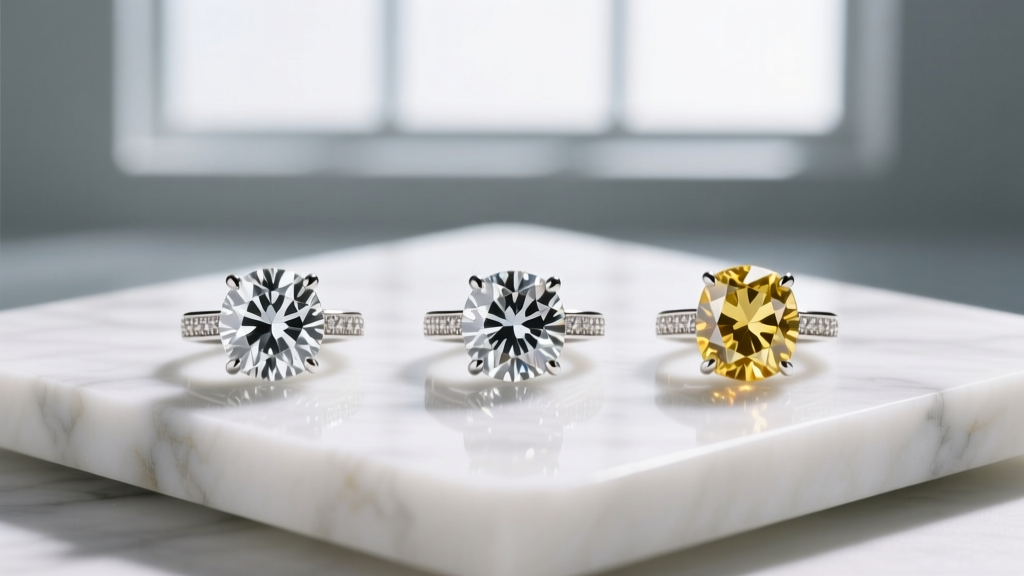
The tragedy of Mathilde Loisel could have been entirely avoided with a simple verification step. When purchasing a diamond necklace—whether from a high-end boutique, an estate sale, or a private seller—always demand an independent grading report from a top-tier laboratory such as the GIA or AGS. A store-issued "certificate of authenticity" is not a substitute for a peer-reviewed gemological dossier.
Furthermore, if you are inheriting or purchasing vintage jewelry, be wary of "old mine" or "old European" cuts that may have been replaced with modern CZ or synthetic spinel over the decades due to stone loss. Always have vintage pieces tested with a modern thermal/electrical conductivity pen before finalizing a transaction. The cost of a professional appraisal (typically $75 to $150) is a microscopic premium to pay to ensure you aren't spending a decade paying off a piece of leaded glass.
Final Verdict: True Value Lies in Transparency
The enduring legacy of Maupassant's story is a stark warning about the dangers of ego, assumptions, and the blind pursuit of perceived status. In the modern jewelry market, value is not determined by how a stone looks across a crowded room, but by its verifiable gemological properties and market transparency. Whether you opt for a $5,000 natural diamond heirloom or a $400 lab-grown equivalent, the true worth of your necklace lies in your complete understanding of what you are buying. Do not let pride prevent you from asking the right questions, demanding the right paperwork, and accurately assessing the materials around your neck.


