Playing Card Necklace Guide: Metals, Enamel & Chain Gauges
Explore the technical details of a playing card necklace, from 316L steel bases to vitreous enamel inlays and optimal chain gauge pairings.

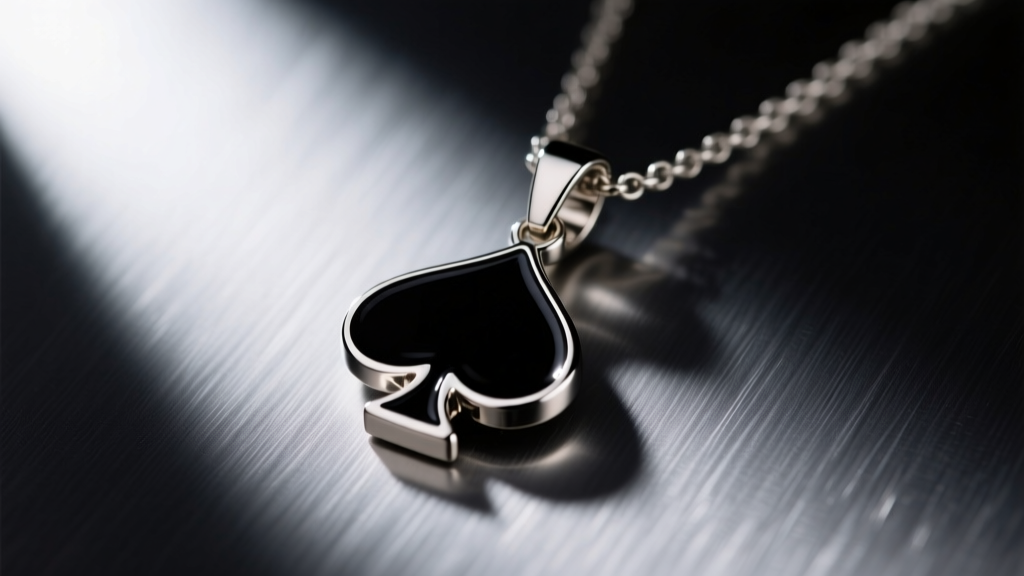
The playing card necklace has evolved far beyond cheap novelty tin and stamped brass. Today, high-end card pendants—featuring spades, hearts, clubs, and diamonds—are sophisticated exercises in micro-metallurgy, precision enameling, and structural engineering. Whether you are evaluating a solid gold diamond suit pendant or a custom 316L stainless steel poker chip necklace, understanding the technical specifications is crucial for longevity and drape. In this expert deep dive, we deconstruct the material science, chain mechanics, and failure points of the modern playing card necklace.
Base Metal Metallurgy: 316L vs. 925 Sterling vs. Brass
The foundation of any premium playing card necklace is its base alloy. The rectangular geometry and sharp interior corners of card suit cutouts demand metals with high tensile strength and resistance to stress corrosion cracking.
316L Surgical Stainless Steel
For everyday wear, 316L is the undisputed champion. Unlike standard 304 stainless steel, 316L contains 2-3% molybdenum, which drastically increases its resistance to pitting and crevice corrosion from chlorides (found in sweat and swimming pools). Its low carbon content ('L' stands for low carbon) prevents chromium carbide precipitation during laser cutting, ensuring the edges of a spade cutout remain rust-proof. It is highly recommended for buyers with nickel sensitivities, as the nickel is tightly bound within the crystalline lattice.
925 Sterling Silver
Sterling silver (92.5% silver, 7.5% copper) offers superior luster and traditional jewelry prestige. However, the copper alloy makes it highly susceptible to silver sulfide tarnish when exposed to atmospheric sulfur. For a playing card pendant with intricate suit cutouts, tarnish accumulation in the recessed corners is a persistent maintenance issue. High-quality 2026 manufacturing mitigates this by applying a 0.5-micron rhodium flash over a nickel-free palladium barrier layer.
Brass and Bronze Alloys
Brass (copper and zinc) is frequently used in budget-friendly card necklaces. The primary failure mode of raw brass is verdigris—a green copper carbonate patina that forms when the metal reacts with the acidic pH of human skin. If choosing a brass playing card pendant, verify that it features an e-coating (electrophoretic deposition) or a thick gold vermeil plating of at least 2.5 microns to prevent skin contact.
The Enamel Inlay Process: Cold vs. Vitreous
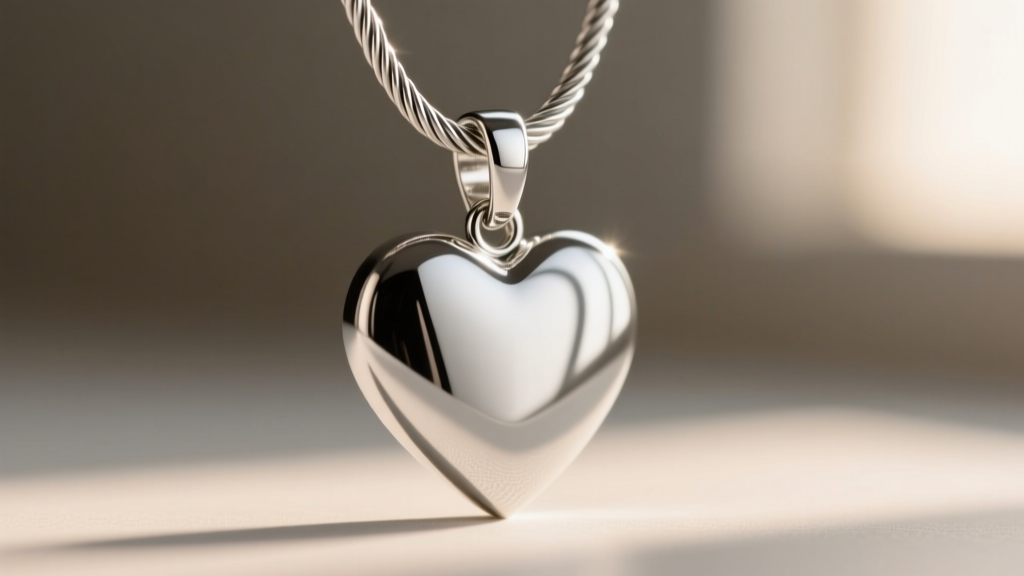
The suits on a playing card necklace are rarely left as bare metal; they are typically filled with enamel to provide stark visual contrast. The methodology used to apply this color dictates the pendant's lifespan.
- Cold Enamel (Epoxy Resin): A two-part polymer that cures at room temperature. While cost-effective and available in unlimited Pantone colors, cold enamel sits at a Mohs hardness of 2-3. It is highly susceptible to micro-scratching and will yellow under prolonged UV exposure. Furthermore, epoxy shrinks slightly as it cures, often pulling away from the sharp interior corners of a diamond or heart cutout.
- Vitreous Enamel (Glass): As detailed by the Metropolitan Museum of Art's enamel archives, vitreous enamel is powdered glass fused to metal at temperatures exceeding 1400°F (760°C). This creates a permanent, non-porous bond with a Mohs hardness of 5-6. Vitreous enamel will not scratch from daily friction, will not yellow, and perfectly fills the microscopic undercuts of laser-cut card suits due to its liquid state during firing.
For a definitive breakdown of historical and modern enamel techniques in jewelry, the Gemological Institute of America (GIA) provides extensive material science literature on glass-to-metal adhesion.
Chain Gauge and Tensile Strength Pairings
A standard 25mm x 15mm playing card pendant weighs between 4 and 7 grams, depending on the metal density and thickness (usually 1.5mm to 2.0mm). Pairing this weight with an incorrect chain gauge is the leading cause of jewelry loss. According to manufacturing standards outlined by jewelry supply authority Rio Grande, the chain must possess a tensile strength that exceeds the pendant's dynamic load (the sudden force applied when the pendant is dropped or caught).
| Chain Gauge (mm) | Chain Style | Approx. Tensile Strength | Max Recommended Pendant Weight | Drape Characteristics |
|---|---|---|---|---|
| 0.8mm - 1.0mm | Cable / Rolo | 1.5 - 2.5 kg | 3 grams | Highly fluid, prone to kinking under rectangular loads. |
| 1.2mm - 1.5mm | Cable / Curb | 4.0 - 6.0 kg | 8 grams | Optimal balance of strength and fluidity for card pendants. |
| 1.8mm - 2.2mm | Figaro / Cuban | 8.0 - 12.0 kg | 15+ grams | Stiff, heavy, dominates the visual hierarchy of the necklace. |
For a standard playing card necklace, a 1.2mm to 1.5mm cable or curb chain is the technical sweet spot. It provides sufficient shear strength to hold the pendant while remaining flexible enough to allow the rectangular card to lay flat against the sternum.
Clasp Mechanics: Lobster vs. Spring Ring
Do not use spring ring clasps for pendants exceeding 5 grams. The internal coil spring in a standard 5mm spring ring degrades rapidly under constant tension, leading to spontaneous unclasping. Always opt for a lobster clasp measuring at least 10mm to 12mm, which utilizes a forged lever mechanism and a heavier return spring, ensuring the gate remains securely closed against the weight of the card pendant.
Bail Engineering and Structural Failure Points
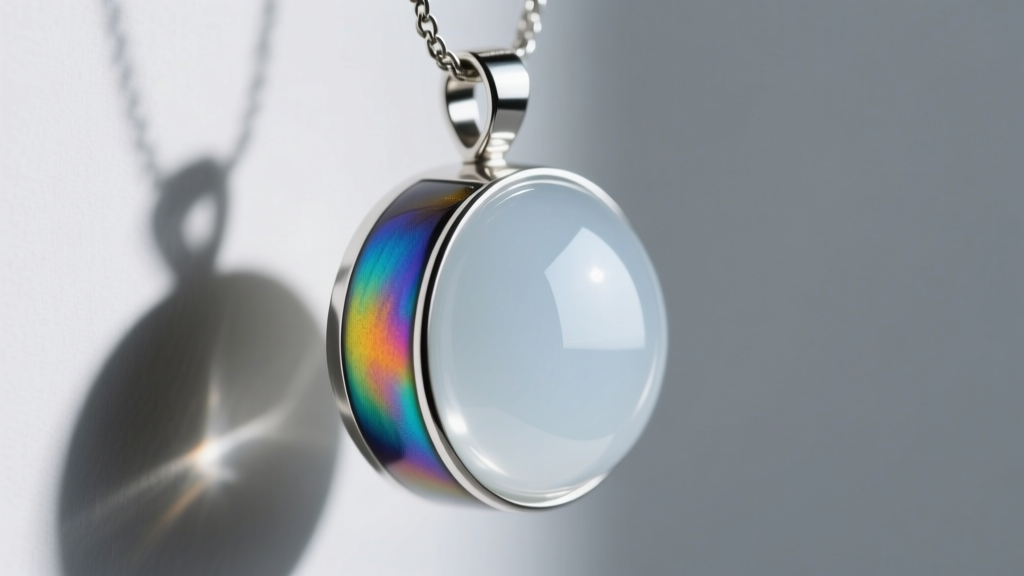
How the chain attaches to the playing card pendant is a critical, often overlooked engineering detail. There are two primary methods:
Direct Top-Drilling
In budget manufacturing, a 1.5mm hole is drilled directly through the top edge of the card pendant. This creates a severe stress riser. Because a playing card pendant is rectangular, it acts as a lever when it catches on clothing. This lateral torque concentrates immense pressure on the thin 1mm bridge of metal above the drill hole. Over time, the chain will act like a saw, elongating the hole until the pendant snaps off.
Hidden Soldered Bails
Premium playing card necklaces utilize a hidden, soldered bail affixed to the back of the pendant. By silver-soldering or laser-welding a dedicated loop to the reverse side, the structural integrity of the card's top edge remains completely intact. The weight is distributed across a broader surface area of the pendant's body, entirely eliminating the lever-effect failure mode.
Drape Geometry and Neckline Pairing
Unlike circular coin pendants that naturally center themselves, rectangular playing card pendants have an asymmetrical center of gravity. If the chain is too long, the pendant will constantly flip and tangle.
For optimal drape, the playing card necklace should be sized to rest on the collarbone or just below it. A 16-inch chain with a 2-inch extender is the industry standard. This length anchors the rectangular pendant against the upper sternum, utilizing the body's natural curvature to keep the card facing forward. When pairing with necklines, V-necks and scoop necks perfectly frame the geometric lines of a spade or heart pendant, whereas high crew necks can cause the rectangular edges to dig into the fabric and flip the pendant backward.
Maintenance and Ultrasonic Cleaning Protocols
Cleaning a playing card necklace requires strict adherence to material limits. If your pendant features vitreous (glass) enamel and a solid steel or silver base, it can be safely cleaned in an ultrasonic jewelry cleaner operating at 40kHz. The cavitation bubbles will safely dislodge sebum and dead skin cells from the sharp interior corners of the suit cutouts without damaging the glass.
However, if your pendant features cold enamel (epoxy) or is made of plated brass, ultrasonic cleaners are strictly prohibited. The high-frequency vibrations will shatter the bond between the resin and the metal, causing the enamel to pop out, and will strip thin micron-plating from brass bases. For these pieces, use a mild, phosphate-free dish soap, a soft-bristled baby toothbrush, and lukewarm water, ensuring you dry the recessed corners immediately with compressed air to prevent water spotting.


