How to Untangle a Chain Necklace: Expert Fixes for Stubborn Knots
Learn how to untangle a chain necklace without breaking it. Expert tips on lubricants, needle techniques, and prevention for fine jewelry.

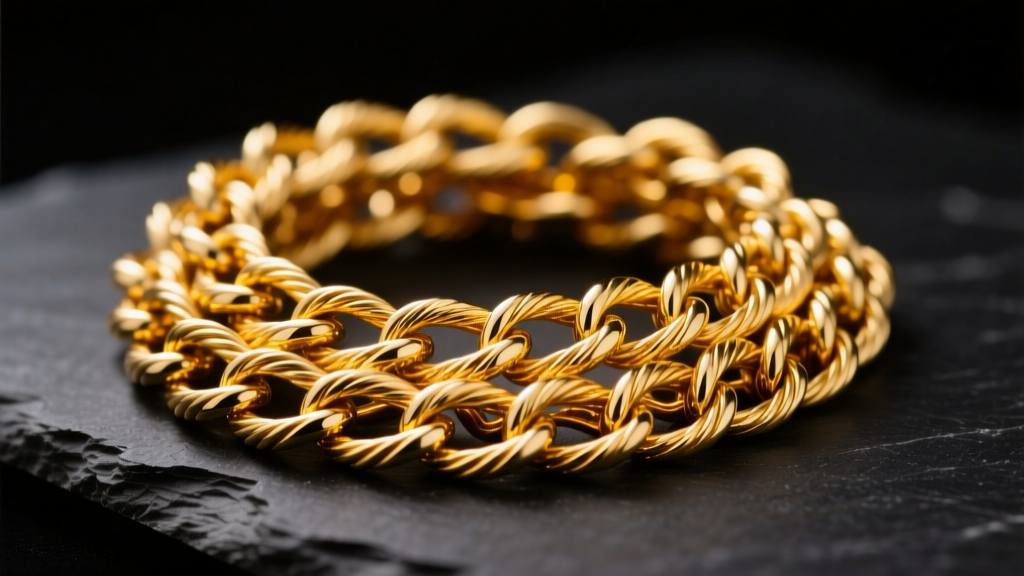
There are few things more frustrating in the world of fine jewelry than pulling a delicate piece from your jewelry box only to find it transformed into a microscopic bird's nest. When you are trying to figure out how to untangle a chain necklace, the margin for error is incredibly small. A standard 14k gold cable chain at 1.0mm (approx. 18-gauge) can withstand roughly 3 to 5 pounds of tensile strength, but the localized stress of pulling a tight knot can easily snap the soldered links or permanently distort the metal.
As a jewelry stylist, I have salvaged everything from vintage 0.8mm platinum chains to heavy, multi-strand oxidized silver rope necklaces. The secret to rescuing your jewelry is not patience alone; it is a combination of physics, proper lubrication, and the right micro-tools. Below is a comprehensive, professional-grade guide to untangling your chains without causing costly structural damage.
The Anatomy of a Chain Knot: Why Fine Jewelry Tangles
To effectively undo a knot, you must understand how it formed. Necklaces tangle primarily due to the pendulum effect. The clasp of a necklace is usually heavier than the chain itself. When stored loosely in a drawer or box, movement causes the heavier clasp to act as a weight, sliding through the open loops of the chain links and creating a slipknot.
Furthermore, the weave of the chain dictates its tangling propensity. Cable and curb chains have uniform, symmetrical links that easily interlock with one another. Box chains, with their sharp 90-degree edges, tend to catch and bind tightly when folded. Conversely, herringbone and snake chains rarely form traditional knots; instead, they suffer from 'kinking'—a structural bending of the metal tubular links that requires an entirely different repair approach.
Essential Tools and Lubricants for Delicate Chains
Never use your bare fingers to pull a tight knot. The natural oils and friction from your skin will only tighten the bind, and your fingers lack the precision required to manipulate 1mm links. Instead, assemble the following toolkit:
- Beading Needles: Size 10 or 12 beading needles feature an ultra-thin 0.45mm shaft, perfect for slipping inside microscopic chain links.
- Nylon-Tipped Tweezers: Metal tweezers will scratch soft metals like 24k gold or sterling silver. Nylon or rubber-coated tips provide grip without marring the finish.
- Non-Slip Surface: A neoprene mat, a piece of velvet, or a microfiber cloth. Never work on glass or polished marble, as the chain will slide and re-knot.
- Magnification: A jeweler's loupe (10x magnification) or a well-lit desk lamp to see the exact pivot point of the knot.
Lubricant Comparison Chart
Friction is the enemy of untangling. Applying a lubricant reduces the coefficient of friction between the metal links, allowing them to slide past one another. However, you must choose your lubricant based on the gemstones attached to the chain.
| Lubricant | Best For | Gemstone Safety | Viscosity / Action |
|---|---|---|---|
| Baby Oil / Mineral Oil | Bare metal chains, diamonds, sapphires | Unsafe for pearls, opals, emeralds | Medium / Penetrates deep into knots |
| Talcum / Baby Powder | Severe, multi-layered snarls | Safe for almost all stones (requires brushing) | Dry / Coats links to prevent binding |
| Graphite Powder | Sterling silver and white gold | Safe, but messy; can stain porous stones | Dry / Excellent metallic slip agent |
| Dish Soap (e.g., Dawn) | Quick fixes, cleaning simultaneously | Safe for most hard stones | High / Can leave a sticky residue if not rinsed |
Expert Warning: Never use WD-40 or synthetic mechanical lubricants on jewelry. According to the Gemological Institute of America (GIA), harsh chemicals and synthetic oils can permanently dull the luster of porous organic gems like pearls, coral, and turquoise, and can degrade the epoxy used in many gemstone settings.
Step-by-Step: How to Untangle a Chain Necklace Safely
Step 1: Preparation and Isolation
Lay the necklace flat on your non-slip microfiber surface. Ensure the room is brightly lit. If the necklace has a pendant, unhook it if possible, or tape it securely to the mat with painter's tape so it does not drag and complicate the knot.
Step 2: The Two-Needle Method
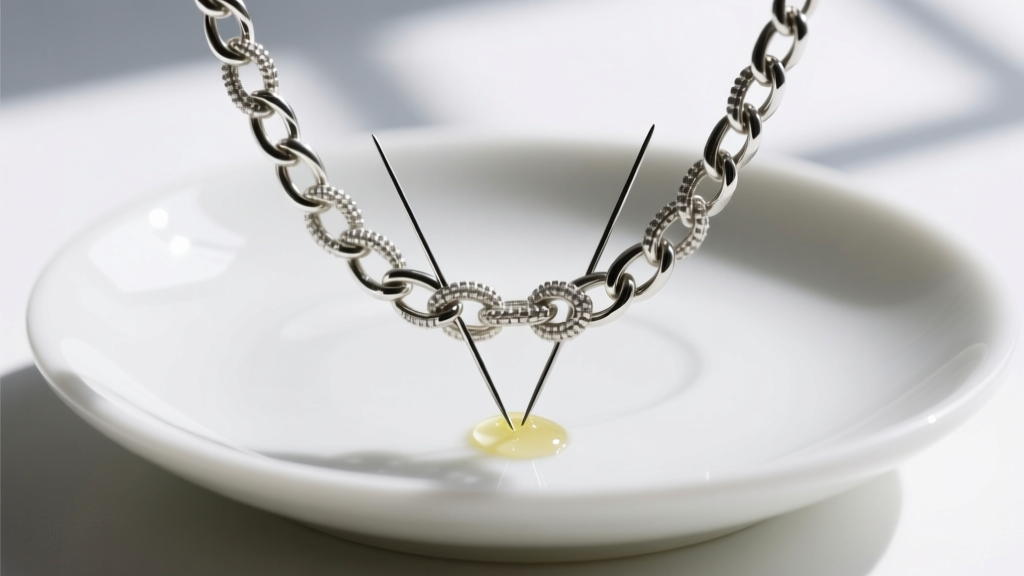
Apply a single drop of mineral oil directly to the center of the knot using a toothpick. Take your two size-12 beading needles. Insert the tip of the first needle into the absolute center link of the knot and gently push upward to create a micro-gap. Insert the second needle into that gap. Slowly wiggle the needles in opposite directions—never pull outward. The goal is to loosen the center link so the surrounding links can cascade away from it.
Step 3: The Talcum Powder Trick for Severe Snarls
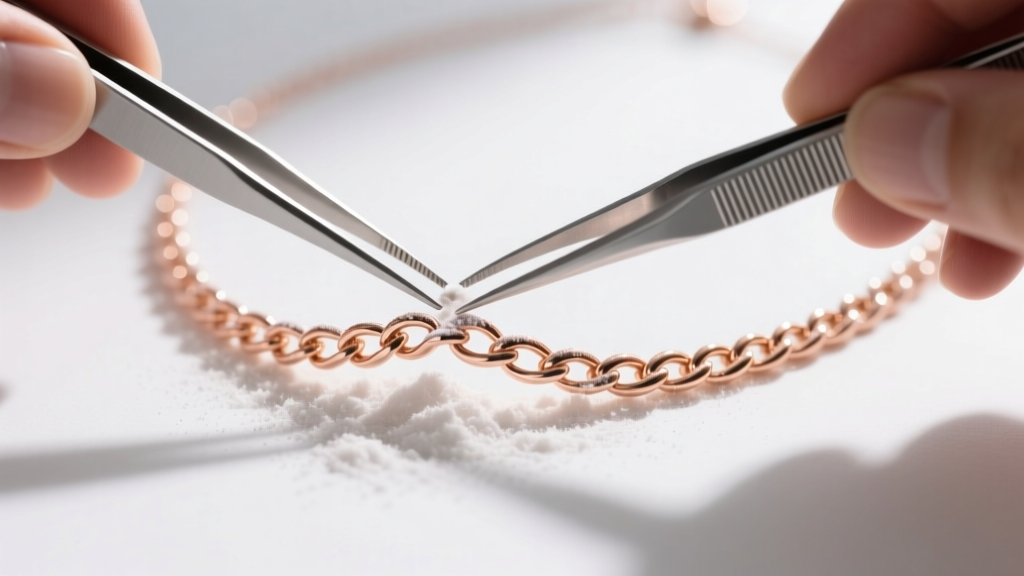
If the knot is a massive, multi-strand ball (common when layering three or more chains), oil will not penetrate the center. Instead, generously dust the entire knot with talcum powder. Tap the surface to let the powder settle into the crevices. Use your nylon tweezers to gently massage the knot. The powder acts as millions of microscopic ball bearings, breaking the friction lock between the links.
Step 4: Post-Untangle Cleaning
Once the chain is free, you must remove the lubricant. For bare gold or platinum, soak the chain in a bowl of warm water with two drops of mild dish soap for five minutes. Gently agitate, rinse with distilled water, and pat dry with a lint-free cloth. For chains with porous stones, avoid soaking; instead, use a damp, sovy microfiber cloth to carefully wipe down the metal links, followed by a dry brush to remove any talcum powder residue.
Troubleshooting Specific Chain Types and Snags
Herringbone and Snake Chain Kinks
Herringbone and snake chains do not tangle; they kink. If a link bends backward against its natural lay, pulling it will snap the chain. To fix a kink, lay the chain flat on a hard surface. Place a smooth, heavy glass bottle (like a perfume bottle) over the kinked area and roll it back and forth with firm, even pressure. This realigns the flattened metal links without stressing the solder joints. For more advanced structural repairs, consult the Jewelers of America guidelines on when to seek a professional bench jeweler.
Clasp Snags
Sometimes the spring-ring or lobster clasp gets caught inside a jump ring. Do not force the clasp open. Use your two needles to gently widen the jump ring by twisting it laterally (side-to-side), never pull it apart vertically, as this will weaken the metal's temper and ruin the circular shape.
Prevention: Storing and Layering Without the Snarl
Mastering how to untangle a chain necklace is a valuable skill, but preventing the tangle is the mark of a true jewelry connoisseur. Implement these storage and layering protocols to keep your collection pristine:
- The Straw Method for Travel: Unclasp the necklace, thread one end through a plastic or silicone drinking straw, and reclasp it. The rigid straw prevents the chain from folding back on itself, making it physically impossible to tangle in a suitcase.
- Layering with Clasp Spacing: When wearing multiple chains, ensure the clasps are of different weights, or use a specialized layering clasp that keeps the chains separated at the nape of the neck. This stops the pendulum effect from occurring while you walk.
- Individual Compartment Storage: Store necklaces hanging vertically on padded hooks, or lay them flat in a jewelry box with individual, velvet-lined compartments. Never toss multiple chains into a single communal dish.
- Friction Reduction: For chains stored in drawers, place a small silica gel packet in the drawer to reduce humidity, which can cause microscopic oxidation on sterling silver, increasing surface friction and making future tangles much harder to undo.
By combining the right micro-tools, appropriate lubricants, and an understanding of chain metallurgy, you can safely rescue even the most stubbornly tangled necklaces, ensuring your fine jewelry remains ready to wear for years to come.


