The Short Story The Diamond Necklace: Real Vs Lab-Grown Diamond Trends
Explore how Guy de Maupassant's short story the diamond necklace mirrors today's lab-grown vs natural diamond trends, pricing, and styling tips.

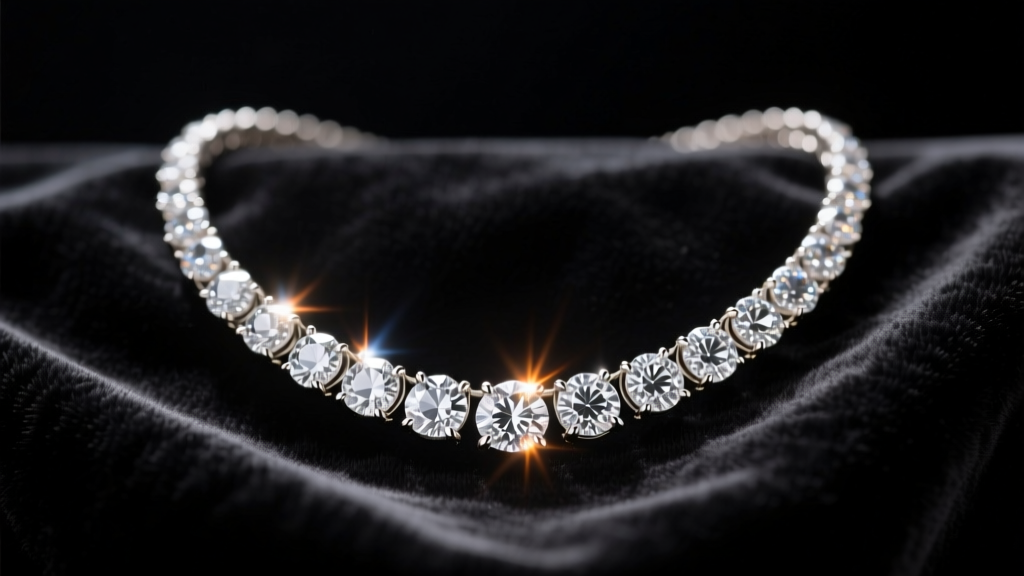
When analyzing Guy de Maupassant's famous short story the diamond necklace (originally titled 'La Parure'), modern gemologists and style historians find a profound reflection of today's jewelry market. Published in 1884, the tale follows Mathilde Loisel, who borrows what she believes to be a priceless diamond necklace, loses it, and spends a decade in grueling poverty to replace it with a genuine diamond piece—only to discover the original was 'paste' (fake). In 2026, the line between 'real' and 'illusion' has never been more blurred, thanks to the meteoric rise of lab-grown diamonds (LGDs) and advanced simulants. This style and trend analysis explores how the themes of Maupassant's literary classic map onto the modern diamond necklace market, breaking down material science, pricing matrices, and structural styling.
The Literary Catalyst: 19th Century Paste vs. Modern Tech
In the late 19th century, 'paste' jewelry was crafted from high-lead glass, which offered a refractive index (RI) of roughly 1.7 to 1.9. While it sparkled beautifully under candlelight, it lacked the hardness and optical fire of a genuine carbon crystal. Fast forward to 2026, and the modern equivalents of Mathilde's borrowed necklace are not fragile glass imitations, but chemically identical lab-grown diamonds and optically superior moissanites. The psychological stigma of wearing 'fake' jewelry has largely evaporated, replaced by a pragmatic, sustainability-focused consumer base that values optical performance and ethical sourcing over geological origin.
Material Science: Natural vs. Lab-Grown vs. Simulants
To understand the modern diamond necklace landscape, we must look at the gemological data. The illusion of value is no longer about tricking the naked eye; it is about choosing the right material for the right budget and lifestyle.
Refractive Index and Dispersion
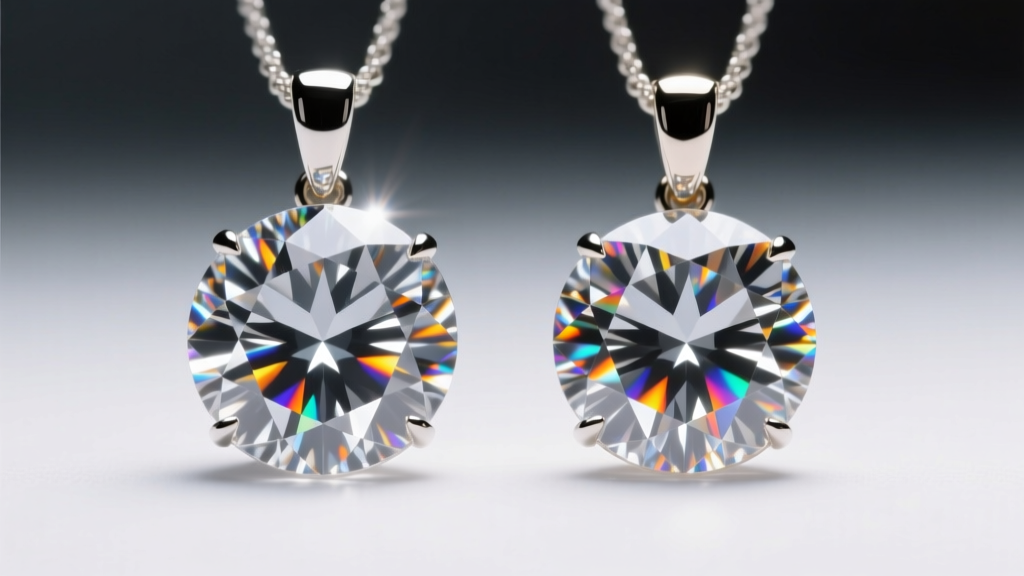
The 'sparkle' of a diamond necklace is dictated by two metrics: Refractive Index (how much light bends inside the stone) and Dispersion (how light splits into spectral colors, or 'fire'). Natural and lab-grown diamonds share an identical RI of 2.42 and a dispersion of 0.044. Moissanite, however, boasts an RI of 2.65 and a staggering dispersion of 0.104. This means a moissanite tennis necklace will exhibit significantly more rainbow flashes than a natural diamond counterpart, a trait highly prized in modern evening wear.
Synthesis Methods: CVD vs. HPHT
For buyers investing in lab-grown diamond rivière necklaces, understanding the synthesis method is crucial for long-term clarity. Chemical Vapor Deposition (CVD) diamonds are grown layer-by-layer in a plasma reactor, often resulting in Type IIa stones with exceptional chemical purity and F-G color grades. High Pressure High Temperature (HPHT) diamonds are grown in a molten metal flux, which can sometimes leave microscopic metallic inclusions. For a high-carat-weight necklace where inclusions might be visible to the naked eye, CVD stones graded VS1 or higher are the industry standard.
The 2026 Pricing Matrix: The Mathilde Loisel Effect
Mathilde Loisel ruined her life to pay for a 5-carat total weight (ctw) natural diamond necklace. Today, the financial barrier to entry for luxury neckwear has been entirely dismantled by LGD technology. Below is a comparative pricing matrix for a standard 5 ctw, 16-inch tennis necklace in 14k white gold, reflecting Q1 2026 market averages.
| Material | Avg. Retail Price (5 ctw) | Color/Clarity Grade | Resale Value Retention | Mohs Hardness |
|---|---|---|---|---|
| Natural Earth-Mined | $28,000 - $45,000 | G-H / VS2 | 30% - 50% | 10 |
| Lab-Grown (CVD) | $3,500 - $6,000 | E-F / VVS2 | 10% - 15% | 10 |
| Moissanite (DEF) | $800 - $1,500 | DEF / VVS1 | Negligible | 9.25 |
| Cubic Zirconia (5A) | $150 - $300 | D / Flawless | None | 8.0 - 8.5 |
As noted by the Federal Trade Commission, the distinction in marketing these stones is strictly regulated, ensuring consumers know exactly what they are purchasing. The data clearly shows that while natural diamonds hold residual value, LGDs offer identical optical and physical properties at a fraction of the cost, eliminating the 'Mathilde Loisel' financial trap.
Structural Integrity: Chain Gauges, Clasps, and Settings
A diamond necklace is only as secure as its weakest structural link. When styling heavy pendants or layering chains, the gauge (thickness) of the metal and the type of clasp are critical failure points that many buyers overlook.
- Pendant Chains: For a 1-carat to 2-carat solitaire pendant, a 1.2mm to 1.5mm rope or cable chain in 14k gold is ideal. 18k gold is softer and more prone to stretching under the weight of heavy pendants over time.
- Tennis Necklace Settings: Look for four-prong settings with reinforced gallery wires. Bezel settings offer superior security for active lifestyles but reduce the stone's visible surface area by roughly 15%, slightly diminishing light return.
- Clasp Mechanics: Never rely on a standard spring-ring clasp for a diamond necklace valued over $1,000. Insist on a lobster clasp or, for high-end pieces, a box clasp with a dual figure-eight safety catch to prevent catastrophic loss if the primary mechanism fails.

Styling the Illusion: Neckline Pairings for Maximum Impact
The true art of wearing a diamond necklace lies in how it interacts with the wearer's neckline and attire. According to the Gemological Institute of America (GIA), the optical performance of a diamond is best showcased when contrasted against light-absorbing fabrics. Here is a practical framework for styling diamond necklaces in 2026:
The V-Neck and Plunge
A deep V-neck creates a natural arrow pointing toward the décolletage. Pair this with a 16-inch or 18-inch diamond rivière necklace. The graduated stone sizes (e.g., 3mm at the back tapering to 6mm at the center) will perfectly frame the neckline without competing with the garment's structure.
The Scoop and Crew Neck
For higher, rounded necklines, avoid chokers or short tennis necklaces that sit flush against the fabric edge. Instead, opt for a 20-inch Y-necklace or a delicate 24-inch lariat pendant. This elongates the neck and draws the eye downward, creating a slimming vertical illusion.
Off-the-Shoulder and Strapless
This is the ultimate canvas for a statement piece. A multi-strand diamond collar or a heavily layered combination of a 14-inch choker and a 16-inch solitaire pendant works beautifully. Ensure the metal color (white gold or platinum) complements the cool tones of the diamonds, maximizing the icy brilliance against the skin.
Conclusion: True Value in Modern Adornment
Guy de Maupassant's short story the diamond necklace serves as a timeless warning about the perils of vanity and the deceptive nature of perceived value. In 2026, the jewelry industry has finally caught up to the moral of the story. With lab-grown diamonds offering identical chemical and optical properties to earth-mined stones, and advanced simulants providing breathtaking fire for everyday wear, the modern consumer is no longer forced into financial ruin for the sake of an illusion. True value today is not dictated by geological rarity, but by the precision of the cut, the security of the setting, and the confidence of the wearer.


