The Theme of the Necklace by Guy de Maupassant: Spotting Fake Gems
Explore the theme of the necklace by Guy de Maupassant through a gemologist's lens. Learn how to troubleshoot and spot fake diamonds before you overpay.

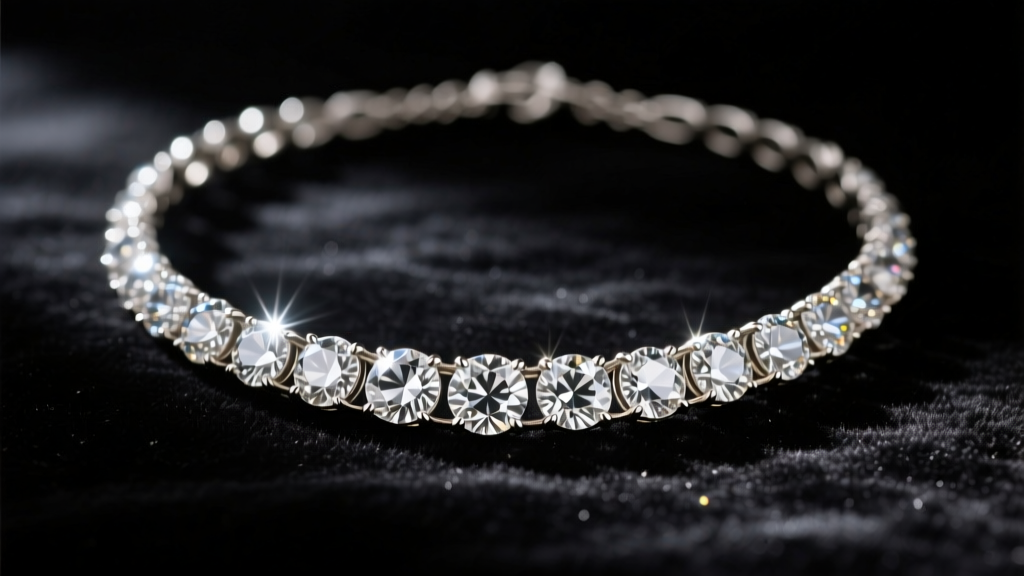
The Literary Tragedy: Appearances vs. Gemological Reality
When literary scholars analyze the theme of the necklace by Guy de Maupassant, they typically focus on the destructive nature of vanity, the illusion of social status, and the cruel irony of fate. Mathilde Loisel borrows what she believes to be a magnificent diamond necklace, loses it, and spends ten grueling years in poverty to repay the 36,000 francs it cost to replace—only to discover the original was mere 'paste' (costume jewelry) worth at most 500 francs. While Maupassant’s 1884 short story is a masterpiece of French literature, it also highlights a catastrophic failure in basic gemological verification.
As a senior jewelry specialist in 2026, I view Mathilde’s tragedy not just as a moral fable, but as a profound troubleshooting case study. The 'Mathilde Loisel Problem'—mistaking a high-quality simulant for a natural gemstone—remains a prevalent issue today. With the rise of lab-grown diamonds, moissanite, and advanced cubic zirconia, distinguishing real from fake requires more than a casual glance. This guide will decode the gemological realities behind the story and provide actionable troubleshooting steps to ensure you never pay diamond prices for glass.
Troubleshooting the 'Paste' Problem: Real vs. Simulant
In the 19th century, 'paste' referred to high-lead glass (often called strass), which had a higher refractive index than standard glass, allowing it to mimic the sparkle of a diamond under candlelight. However, glass is fundamentally soft. Today, we deal with much more deceptive simulants. To troubleshoot a suspected fake, you must evaluate three critical physical properties: thermal conductivity, refractive index, and facet junction wear.
1. Thermal Conductivity and the Fog Test
Diamonds are exceptional thermal conductors. They dissipate heat almost instantly. The classic 'fog test' is a rudimentary troubleshooting step: breathe on the stone. A real diamond will clear up in less than a second because the heat from your breath disperses immediately. Glass paste, cubic zirconia (CZ), and even moissanite will retain the fog for several seconds. While not definitive for moissanite (which also conducts heat well, though differently), this test immediately flags glass paste and standard CZ.
2. Refractive Index (RI) and Light Return
The brilliance of a diamond comes from its high Refractive Index (2.42) and its precise cut, which causes total internal reflection. Paste glass has an RI of roughly 1.5 to 1.7. When you look straight down through the table (top facet) of a glass paste stone, you will often be able to see through it to the setting beneath—a phenomenon known as 'reading through.' A properly cut diamond will reflect almost all light back to the eye, making it impossible to read text or see the mounting through the center of the stone.
3. The Weight Test: Specific Gravity
Diamond has a specific gravity (SG) of 3.52. Cubic zirconia, on the other hand, has an SG of roughly 5.6 to 6.0. This means a CZ stone of the exact same physical dimensions as a diamond will feel noticeably heavier in your hand. While this is difficult to judge with a delicate pendant necklace, if you are examining a loose stone or a heavy statement piece, the heft is a dead giveaway. Glass paste, conversely, often has a lower SG (around 2.5 to 4.0), making it feel suspiciously light for its size. Understanding these density differences is a cornerstone of gemological troubleshooting.
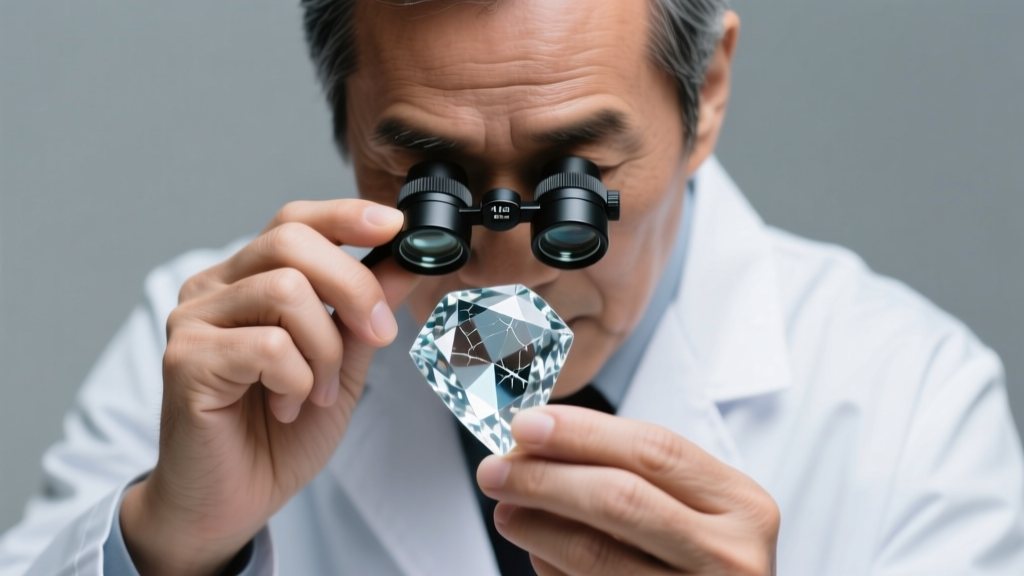
Microscopic Troubleshooting: The 10x Loupe Inspection
To truly solve the mystery that eluded Mathilde and her husband, you need a 10x triplet loupe. This is the gold standard for preliminary gemological troubleshooting. When examining the necklace under magnification, focus on the facet junctions (where the flat polished planes meet) and the girdle (the outer edge of the stone).
- Facet Junction Abrasion: Because diamond is a 10 on the Mohs hardness scale, its facet junctions remain razor-sharp indefinitely. Softer simulants like CZ (8.5) and glass paste (5.5) will show microscopic chipping, rounding, and abrasion at the junctions after years of wear.
- Gas Bubbles: If the stone is glass paste, a 10x loupe will often reveal tiny, perfectly spherical gas bubbles trapped inside the stone. Natural and lab-grown diamonds never contain spherical gas bubbles; their inclusions are typically crystalline or feather-like fractures.
- Polish Lines: Diamonds may show microscopic parallel polish lines on certain facets, but they will never show the 'orange peel' effect on the surface that is characteristic of softer, heat-sensitive simulants like CZ.
Modern Simulants: Beyond 19th Century Paste
Maupassant’s characters were fooled by leaded glass. Today’s consumers face a much more complex landscape. If you are troubleshooting a vintage estate piece or a modern heirloom, you must understand how contemporary simulants behave. Below is a comparative breakdown of common diamond alternatives you might encounter when trying to avoid Mathilde's fatal mistake.
| Material | Mohs Hardness | Refractive Index (RI) | Specific Gravity | Key Troubleshooting Identifier |
|---|---|---|---|---|
| Natural Diamond | 10 | 2.42 (Single) | 3.52 | Razor-sharp facets, natural crystalline inclusions, high thermal conductivity. |
| Lab-Grown Diamond | 10 | 2.42 (Single) | 3.52 | Identical physical properties to natural; requires UV fluorescence or spectroscopy to separate. |
| Moissanite | 9.25 | 2.65-2.69 (Double) | 3.22 | Strong double refraction (facet doubling visible under loupe), passes basic thermal testers. |
| Cubic Zirconia (CZ) | 8.0 - 8.5 | 2.15 (Single) | 5.6 - 6.0 | Noticeably heavier than diamond, abraded facet junctions, completely flawless internally. |
| Glass Paste (Strass) | 5.5 - 6.5 | 1.5 - 1.7 (Single) | 2.5 - 4.0 | Spherical gas bubbles, rounded facets, scratches easily, reads through to the setting. |
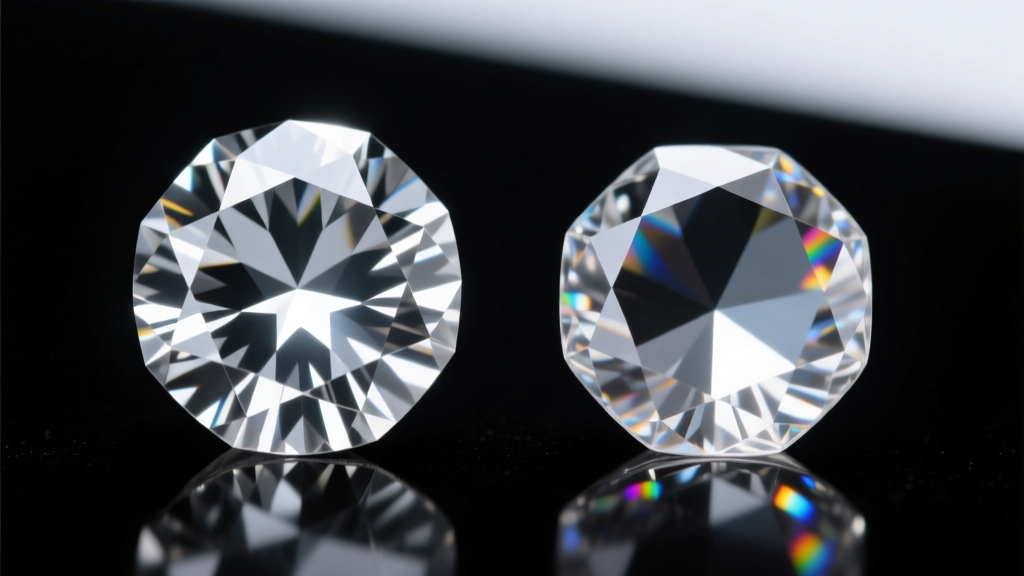
As noted by the Gemological Institute of America (GIA), the most common mistake consumers make is relying solely on visual 'sparkle.' Moissanite actually has a higher RI than diamond, resulting in a 'disco ball' effect (excessive fire) that can easily trick the untrained eye in dim lighting, much like the ballroom scene in Maupassant's story.
Financial Troubleshooting: Appraisals and Hallmarks
Mathilde’s ultimate downfall was assuming the value of the necklace based on the social status of her friend, Madame Forestier. In the jewelry trade, we call this 'provenance bias.' You must troubleshoot your own biases by relying on physical evidence and documentation.
Checking the Metal and Hallmarks
Fine diamonds are almost never set in base metals or silver, as the prongs would wear away too quickly to secure the valuable stone. If you are examining a purported diamond necklace, check the clasp and the interior of the links for hallmarks. Look for stamps like 18K, 14K, 750, or 585. If the piece is stamped 925 (sterling silver) or bears no stamp at all, it is highly probable the stones are simulants. Furthermore, examine the prongs. In authentic diamond jewelry, prongs are typically solid and precisely rounded. In paste jewelry, the 'prongs' are often merely cast as part of the metal base or glued into place.
The Importance of Independent Verification
According to the Federal Trade Commission (FTC) Jewelry Guides, it is illegal for jewelers to misrepresent the weight, quality, or origin of a gemstone. However, private estate sales and vintage markets are rife with misidentified pieces. Before purchasing any high-value antique necklace, always require a recent grading report from a reputable laboratory (such as GIA or AGS). If a report is unavailable, make the purchase contingent upon an independent appraisal by a certified gemologist.
Conclusion: Valuing Truth Over Illusion
The enduring theme of the necklace by Guy de Maupassant is a cautionary tale about the danger of valuing illusions over reality. Mathilde Loisel’s tragedy was entirely preventable with a rudimentary understanding of materials and a simple loupe inspection. In 2026, with gemological technology more accessible than ever, there is no excuse for falling victim to the 'paste' deception. Whether you are evaluating a family heirloom, shopping for an antique rivière, or simply trying to understand the true nature of your jewelry, remember that true value lies in verifiable facts, not assumptions. Equip yourself with a 10x loupe, understand the physical properties of your gems, and never let the illusion of status dictate your financial reality.
For further reading on historical jewelry identification, the original text of The Necklace on Project Gutenberg remains a fascinating study in the social pressures that drive our obsession with jewelry, reminding us that the most valuable asset a jewelry collector can possess is a critical, educated eye.


