How to Clean an Elizabeth Taylor Necklace: Vintage Care Guide
Learn expert conservation techniques to clean and store your Elizabeth Taylor necklace, from gold-plated replicas to faux pearl strands.

The Legacy and Liability of Vintage Glamour
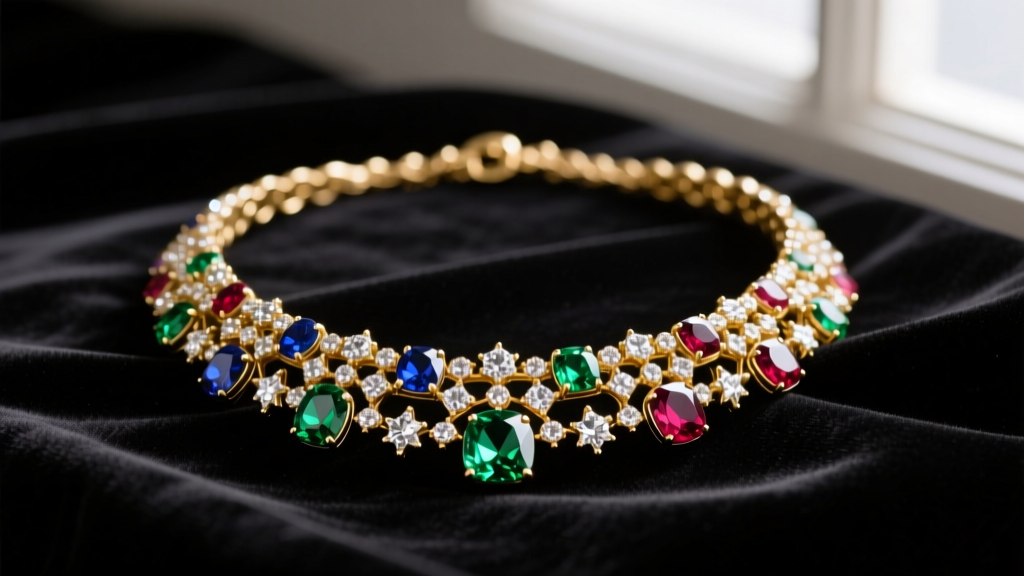
When you acquire an Elizabeth Taylor necklace, you are holding a piece of pop-culture and jewelry history. While Taylor’s personal haute joaillerie collection—featuring legendary pieces like the Bulgari emerald suite and the La Peregrina pearl—remains locked in high-security vaults or private collections, her eponymous fashion jewelry lines from the late 1990s and 2000s are highly sought after by vintage collectors today. These accessible pieces, often sold through broadcast networks like HSN and QVC, captured her signature maximalist aesthetic using gold vermeil, Austrian crystals, foil-backed rhinestones, and simulated pearls.
However, caring for these specific materials requires a radically different approach than cleaning solid 18k gold or natural diamonds. The very construction methods that gave these necklaces their brilliant, cinematic sparkle also make them highly vulnerable to modern cleaning mistakes. In this 2026 conservation guide, we break down the exact chemical and mechanical protocols required to clean, maintain, and restore your vintage Elizabeth Taylor necklace without destroying its delicate material integrity.
Identifying Your Necklace’s Material Composition
Before applying any cleaning agent, you must accurately identify the materials in your specific Elizabeth Taylor necklace. The eponymous collections primarily relied on three core material categories, each with distinct failure modes when exposed to moisture or friction.
1. Gold Vermeil and Electroplated Brass
Unlike solid gold, the golden tones in these necklaces are typically achieved through gold electroplating over a brass or base-metal core. High-end pieces from her collection feature gold vermeil (a thick layer of at least 2.5 microns of 14k or 18k gold over sterling silver), while more affordable tiers use thin gold wash over brass. Using abrasive polishes or harsh chemicals like ammonia will strip this microscopic gold layer, exposing the base metal to rapid oxidation and green skin-transfer.
2. Foil-Backed Rhinestones and Austrian Crystals
To replicate the massive carat weights of Taylor’s actual diamond collection, her fashion necklaces utilized large, faceted glass or acrylic stones with a delicate metallic foil glued to the back. This foil reflects light back through the facets, creating the illusion of high-refractive-index gemstones. If water penetrates the prong settings, the foil oxidizes, turning black and effectively 'killing' the stone's sparkle.
3. Simulated Pearls and Nacre Coatings
Taylor’s love for pearls is well-documented. Her fashion lines replicated this using glass or plastic beads coated in 'pearl essence'—a mixture of guanine (derived from fish scales) or synthetic mica suspended in a lacquer binder. This coating is incredibly soft and will dissolve or peel if exposed to alcohol, perfumes, or ultrasonic vibrations.
Conservation Protocols: What to Use and What to Avoid
The most common mistake collectors make is treating vintage fashion jewelry like fine jewelry. Below is a definitive matrix for cleaning agents and their compatibility with the materials found in an Elizabeth Taylor necklace.
| Material Component | Approved Cleaning Method | Strictly Avoid | Primary Failure Mode |
|---|---|---|---|
| Gold Vermeil / Plating | Mild pH-neutral dish soap, distilled water, microfiber cloth | Silver dip, ammonia, baking soda paste, toothpaste | Micro-abrasions and complete stripping of the gold layer |
| Foil-Backed Rhinestones | Dry brushing with a soft makeup brush, gentle wiping with a dry microfiber swab | Ultrasonic cleaners, liquid submersion, steam cleaners | Moisture infiltration causing silver/black foil oxidation |
| Simulated Pearls | Damp (not wet) lint-free cloth, wiped immediately dry | Alcohol, perfume, vinegar, ultrasonic cavitation | Dissolution of the pearl essence coating, resulting in peeling |
| Base Metal Settings (Brass) | Specialized non-liquid brass polishing cloth (used only on bare metal areas) | Any liquid polish, acidic solutions (lemon/vinegar) | Chemical burn to adjacent rhinestone foils and pearl coatings |
The Step-by-Step Dry Cleaning Technique
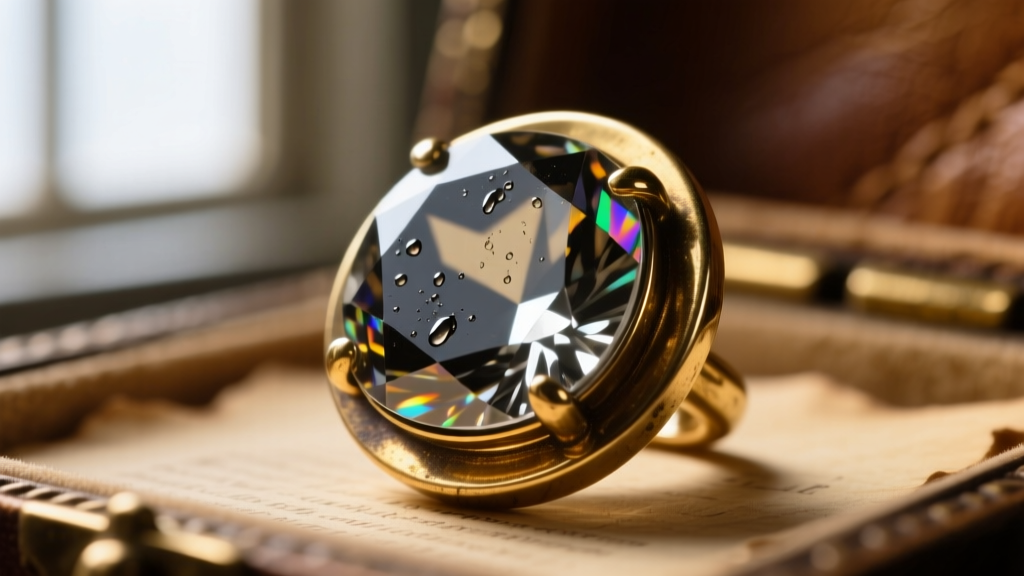
For an Elizabeth Taylor necklace heavily encrusted with rhinestones, liquid cleaning is almost always contraindicated. Instead, utilize the 'Dry Conservation Method' favored by museum curators:
- Surface Dusting: Use a clean, unused, soft-bristled makeup brush (like a goat-hair blending brush) to gently sweep away dust and skin cells from the crevices of the prong settings.
- Targeted Swabbing: Dip a cotton swab in a tiny amount of distilled water, then roll it on a dry paper towel until it is barely damp. Carefully trace the metal settings, avoiding direct contact with the glass stones or pearl coatings.
- Crystal Polishing: Use a dry, lint-free microfiber cloth to gently buff the surface of the Austrian crystals. Do not apply pressure to the prongs, as vintage glue becomes brittle over time and the stones may pop out.
The La Peregrina Protocol: Caring for Pearl Strands
Elizabeth Taylor’s most famous pearl, the 50.56-carat La Peregrina, required meticulous care to preserve its natural nacre. While your Elizabeth Taylor necklace likely features simulated pearls, the structural mechanics of the strand require similar attention. According to the Gemological Institute of America (GIA), pearls—both natural and simulated—are highly susceptible to environmental degradation and string failure.
Conservation guidelines from the Victoria and Albert Museum (V&A) dictate that vintage strung jewelry should never be worn directly against skin that has been treated with lotions or perfumes, as the chemical solvents degrade both the bead coatings and the structural integrity of the silk or nylon threading.
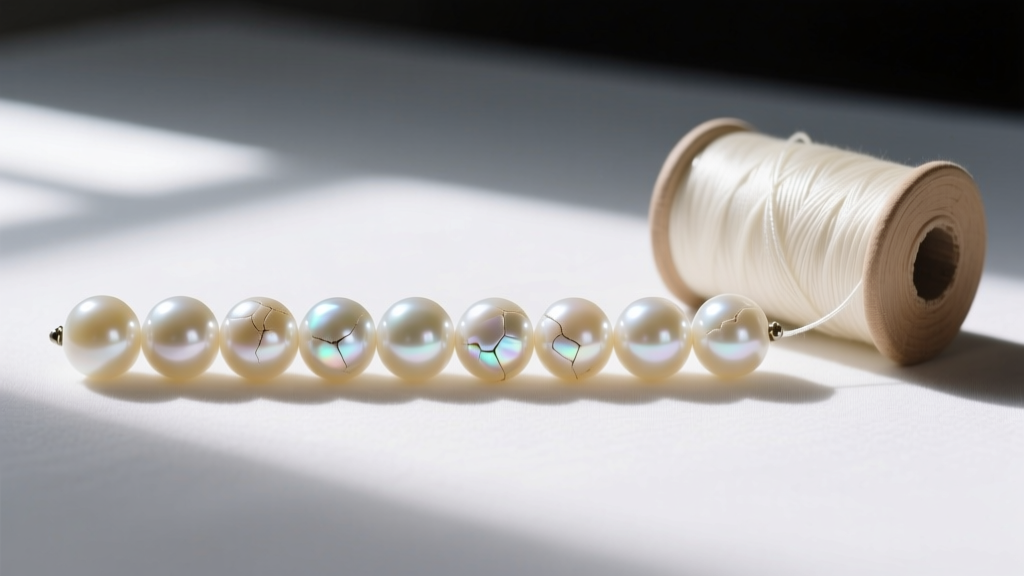
If your vintage pearl necklace shows signs of stretching (visible gaps between the knots), it is a critical failure point. Wearing a stretched strand risks catastrophic breakage. Vintage Elizabeth Taylor pearl strands should be professionally restrung using pure silk bead cord with French wire ends to protect the silk from the metal clasp. Expect to pay between $65 and $120 for professional restringing by a master jeweler in 2026, depending on the number of knots required.
Environmental Storage and Micro-Climate Control
How you store your Elizabeth Taylor necklace when it is not being worn is just as critical as how you clean it. The brass and copper alloys used in the base metals of vintage fashion jewelry are highly reactive to atmospheric humidity and sulfur compounds in the air.
Creating an Archival Storage Environment
- Acid-Free Barriers: Never store vintage jewelry in standard plastic ziplock bags or PVC-lined jewelry boxes. PVC off-gasses chemicals that cause gold plating to cloud and base metals to pit. Wrap the necklace in unbuffered, acid-free archival tissue paper.
- Anti-Tarnish Technology: Place 3M Anti-Tarnish strips or Pacific Silvercloth inside the storage container. These materials absorb airborne sulfur and hydrogen sulfide before they can react with the copper in the brass alloy.
- Humidity Regulation: Maintain a relative humidity (RH) of 40-50%. If you live in a high-humidity environment, store the wrapped necklace in an airtight acrylic box with a rechargeable silica gel desiccant canister to prevent the rhinestone foils from oxidizing.
- Physical Support: Never hang a heavy, vintage rhinestone necklace by its chain. The weight of the glass stones will warp the base metal links over time. Lay the piece flat in a padded, velvet-lined drawer with individual compartments to prevent the stones from scratching one another.
When to Seek Professional Restoration
Despite your best efforts, vintage pieces from the late 1990s and early 2000s are now reaching an age where material fatigue is inevitable. If your Elizabeth Taylor necklace suffers from 'dead' (blackened) rhinestones, severe gold plating loss, or clasp failure, DIY repairs will only diminish its collector value.
Seek out a jeweler who specializes in vintage costume jewelry restoration. In the current market, professional re-foiling of a single rhinestone typically costs between $25 and $45. Complete gold re-plating (using a 2.5-micron 18k gold bath) for a standard 18-inch chain necklace ranges from $150 to $280. By investing in professional conservation, you ensure that the cinematic glamour of your Elizabeth Taylor necklace survives for the next generation of collectors.


