Mens Clover Necklace: A Technical Guide to Metals & Fit
Discover the technical details of a mens clover necklace. Compare metal grades, chain gauges, and pendant proportions for durable, masculine styling.

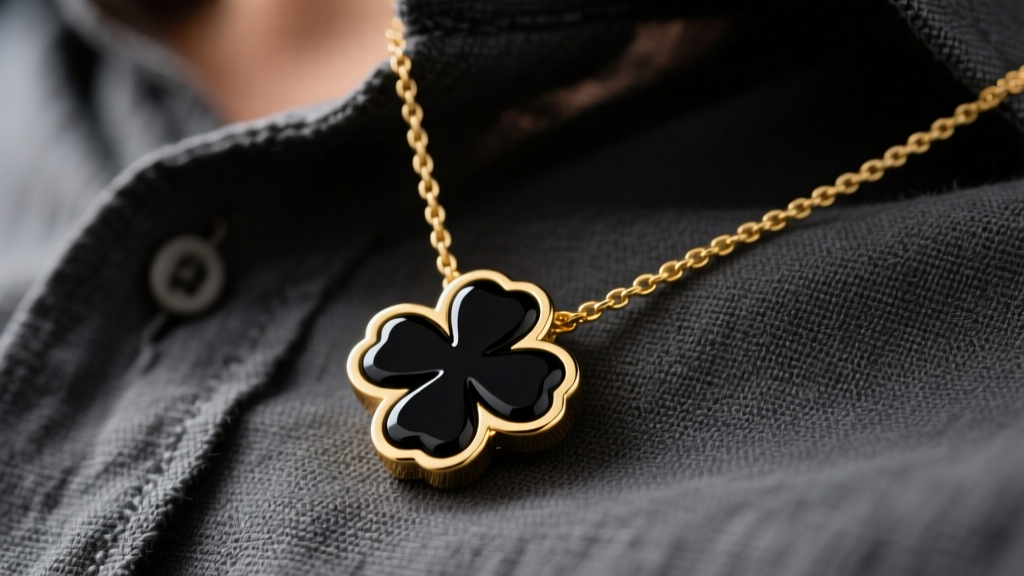
The clover motif—often recognized in jewelry as the quatrefoil or trifoil—has historically been relegated to delicate, feminine adornment, heavily popularized by legacy French jewelry houses. However, the modern mens clover necklace represents a significant shift toward geometric, nature-inspired masculine styling. When adapting this motif for men, jewelers must fundamentally alter the metallurgy, chain mechanics, and structural proportions to withstand the rigors of daily menswear. This technical deep dive strips away marketing aesthetics to examine the material science, hardware engineering, and proportional realities required to select a durable, well-engineered piece.
Metallurgy & Material Grades for Men's Pendants
The longevity of a clover pendant is dictated by its base metal's Vickers Hardness (HV) and corrosion resistance. Men's jewelry frequently encounters higher impact risks, sweat acidity, and environmental abrasion than women's fine jewelry. Therefore, selecting the correct alloy is non-negotiable.
316L Surgical Stainless Steel
For daily wear, 316L stainless steel is the benchmark for durability. The 'L' denotes low carbon content, which prevents carbide precipitation during welding and ensures superior resistance to galvanic corrosion. With a Vickers Hardness ranging from 150 to 190 HV, 316L resists scratching and deformation. It is highly recommended for men who work with their hands or live in high-humidity environments, as it will not oxidize or react to the sulfur compounds in human sweat.
14k vs. 18k Gold Alloys
While 18k gold (75% pure gold) offers a richer, deeper yellow hue, its Vickers Hardness sits around 115-125 HV, making it highly susceptible to denting if the clover pendant features high-relief bevels. For a mens clover necklace, 14k gold (58.5% pure gold) is vastly superior. Alloyed with copper, silver, and zinc, 14k gold achieves a hardness of approximately 140-150 HV. This increased tensile strength ensures that the prongs or bezels holding gemstone inlays remain secure under physical stress. According to the Federal Trade Commission (FTC) Jewelry Guidelines, any piece stamped '14k' must strictly adhere to these fineness tolerances, ensuring you are receiving a structurally sound alloy.
925 Sterling Silver and Rhodium Plating
Sterling silver (92.5% silver, 7.5% copper) is inherently soft (approx. 60-70 HV) and highly reactive to sulfur, leading to rapid tarnishing. If opting for a silver clover pendant, it must feature a thick rhodium flash plating (at least 0.5 microns) to act as a sacrificial barrier against oxidation. Unplated silver clovers will develop a heavy patina that obscures the geometric symmetry of the quatrefoil design within months of daily wear.
Gemstone Inlays: Hardness and Bezel Engineering
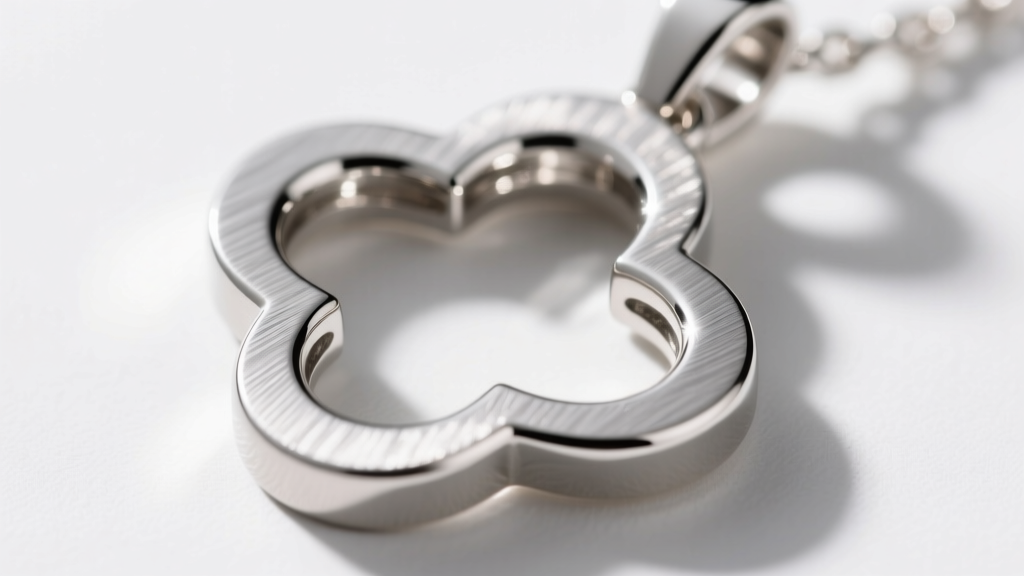
A defining characteristic of the clover necklace is the use of contrasting gemstone inlays within the metal petals. The structural integrity of these inlays relies on the Mohs hardness scale and the precision of the bezel setting.
- Black Onyx (Mohs 7): The most durable and practical choice for men. Onyx is a cryptocrystalline quartz that resists scratching and can withstand ultrasonic cleaning. Its deep black contrast works exceptionally well with both yellow gold and steel.
- Mother of Pearl (Mohs 2.5 - 4.5): Highly prone to delamination and scratching. If a clover pendant features MOP, the metal bezel must sit at least 0.5mm above the stone's surface to protect the edges from impact. Furthermore, MOP is porous; exposure to chlorine or harsh acids will permanently etch the nacre layers.
- Malachite (Mohs 3.5 - 4): Visually striking but structurally fragile. Malachite is highly sensitive to heat and acids. As noted by the Gemological Institute of America (GIA), malachite requires strict protective settings and should never be cleaned with steam or ultrasonic waves, as the vibrations can fracture the stone's internal banding.
Chain Mechanics: Gauge, Links, and Tensile Strength
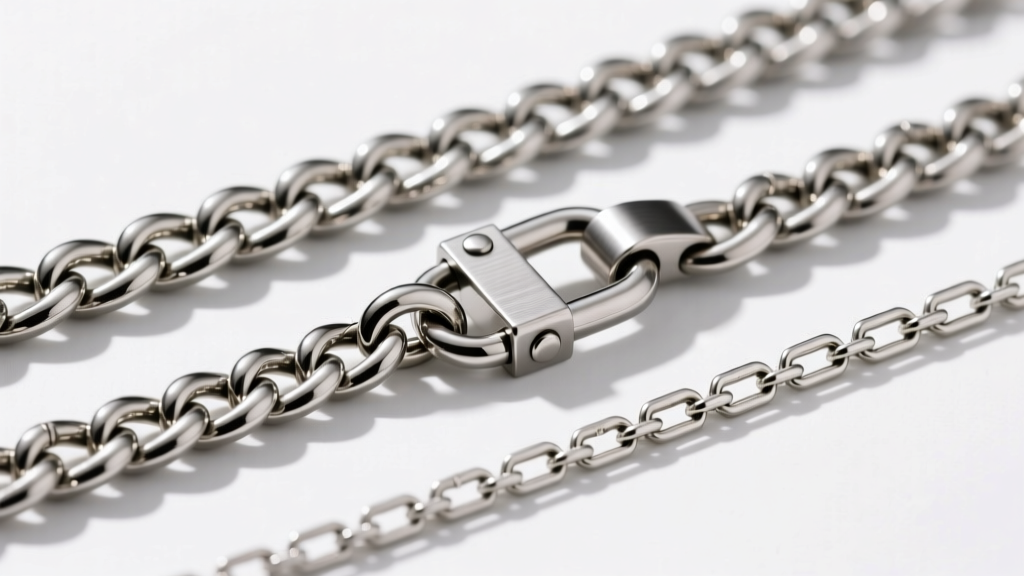
The pendant is only as secure as the chain suspending it. A common failure point in men's jewelry is the mismatch between pendant weight and chain tensile strength. The geometry of the chain links dictates how it handles torsion stress and weight distribution.
Cuban Link Chains
The Cuban link features interlocking, flat-filed oval links. This geometry distributes the weight of a heavy clover pendant evenly across the collarbone, reducing localized stress on individual links. For men, a 3mm to 5mm width provides the necessary visual weight to balance a masculine clover motif without resembling a cable.
Box Chains
Constructed from square, interlocking links, box chains offer a modern, industrial aesthetic that pairs well with geometric quatrefoil pendants. However, box chains under 2.5mm are highly susceptible to kinking. Once a box chain kinks, the structural integrity of the link is compromised, and it cannot be easily soldered back to its original tolerance.
Rope Chains
Rope chains consist of helical, twisted links that offer high light refraction. While visually dynamic, the twisted nature of the links introduces inherent torsion stress. If a rope chain snaps under the weight of a heavy solid-gold clover pendant, the helical unraveling makes laser welding and repair exceptionally difficult.
Proportion and Weight Distribution Matrix
Achieving the correct visual and physical balance is critical. A pendant that is too heavy for its chain will cause the clasp to constantly migrate to the front of the neck, while a chain that is too thick will overpower the intricate geometry of the clover. Use the following technical matrix to match your hardware:
| Pendant Width (mm) | Pendant Weight (g) | Ideal Chain Gauge (mm) | Recommended Chain Style | Required Clasp Type |
|---|---|---|---|---|
| 15mm - 20mm | 4g - 8g | 2.0mm - 3.0mm | Box / Wheat | Standard Lobster (12mm) |
| 22mm - 28mm | 10g - 18g | 3.5mm - 4.5mm | Cuban / Curb | Heavy Lobster (15mm) |
| 30mm - 38mm | 20g - 35g | 5.0mm - 6.0mm | Thick Cuban / Figaro | Fold-Over / Tongue-in-Groove |
The Clasp Hardware
Never rely on a standard spring-ring clasp for a mens clover necklace exceeding 10 grams. Spring rings utilize a weak internal coil spring that degrades over time due to sweat corrosion and repeated mechanical tension. Always upgrade to a solid cast lobster clasp or a tongue-in-groove safety clasp, which relies on mechanical friction rather than spring tension to remain closed.
Patina, Maintenance, and Real-World Wear
Maintaining a clover necklace requires understanding the interaction between the metal finish and environmental abrasives. Many masculine clover pendants utilize a 'brushed' or 'sandblasted' finish on the outer rim, contrasted with a high-polish inner bevel.
When cleaning a two-tone finish pendant, avoid aggressive polishing cloths treated with jeweler's rouge, as these will inadvertently polish the brushed matte surfaces, ruining the intended contrast. Instead, use a mild solution of warm water and a few drops of phosphate-free dish soap, agitated with a soft-bristled baby toothbrush. For pendants featuring malachite or mother of pearl inlays, submerge only the metal edges, avoiding prolonged water exposure to the porous stones. By adhering to these metallurgical and mechanical guidelines, you ensure that your clover necklace functions not just as a stylistic nod to heritage design, but as a robust, engineered accessory built for the realities of modern menswear.


