Abercrombie Necklace Materials & Tarnish: An Expert Technical Review
An expert metallurgical review of the Abercrombie necklace. We analyze base metals, plating thickness, tarnish rates, and clasp durability.

The Metallurgy of Mall Fashion: Deconstructing the Abercrombie Necklace
When evaluating fashion jewelry from major retailers, consumers are often left guessing about the actual materials resting against their skin. The Abercrombie necklace line has become a staple in fast-fashion accessorizing, offering trendy, layered aesthetics at an accessible price point. However, from a metallurgical and gemological perspective, the longevity and wearability of these pieces are dictated by strict manufacturing constraints. As jewelry experts, we look past the marketing terminology to examine the base alloys, plating micron thicknesses, and hardware failure modes that define the true lifespan of these accessories. Understanding the electrochemical realities of fashion jewelry is essential for making informed purchasing decisions and managing your expectations regarding tarnish and skin sensitivities.
Base Metal Analysis: The Core Alloys
The structural integrity and tarnish profile of any plated necklace begin with its substrate. Abercrombie & Fitch predominantly utilizes two base metals for their necklace lines: C26000 cartridge brass and 316L stainless steel. The choice between these two alloys is usually dictated by the manufacturing method required for the specific pendant or chain style.
Brass Substrates and Copper Oxidation
For intricate pendants, cast charms, and complex stamped components, brass is the industry standard due to its excellent malleability and low melting point. However, brass is an alloy of copper and zinc. When the protective outer plating of an Abercrombie necklace inevitably wears thin, the exposed copper reacts with ambient moisture, oxygen, and the sulfur compounds present in human sweat. This electrochemical reaction produces copper sulfate and copper chloride, manifesting as the notorious green or black tarnish that transfers to the wearer's skin. Because brass is highly reactive, the quality of the barrier plating is the single most critical factor in the necklace's lifespan.
Stainless Steel Chains
For simpler cable chains and herringbone links, the brand frequently employs 316L stainless steel. This austenitic steel contains molybdenum, which provides high resistance to pitting and corrosion. While stainless steel is vastly superior to brass regarding structural durability and hypoallergenic properties, it presents a different challenge for plating adhesion. The passive oxide layer that protects stainless steel from rust also makes it difficult for traditional gold electroplating to bond securely, often necessitating specialized nickel strike layers or alternative deposition methods.
Plating Technologies: Flash Plating vs. PVD
The golden or silver finish on an Abercrombie necklace is not solid metal; it is a microscopic surface treatment. According to the Federal Trade Commission Jewelry Guides, retailers must adhere to strict definitions regarding gold plating. Most fashion jewelry in this tier utilizes either traditional flash electroplating or Physical Vapor Deposition (PVD).
The Reality of Flash Electroplating
Electroplating involves submerging the base metal into an electrolyte solution containing dissolved gold or silver ions and applying an electrical current. In the fast-fashion sector, this is often "flash plating," a high-speed, low-cost process that deposits a layer of gold typically measuring less than 0.175 microns (roughly 7 millionths of an inch). At this thickness, the plating is highly micro-porous. It provides the initial aesthetic appeal but lacks the mechanical durability to withstand the friction of daily wear, meaning the underlying brass will begin to oxidize within weeks of continuous use.
PVD Coating on Stainless Steel
For their stainless steel chain offerings, Abercrombie increasingly relies on PVD (Physical Vapor Deposition). PVD is a vacuum-coating process that vaporizes titanium nitride or zirconium and bonds it to the steel at a molecular level. PVD coatings are significantly harder than electroplated gold, offering superior scratch resistance and a much slower tarnish rate. However, PVD color matching can sometimes lean slightly cooler or more "brassy" than the warm, rich tone of traditional 14k or 18k gold electroplating.
| Jewelry Tier | Plating Type | Average Thickness | Base Metal | Expected Lifespan (Daily Wear) |
|---|---|---|---|---|
| Fast Fashion (e.g., Abercrombie) | Flash Electroplating / PVD | < 0.175 microns (Electro) / ~0.3 microns (PVD) | Brass / 316L Steel | 3 to 12 months |
| Demi-Fine | Gold Vermeil | 2.5+ microns | Sterling Silver (925) | 1 to 3 years |
| Gold Filled | Mechanical Bonding | ~15 to 25 microns (5% of total weight) | Jeweler's Brass | 5 to 15+ years |
| Fine Jewelry | Solid Alloy | N/A (Solid throughout) | 14k/18k Gold, Platinum | Lifetime / Generational |
Hardware Engineering and Failure Points
A necklace is only as secure as its weakest mechanical link. When conducting a technical review of the Abercrombie necklace hardware, we focus on the lobster clasps, jump rings, and soldering quality. The brand typically uses standard cast zinc-alloy or stamped brass lobster clasps. While functional, the internal steel springs in these clasps are rarely coated. Over time, moisture infiltrates the clasp housing, causing the internal spring to rust and seize, rendering the clasp useless even if the exterior gold plating remains intact.
Furthermore, the jump rings connecting the pendant to the chain are frequently left unsoldered. In fine jewelry, a jump ring is fused shut with a laser or torch to prevent the chain from slipping through the gap when tension is applied. In mass-market fashion jewelry, the jump rings are simply pinched closed. This creates a structural vulnerability; a sharp tug on the pendant will easily pull the soft brass jump ring apart, resulting in the loss of the charm. Consumers should routinely inspect the gap on these jump rings and use jewelry pliers to gently push them back into alignment.
Skin Sensitivities and Hypoallergenic Compliance
One of the most frequent complaints regarding fashion jewelry is contact dermatitis. Abercrombie & Fitch operates globally and must comply with international safety standards, including the European Union's REACH regulation and California's Proposition 65, which strictly limit the use of lead, cadmium, and nickel. While the brand markets certain items as "hypoallergenic" or "nickel-free," it is vital to understand the metallurgical reality of this claim.
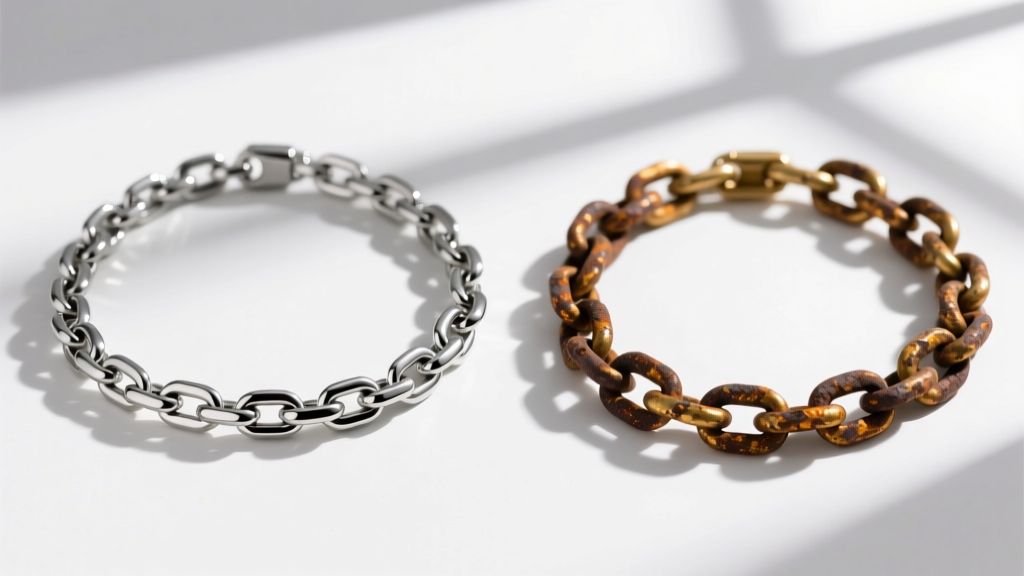
In traditional electroplating, a "nickel strike" layer is often applied between the brass base and the gold topcoat to create a smooth, bright surface. Even if the top layer is nickel-free, micro-pores in the flash plating can allow sweat to penetrate and leach nickel ions to the skin. If you have a known nickel allergy, an Abercrombie necklace made from electroplated brass poses a moderate risk of triggering a reaction. Conversely, their PVD-coated 316L stainless steel options are genuinely hypoallergenic, as 316L steel traps its trace nickel content within a stable crystalline lattice that does not leach under normal conditions.
Expert Maintenance Protocol for Plated Fashion Jewelry
To maximize the functional lifespan of a gold-plated brass Abercrombie necklace, you must actively mitigate the electrochemical reactions that cause tarnish. As outlined by the Gemological Institute of America (GIA), plated jewelry requires a fundamentally different care regimen than solid gold. Follow these strict technical guidelines to preserve the micro-thin plating:
- Avoid Thiourea-Based Dips: Never use commercial liquid silver or gold dips. These contain thiourea and sulfuric acid, which will instantly strip flash plating down to the raw brass substrate.
- Implement a Barrier Coating: For pendants that rest directly against the sternum, apply a micro-thin layer of clear, cosmetic-grade nail polish or a specialized jewelry barrier spray to the back of the pendant. This creates a physical dielectric barrier between the copper-rich brass and the acidic pH of your skin.
- Friction Mitigation: Do not wear plated chains while sleeping or exercising. The mechanical friction of cotton sheets and the high salinity of sweat will accelerate the mechanical wear of a sub-micron gold layer.
- Ultrasonic Warning: Never place an electroplated fashion necklace in an ultrasonic cleaner. The high-frequency cavitation bubbles will literally blast the poorly adhered flash plating off the brass substrate.
Expert Insight: The true value of an Abercrombie necklace lies in its trend-responsive design and layering utility, not its generational durability. By treating these pieces as seasonal accessories rather than permanent fixtures, and by strictly controlling their exposure to moisture and friction, you can extract maximum aesthetic value before the inevitable oxidation process takes over.
Final Verdict
The Abercrombie necklace serves a distinct purpose in the modern jewelry market: providing accessible, high-style layering components for seasonal wardrobes. From a technical standpoint, buyers must recognize the limitations of flash-plated brass and the mechanical vulnerabilities of unsoldered hardware. By opting for their PVD-coated stainless steel chains when possible, and rigorously applying the maintenance protocols outlined above, consumers can effectively navigate the compromises of fast-fashion metallurgy and enjoy their jewelry with realistic expectations.


