Mastering Necklace Knots Adjustable: Technical Cord Guide
Master the mechanics of necklace knots adjustable systems. Explore cord friction coefficients, sliding knot techniques, and material durability.

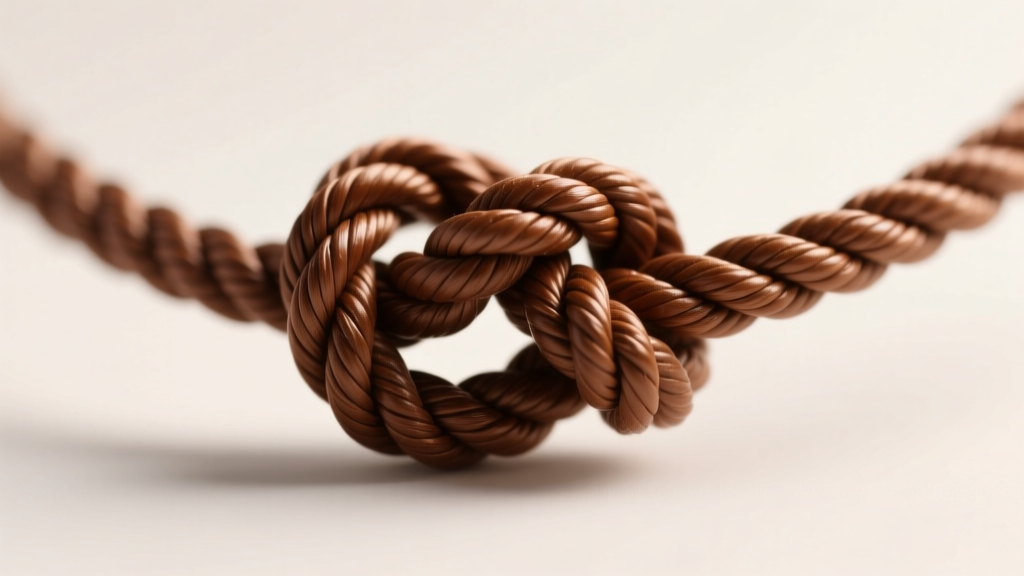
The transition from traditional metal clasps to cord-based adjustable systems has fundamentally changed pendant and necklace design. For jewelers and advanced crafters, mastering necklace knots adjustable mechanisms is not merely about learning a tying pattern; it is an exercise in applied physics, material science, and structural engineering. A poorly executed sliding knot will either slip under the weight of a heavy stone pendant or choke the cord to the point of structural failure. In this technical deep dive, we examine the mechanical forces at play, evaluate modern cordage materials, and provide a precise framework for executing high-load sliding knots.
The Physics of Sliding Friction Knots
The holding power of any adjustable sliding knot is governed by the Capstan equation (also known as the Euler-Eytelwein formula). This principle dictates that the friction holding the knot in place is an exponential function of the coefficient of friction between the cord layers and the total angle of wrap. In practical terms, every additional wrap of the binding cord around the base cords multiplies the holding strength exponentially, not linearly.
According to the International Guild of Knot Tyers (IGKT), static friction must always exceed the kinetic force applied by the pendant's weight and the wearer's movements. If a 50-gram pendant exerts a downward force, the sliding knot must generate enough radial compression (normal force) to counteract it. This is why a single overhand knot fails as a slider, while a multi-wrap macramé square knot or a double overhand sliding knot succeeds. The binding cord acts as a localized clamp, distributing the compressive force over a wider surface area and preventing localized shear stress on the base cords.
Cord Material Matrix: Friction and Durability
Not all cords are engineered for sliding mechanisms. The surface texture, core construction, and coating of the cord dictate its coefficient of friction ($\mu$). As of 2026, the market has seen a surge in ultra-high-molecular-weight polyethylene (UHMWPE) micro-cords, but traditional materials remain dominant for specific applications. Below is a technical comparison of the most common cordage used for adjustable necklace systems.
| Material | Optimal Diameter | Friction Coefficient ($\mu$) | Abrasion Resistance | Best Application |
|---|---|---|---|---|
| Waxed Cotton | 0.8mm - 1.5mm | High (0.45 - 0.60) | Moderate | Heavy stone pendants, rustic designs |
| Chinese Knotting (Nylon) | 0.8mm - 2.0mm | Medium (0.30 - 0.40) | High | Intricate macramé, melt-sealed ends |
| UHMWPE Micro-Cord | 0.5mm - 1.0mm | Low (0.15 - 0.25) | Extreme | Minimalist metal pendants, high-tensile needs |
| Silk (Braided) | 1.0mm - 2.0mm | Low (0.20 - 0.30) | Low | Lightweight pearls, temporary sliders |
Waxed cotton remains the gold standard for simple sliding knots because the microcrystalline wax coating increases surface tackiness, effectively raising the static friction threshold. However, body heat and UV exposure can degrade the wax over time. Nylon Chinese knotting cord, conversely, relies on its tight braided sheath for durability and can be thermally fused at the ends, though it requires more binding wraps to achieve the same holding power as waxed cotton.
Step-by-Step: The Double Overhand Sliding Knot
For single-strand base cords or parallel double strands, the double overhand sliding knot (often called the barrel knot slider) offers the most streamlined profile. The Ganoksin Jewelry Making Community frequently recommends this knot for its low-profile geometry, which prevents the knot from catching on clothing.
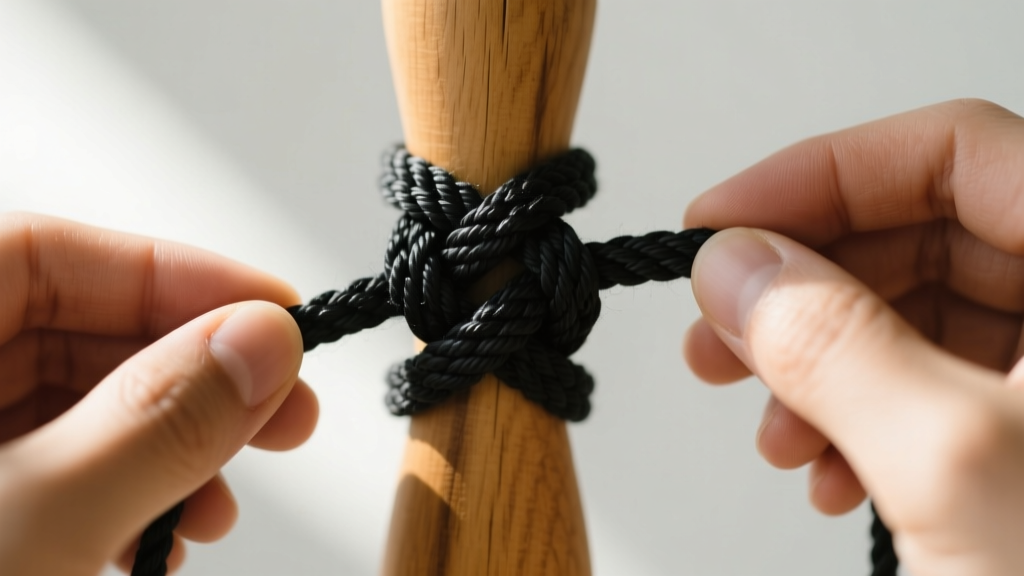
Execution Parameters
- Preparation: Overlap the two base cord ends by at least 4 inches (10 cm). Secure the overlap zone with a temporary clamp or tape to maintain parallel alignment.
- The Binding Cord: Cut a 12-inch (30 cm) piece of the same cord material (or a slightly thinner gauge for a tighter wrap). Leave a 2-inch tail at the start.
- Wrapping Phase: Wrap the binding cord tightly around both base cords. For 1.0mm waxed cotton, exactly 5 to 6 wraps are required to achieve optimal radial compression without creating a bulky, inflexible node.
- The Lock: Pass the working end of the binding cord through the initial loop created by the starting tail. Pull the tail to bury the working end inside the wraps.
- Tensioning: Use smooth-jawed pliers to pull the tail taut. Do not use serrated pliers, as they will score the cord fibers and reduce the tensile strength by up to 40%.
Load-Bearing Limits and Failure Points
Understanding how and why adjustable knots fail is critical for designing durable jewelry. The primary failure mode in necklace knots adjustable systems is not the snapping of the cord, but rather abrasion fatigue at the choke point.
Tensile Strength vs. Knot Choke
When a sliding knot is pulled tight to shorten the necklace, the base cords are forced into a tight bend radius. According to material testing standards, a cord bent over a radius equal to its own diameter loses approximately 50% of its rated tensile strength. If you are using a 1.0mm nylon cord rated for 40 lbs of tensile strength, the effective breaking point at the tightest part of the sliding knot drops to roughly 20 lbs. While this is more than sufficient for a 3-ounce pendant, it becomes a critical vulnerability if the necklace is subjected to sudden dynamic loads (e.g., a child pulling on the pendant).
To mitigate this, expert jewelers utilize a 'core-and-sheath' approach, inserting a flexible but unbreakable UHMWPE micro-cord inside a larger braided cotton sleeve. This maintains the high friction of the cotton exterior while providing a fail-safe tensile core that cannot be severed by bend-radius fatigue.
Finishing Techniques: Securing the Tails
The final step in any adjustable system is managing the cord tails that hang below the sliding knots. Unsecured tails will eventually fray, unravel, or slip back through the knot mechanism under repeated kinetic friction.
Adhesives vs. Mechanical Locks
The most common mistake among novice makers is using standard cyanoacrylate (super glue) to seal knot tails. Cyanoacrylate cures into a rigid, brittle plastic. When the flexible cord bends, the brittle adhesive micro-fractures, creating sharp internal edges that cut the cord fibers from the inside out.
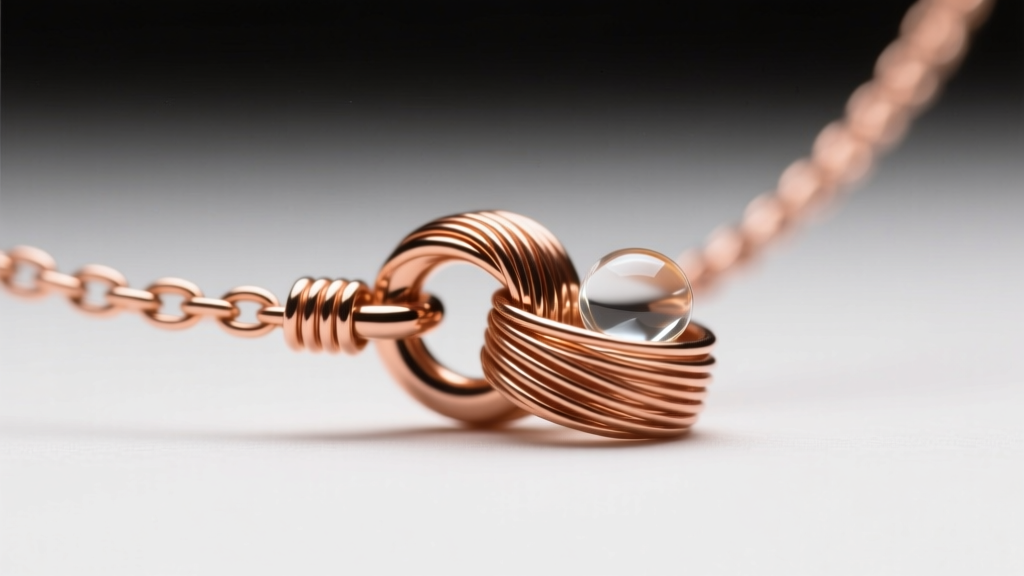
Instead, utilize a two-part clear jeweler's epoxy or a flexible polyurethane adhesive. Apply a microscopic drop to the exit point of the knot tail using a dental pick or a fine-gauge syringe. For a purely mechanical finish that avoids adhesives entirely, employ a micro wire-wrap technique: bind the final 3mm of the tail with 28-gauge dead-soft copper or silver wire, then trim and tuck the wire end. This provides a permanent, flexible, and highly decorative mechanical lock that complements the artisan nature of the piece.
Maintenance and Recalibration
Even perfectly tied adjustable knots require periodic maintenance. Environmental factors such as humidity, skin oils, and cosmetic lotions alter the friction coefficient of the cord. Waxed cotton, in particular, can absorb sebum, which acts as a lubricant and causes the knots to slip over time. Instruct end-users to periodically 'recalibrate' their necklaces by applying a micro-dab of beeswax or specialized cord wax to the sliding mechanism, restoring the necessary static friction and extending the functional lifespan of the jewelry.


