Alice Madness Returns Necklace Guide: Alloys, Gauges & Patina
Explore the technical details of the Alice Madness Returns necklace. We analyze metal alloys, chain gauges, casting methods, and custom patina work.

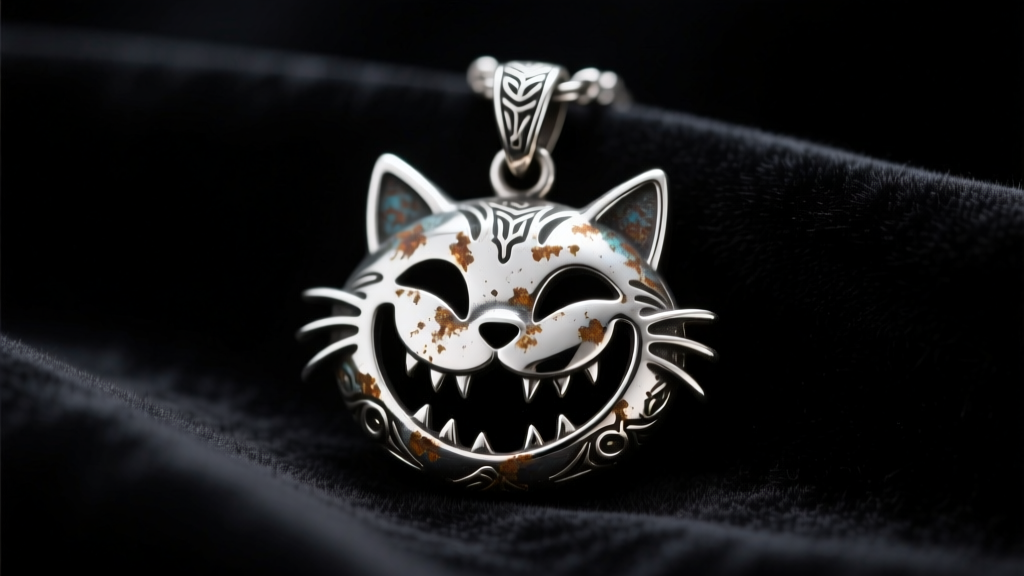
The Anatomy of an Authentic Alice Madness Returns Necklace
When Spicy Horse and Electronic Arts released Alice: Madness Returns in 2011, they redefined the visual language of Wonderland, trading whimsical fantasy for a grimdark, psychological horror aesthetic infused with Victorian gothic and steampunk elements. For jewelry makers, cosplayers, and collectors, the iconic pendants from the game—most notably the Cheshire Cat’s jagged grin, the Vorpal Blade, and the rusted Wonderland Key—present a unique metallurgical challenge. Capturing the decaying, gritty essence of this specific iteration of Wonderland requires more than just a basic 3D print or a cheap alloy pour. It demands a deep understanding of base metals, precision casting techniques, and chemical patinas. In this expert deep dive, we deconstruct the technical specifications required to source, craft, or upgrade an authentic-grade Alice Madness Returns necklace that can withstand daily wear while maintaining its haunting aesthetic.
Base Metals: Zinc Alloy vs. Silicon Bronze vs. Sterling Silver
The vast majority of officially licensed Alice: Madness Returns merchandise produced in the early 2010s was manufactured using Zamak, a family of zinc alloys containing aluminum, magnesium, and copper. Specifically, Zamak-3 and Zamak-5 are the industry standards for die-casting costume jewelry. Zamak is favored for mass production due to its low melting point (approximately 385°C) and high fluidity, which allows it to fill intricate steel molds quickly. However, Zamak has significant drawbacks for heirloom-quality fandom jewelry. It is inherently brittle, prone to a degradation phenomenon known as 'zinc pest' if the alloy composition is impure, and relies entirely on a thin electroplated finish (usually antique silver or gunmetal) to prevent oxidation. Once this flash plating wears off, the pendant is susceptible to rapid corrosion from skin acids.
For collectors seeking a permanent piece, high-end artisan replicas utilize Silicon Bronze or 925 Sterling Silver. Silicon Bronze (an alloy of copper, silicon, and trace elements like manganese) offers exceptional tensile strength and a natural warm undertone that takes dark patinas beautifully. Sterling silver, while softer, provides the highest level of detail resolution and intrinsic value. According to metallurgical guidelines from the Gemological Institute of America (GIA), copper-based alloys like bronze develop a stable, protective patina over time, whereas zinc alloys simply degrade. Upgrading your Alice Madness Returns necklace from pot metal to solid bronze increases the pendant's lifespan from a few years to several generations.
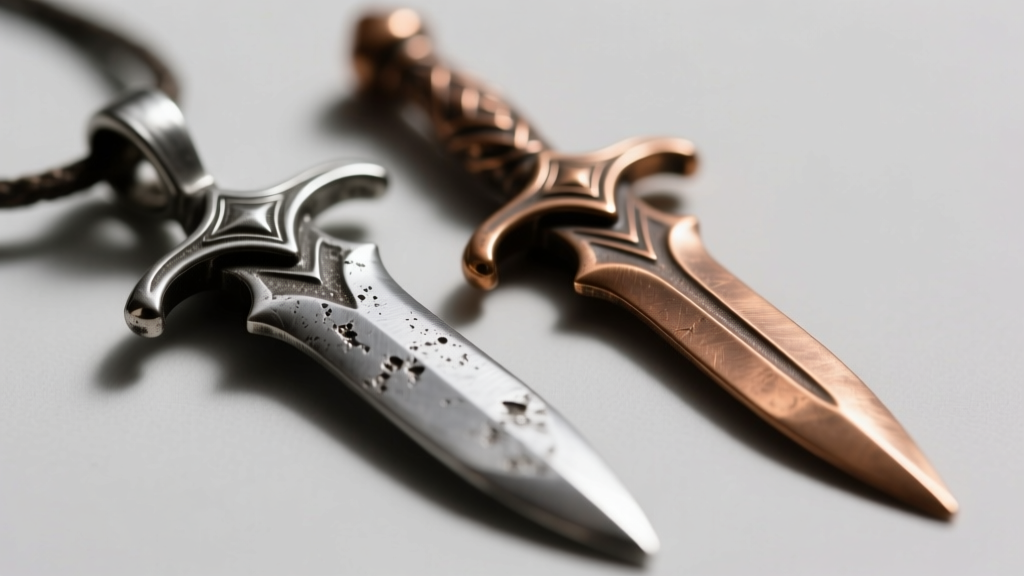
Casting Techniques: Capturing the Grimdark Detail
Die-Casting vs. Lost-Wax Investment Casting
The method used to form the pendant dictates the crispness of the micro-details—such as the individual serrations on the Vorpal Blade or the micro-fissures in the Cheshire Cat’s teeth. Mass-market replicas use high-pressure die-casting, where molten Zamak is injected into a machined steel mold. While fast, this process often leaves visible ejector pin marks on the back of the pendant and a prominent parting line along the edges that requires manual filing, which can inadvertently soften the sharp, aggressive geometry characteristic of the game's art style.
Conversely, master jewelers crafting premium Alice Madness Returns necklaces employ lost-wax investment casting. This process begins with a high-resolution 3D-printed or hand-carved wax master, which is encased in a plaster-like investment material. The mold is burned out in a kiln, leaving a perfect negative cavity. Molten bronze or silver is then forced into the cavity using centrifugal force or a vacuum assist. As noted by manufacturing experts at Rio Grande, centrifugal casting ensures that dense, heavy metals completely fill the finest crevices of the mold before solidification, resulting in razor-sharp edges and zero porosity on the surface of the casting. This is critical for achieving the 'shattered glass' look of the Cheshire Cat pendant.
Chain Gauges, Clasps, and Tensile Strength
The most common failure point of any fandom necklace is the chain. Official merchandise typically pairs heavy, solid-metal pendants with flimsy 1.2mm or 1.5mm brass cable chains featuring a thin flash plating. These chains lack the tensile strength to support a 25-gram bronze Vorpal Blade pendant, leading to stretched links and catastrophic clasp failures. To build a reliable Alice Madness Returns necklace, you must upgrade the findings.
We recommend utilizing oxidized sterling silver or stainless steel curb, rope, or box chains in the 2.0mm to 2.5mm gauge range. Curb chains lay flat against the collarbone, preventing the pendant from flipping, while rope chains offer a twisted, Victorian-era texture that perfectly complements the steampunk elements of Wonderland. Furthermore, swapping the standard lobster clasp for a heavy-duty stainless steel parrot clasp or a magnetic neodymium clasp ensures the chain remains secure during active wear, such as convention attendance or cosplay.
| Chain Type | Recommended Gauge | Material | Tensile Strength | Aesthetic Fit |
|---|---|---|---|---|
| Cable (Standard) | 1.5mm - 2.0mm | Oxidized Brass | Low (Prone to stretching) | Basic, utilitarian |
| Curb | 2.0mm - 2.5mm | 925 Sterling Silver | High (Excellent durability) | Victorian Gothic, sturdy |
| Rope | 2.0mm - 3.0mm | Silicon Bronze | Very High (Heavy duty) | Steampunk, textured |
| Box | 1.5mm - 2.0mm | Stainless Steel | High (Rigid structure) | Industrial, grimdark |
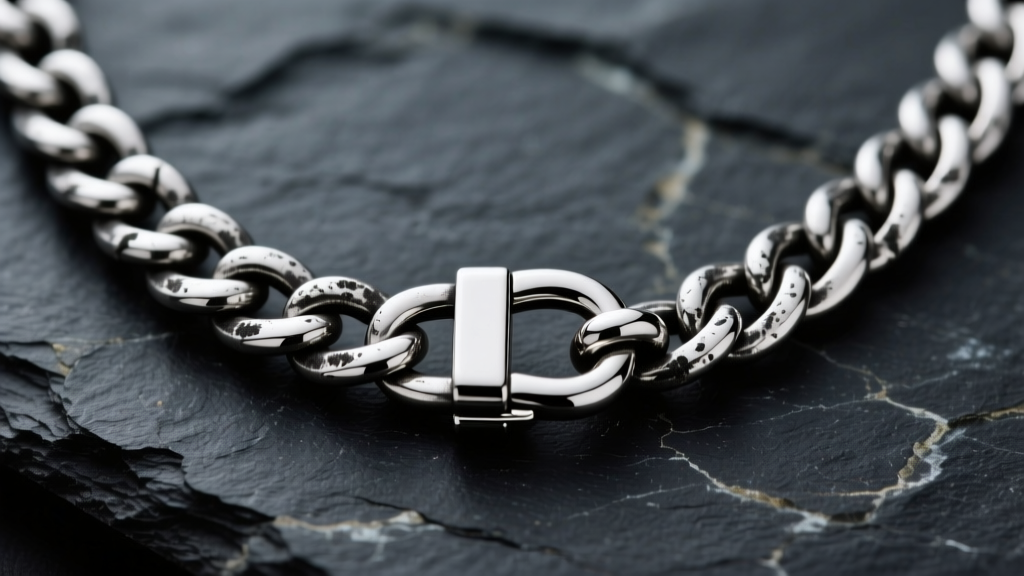
The Art of the Patina: Aging Wonderland
The Alice: Madness Returns aesthetic is defined by decay, rust, and psychological deterioration. A highly polished silver or bronze Cheshire Cat pendant looks entirely out of place; it must look as though it was pulled from the murky depths of the Deluded Depths or the scorched ruins of the Hatter's Domain. This is achieved through chemical patination.
For silver and bronze pendants, Liver of Sulfur (LOS)—a mixture of potassium sulfide, potassium polysulfide, and potassium thiosulfate—is the industry standard for inducing rapid, controlled oxidation. By dissolving a small quantity of LOS gel in warm water, jewelers can dip the pendant to achieve a deep, matte black or gunmetal grey finish. The true artistry lies in the subsequent polishing phase. Using high-grit micromesh pads or a rotary tool with a soft felt wheel, the jeweler carefully buffs only the high points and raised edges of the pendant. This leaves the deep recesses, such as the gaps between the Cheshire Cat's teeth or the runes on the Wonderland Key, pitch black, while the edges gleam with a dull, worn metallic luster. Finally, the piece must be submerged in a baking soda and water bath to neutralize the chemical reaction and halt further oxidation, followed by a coating of microcrystalline wax to seal the finish against skin oils and moisture.
Sourcing, Authentication, and Price Tiers
Navigating the secondary market for an Alice Madness Returns necklace requires a discerning eye to distinguish between original 2011 promotional merchandise, modern mass-produced knockoffs, and artisan-cast replicas. Original EA/Spicy Horse merchandise often features specific maker's marks or comes with original backing cards, though the zinc alloy construction means many surviving originals suffer from severe plating loss and structural fatigue.
"When evaluating fandom jewelry, always inspect the bail—the loop that connects the pendant to the chain. Mass-produced pieces use glued-on or poorly soldered bails that snap under torque. Artisan pieces feature cast-in-place bails or heavily soldered sterling silver jump rings that are integral to the pendant's structural integrity."
Pricing generally falls into three distinct tiers based on material and manufacturing origin:
- Tier 1: Mass-Market Zamak ($15 - $35): Typically found on AliExpress, Amazon, or fast-fashion costume sites. These are die-cast, lightly plated, and paired with fragile chains. Suitable for brief cosplay use, but not for daily wear.
- Tier 2: 3D-Printed Resin / Plated Brass ($40 - $75): Often sold by independent creators on Etsy. While the detail from SLA resin printing can be exceptional, the structural integrity is lower than cast metal, and the electroplated finishes can chip or flake over time.
- Tier 3: Artisan Lost-Wax Cast Bronze/Silver ($90 - $250+): The gold standard for collectors. These pieces are cast in solid silicon bronze or 925 sterling silver, feature hand-applied Liver of Sulfur patinas, and are strung on heavy-duty, upgraded chains. They are built to last a lifetime and accurately reflect the grimdark majesty of the game.
Conclusion
The Alice Madness Returns necklace is more than a simple piece of fandom merchandise; it is a wearable artifact of one of gaming's most unique psychological horror landscapes. By understanding the metallurgical differences between brittle zinc alloys and enduring silicon bronzes, recognizing the superior detail of lost-wax investment casting, and mastering the chemical artistry of dark patinas, collectors and jewelers can elevate these iconic pendants from cheap costume accessories to genuine works of dark, wearable art. Whether you are wielding the Vorpal Blade or wearing the Cheshire Cat's grin, ensuring your jewelry is built with technical precision guarantees that your journey through Wonderland will never be cut short by a broken chain.


